
Landscaping & hardscaping in Utah County
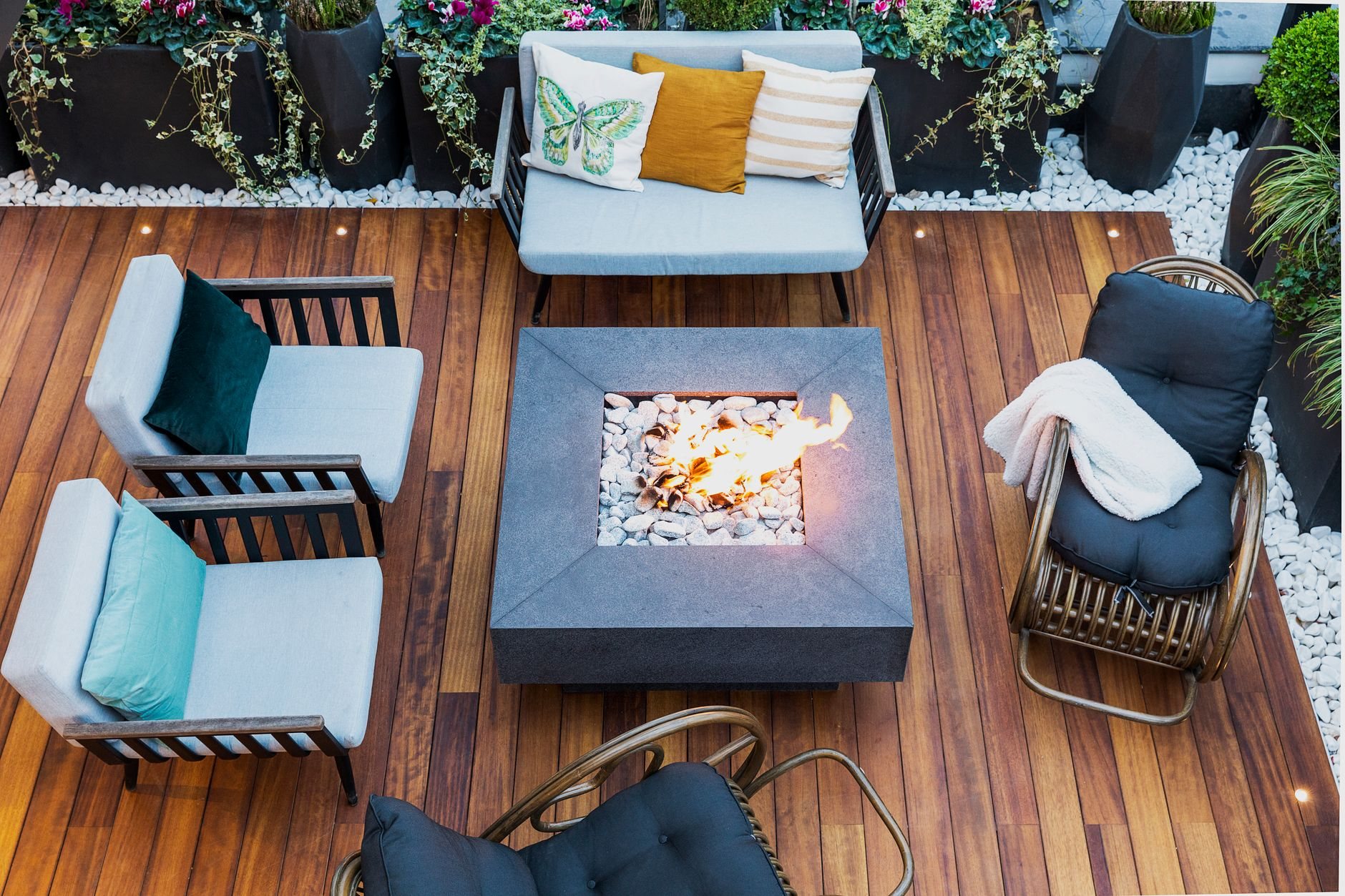
Patios, walkways, garden walls, fire pits, planting, turf, and the grading and drainage underneath it all — designed and built as one scope by a licensed general contractor. When the same team shapes the ground and builds on it, the yard works as a system instead of a collection of projects.
When a general contractor is the right call for your yard
Plenty of yards get built one contractor at a time — a paver crew this spring, a sprinkler company in June, someone with a skid steer for the boulders. That works for a single small project. It works badly when the projects depend on each other, which in a full yard they almost always do.
The patio elevation sets the step count off the back door. The wall footings decide where the irrigation main runs. The grading has to move water away from the house before anything pretty goes on top of it. When one contractor owns the sequence, those decisions get made once, in the right order — and nobody gets to blame the previous crew.
Bring us in when you’re doing more than one thing at a time: a new patio plus the walls and steps that reach it, a full yard on a new-construction lot, a slope that needs grading and drainage solved before it needs plants, or a backyard rebuild after an excavation or utility project tore it up. For a single scope, the pages below cover how we build each one.
The built parts: patios, walls, steps, and fire
Paver patios
Interlocking concrete pavers over a compacted base built for freeze–thaw movement — the workhorse Utah patio.
ExploreFlagstone & natural stone patios
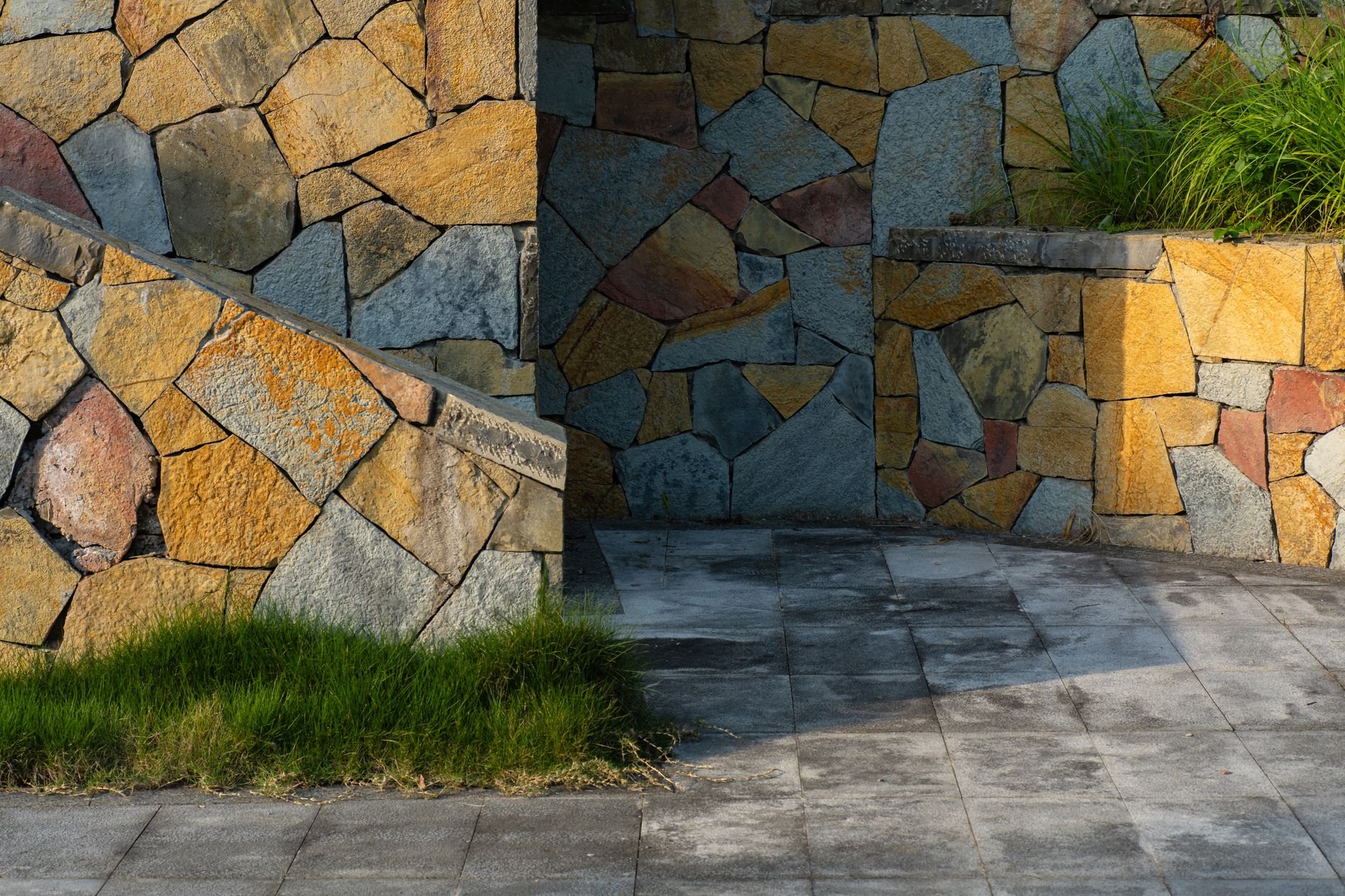
Irregular and cut natural stone, dry-laid or mortar-set, when you want the yard to look like it grew there.
ExploreBrick patios
Clay brick in classic patterns — running bond, herringbone, basketweave — with the base prep that keeps the pattern flat.
ExploreGravel & pea gravel patios
Edged, compacted gravel surfaces that drain instantly and cost the least per square foot of any patio option.
ExplorePaver driveways & walkways
Vehicle-rated paver systems with thicker base sections and edge restraint that holds under turning tires.
ExploreSeat walls & garden walls
Low masonry and block walls that define spaces, hold planting beds, and add seating without adding furniture.
ExploreFire pits
Wood-burning and gas fire pits, built to code clearances and, for gas, coordinated with licensed plumbers.
ExploreOutdoor steps
Stone, paver, and concrete steps with consistent rise and run — the detail that decides whether a slope is usable.
ExploreWater features
Fountains, pondless waterfalls, and basins with the liner, pump, and electrical details handled properly.
ExploreBoulder placement
Machine-set landscape boulders — sourced, staged, and seated so they read as intentional, not dropped.
ExploreThe living parts: grade, water, plants, and light
Landscape grading & drainage
Regrading, swales, French drains, and downspout routing — the invisible work every other scope depends on.
ExploreSod installation
Soil prep, finish grading, and fresh-cut sod laid tight — a lawn in a weekend instead of a season.
ExploreArtificial turf
Drainage-backed synthetic turf over a compacted base, for lawns that stay green without a drop of irrigation.
ExploreSprinkler & irrigation systems
Zoned irrigation design and installation, with backflow work handled by licensed plumbers we coordinate and quality-check.
ExplorePlanting & garden beds
Bed construction, soil amendment, and plant installation matched to your lot’s sun, soil, and water reality.
ExploreMulch, rock & xeriscaping
Water-wise landscapes built with rock, mulch, and drought-tolerant planting — designed, not just gravel-and-done.
ExploreLandscape lighting
Low-voltage path, accent, and wall lighting that makes the yard usable after dark and safer on the steps.
ExploreLandscape edging & borders
Steel, concrete, paver, and stone edging that keeps beds, lawn, and gravel where they belong for years.
ExploreHow we approach a yard project
The order matters more than the materials. Here’s the sequence we run on nearly every landscape and hardscape project, whether it’s one patio or a full lot.
- Walk the site. We look at where water goes now, where the soil is fill versus native, what the slope wants to do, and how you actually plan to use the space.
- Design the levels. Patio elevations, wall heights, step counts, and drainage paths get set on paper first. Changing a grade line costs nothing at this stage and plenty later.
- Solve water first. Grading, drains, and irrigation sleeves go in before anything is built on top of them. Utah’s summer monsoon can drop an inch of rain in an hour on baked ground — the yard has to shed it away from the foundation.
- Build the hardscape. Walls, patios, steps, and borders, each on a compacted base sized for our freeze–thaw climate. Base prep is where hardscapes are won or lost, and it’s the part you’ll never see.
- Finish with the living layer. Irrigation heads, soil, plants, sod or turf, mulch and rock, and lighting last — so nothing gets driven over after it’s planted.
What Utah ground and weather do to a yard
Three local realities drive most of our design decisions. First, freeze–thaw: the Wasatch Front sees roughly 100-plus freeze–thaw days a year, which is why our paver bases are compacted in lifts, our concrete is air-entrained, and our edging is anchored — anything laid casually will heave by the second spring. Second, soils: much of Utah County sits on expansive clay or collapsible bench soils, documented by the Utah Geological Survey, and both will move patios and low walls that skip proper base preparation. Third, sun: high-elevation UV fades stains, sealers, and cheap turf faster than most product warranties assume, so we spec materials rated for it.
Cost follows the same logic. What moves a landscape budget most isn’t the visible material — it’s access (can a machine reach the backyard, or does everything get wheelbarrowed), grade change (every foot of elevation means walls or steps), soil condition, and demolition of what’s there now. Natural stone runs higher than pavers, pavers higher than gravel, and irrigation scales with zone count. We’ll give you a ballpark planning range after a site walk and a firm estimate once the design is set.
Hardscaping also connects naturally to our structural work. Slopes that need real engineering move into retaining walls, poured surfaces into concrete driveways and flatwork, and shade structures into pergolas and outdoor structures. One team, one sequence, one standard.
Questions we actually get
What does landscaping and hardscaping cost in Utah County?
As ballpark planning numbers: paver patios commonly run $18–$35 per square foot installed, gravel far less, natural stone more. Full-yard projects with grading, irrigation, hardscape, and planting typically land in the tens of thousands depending on lot size and slope. Access, grade change, and soil condition move the number most. We firm it up after a site walk.
Do landscape projects need permits or engineering?
Often not — patios, planting, and irrigation usually don’t. Walls around four feet and taller generally require engineering and a permit in most Utah cities, gas fire features need a permitted gas line, and grading changes near property lines can trigger review. We handle the permitting when it applies; verify thresholds with your city’s building department.
What season is best for hardscape and landscape work in Utah?
Hardscape installs run from early spring through late fall — compaction and mortar both prefer unfrozen ground. Sod does best spring and early fall; summer installs work with attentive watering. Design and bidding in winter gets you on the spring schedule early, which is when calendars fill fastest.
Can you do just the hardscape and leave the planting to us?
Yes. Plenty of clients want the walls, patio, grading, and irrigation sleeves done professionally and enjoy doing the planting themselves. We’ll leave you finish-graded beds, amended soil if you want it, and a layout plan so your planting fits the irrigation zones.
Where this work fits
Landscaping and hardscaping is one family within our site, structure and envelope services. If your yard project starts with moving real earth, see excavation and grading; if it ends with a property line, see fencing.
Tell us what you’re working on
One patio or a whole lot — we’ll walk the site and give you a straight read on levels, drainage, sequence, and budget before anyone commits to anything. We reply within a couple of hours during business hours, a day at most.