
Flagstone & Natural Stone Patio Installation
A flagstone patio is quarried stone — sandstone, quartzite, or limestone slabs — fitted together dry over a compacted base or set in mortar over a concrete slab. Grandview builds both types across Utah County and Salt Lake County under a B100 general contractor license.
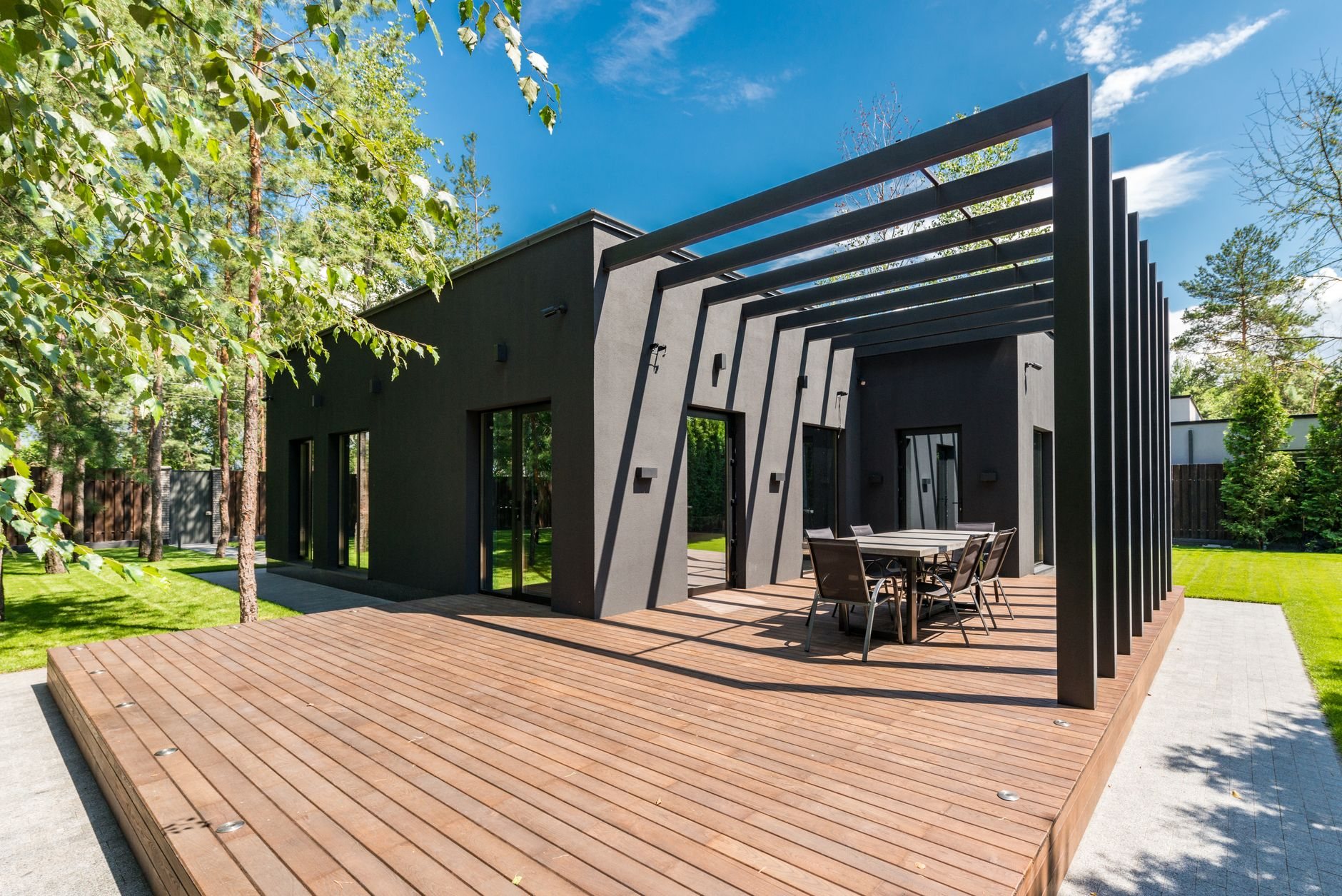
When flagstone is the right patio, and when it isn’t
Choose flagstone when the look matters more than the budget line and you want a surface where no two square feet repeat. It suits older homes, sloped lots with boulders and native planting, and anywhere a tight geometric pattern would fight the setting. Irregular flagstone can also take planted joints — creeping thyme or sedum between the stones — which no manufactured product can match.
It is the wrong choice in a few cases. For a dead-flat surface where a dining table never rocks, a paver patio delivers that more predictably, because every unit is the same thickness. On a tight budget, a gravel patio costs a fraction. To echo brick detailing on the house, a brick patio ties in more naturally than stone.
Natural stone is also slower to install than any of those. Each piece gets picked, test-fit, trimmed, and seated by hand, and that labor is most of what you pay for.
Dry-laid or mortar-set: the decision that shapes everything
This one choice determines the stone thickness, the base, the joints, and how the patio behaves through a Wasatch Front winter.
Dry-laid flagstone sits on a bedding layer of coarse sand or stone dust over six to eight inches of compacted road base, with no slab. The stone must carry foot traffic on its own, so it runs one and a half to two and a half inches thick. The advantage in Utah is flexibility: through our hundred-plus freeze–thaw days a year, a dry-laid patio moves with the ground and settles back, and a single heaved stone can be lifted, re-bedded, and reset in an hour.
Mortar-set flagstone is bonded to a reinforced, air-entrained concrete slab with a mortar bed, and the joints are grouted. This allows thinner, cheaper stone — three-quarter to one and a quarter inch — and a surface that stays where it was built with no joint maintenance and no weeds. The trade-off is rigidity. The slab needs control joints and a prepared subgrade, especially on the expansive clay and collapsible bench soils the Utah Geological Survey maps across much of Utah County. A slab poured on untreated clay cracks, and mortar-set stone cracks with it.

Stone selection follows the method. Regional sandstone in buff, rose, and chocolate tones is the most common flagstone sold along the Wasatch Front. It is also the most porous, so softer grades can spall when they absorb water and freeze; we specify denser sandstone or quartzite for patios in shade or low spots and seal sandstone that will see snowmelt. Cut flagstone lays faster with tighter joints; irregular flagstone looks more natural but carries a 10 to 20 percent waste factor from trimming.
How we build a flagstone patio
- Set the elevation and the fall. The surface sits a riser below the door threshold and slopes an eighth to a quarter inch per foot away from the house, checked across every piece on irregular stone.
- Excavate and compact. We dig to the full depth of base, bedding, and stone, strip organics and loose fill, and compact the subgrade. On clay we may over-excavate and replace with road base.
- Build the base. Dry-laid: road base plate-compacted in two-inch lifts to six to eight inches. Mortar-set: a four-inch reinforced, air-entrained slab with control joints that the stone layout will mirror.
- Dry-fit the field. We lay out the stone before setting any of it, so large pieces anchor the corners and joints stay a consistent half inch to one inch. Pieces get trimmed with a chisel or saw as they go.
- Bed and level each stone. Flagstone varies in thickness, so each piece gets its own bedding depth to land flush with its neighbors. This is the slow part.
- Fill the joints and finish. Polymeric sand, decomposed granite, or planting soil for dry-laid; grout for mortar-set, then a breathable sealer if the stone calls for it.
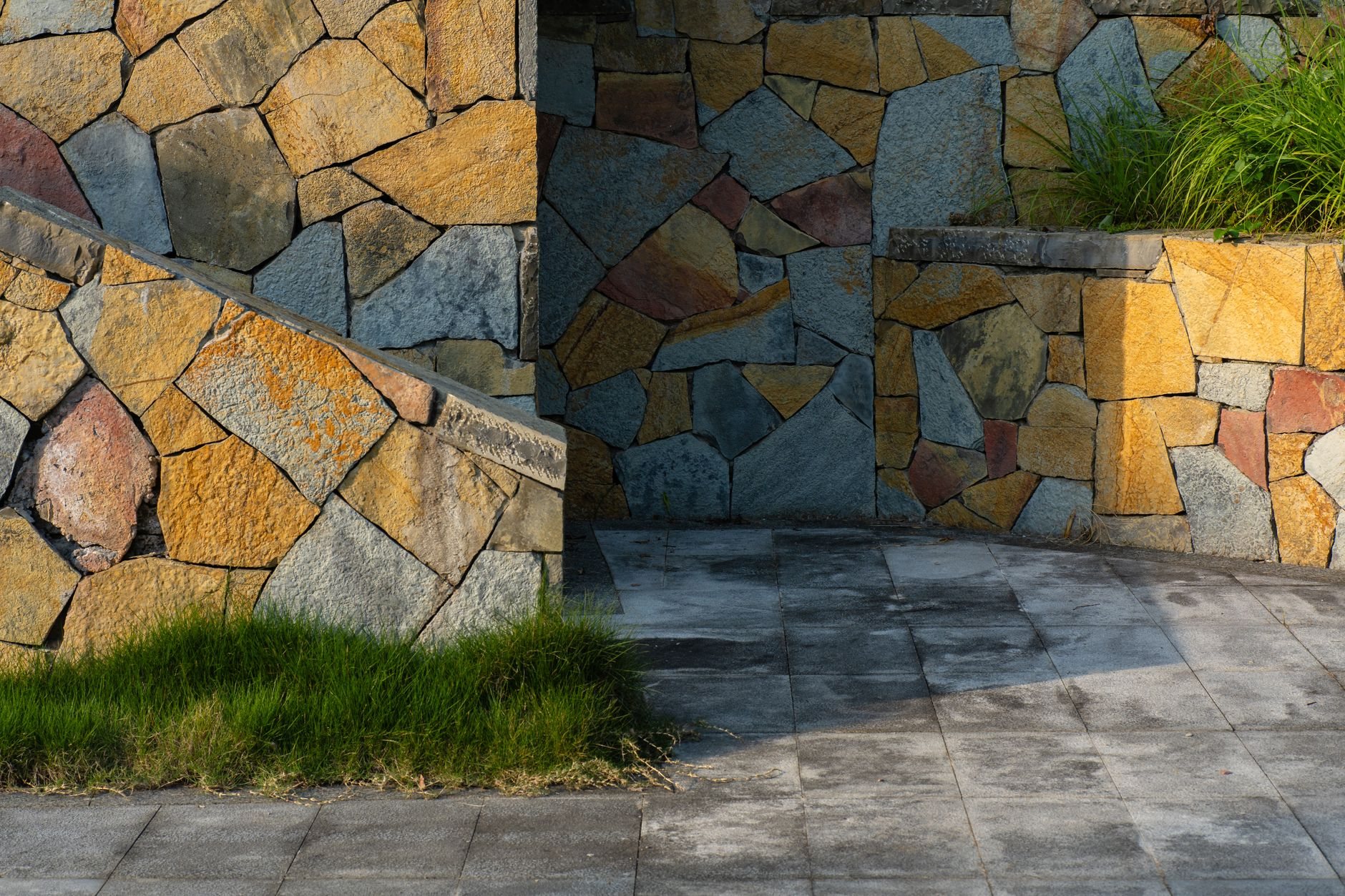
At a grade change we build outdoor steps in matching stone, and a flagstone-capped seat wall can go on the same base in the same visit.
What does a flagstone patio cost in Utah County?
As ballpark planning numbers, dry-laid flagstone patios in Utah County commonly run $25 to $45 per square foot installed, and mortar-set flagstone over a new concrete slab runs $40 to $65 or more. Most of the premium over pavers is labor.
What moves the number: the stone (quartzite over sandstone, cut over irregular), the method (a slab is its own line item), backyard access for pallets that weigh well over a ton each, and the subgrade. A small patio costs more per foot than a large one because mobilization doesn’t shrink. We give a budget range after a site walk and a firm estimate once the stone and method are chosen.
Questions we actually get
Will a flagstone patio heave in a Utah winter?
A dry-laid patio on a properly compacted base moves slightly and settles back; that flexibility is the point. Heaving comes from water trapped under the stone in poor base or clay subgrade, which freezes and lifts it. Mortar-set patios resist individual movement but can crack as a unit if the slab was poured on unprepared soil.
Can flagstone be laid over my existing concrete patio?
Often, yes. If the slab is sound and drains away from the house, thin flagstone can be mortar-set directly over it, which saves the cost of a new pour. If the slab is cracked, heaved, or holds water, bonding stone to it transfers those problems upward, so we assess the slab first.
How do I keep weeds out of dry-laid flagstone joints?
Polymeric sand, swept in and activated with water, hardens enough to block most weed seed while staying flexible. Decomposed granite joints need occasional topping-up. For planted joints, choose a groundcover that outcompetes weeds, such as creeping thyme, and accept a season of hand-weeding while it fills in.
Flagstone is one patio option within our landscaping and hardscaping family, part of Grandview’s site, structure and envelope services. For a poured surface, see concrete patios. Our B100 license is verifiable at dopl.utah.gov.
Tell us what you’re working on
We’ll walk the site, talk through dry-laid versus mortar-set, and give you a straight read on budget. We reply within a couple of hours during business hours, a day at most.