
Landscape Edging & Borders in Utah
Landscape edging is the hard line between lawn, bed, rock, and pavement — steel, concrete, paver, or stone, set deep enough that a Utah winter can’t lift it. Grandview installs edging and borders under a B100 general contractor license, as a standalone scope or as the finishing line on a larger yard build.
When edging is the scope, and when it’s something else
Edging solves a containment problem. Lawn creeping into the beds, rock migrating onto the grass, mulch washing across the walk after a summer cloudburst, a mower scalping the bed line — each is a missing or failed border, and a continuous anchored edge is the fix.
If the border holds back more than about a foot of soil, it’s a garden wall, with a footing and drainage to match. If you’re building the bed itself — soil, amendment, plants — that’s planting and garden bed installation, and edging is the frame around it.
The scope that leans on edging hardest is a rock or xeriscape conversion: without a real border, three-quarter-inch rock walks onto the lawn within a season. Paver edge restraint and gravel patio containment are covered on those pages.
Steel, concrete, paver, or stone: which border suits which line
We are fond of straight lines and straight answers, and edging is where both show. Each material has one detail that decides whether its line is still straight in five years.
Steel edging. Hot-rolled steel, 3/16 inch thick and 4 or 5 inches tall, in 8- to 16-foot lengths joined with overlapping tabs and driven steel stakes about every 30 inches. It bends cold to sweeping curves, nearly disappears, and lets a mower wheel ride right along it. Raw steel rusts to an even patina within a season under Utah’s high-elevation sun; powder-coated stock holds its color. Anywhere a mower or snow shovel meets the edge, we recommend it over aluminum or roll plastic.
Concrete curbing. A continuous poured or extruded border, usually 4 to 6 inches wide and 4 inches deep, in a flat mower-strip profile or a raised curb. We use an air-entrained mix, which matters on the Wasatch Front where roughly 100-plus freeze–thaw days a year will spall a plain mix. Control joints every 3 to 4 feet put shrinkage cracks where we want them, and the curb takes integral color or a stamped texture.
Paver soldier course. Pavers set on end (soldier) or flat (sailor) in a mortar bed over compacted road base, with a concrete haunch on the outside face to lock them in. The natural border beside a paver walkway; the flat version doubles as a mowing strip.
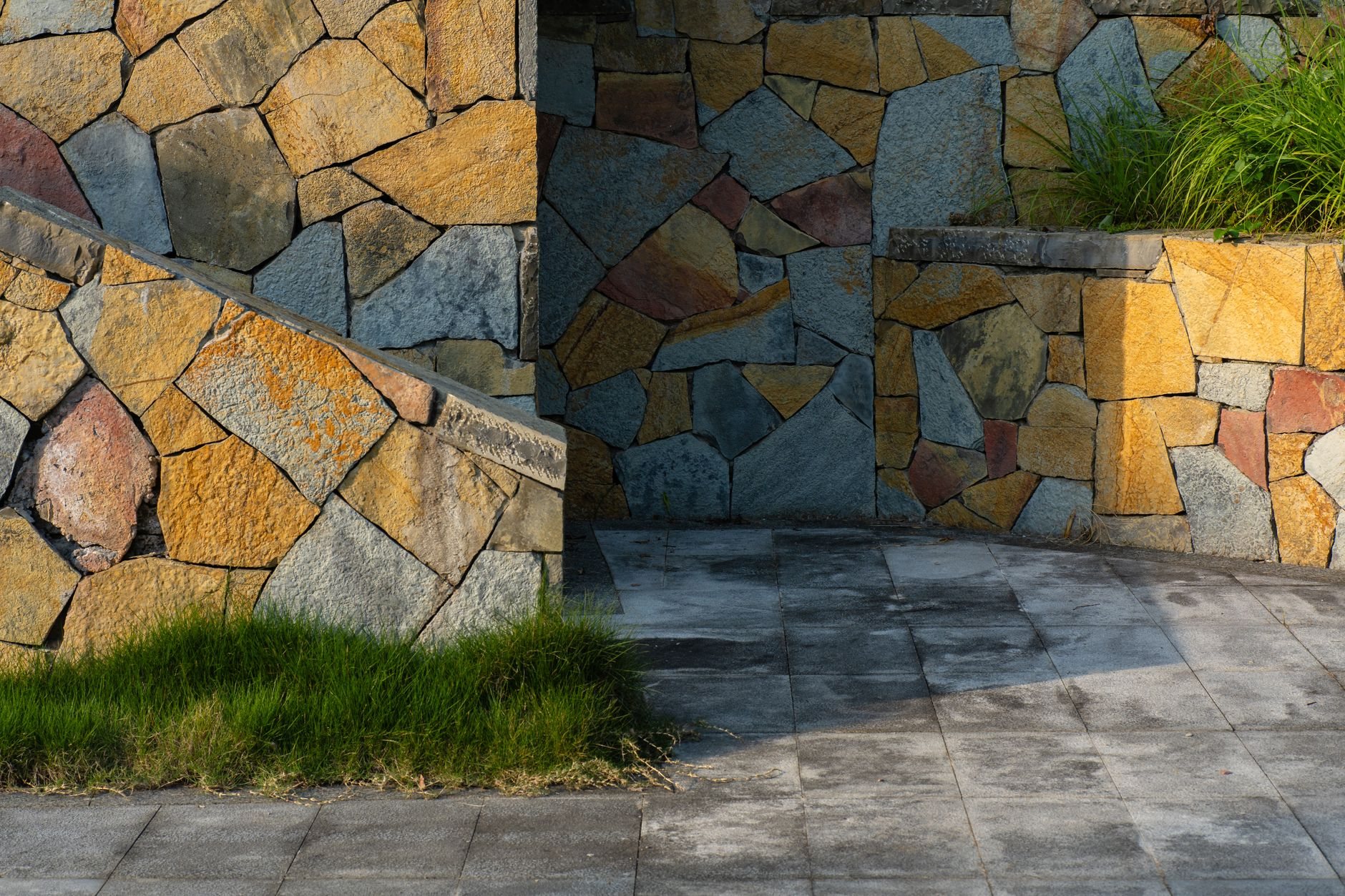
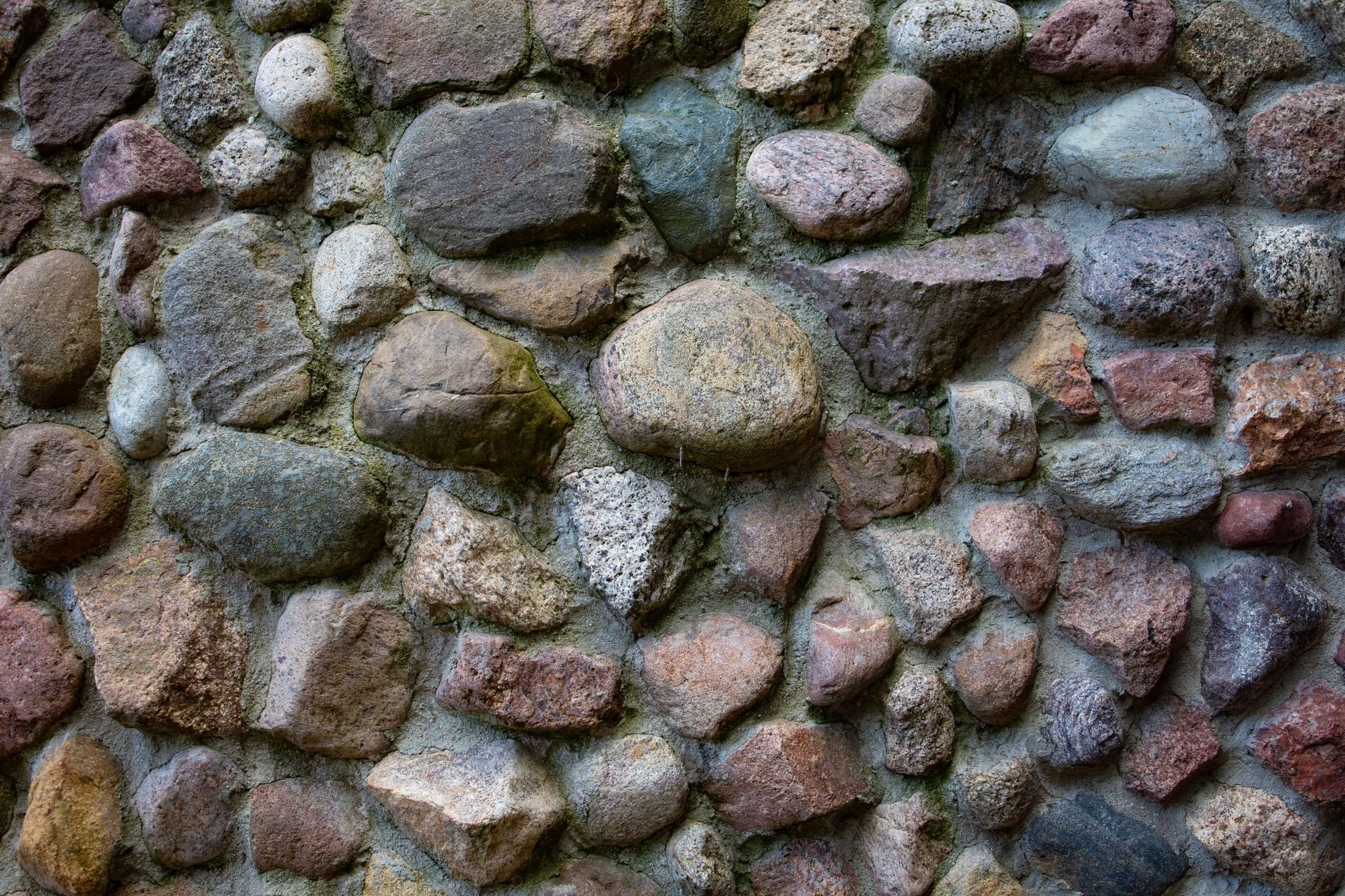
Natural stone. Cut cobbles or fieldstone, mortar-set on a compacted base or dry-laid for a looser look — the most expensive line in the yard and the only one that improves with age.
How we install edging so it stays put
Most failed edging in Utah failed at the trench, not the material.
- Lay out the line. Paint for straights, a garden hose for curves, then a check that the mower can follow it. We locate sprinkler heads, laterals, and lighting wire, and call Blue Stakes (811) for anything deeper.
- Cut the trench. Sod and roots come out. Steel gets a narrow slot about 5 inches deep; concrete, pavers, and stone get a trench 6 inches deep and 8 to 10 inches wide to make room for base and haunch.
- Build the base. Concrete, paver, and stone borders sit on 3 to 4 inches of compacted road base. On the expansive clays common across Utah County, documented by the Utah Geological Survey, we keep the base slightly wider than the border so seasonal swelling pushes evenly instead of tipping it.
- Set and anchor. Steel: lengths connected, top a half-inch to an inch above finished grade, 10- to 12-inch stakes driven below the frost-active zone. Concrete: formed or extruded, finished, jointed, and kept damp through the first day. Pavers and stone: bedded, haunched, and cured before backfill.
- Backfill and reconnect. Both sides compacted, mulch graded an inch below the top of the edge and rock a half-inch below, and any irrigation heads we relocated reset and tested.
What moves the cost of landscape edging in Utah
As ballpark planning numbers per linear foot installed: steel edging commonly runs $8–$18, poured or extruded concrete curbing $8–$16, a paver soldier course on a concrete base $14–$28, and mortared natural stone $20–$40 and up. Ranges, not a quote — the firm number follows a site walk.
Toward the top of the range: short runs (under about 100 linear feet, setup is a bigger share of the bill), tight curves in concrete or pavers, sod removal and haul-off, irrigation lines that have to move, and backyard access that turns a wheelbarrow into the delivery truck. Toward the bottom: long straight runs, open access, and bundling the edging into a larger landscaping and hardscaping project — or other site and structure work — while the crew is already there. And before committing to a raised curb out front: HOAs in newer Wasatch Front developments often need to approve visible yard changes, edging included.
Questions we actually get
Does steel edging heave in Utah winters?
It can, if the stakes are short. Frost works the ground along the Wasatch Front dozens of times a winter, and a 6-inch stake walks up with it. We drive 10- to 12-inch stakes at about 30-inch spacing and set the edge 4 to 5 inches below grade. A quarter-inch of seasonal lift in heavy clay is normal; more than that and we re-tap it in spring.
Can you add edging to an existing yard without tearing it up?
Yes. Edging is one of the few hardscape scopes that goes into a finished yard cleanly. We cut the trench by hand or with a bed edger, keep the lawn side undisturbed, and reset any sprinkler heads on the line. A typical residential border is a one- to two-day job; concrete needs another day to cure before mulch goes back.
Do I need a mowing strip, or is a raised curb fine?
Depends on who’s mowing. A flush steel edge or a flat concrete or paver strip lets the mower wheel ride the border and ends weekly string-trimming. A raised 4- to 6-inch curb looks more substantial and holds rock better on a slope, but you’ll trim along it. Many yards use flat strips at the lawn and raised curbs around rock beds.
Tell us what you’re working on
We reply within a couple of hours during business hours — a day at most. You’ll get a straight read on scope, sequence, and budget before anyone commits to anything.