
Landscape lighting in Utah County
Low-voltage landscape lighting is a 12-volt system of path, accent, well, and hardscape lights run off a transformer, so the yard is usable and safe after dark without glare. Grandview designs and installs these systems under a B100 general contractor license, building them into patios, walls, and steps as the hardscape goes in rather than bolting them on afterward.
When landscape lighting is the right scope, and when it isn’t
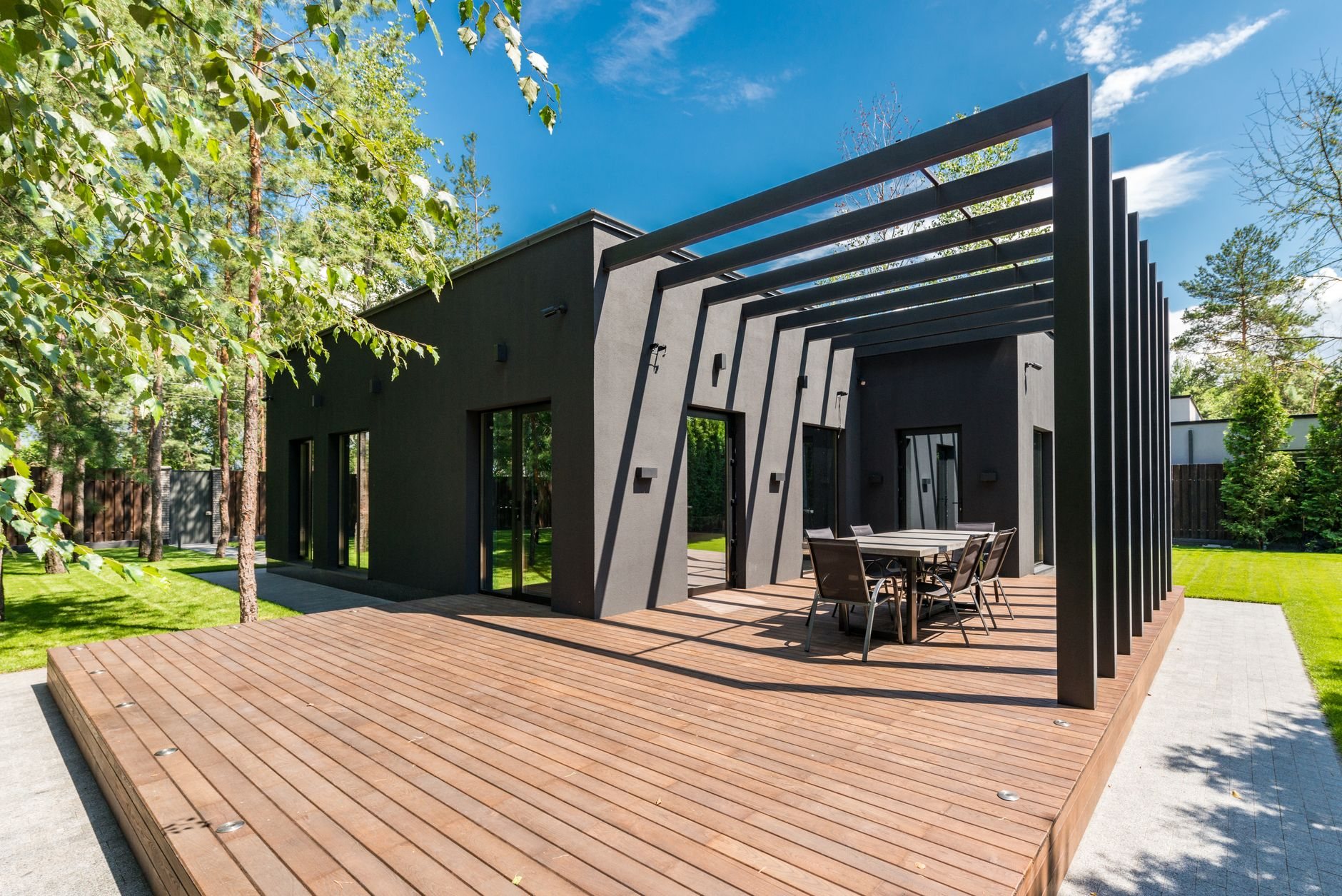
This is one scope within our landscaping and hardscaping work, in the site, structure and envelope family: lighting for the ground plane of the yard, meaning walkways, beds, trees, walls, steps, and patio edges. Plan it when the yard goes dark at 6 pm from October to March, when guests feel their way down outdoor steps by phone flashlight, or when a new paver patio disappears at dusk.
Two neighbors live on their own pages. Fixtures fastened to a deck’s posts, rails, and risers are deck lighting, because they mount to framing rather than sit in soil. Submersible lights in a basin belong with water features. And 120-volt sconces and floods on the house are electrical work; where a project needs them, Grandview holds the contract and coordinates licensed electricians for that portion.
What a well-built low-voltage system is made of
The transformer. A stainless multi-tap unit, usually 150 to 600 watts, sized so the system runs at roughly 75 to 80 percent of capacity. The 12V through 15V taps are how a long run gets correct voltage at the far end; a single-tap plug-in unit is the usual reason lights go dim toward the back fence.
The wiring. Direct-burial 12-gauge cable for main runs, wired in a hub or loop layout so every fixture sees close to the same voltage; daisy-chaining leaves the first light bright and the twelfth amber. Every splice gets a gel-filled or heat-shrink waterproof connector, never a twist-on nut and tape.
The fixtures. Cast brass and copper cost more than aluminum and justify it here. At Utah County’s elevation, UV and summer surface heat chalk cheap powder coat within a few seasons; brass patinas and keeps working. We specify LED fixtures at 2700K, which reads as firelight against stone rather than parking-lot white. The U.S. Department of Energy puts LED energy use at least 75 percent below incandescent with far longer life, which matters on fixtures you’d otherwise relamp on your knees in the mulch.
The controls. An astronomic timer or photocell at the transformer, with zoning where you want path lights all night and accents off at midnight.
Lighting built into the hardscape, not aimed at it
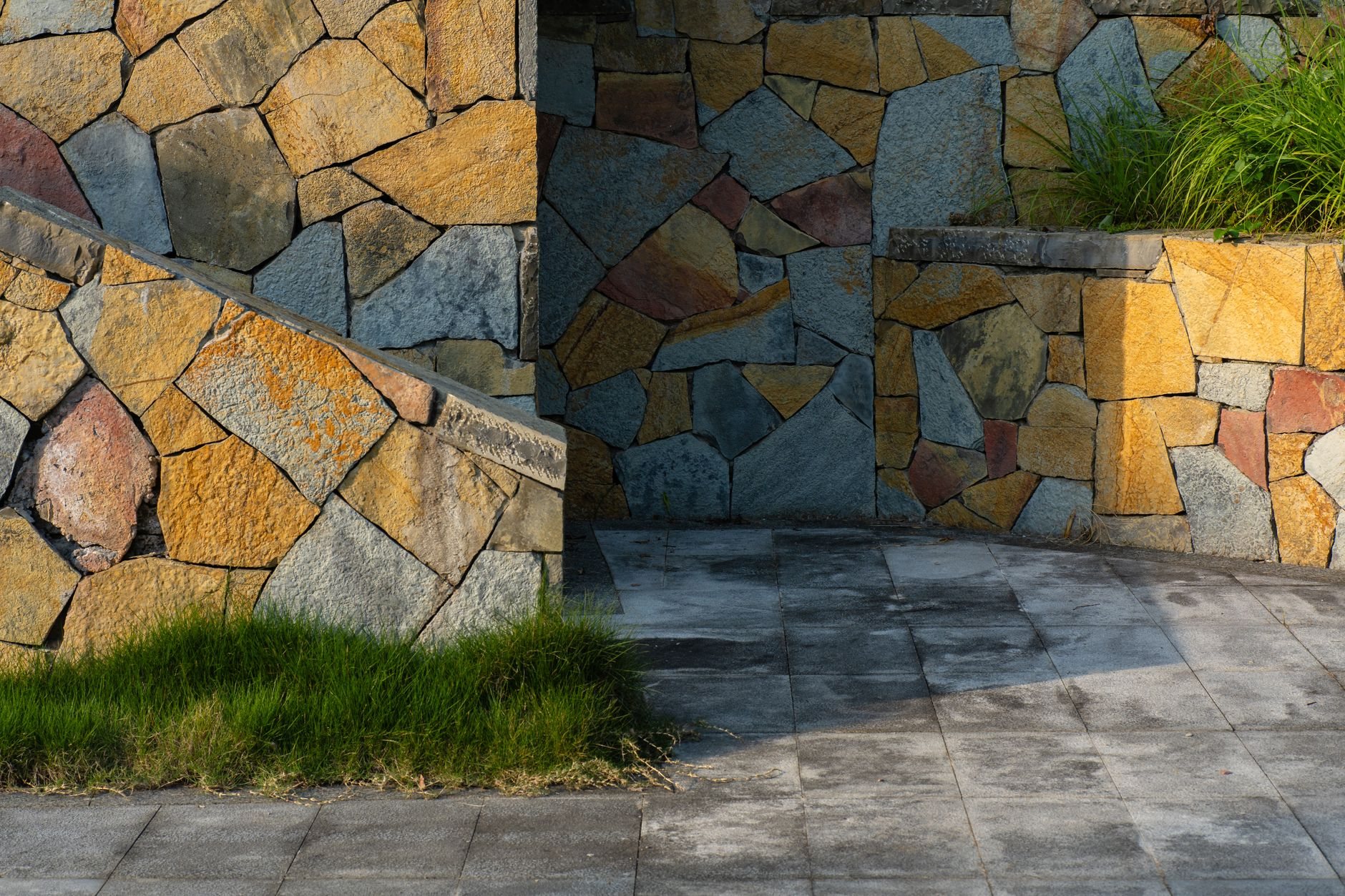
The fixtures people notice least and like most disappear into masonry. Hardscape lights are low-profile LED bars set under the cap of a seat wall or garden wall or into a step riser, washing the face below. Well lights sit flush in a paver field to uplight a tree. Both go in while the wall or step is being built: the chase through a block core, the notch in a cap stone, and the sleeve under a patio base can’t be added cleanly once mortar has cured. That is why lighting belongs in the same contract as the patio, steps, and walls.
- Walk the yard at dusk. We find what needs light for safety (steps, grade changes, the walk in), what deserves it (a specimen tree, a stone wall), and where the neighbors’ windows are.
- Lay out and load-calculate. Fixture count, wattage, run lengths, and transformer size get worked out on paper, with voltage drop checked before cable is bought.
- Rough-in with the hardscape. Sleeves, chases, and cable stubs go in during base and masonry work. On a retrofit we lift and relay pavers rather than running cable on the surface.
- Set, aim, and night-adjust. Fixtures go in after planting and sod, get aimed at night, and are re-aimed after a week of use. You get a plan locating every fixture and splice.
The transformer plugs into a GFCI-protected exterior outlet. If one must be added, that is 120-volt work by licensed electricians we coordinate and inspect under our contract; the low-voltage system itself is ours.
What moves the cost of landscape lighting in Utah
As a ballpark planning number, most residential systems of 10 to 20 brass fixtures with a professional-grade transformer land between roughly $3,500 and $9,000 installed in Utah County. That is a planning range, not a quote. The drivers:
- Fixture grade and count. Brass and copper run several times the price of aluminum stake lights and are the largest line item. Hardscape and well lights cost more per point because of the masonry work.
- Cable runs and burial. Large bench lots in Alpine, Highland, or Draper mean long runs and heavier cable. Freeze–thaw cycling heaves shallow cable and stakes out of the ground, so we bury cable well below the reach of the mulch rake and the edger.
- Electrical. A new exterior GFCI outlet adds licensed electrician cost; an existing one in the right place doesn’t.
Snow factors in too. On a bench lot that holds snow from December to March, a 14-inch path light spends the winter buried, so we mount path lights taller and favor riser-mounted lights on steps. Several Utah County cities have outdoor-lighting ordinances limiting glare and light trespass, and HOA-dense developments in Lehi and Saratoga Springs often add rules on fixture style; we check both before specifying. Our license is verifiable at dopl.utah.gov.
Questions we actually get about landscape lighting
Can landscape lighting be added to a yard that’s already finished?
Yes. We trench through beds and lawn, then lift and relay pavers where cable crosses a walk. What a retrofit can’t do cleanly is integrate lights into existing mortared walls and steps, so a finished yard usually gets stake, well, and surface-mounted fixtures instead.
How many fixtures does a typical Utah County yard need?
Fewer than most people expect. A quarter-acre lot with a patio, a front walk, and a few trees usually lands at 10 to 16 fixtures. The goal is contrast, not coverage: over-lighting flattens the yard and annoys the neighbors.
Does a low-voltage system need an electrician or a permit?
The 12-volt side doesn’t require a licensed electrician, and most Utah County cities don’t permit it separately. The transformer does need a GFCI-protected exterior outlet; adding one is 120-volt work by licensed electricians we coordinate. Verify with your city building department when a new circuit is involved.
What drives the price up fastest?
Fixture grade and quantity. Moving from aluminum to cast brass across 15 fixtures can double materials cost, and hardscape-integrated lights cost more per point than stakes. After that it’s cable length on big lots and whether a new exterior outlet is required. Controls are a small share.
Tell us what you’re working on
We reply within a couple of hours during business hours, a day at most. You’ll get a straight read on fixture count, transformer sizing, and budget before anyone commits to anything.