
Excavation & site grading contractor in Utah County
We cut building pads, dig basements, trench utilities, and finish-grade lots so water moves away from the structure instead of toward it — with compaction planned around the Wasatch Front’s collapsible and expansive soils. Grandview performs this work as a licensed B100 general contractor — verifiable through the Utah Division of Professional Licensing — serving Utah County and the Salt Lake Valley.
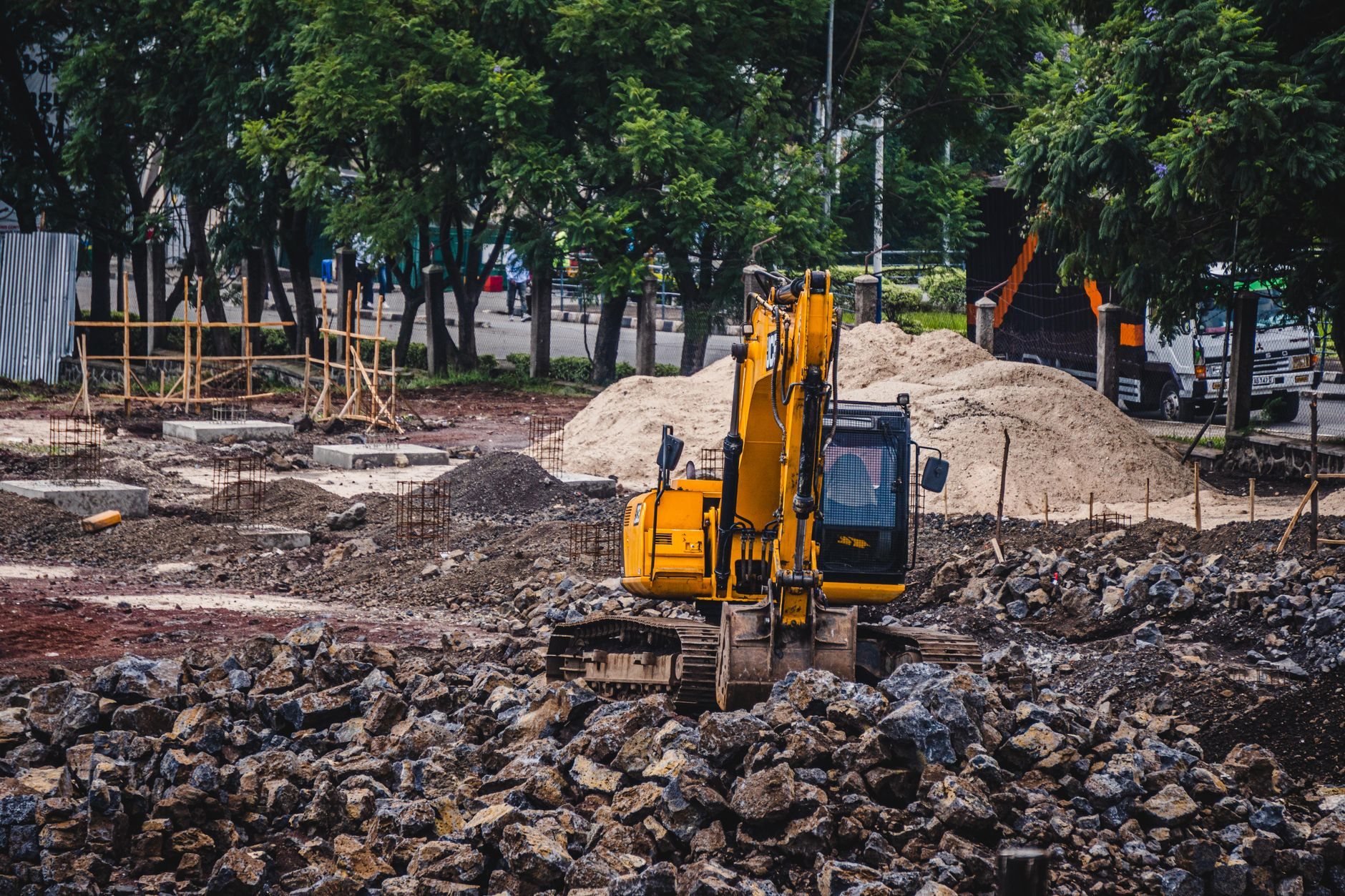
When you need an excavation contractor, not just a machine
Renting an excavator is easy. Knowing where the cut goes, how deep to over-excavate bad soil, and how to compact what goes back in — that’s the actual job. Most of our excavation and grading work falls into three situations.
You’re building something. A new home, an addition, a detached garage, or a shop needs a pad cut to grade, a basement or crawl-space dig, footing trenches at the right depth, and backfill that won’t settle and crack the flatwork above it. Because we’re a general contractor, the dig is planned against the foundation design — not handed off blind to whoever pours next.
Your lot drains the wrong way. Water pooling against the foundation, a soggy side yard, a window well that fills every July cloudburst. Regrading, swales, and drain lines fix the slope problem at the dirt level, where it’s cheapest to fix.
You need trenching or site prep for other work. Utility laterals, French drains, driveway and patio subgrade, or the cut-and-bench work behind a new retaining wall. If the follow-on work is concrete or structure, we can carry that scope too under the same contract.
What’s included in our excavation and grading scope
- Building pads and basement digs — cut to engineered grade, with over-excavation and structural fill where the soils report calls for it.
- Trenching — footings, utility laterals, and drain lines, cut to depth and bedded properly before anything gets buried.
- Rough and finish grading — positive drainage away from structures, swales where the water needs a path, and a surface ready for concrete or landscaping.
- Backfill and compaction — structural fill placed in lifts and compacted, not dumped in one push and hoped over.
- Haul-off and import — spoils out, road base or structural fill in, priced by real volumes rather than a guess.
- Erosion and dust control — the measures your city’s grading permit will ask about before it issues.
Two honest notes on how this work runs. Utility locates come first on every dig: Utah law requires a Blue Stakes 811 locate before excavation, and we schedule it as part of the job, not as your homework. And compaction testing is performed by an independent geotechnical firm — we schedule the technician, meet them on site, and build to their density reports, because a passing test from the person who did the compacting isn’t worth much.
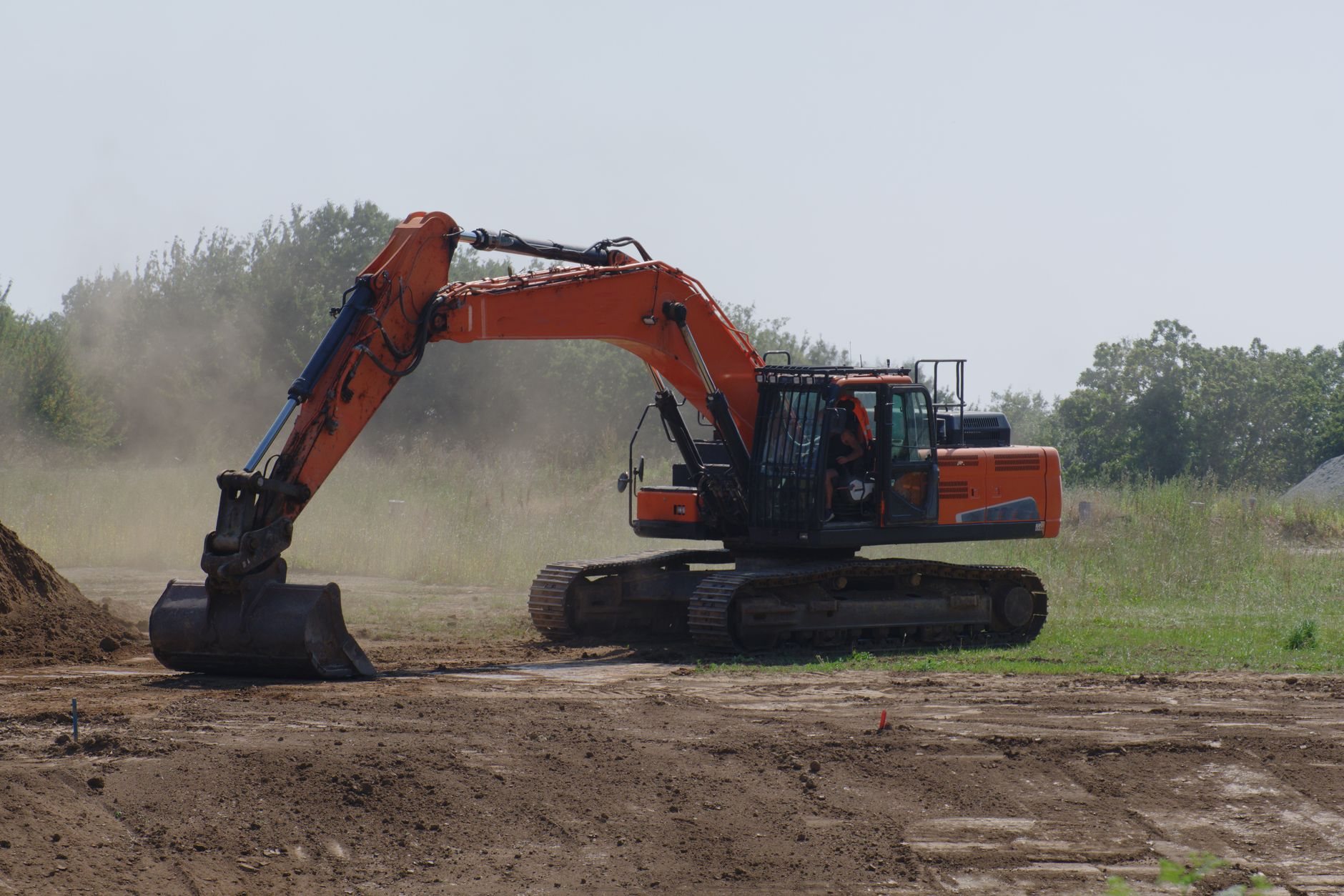
How a dig actually goes
Problems happen. Surprises should not. The sequence below is how we keep the second kind off your site.
- Walk the site. Access, slope, spoils staging, existing utilities, and what the soils report says — or whether you need one before anyone prices a footing.
- Locates and permits. Blue Stakes 811 marks the utilities; we pull the grading or building permit your city requires. Timelines differ — fast-growth cities like Lehi, Saratoga Springs, and Eagle Mountain run different review queues than established Provo, Orem, or Salt Lake City departments, and we plan the schedule around the real one.
- Strip and cut. Topsoil stripped and stockpiled for reuse, then the cut taken to engineered grade. If we hit soft, wet, or collapsible material, we over-excavate and tell you before the change order, not after.
- Compact and verify. Structural fill goes back in controlled lifts, compacted and density-tested so the geotech report — not optimism — says the pad is ready to bear.
- Trench and backfill. Footings and utilities cut to depth, inspected where required, bedded, and backfilled without voids.
- Finish grade. Final slopes set away from the structure, swales shaped, and the site left ready for concrete, framing, or landscaping.
Why do Utah County soils change how a site gets dug?
Because the two soil problems here fail in opposite directions. Bench lots along the Wasatch Front often sit on collapsible soils — a hazard the Utah Geological Survey documents across the region — that hold shape while dry, then settle when irrigation or a wet spring finally saturates them. Valley-floor lots often sit on expansive clay that swells when wet and lifts whatever’s on it. Both get the same class of fix: remove the unreliable material, then rebuild the grade with structural fill compacted in tested lifts.
Water is the other half of the story. Utah’s summer monsoon can drop an inch of rain in an hour onto ground that spent six weeks baking hard, and a lot that drains toward the house delivers all of it to the foundation. That’s why finish grading isn’t a cosmetic step for us — the slope and swale plan is drainage engineering done with a blade.
Depth matters too. Footing trenches have to reach below local frost depth — commonly around 30 inches along the Wasatch Front, though your city’s building department sets the number that counts. Trenching shallower than frost depth is how water lines and footings end up moving every winter.
What does excavation and grading cost in Utah?
It depends mostly on dirt and distance: what the soil is, how much has to leave the site, and how far the truck drives to dump it. As ballpark planning numbers only — never a quote — residential regrading and drainage corrections often land between $2,000 and $8,000, and full basement digs with export and backfill commonly run $10,000 to $30,000. A site walk turns those into a real budget range.
What moves the number up or down:
- Soil conditions. Over-excavation of collapsible or expansive material adds machine time, export, and imported structural fill.
- Export and import volume. Hauling is priced per load; a balanced cut-and-fill site is cheaper than one that ships forty truckloads across the valley.
- Access. A tight infill lot in Provo where a mini excavator works around fences costs more per yard than an open Eagle Mountain lot with room to swing.
- Groundwater and rock. Dewatering a wet dig or breaking through cobble and boulder layers slows everything down.
- Testing and engineering. Geotechnical reports and density testing are modest line items that prevent expensive ones.
We’ll give you a budget range after walking the site, a firm estimate once scope is defined, and a proposal you can hold us to. Those are three different documents, and we’ll always tell you which one you’re looking at.
Questions we actually get
Do I need a permit to regrade my lot?
Often, yes. Most Wasatch Front cities require a grading permit once you move more than a threshold volume of soil or change how the lot drains, and pushing your runoff onto a neighbor’s property is a problem everywhere. We identify what your city requires and pull the permit as part of the job — verify specifics with your city’s building department.
What makes one dig cost twice as much as a similar-looking one?
Usually something you can’t see from the curb: collapsible soil that forces over-excavation, groundwater that needs pumping, buried cobble, or a haul route that doubles trucking time. Access matters too — a machine that has to work through a 6-foot gate moves a fraction of the dirt per hour. This is why we walk sites before pricing them.
Can you excavate in winter?
Usually. Utah winters freeze the top of the ground, but most digs proceed fine once we’re through the frost crust — deep freezes after a dry cold snap are the main thing that stalls a job. The bigger winter constraint is what follows the dig: concrete curing gets harder to guarantee in the cold, so we sequence the pour dates honestly.
What is compaction testing and why should I pay for it?
A technician from an independent geotechnical firm measures the density of each lift of fill as it’s placed. Passing tests mean the pad or trench backfill will carry its load without settling; skipping them is how driveways sink and footings crack years later. It’s one of the cheapest insurance policies in construction.
How much slope should the finished grade have?
The common standard under current Utah-adopted code is about 6 inches of fall in the first 10 feet away from the foundation, with swales or drains picking up water where lot lines make that slope impossible. On tight lots we’ll show you exactly where the water will go before we shape anything.
Who handles the utility locates?
We do. Utah law requires a Blue Stakes 811 locate request before any excavation, with marks typically completed within two business days. We file it, wait for the marks, and hand-dig near anything questionable. Private lines the utility doesn’t own — landscape wiring, old sprinkler mains — are the ones we probe for separately.
Where excavation fits in the bigger project
Dirt work is usually the first trade on site and the one everything else stands on. If a structure has to come down before the digging starts, our demolition crew clears the way. If the dig reveals settlement damage on an existing home, foundation repair treats the cause in the soil. Graded pads usually lead straight into concrete driveways and flatwork, and sloped or bench lots often need retaining walls to hold the new grade. All of it lives in our site, structure & envelope family, and all of it can run under one contract.
Tell us what you’re working on
Send us the address and what you’re planning — a pad, a dig, a drainage fix — and we’ll give you a straight read on soils, sequence, and budget before anyone commits to anything. We reply within a couple of hours during business hours, a day at most.