
Landscape grading & drainage in Utah
Landscape grading and drainage reshapes a yard so water runs away from the house and off the lot instead of pooling against the foundation or under the patio. Grandview designs and builds it under a Utah B100 general contractor license — regrading, swales, French drains, downspout routing, and dry wells — as the first step of a yard project or as the fix for a yard that already floods.
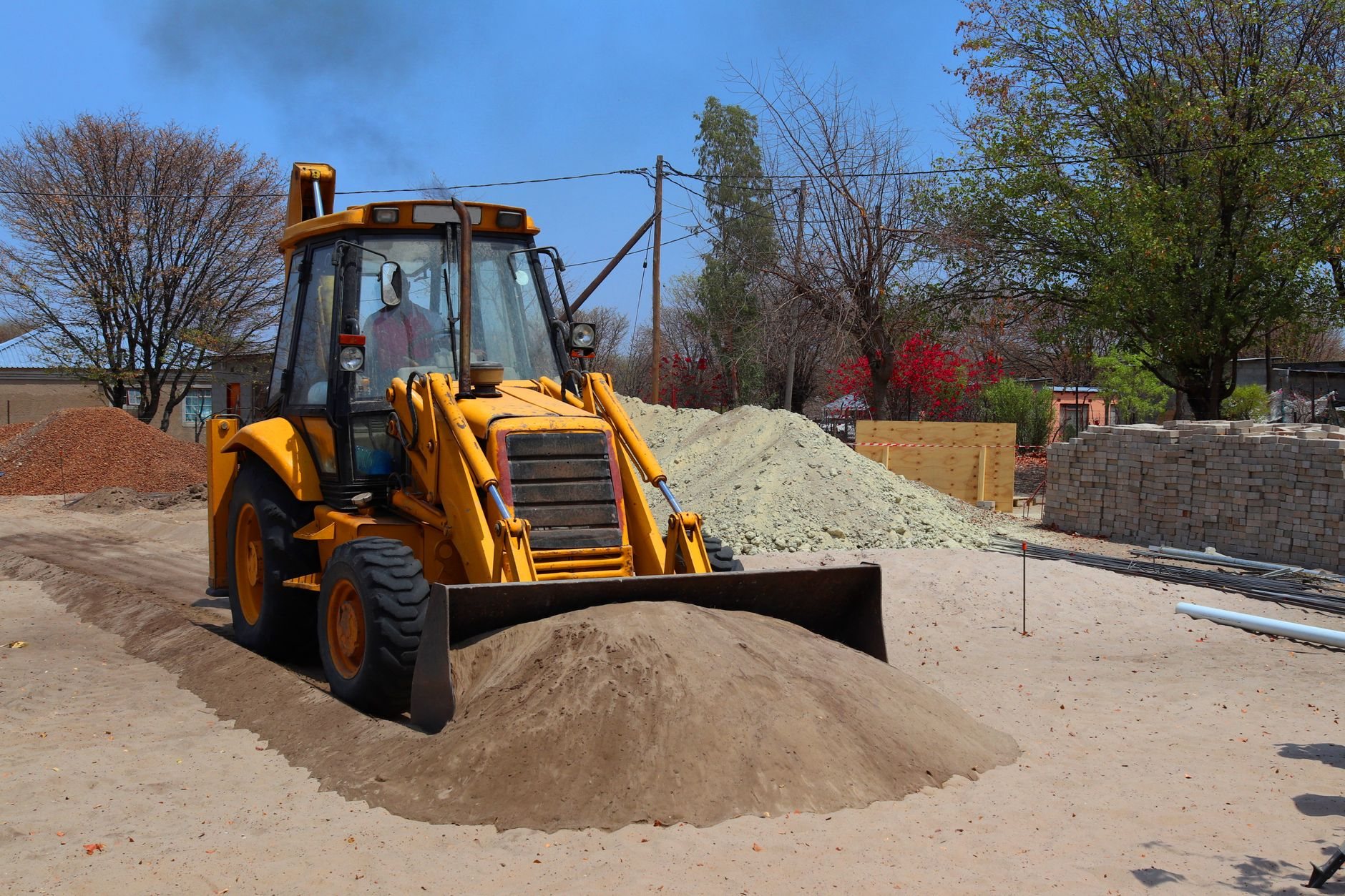
When grading and drainage is the job, not a line item
Every page in our landscaping and hardscaping family touches grade somewhere. Sod installation includes a finish grade under the turf. Xeriscaping shapes rock beds to shed water. A sprinkler system adds water on purpose. This page is for when the water itself is the problem.
You’re in the right place if the lawn holds puddles for days after a storm, if window wells fill, if one basement wall gets damp every spring, if a downspout dumps next to the foundation, or if a new patio can’t go in until the ground under it stops being a bowl. It’s also the right call on a new-construction lot where the backfill has settled into a trench around the house.
Two neighbors deserve a mention. Bulk earthmoving before anything is designed is rough and finish grading under excavation. Water already inside the basement calls for a French drain at the footing; the yard work on this page is what keeps it from coming back.
What the work actually involves
Yard drainage fails for one of three reasons: the surface slopes the wrong way, there’s nowhere for water to go, or the soil won’t let it through. Most Wasatch Front lots have two of the three.
- Shoot the grades. We run a laser level across the lot and record elevations at the foundation, lot lines, downspouts, and low spots. A yard that “looks flat” is usually off by inches in the wrong direction.
- Fix the slope at the house. We build to a fall of about six inches in the first ten feet away from the foundation, consistent with current Utah-adopted code — usually by importing clean fill and compacting it in lifts against the wall. Uncompacted backfill keeps settling for years, which is why so many ten-year-old homes have a moat.
- Give water a path. Where the surface alone can’t drain the lot, we cut swales — shallow, broad channels graded at one to two percent along a lot line to the street — and set patio, walk, and lawn elevations to feed them.
- Get roof water away. A single downspout can discharge several hundred gallons in one monsoon cell. We pipe downspouts into buried solid PVC that daylights at a pop-up emitter, a swale, or a dry well, with a cleanout at the top. Where the gutters themselves are the problem, downspout work folds into the same contract.
- Deal with soil that won’t drain. Over tight clay, surface grading alone leaves a saturated layer. A landscape French drain — filter fabric, perforated pipe, washed three-quarter-inch drain rock, run to daylight or a dry well sized for the catchment — intercepts that water before it reaches the foundation or the patio base.
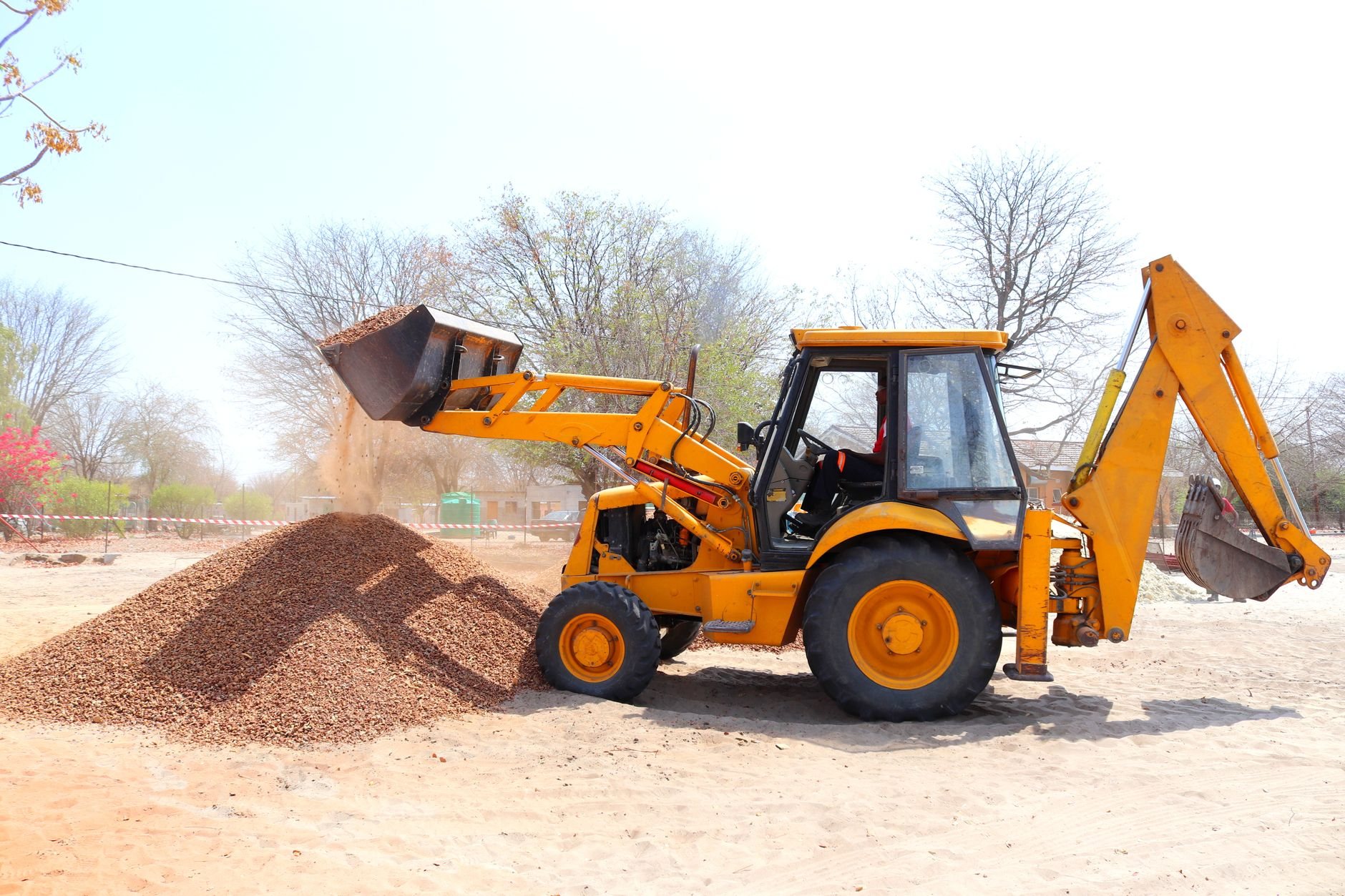
Soil is where Utah makes this harder than the textbook. Much of Utah County and the Salt Lake bench sits on expansive clay or collapsible soils, both mapped by the Utah Geological Survey. Expansive clay seals up when wet and keeps water on the surface; collapsible bench soil lets it drop straight down and settle the ground under a foundation or patio. A test pit tells us which you have before we design. Timing matters too: spring snowmelt arrives while the ground is still frozen a few inches down, so water that would soak in during July runs across the surface in March. A plan built only for summer rain misses the season that floods the most Utah basements.
What does landscape grading and drainage cost in Utah?
As ballpark planning numbers, not a quote: regrading and compacting fill around a foundation typically runs from the low thousands for one problem side to the mid-single-digit thousands for a full perimeter. Buried downspout runs with a pop-up emitter commonly land in the hundreds per run. Landscape French drains price per linear foot, generally tens of dollars a foot depending on depth, rock volume, and outlet distance. A dry well adds a few thousand on top.
What moves the number: machine access versus hand trenching, distance to a legal outlet, fill imported and hauled off, and what has to come out and go back — sod, beds, a patio edge. Flat lots ringed by neighbors cost more because the answer is storage, not slope. We’ll give you a budget range after a site walk and a firm estimate once the grading plan is drawn.
Questions we actually get
Can I just add topsoil against the house to fix the slope?
Not reliably. Loose topsoil settles and holds water against the foundation instead of shedding it. The fix is compacted structural fill under a thin topsoil cap, graded to fall away from the house, with the finish grade kept below siding or stucco so you don’t trade a drainage problem for a rot problem.
Where does the water go on a flat lot?
Somewhere legal. You can’t direct runoff onto a neighbor’s property, so the options are a swale to the street or curb, a storm-drain connection where the city allows it, or a dry well on your own lot that lets water soak away slowly. Which works depends on your soil’s infiltration rate, which we test first.
Do I need a permit for yard grading and drainage?
Usually not for regrading inside your own lot or burying downspouts. Changing grade at a property line, altering an established drainage path, or tying into a public storm system can trigger review, and HOA neighborhoods often want a plan. We’ll flag it before work starts; verify thresholds with your city’s building department.
Should drainage go in before or after the new patio and lawn?
Before, every time. Drain pipe, swale elevations, and the compacted grade at the house set the finished heights for everything else; running a drain after a patio is built means cutting it. On a full yard we sequence drainage first so the patio base and the sod land on ground that already sheds water.
Grading and drainage sits within our site, structure and envelope services. Our B100 license is verifiable at dopl.utah.gov.
Tell us where the water goes
Send a few photos after the next storm and we’ll tell you what we’re seeing. We reply within a couple of hours during business hours, a day at most.