
Custom Fire Pit Construction in Utah
A built-in fire pit is a block or masonry ring with a firebrick or gas-burner core, set on its own drained base and tied into the patio around it. Grandview designs and builds wood-burning and gas fire pits under a B100 general contractor license, with gas lines run by licensed plumbers we coordinate and quality-check.
When a built-in fire pit is the right choice
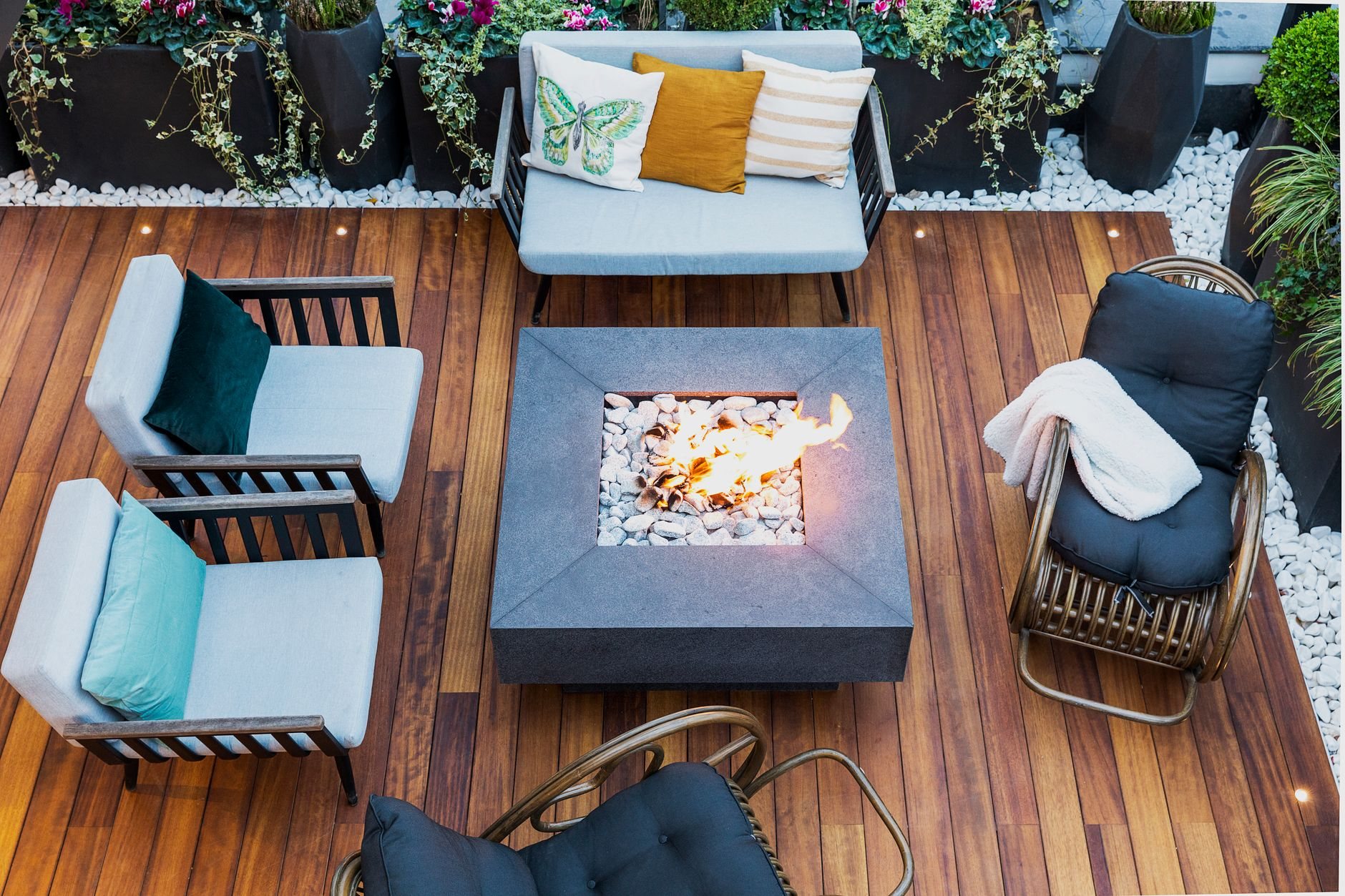
A permanent pit makes sense when the fire is the reason the patio exists. If people will sit around it most evenings from April through October, a built-in ring earns its cost. If the fire is occasional, a listed portable bowl on a non-combustible pad does the job for far less, and we’ll say so.
A pit is an open ring; heat goes everywhere and smoke goes where the wind sends it. If you want a firebox and a chimney that pulls smoke up and away, that’s an outdoor fireplace, a different build with a footing, a flue, and roughly twice the budget. If the goal is cooking, see outdoor kitchens.
Most pits we build go in with a paver patio or flagstone patio and a seat wall curving around one side, as one hardscape scope within our site and structure work. Built together, the pit base, wall footing, and patio base get compacted as one, so nothing settles at a different rate than its neighbor.
Wood-burning or gas: the decision that shapes everything else
Pick the fuel first. The liner, the base, the trench, and the permit all follow from it.
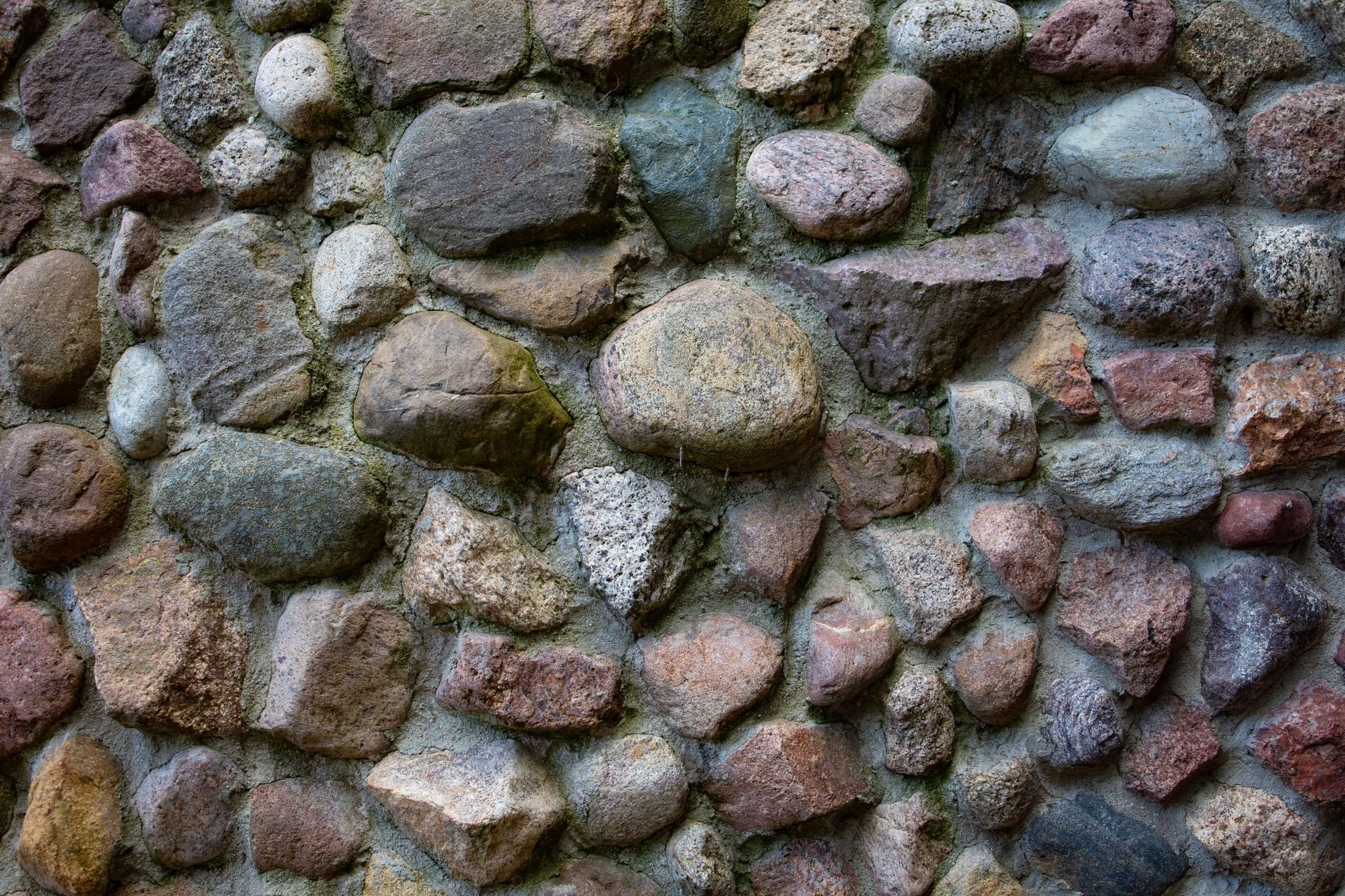
Wood-burning. The ring is CMU block or segmental wall units lined with firebrick in refractory mortar, because ordinary block and concrete pavers spall when heated to 800 degrees and then rained on. The floor is open gravel over a drained base, never a sealed slab, so meltwater leaves instead of freezing inside the ring. We don’t line pits with river rock or other water-holding stone; trapped moisture turns to steam under heat and can crack it violently. Inside diameters run 36 to 44 inches, walls 12 to 18 inches, with a stone or precast cap that overhangs to keep rain off the block face.
Gas. Same block ring, but the core is a listed stainless burner pan, typically 50,000 to 90,000 BTU for a residential pit. The pan needs a drain, the enclosure needs vent openings low in the wall (propane is heavier than air and pools in a sealed ring), and the media is lava rock or tempered fire glass, not gravel. The line is trenched, sized for the burner, fitted with a shutoff and sediment trap, and pressure-tested by licensed plumbers working under our contract. Electronic ignition adds a low-voltage run we coordinate with the landscape lighting circuit.
One Utah point tips many clients toward gas. On winter inversion days the Utah Department of Environmental Quality issues mandatory no-burn orders for the Wasatch Front, and many cities extend them to outdoor wood fires. A gas pit runs those nights. A wood pit sits cold.
How we build a fire pit that survives Utah winters
- Set the clearances. The International Fire Code, which Utah adopts, keeps open recreational fires 25 feet from structures and combustibles; listed gas appliances follow their listing, usually closer. Nothing overhead: no pergola beam, deck overhang, or tree canopy. Verify distances with your city’s fire department; bench lots near the wildland edge sometimes carry extra rules.
- Design the circle. Leave 18 to 24 inches of clear patio between the ring and the seat wall, with the wall five to seven feet from center so people can lean back without roasting.
- Build the base. Gas line first, in a sleeve under the patio, then compacted gravel with open drainage underneath. With 100-plus freeze–thaw days a year along the Wasatch Front, a ring that can’t drain heaves or cracks by the second spring. On the expansive clay common across Utah County, we dig below topsoil and compact in lifts.
- Lay the ring and liner. Block courses go up, the firebrick liner or burner enclosure goes in, and the cap is set last. For gas, the burner is leak-tested and lit before the media goes on.
- Tie into the patio. Pavers or stone are laid up to the ring on the same compacted base. One surface, not three projects.
What a built-in fire pit costs in Utah
As ballpark planning numbers, not quotes: a wood-burning block-and-firebrick pit with a stone cap, built into an existing patio, commonly lands between $2,500 and $6,000. A natural gas pit with listed burner, trenched line, and ignition typically runs $5,000 to $12,000. Add a curved seat wall and the pair often reaches $8,000 to $18,000.
What moves the number: distance from the gas meter to the pit (every foot is trench, pipe, and backfill), whether the patio exists yet, stone veneer versus plain block, electronic ignition versus a match-lit key valve, and backyard access for a compact excavator. Planning range after a site walk; fixed price once fuel, size, and finish are decided. Our B100 license is verifiable at dopl.utah.gov.
Questions we actually get
Do I need a permit for a fire pit in Utah?
A wood-burning pit usually doesn’t need a building permit, though it must meet your city’s fire code clearances. A gas pit needs a permitted gas line, inspected before the trench is backfilled. We pull the permit and schedule the inspection; confirm specifics with your city’s building department, since each handles it a little differently.
Can I convert a wood-burning fire pit to gas later?
Sometimes, but rarely cheaply. The ring needs vent openings cut in, a drained burner pan fitted, and a gas line trenched to it, which means opening the patio unless a sleeve was laid originally. If gas is a maybe, we run a capped sleeve under the patio now so the conversion later is a burner swap, not a demolition.
Why not just stack retaining wall blocks and call it done?
You can, and plenty of people do, but unlined segmental block exposed to repeated wood fires spalls and cracks within a few seasons, especially once it absorbs water and freezes. A firebrick liner or a steel insert ring costs a few hundred dollars and keeps the visible block from being the sacrificial part.
Tell us what you’re working on
Wood or gas, new patio or existing: we’ll walk the yard, check clearances, and give you a straight read on size, sequence, and budget. We reply within a couple of hours during business hours, a day at most.