
Sprinkler & Irrigation Systems in Utah
A sprinkler and irrigation system is the buried network of mainline, valves, laterals, heads, and drip that waters a yard on a schedule instead of by hose. Grandview designs it as part of the whole yard, holds the contract under a Utah B100 general contractor license, and coordinates licensed irrigation and plumbing trade partners who install and pressure-test it within your project.
When a new irrigation system is the right call
A full system makes sense on three kinds of lots: a new-construction yard with nothing in the ground yet, a rebuild where the old system has been patched by three owners and nobody knows where the valves are, and a yard changing shape — lawn shrinking, beds growing, a patio going where the heads used to be. In each case the irrigation gets designed once, on the same plan as the hardscape.
If the lawn is leaving entirely, artificial turf needs no irrigation, and a rock and xeriscape landscape usually needs only a small drip system. If the yard’s problem is water pooling rather than water missing, landscape grading and drainage comes first; sprinklers on a yard that doesn’t drain just make the mud reliable. And if you’re ordering sod, the system has to be in and tested before the first roll goes down. We see dependencies before they become delays.
What goes into a system that still works in year ten
The point of connection decides the design. Many Utah County cities — Orem, Lehi, Spanish Fork, Pleasant Grove, and Springville among them — deliver pressurized secondary irrigation water through a separate connection. It’s untreated canal water, available roughly mid-April to mid-October, and it carries silt. On secondary we spec a filter at the connection, debris-tolerant valves, and pressure-regulated heads, because secondary pressure often runs higher than spray nozzles want. On a culinary connection, a backflow prevention assembly is required to keep irrigation water out of the drinking supply. Licensed plumbers we coordinate install it, and most water providers require annual testing by a certified tester — verify the schedule with your city.
Pipe, depth, and the fall blowout. Utah systems are winterized rather than buried below frost depth, so the mainline runs at a consistent 12–18 inches with laterals above, a blowout fitting near the connection, and drain points at the low ends. Mainline is Schedule 40 PVC or poly, laterals are sized for each zone’s flow, and every run under a future patio, walkway, or driveway goes through a sleeve installed before the hardscape, not bored under it later.
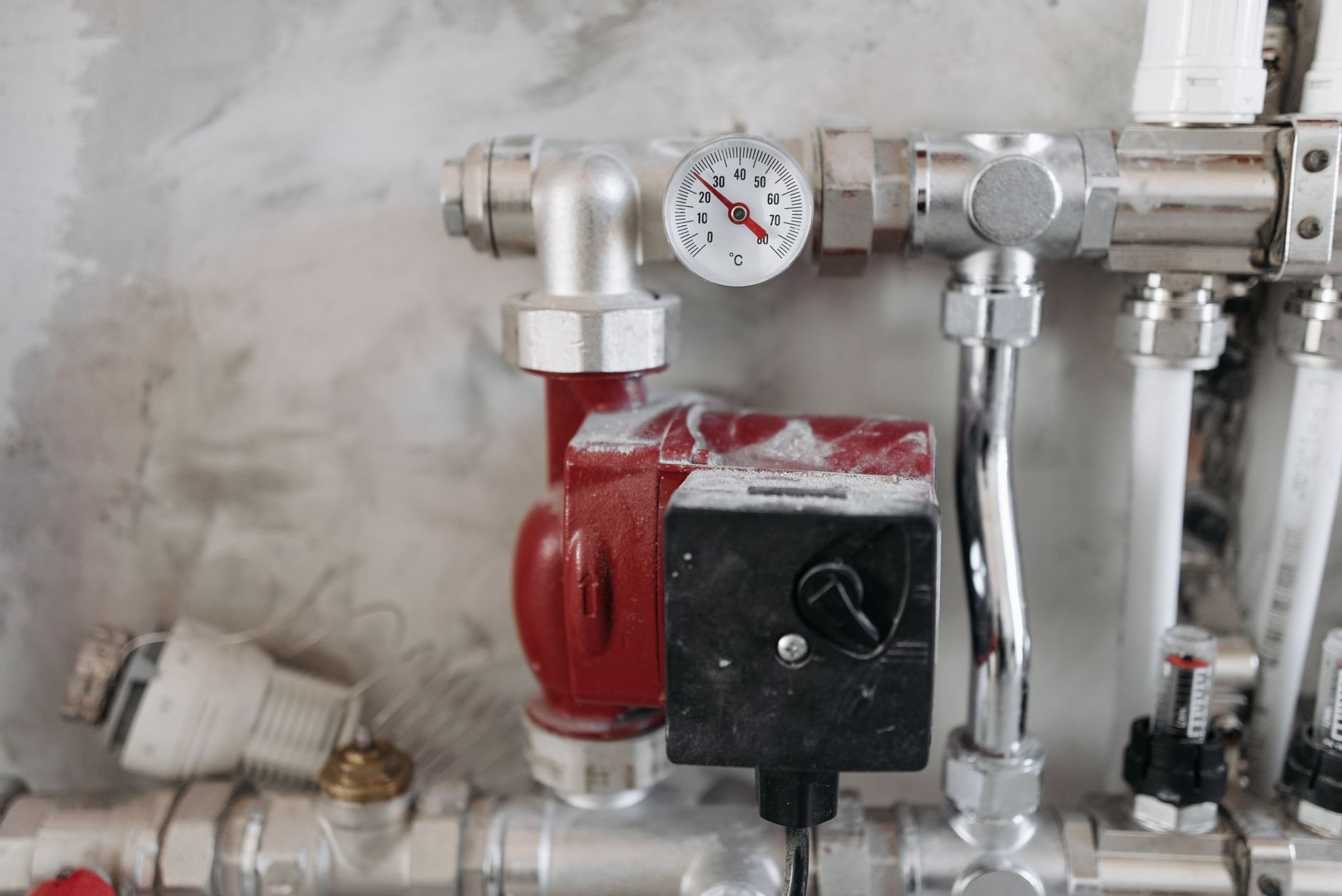
Zones by plant, not by convenience. Turf gets rotors with matched-precipitation nozzles set head-to-head. Narrow park strips get short-throw sprays or drip. Beds, trees, and slopes get drip. Mixing those on one valve means something is always overwatered. Utah County’s clay soils take water slowly, so run times are split into cycle-and-soak — several short runs instead of one long one that sheets into the gutter.
The controller is where the water savings live. We spec a weather-based smart controller — the EPA WaterSense program labels the ones that adjust to local conditions — plus a rain and freeze sensor. In one of the driest states in the country, a controller that skips the day after a monsoon cloudburst pays for itself within a few seasons.
How the install sequences with the rest of the yard
- Measure the supply. Static pressure and flow at the point of connection set the zone count. Guessing here is how systems end up with heads that mist instead of throw.
- Design on the plan. Zones follow plant type and sun exposure. Sleeves are marked under every future patio, walk, and wall footing.
- Locate, sleeve, and trench. Utility locates first. Sleeves go in after rough grade and before hardscape; trenching runs after walls and patios are built so nothing gets driven over.
- Install and pressure-test. The mainline is tested under pressure before any trench is backfilled. The backflow assembly is installed by the licensed plumber and tested before the system goes live.
- Set, program, and hand over. Heads are set to finish grade after sod or mulch, the controller is programmed for the plants it’s actually watering, and you get an as-built map of valves and sleeves.
What does a sprinkler system cost in Utah?
As a ballpark planning number, a new residential system on a typical Wasatch Front suburban lot commonly lands between $3,500 and $8,000 installed. Large lots, extensive drip, and retrofits through established lawn push higher. That’s a planning range, not a quote — we give a firm estimate after the supply is measured and the design is set.
What moves the number: zone count above everything else; the point of connection, since a backflow assembly or secondary-water filter is a real line item; drip versus spray, because drip costs more to install and less to run; trenching conditions, as rocky bench fill and wet clay both slow a trencher; and whether the controller is basic or weather-based. Grandview’s design, coordination, and quality control across the trade partners are priced within the same proposal — one contract, one number.
Questions we actually get
Can my sprinklers run on secondary irrigation water?
Yes, where your city provides it, and it’s usually far cheaper than culinary water. The system has to be designed for it: a filter at the connection, debris-tolerant valves, and pressure regulation. Secondary water also shuts off for the winter, so early-spring and late-fall watering needs a plan.
Do I need a backflow preventer, and who tests it?
If the system connects to culinary water, yes. The assembly is installed by a licensed plumber we coordinate within your project, and most Utah water providers require annual testing by a certified tester. Confirm your city’s schedule; some send reminders, some don’t.
Can you add a system to an existing lawn without wrecking it?
Mostly. A vibratory plow pulls pipe through established turf through a narrow slit that closes in a few weeks; valve boxes and the mainline still need open trenches. Expect visible lines for a month and some sod repair. It costs more per zone than a bare-lot install, which is why we sequence sprinklers before sod when we can.
When should the system be installed, and do you winterize it?
Install runs from spring thaw through late fall, ideally after hardscape and before sod or planting. Every system we deliver has a blowout fitting and drain layout for fall winterization, and you get written instructions plus an as-built map. Annual blowouts are a quick service call from any irrigation company.
Irrigation is one scope within our landscaping and hardscaping work, part of the site, structure and envelope family. Our B100 license is verifiable at dopl.utah.gov.
Tell us what you’re working on
We’ll measure the supply, walk the zones, and give you a straight read on scope, sequence, and budget before anyone commits to anything. We reply within a couple of hours during business hours — a day at most.