
Outdoor Steps & Stairs in Utah County
Outdoor steps are paver, stone, or poured concrete risers that carry a walkway, patio, or entry across a change in grade, built shallower and deeper than indoor stairs so they’re safe in wet shoes and snow. They suit any yard with more than about eight inches to cross, and Grandview designs and builds them under a B100 general contractor license.
When outdoor steps are the right scope
Eight inches of grade change wants one step; three feet wants five or six with a landing. Below eight inches we’d rather fix it with a regrade than build a single riser nobody expects.
Three neighbors are easy to confuse with this page. Stairs hung off a wood deck are framed stringers, covered under deck stairs and railings. A poured flight tied to a foundation, like an entry stoop, is engineered work on our concrete stairs page. And if the slope must be held back as well as climbed, the steps become a detail inside a retaining wall project.
What’s left is the everyday yard stair: back door down to a patio, a paver walkway climbing a bench lot to the front door, slab-stone steps through a planted slope, or boulder steps down to a lower lawn.
Why outdoor steps use different numbers than indoor stairs
An indoor stair is roughly 7 inches of rise to 11 of tread. Outside, people move slower, carry things, and walk on wet or icy surfaces, so the ratio flattens to 5.5 to 6.5 inches of rise and 14 to 17 of tread. The landscape rule is twice the rise plus the tread near 26 inches: a 6-inch rise pairs with a 14-inch tread.
Consistency matters more than the exact figure. Every riser in a flight is held within a quarter inch of the others, because the step half an inch taller than the last is the one that catches a toe. Treads get a wash of about an eighth inch per foot so meltwater runs off instead of glazing, and runs longer than five risers get a landing.
Steps serving the house generally fall under current Utah-adopted residential code: four or more risers typically means a graspable handrail. Garden steps usually aren’t inspected, but we build them to the same discipline. Verify thresholds with your city building department; the license we build under is listed at dopl.utah.gov.
Paver, stone, concrete, or boulder: choosing the step material
Block-and-paver steps match a paver patio or walkway. The riser is a wall block set in adhesive; the tread is pavers over compacted base, in the same unit as the path. Fastest to build and repairable one unit at a time.
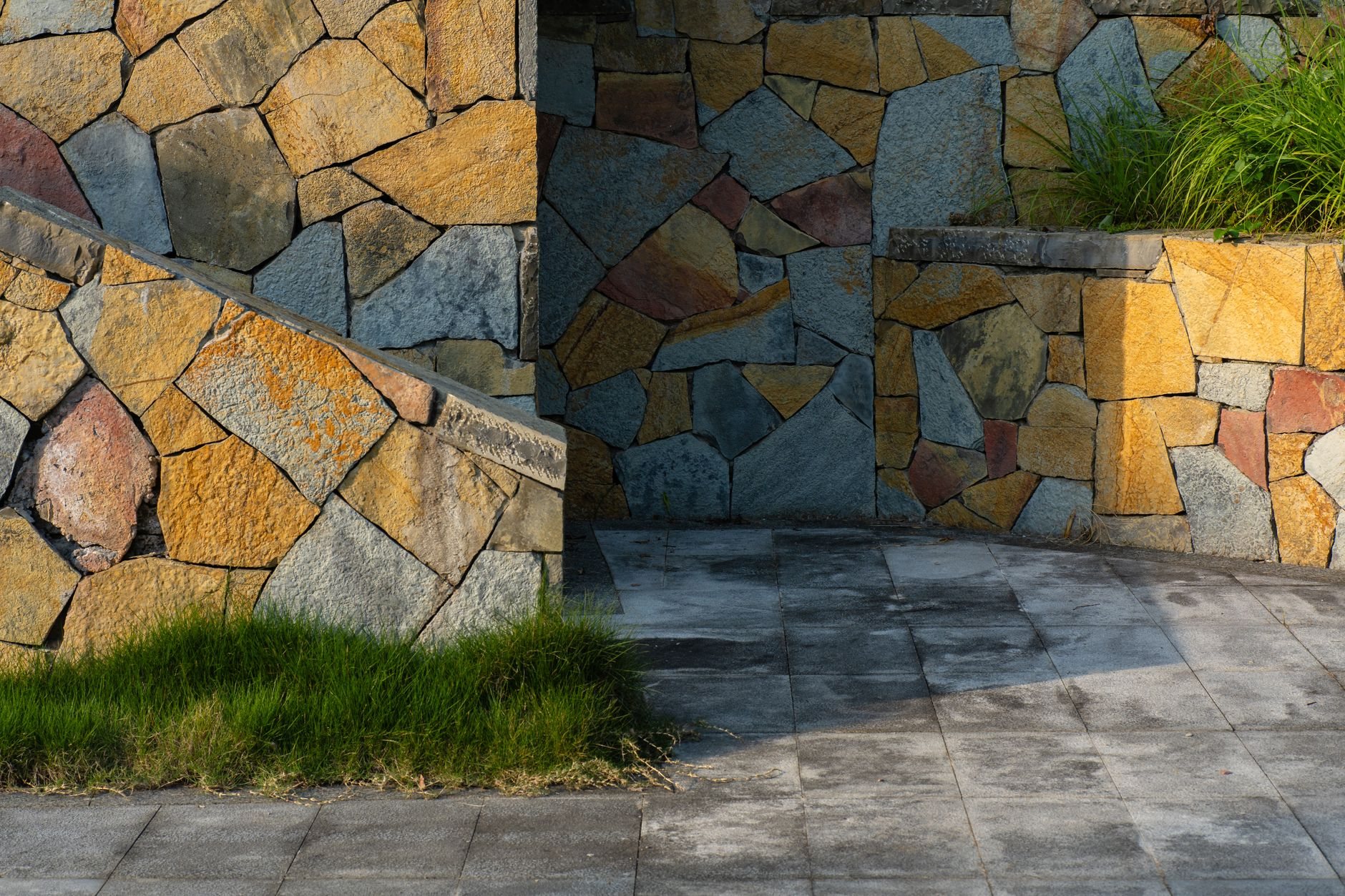
Cut natural stone slab steps use a single 6-inch-thick piece of quartzite, sandstone, or granite as both riser and tread. One piece per step means no joints to heave; each slab weighs several hundred pounds and is machine-set.
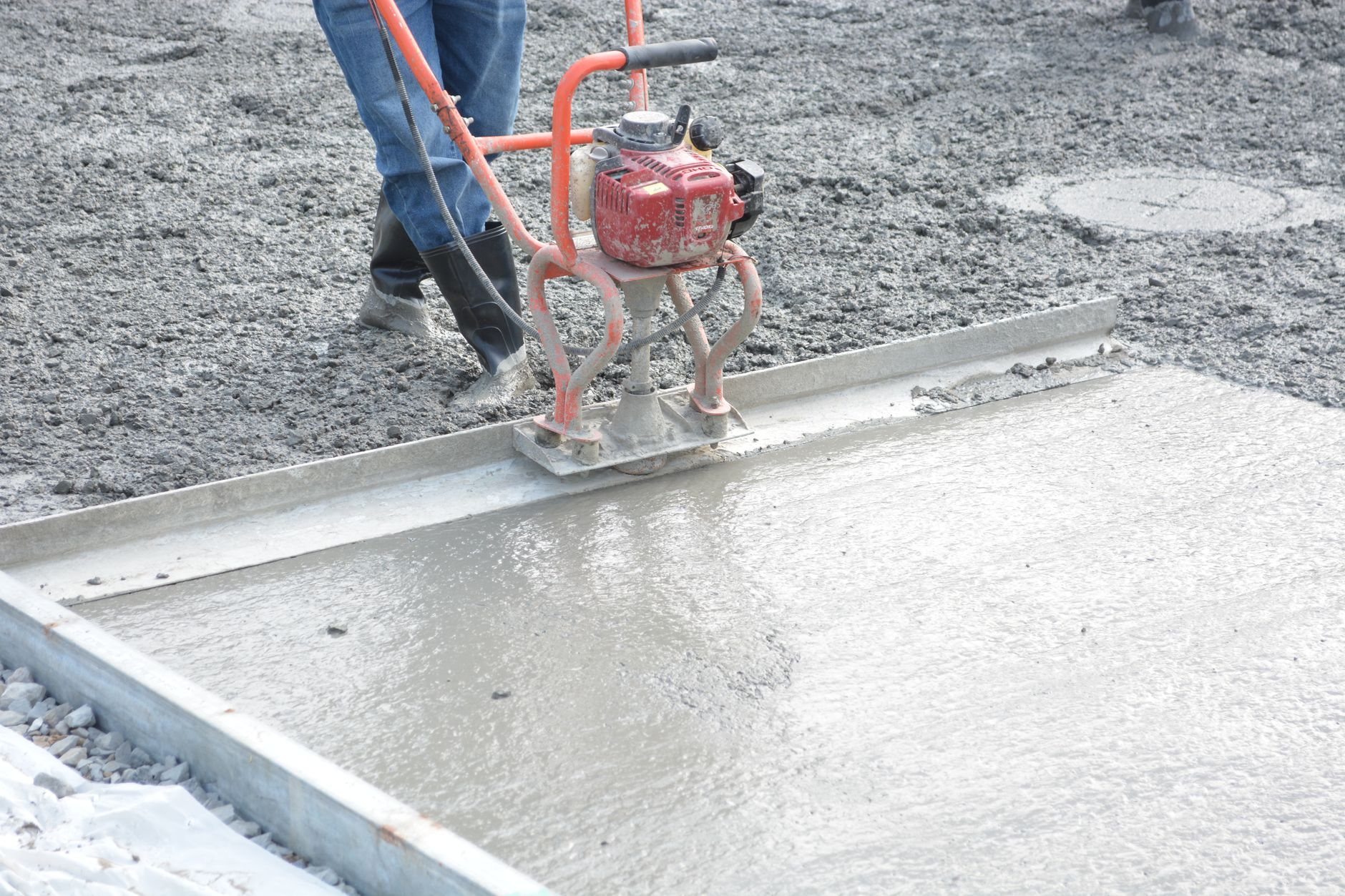
Poured concrete steps suit entries, wide runs, and anywhere a broom-finished surface already exists. They’re formed, reinforced, and poured monolithically on a footing in an air-entrained mix, which keeps the surface from spalling through the Wasatch Front’s hundred-plus freeze-thaw days a year.
Boulder steps are flat-faced landscape boulders seated as treads through an informal slope, set with our boulder placement service. We still hold rises within an inch so the path walks naturally.

How we build a run of outdoor steps
- Shoot the elevations. Laser-level finished grade at top and bottom and divide by a comfortable rise. If it comes out to 4.6 steps, we adjust the landing grade, not the last riser.
- Excavate and base. The footprint comes out to undisturbed soil, usually 10 to 12 inches below the lowest tread. Over the expansive clays and collapsible bench soils the Utah Geological Survey maps across Utah County, we go deeper and add geotextile so the base can’t pump into wet clay. Crushed stone is compacted in 3-inch lifts.
- Build from the bottom up. The first riser is set dead level into the base, and every riser after is measured from that one. Each is back-filled and compacted before the tread above goes on.
- Set the treads with a wash. Treads overhang the riser about an inch and pitch forward. Slabs bed in stone dust; paver treads are edge-restrained.
- Cheek walls, lighting, rail. Steps cut into a slope need soil held at each side; a short garden wall does that and houses riser lights, whose conduit goes in before the treads. Handrail posts are core-drilled and epoxied, or sleeved into poured steps.
- Keep water off the run. Utah’s August cloudbursts take the stairs if they’re the lowest line on a slope, washing out the base from the bottom riser first. We pitch the ground beside the run away from it and add a drain inlet at the landing on long flights.
What do outdoor steps cost in Utah County?
As ballpark planning numbers for a run about four feet wide: block-and-paver steps commonly run $200 to $350 per riser installed, poured concrete steps about $250 to $450 per riser including the footing, and cut natural stone slab steps $400 to $700 per step depending on the stone. These are planning ranges, not quotes; a site walk turns them into a budget range and then an estimate.
What moves the number: width, landings, cheek walls, handrail, lighting, and access. On tight bench lots in Provo and Orem, getting slabs to a backyard without a machine can cost more than the slabs. Outdoor steps are one scope within our landscaping and hardscaping family, part of site, structure and envelope.
Questions we actually get
Can you rebuild outdoor steps that have settled or heaved?
Usually, yes. Paver and block steps come apart and go back together on a rebuilt base, often reusing the units. Settled poured steps can sometimes be lifted; a flight that has cracked through is normally removed and re-poured on a proper footing.
How many steps do I need for my grade change?
Divide the elevation difference by a six-inch rise and round to a whole number. A 30-inch drop from a door to a patio is five risers. If it doesn’t come out even, we adjust the patio or landing grade slightly rather than build one odd step, because the odd step is the one people fall on.
Do outdoor steps need a handrail or permit?
Steps serving the house with four or more risers generally need a graspable handrail under current Utah-adopted residential code, and a permit is often involved when they’re part of an entry. Detached garden steps are usually not inspected, though we recommend a rail on any run of five or more. Confirm with your city building department.
What’s the best step material for snow and ice?
Textured surfaces with a forward wash: broom-finished air-entrained concrete, split-face pavers, or natural stone with a flamed or cleft face. Smooth-sawn stone and polished finishes are the ones to avoid. Riser lights help in the dark months, and a drain at the landing keeps meltwater from refreezing on the bottom tread.
Tell us what you’re working on
Send a photo of the slope and a rough measurement of the drop and we’ll give you a straight read on riser count, material, and budget. We reply within a couple of hours during business hours, a day at most.