
Concrete driveway & flatwork contractor in Utah County
Driveways, patios, walkways, sidewalks, RV pads, and garage slabs, poured in air-entrained mixes and finished for Utah’s 100-plus freeze–thaw days a year. Grandview handles the full scope — tear-out, base, pour, finish, joints, and sealing — under one B100 general contractor license.
Who calls us for concrete flatwork
Homeowners with a driveway that’s cracking, heaving, or spalling and needs replacing rather than patching. Owners of new lots in Lehi, Saratoga Springs, and Eagle Mountain who need a driveway, walkways, and an RV pad poured before landscaping. Property managers replacing trip-hazard sidewalks and aprons across a portfolio. And anyone adding a patio, extending a parking pad, or pouring a slab for a detached garage or shop.
Flatwork is also where we often meet clients mid-project: a driveway pour that has to sequence with excavation and grading, a patio that ties into a new retaining wall, or exterior concrete replaced as the last step of a bigger renovation. Because we’re a general contractor, the concrete doesn’t have to be an isolated errand — it can be one sequenced line in a larger scope.
We are fond of straight lines and straight answers.
What’s included in a flatwork project
Every exterior pour we do covers the whole sequence, because the parts you never see decide how the surface holds up:
- Tear-out and haul-off. Sawcutting, breaking out the old slab, and hauling the debris — disposal included, not left in your parking strip.
- Base preparation. Excavating to grade, placing road base, and compacting it in lifts. On the Wasatch Front this step matters more than the concrete itself: expansive clay swells when wet and collapsible bench soils settle when saturated, and a slab poured over either without proper base prep will move.
- Forming and reinforcement. Straight, well-braced forms; rebar or wire mesh where the slab’s use calls for it, on chairs so it sits in the concrete rather than under it.
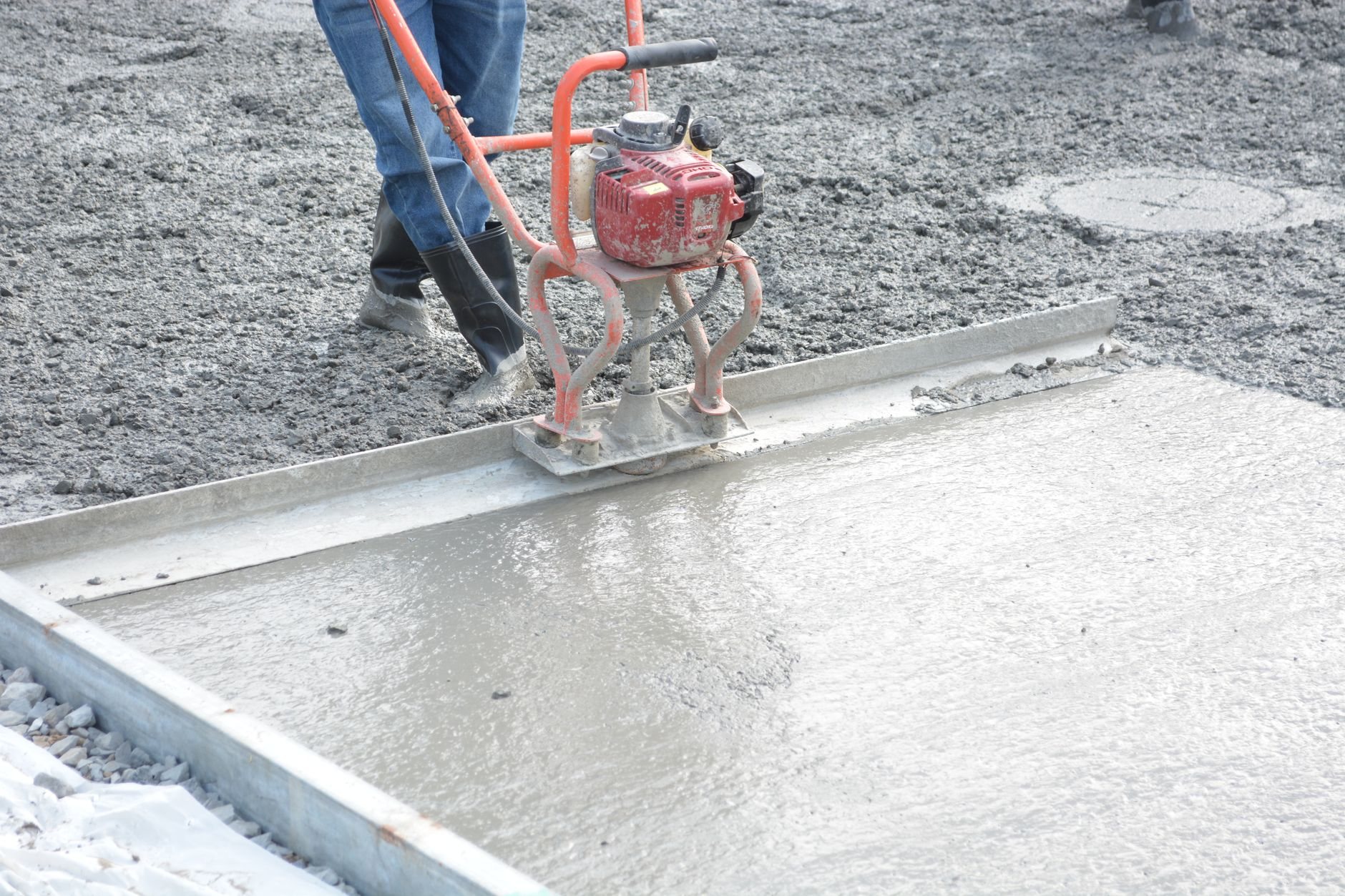
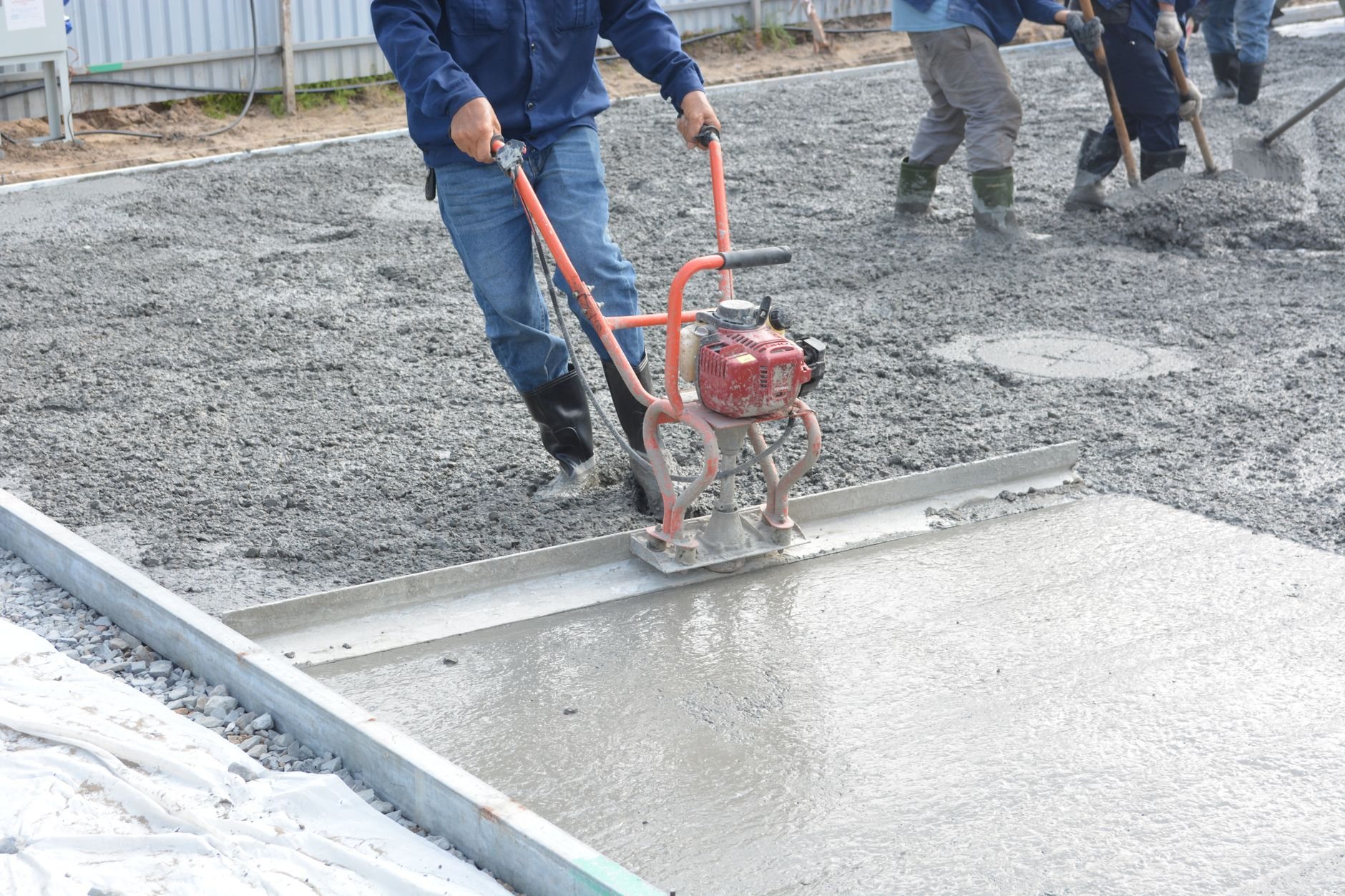
- The pour and finish. Air-entrained exterior mix, screeded, floated, and finished — broom finish for traction on driveways and walks, or a smoother trowel finish where it belongs.
- Control joints and curing. Joints cut or tooled at the right spacing and depth so the inevitable cracks happen inside the joints, plus a proper cure before the slab takes traffic.
- Sealing. A penetrating sealer once the slab has cured, which is your driveway’s main defense against water, deicer salts, and Utah’s high-elevation UV.
Two honest notes on scope. Decorative finishes — stamped patterns, integral color, exposed aggregate — are their own craft, covered on our decorative and stamped concrete page. And if you want a heated snowmelt driveway, the tubing or cable and its controls are electrical and mechanical work: Grandview holds the contract and manages licensed electricians and plumbers for those systems, and we coordinate, sequence, and quality-check their work within the pour schedule.
What makes a concrete driveway last in Utah?
Four things: an air-entrained mix, a compacted base, correctly spaced control joints, and drainage that moves water off and away from the slab. The Wasatch Front sees roughly 100-plus freeze–thaw days a year; air entrainment builds microscopic voids into the concrete that give freezing water somewhere to expand besides the surface of your driveway. Skip it and you get scaling and spalling within a few winters.
The other half of the equation is water management. Utah’s summer monsoon can drop an inch of rain in an hour on ground that spent six weeks baking, so we set slab elevations and slopes — typically about a quarter inch per foot — to shed cloudburst runoff away from your foundation, not toward it. When slope alone can’t do the job, a channel or french drain built into our waterproofing and drainage scope handles the rest. A driveway that drains at the garage door is a problem we’d rather design out than apologize for.
One more Utah-specific reality: deicer salts. Magnesium chloride and rock salt accelerate surface damage on young concrete, which is why we seal every exterior pour and why we’ll tell you to keep deicers off a new slab through its first winter. Sand works fine in year one.
How a driveway replacement runs
- Walk the site. We look at the existing slab, the soil, the slope, and where the water goes. If the cracking traces back to settlement rather than surface wear, we’ll say so — that’s a foundation and settlement conversation, not a repour.
- Scope and price. You get a written scope: square footage, thickness, reinforcement, finish, and what’s excluded. Budget range first if you’re still planning; a firm estimate once the scope is set.
- Approvals. Work in the park strip or a new curb cut usually needs a city permit; verify specifics with your city’s building department. In HOA-governed developments — common across northern Utah County — we help you package the approval submittal so the pour isn’t waiting on a board meeting.
- Tear-out and base. Demo, haul-off, grading, road base placed and compacted in lifts, forms set and checked.
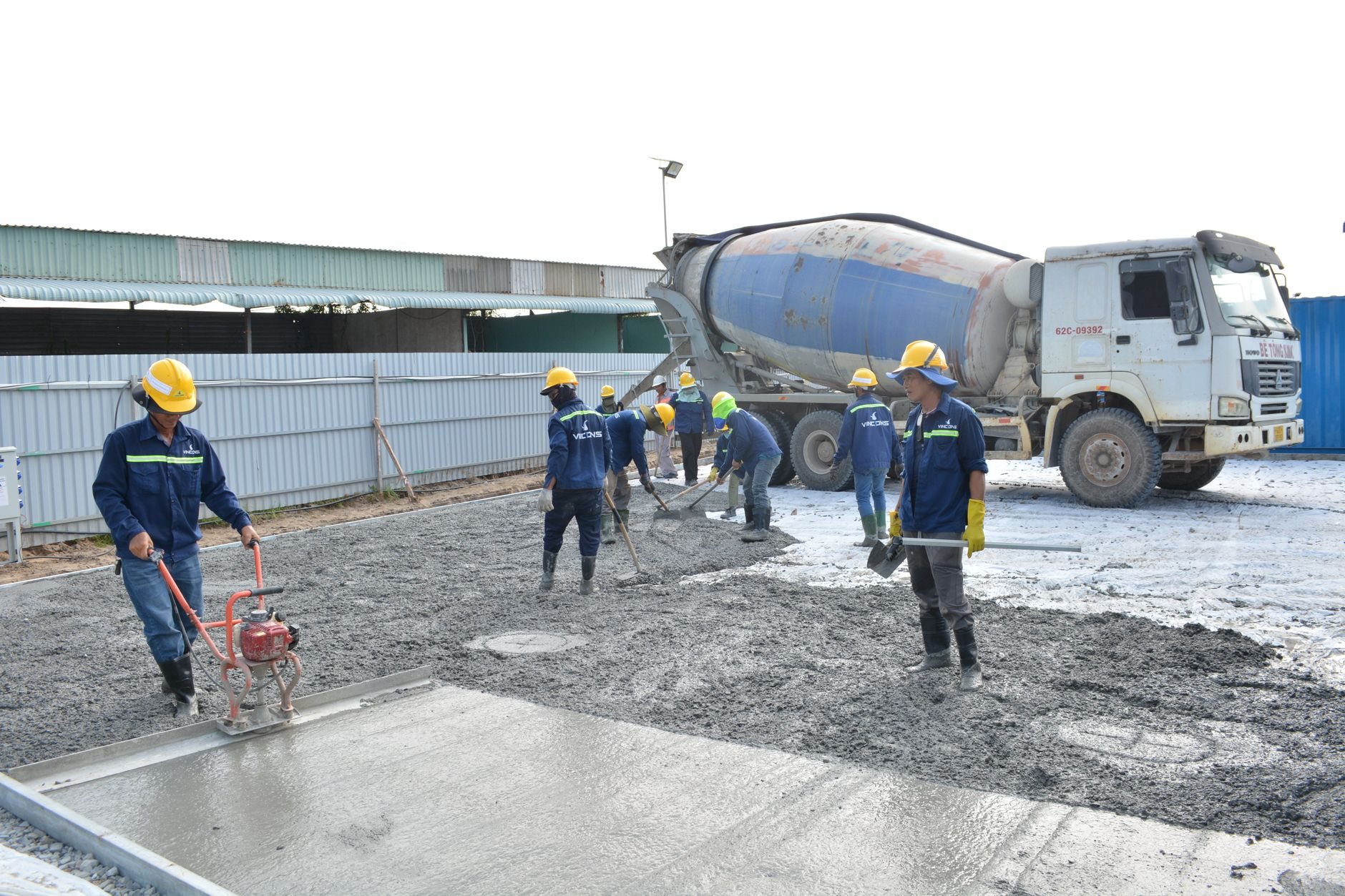
- Pour, finish, joint. Usually a single day. Air-entrained mix placed, finished, jointed, and cured properly.
- Cure and seal. Foot traffic in a day or two, vehicles at about a week, full design strength near 28 days. We come back to seal once the slab is ready, and we tell you exactly how to treat it in the meantime.
What does a concrete driveway cost in Utah County?
As a ballpark planning number, plain gray broom-finished flatwork in Utah County typically runs about $8–$14 per square foot installed, including tear-out of an existing slab, base prep, reinforcement, and finishing. A standard two-car driveway of 500–700 square feet usually lands somewhere in the $5,000–$9,000 range. These are planning figures, not a quote — a firm number comes after a site walk.
What moves the price inside that range:
- Tear-out. Removing and hauling an old slab adds cost; thick, heavily reinforced old concrete adds more. New pours on bare ground skip this line entirely.
- Thickness and use. Standard driveways pour at four inches. RV pads and shop slabs that will carry a trailer, motorhome, or lift go to five or six inches with heavier reinforcement — more concrete, more steel, more cost, and worth every dollar the first time you park on it.
- Soil and base conditions. Expansive clay or soft, collapsible fill can require over-excavation and extra road base before anyone should pour.
- Access. If the mixer truck can’t reach the forms, concrete moves by pump or buggy, and the pump adds a fixed cost to small pours.
- Geometry and extras. Curves, steps, multiple elevations, thickened edges, and snowmelt systems all add labor beyond simple square footage.
Questions we actually get
How soon can I drive on a new concrete driveway?
Plan on about seven days for regular vehicles. Concrete reaches most of its working strength in the first week and full design strength around 28 days. Foot traffic is fine after a day or two. Keep heavy trucks, trailers, and dumpsters off for a month — a moving van at day ten can leave marks the slab will carry forever.
Can you pour concrete in a Utah winter?
Sometimes, with cold-weather measures — heated water, accelerators, insulated blankets. But curing quality is far easier to guarantee above about 40 degrees, so for exterior flatwork we’d usually rather schedule you for spring than pour into a hard freeze. If waiting three weeks gets you a better slab, we’ll tell you that plainly.
My driveway is cracked. Repair, lift, or replace?
It depends on the cause. Hairline surface cracks are cosmetic. A settled slab that’s otherwise sound can sometimes be lifted. But wide cracks, heaving between panels, or widespread scaling usually mean the base or the original mix failed, and replacement is the honest answer — patching over a bad base buys two or three years at most.
Do I need a permit or HOA approval for a new driveway?
Often, yes. Widening a driveway, adding a curb cut, or working in the park strip typically requires a city permit — verify with your city’s building department, since processes differ between fast-growing cities like Lehi and established ones like Provo. HOA-governed neighborhoods usually require design approval too, especially for RV pads. We handle the paperwork with you.
What drives the cost beyond square footage?
Tear-out of existing concrete, slab thickness (RV pads run five to six inches versus the standard four), soil conditions that demand extra excavation and base, truck access, and geometry — curves, steps, and multiple elevations. Square footage sets the starting point; these factors move the per-foot price up or down from there.
How often should exterior concrete be sealed?
Every two to three years for a driveway that sees deicer salts and daily sun. Utah’s elevation means stronger UV than most of the country, and freeze–thaw cycling plus magnesium chloride is hard on unsealed surfaces. A penetrating sealer is cheap insurance; we apply the first coat as part of every pour.
Related work
Flatwork sits inside our broader site, structure and envelope services, alongside excavation, foundations, retaining walls, and the rest of the below-grade sequence. If you want a finish with more character than broom-gray, start with decorative and stamped concrete.
Tell us what you’re pouring
Send us the rough dimensions and a photo or two, or just describe the project. We reply within a couple of hours during business hours — a day at most — with a straight read on scope, timing, and a realistic budget range before anyone commits to anything.