
Flooring installation in Utah County
Grandview Contractors installs hardwood, LVP, laminate, tile-ready subfloors, carpet, and commercial flooring across Utah County and Salt Lake County under a Utah DOPL B100 general contractor license. Every floor starts the same way: a flat, dry, verified subfloor — because the prep you can’t see decides how long the floor you can see lasts.
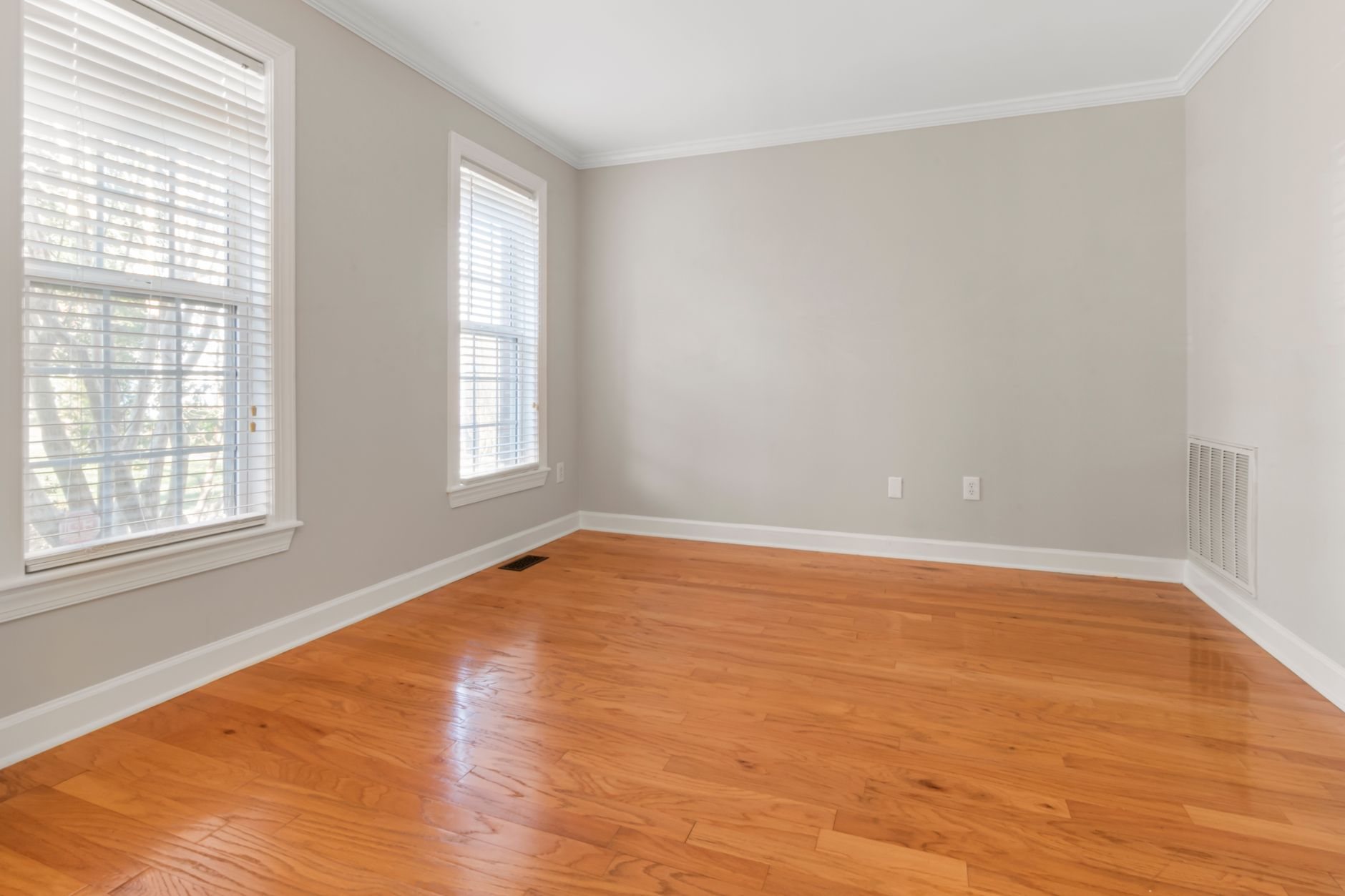
When flooring is a project, not just a product
Plenty of flooring jobs are simple: one room, sound subfloor, straightforward material. If that’s your situation, a flooring-only installer may serve you fine. We earn our keep when the floor is connected to everything else — and in a renovation, it usually is.
Call us when the flooring is part of a larger remodel and needs to be sequenced with painting, trim and baseboard, and cabinet work so nobody damages anybody else’s finish. Call us when the old floor is coming out and you don’t know what’s under it. Call us when the subfloor has humps, soft spots, or squeaks that a flooring crew would just floor over. And call us for multi-unit and commercial work, where the schedule, the documentation, and the occupied-building logistics matter as much as the material.
Flooring is one section of our broader renovation and build-out services. The same rule applies here as everywhere else: defined scope before demolition, and changes in writing.
Hardwood flooring services
Solid or engineered, new install or refinish — hardwood rewards patience. In Utah’s dry climate, that starts with real acclimation time before the first board goes down.
Solid hardwood installation
Nail-down solid wood floors, acclimated and installed with the expansion room Utah’s dry winters demand.
ExploreEngineered hardwood
Dimensionally stable wood flooring for basements, slabs, and rooms where solid wood is the wrong call.
ExplorePrefinished vs site-finished
The honest trade-offs — durability, dust, downtime, and repairability — before you order material.
ExploreSanding & refinishing
Full sand-and-refinish for worn floors, including color changes and repairs to damaged boards.
ExploreScreen & recoat
A fresh wear layer without a full sand — the maintenance step that postpones refinishing for years.
ExploreHerringbone, chevron & parquet
Pattern floors laid out from the room’s true centerlines, so the pattern lands where the eye does.
ExploreWide-plank & exotic species
Wide boards and less common species, specified with the fastening and acclimation they actually require.
ExploreBorders, medallions & inlays
Custom border work and inlaid details for entries, formal rooms, and floors worth signing.
ExploreVinyl, laminate, carpet, and commercial flooring
The workhorse floors — chosen for water resistance, wear, budget, or all three. Tile has its own trade and its own page: see our tile installation services.
Luxury vinyl plank (LVP)
The most-requested floor in Utah remodels — waterproof, durable, and only as good as the slab under it.
ExploreLuxury vinyl tile (LVT)
Tile and stone looks in resilient vinyl, with or without grouted joints.
ExploreSheet vinyl
Continuous, water-tight flooring for laundry rooms, rentals, and budgets that need to stretch.
ExploreGlue-down vs floating vinyl
Which installation method fits your subfloor, your rooms, and how the building gets used.
ExploreLaminate flooring
Hard-wearing wood looks at a friendlier price, installed with the moisture precautions laminate needs.
ExploreBamboo & cork
Renewable floors with real comfort and acoustic benefits — and real acclimation requirements in our dry climate.
ExploreWall-to-wall carpet
Carpet and pad installation with proper stretch-in, seam placement, and transitions that stay down.
ExploreCarpet tile
Modular carpet for offices and commercial spaces — replaceable square by square as wear happens.
ExploreStair runners & stair carpet
Runners and full stair carpet fitted to each tread, because stairs forgive nothing.
ExploreVCT & commercial flooring
VCT and commercial-grade flooring for retail, medical, and back-of-house spaces, on tenant-driven schedules.
ExploreSubfloor prep & leveling
Self-leveling, grinding, patching, and moisture mitigation — the step every warranty quietly depends on.
ExploreFloor removal & demo
Tear-out of tile, hardwood, carpet, and adhesives, with dust control and honest disposal pricing.
ExploreSubfloor first, material second
- Assess. We check flatness, moisture, and structure before recommending anything. On slab-on-grade floors, that includes moisture testing — the expansive clay and collapsible soils common along the Wasatch Front can move slabs and wick moisture, and glue-down floors fail from below, not above.
- Select. Material matched to the room’s real life: pets, sun, water, traffic. Utah’s elevation makes for intense UV, and floors near big south-facing windows fade faster here than the samples suggest — we’ll tell you which finishes hold up.
- Prep. Removal, leveling, patching, underlayment, and moisture mitigation as defined line items, not surprises.
- Acclimate. Wood, bamboo, and laminate sit on site until they reach equilibrium with your home’s humidity. Skipping this step is where most gaps and cupping come from.
- Install & finish. Layout from the room’s sight lines, transitions and trim coordinated, and a walkthrough before we call it done.
We are fond of straight lines and straight answers.
What moves flooring cost in Utah?
Material is the number everyone shops, but installed cost is driven by five things: what’s coming out, what condition the subfloor is in, the material itself, the pattern, and the transitions. Tear-out of glued or mudset floors costs real money; a herringbone layout costs more labor than straight-lay of the same board; a house full of doorways and level changes takes longer than an open plan. As ballpark planning numbers, most Utah installs land between roughly $4 and $8 per square foot installed for LVP and laminate, and roughly $8 to $15+ for hardwood — treat those as ranges for budgeting, not quotes. Subfloor repair and leveling is the honest wildcard, which is why we assess it before we price it.
One more Utah-specific note: if you’re flooring a basement, deal with what’s under the floor first. Utah sits on high-radon geology, and the EPA recommends testing for radon before finishing below-grade space — mitigation is much cheaper before the finishes go in. Our basement finishing team handles radon, moisture, and egress as part of the scope, so the flooring is the last problem, not the first.
Questions we actually get
Which flooring is best for Utah basements?
Luxury vinyl plank and tile handle below-grade conditions best; engineered hardwood works over a proper vapor barrier. Solid hardwood doesn’t belong in a basement. Whatever you choose, test the slab for moisture and the space for radon first — Utah’s geology makes both worth checking before anything gets glued or floated down.
Can you install new flooring over my existing floor?
Sometimes. Floating floors can go over some existing surfaces if they’re flat, dry, and sound, and if the added height doesn’t fight doors, appliances, and transitions. Often tear-out is cheaper than it looks and better for the result. We check flatness and height stack-ups during the assessment and give you both prices.
What drives the installed price beyond the material itself?
Tear-out and disposal, subfloor repair and leveling, moisture mitigation on slabs, pattern complexity, and the number of rooms and transitions. Two houses with identical material can differ by thousands in prep. That’s why we assess the subfloor before quoting — a low bid that skips prep isn’t a low bid for long.
How long does hardwood need to acclimate before installation?
Typically several days to two weeks, depending on species, width, and season — wide planks in a dry Utah January need more time than narrow oak in September. We measure moisture content in the wood and the subfloor rather than just counting days, and we don’t install until the numbers agree.
Related services
Flooring usually lands near the end of a remodel, right alongside interior painting and trim and finish carpentry — we sequence all three so fresh work protects fresh work. For wet areas and showers, our tile installation team covers ceramic, porcelain, and stone. And like every Grandview project, the work runs under one B100 general contractor license you can verify at dopl.utah.gov.
Tell us what you’re working on
We reply within a couple of hours during business hours — a day at most. You’ll get a straight read on scope, sequence, and budget before anyone commits to anything.