
Hardwood Floor Sanding & Refinishing in Utah County
Hardwood floor refinishing sands a worn or discolored wood floor back to bare wood, repairs damaged boards, and rebuilds the finish from the sealer up — the right fix when wear has gone through the finish into the wood. Grandview Contractors refinishes existing hardwood across Utah County and Salt Lake County under a Utah DOPL B100 general contractor license, usually within a larger remodel.
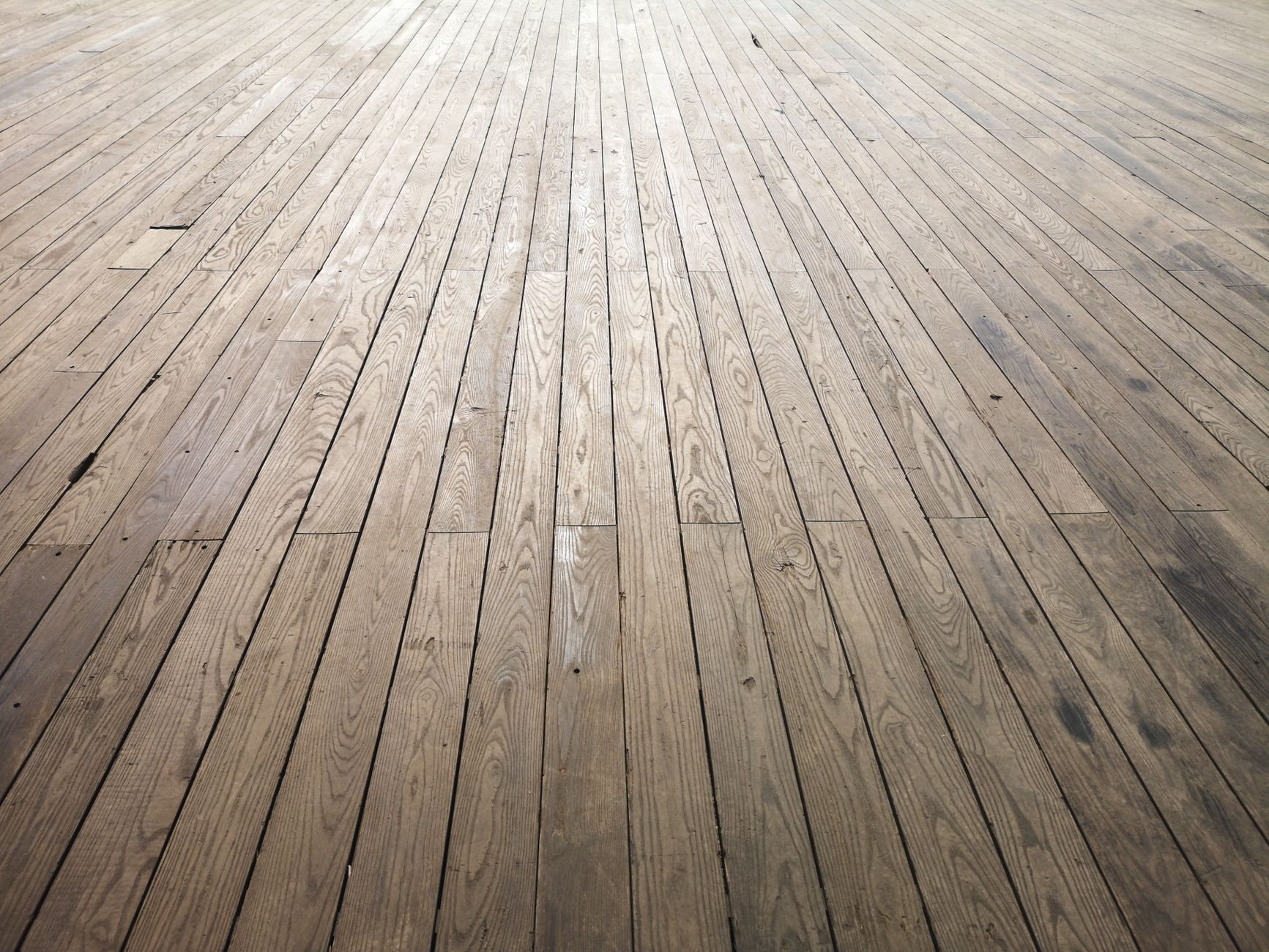
When a full sand-and-refinish is the right call
A full sand-and-refinish sits between a recoat and a replacement, and it’s right when the damage is in the wood, not just the finish.
If the floor is dull and lightly scratched but the wear hasn’t reached raw wood, a screen and recoat adds a fresh wear coat for a fraction of the cost and disruption. The test is simple: drip water on the worst traffic lane. If it beads, the finish is intact and a recoat will hold. If it soaks in and darkens the wood, only sanding will fix it.
Some floors are past refinishing. Solid strip flooring sanded several times may have under 1/8″ of wood above the tongue, and another pass risks exposing nail heads. Widespread cupping or pet staining across dozens of boards usually means replacement — see solid hardwood installation. Engineered floors can take one careful sanding if the veneer is 3mm or thicker; anything thinner, and we’ll say so before a machine touches it.
Refinishing is also the moment to change color — a 1990s golden-oak floor can come back natural-matte or deep walnut. If you’re weighing that against new material, see prefinished vs site-finished hardwood.
What sanding and refinishing actually involves
- Inspect and measure. We check remaining wear-layer thickness at a register or threshold, map loose boards and stains, and test for old wax that would reject new finish.
- Repair first. Split or rotted boards are cut out and replaced with matching species and width, laced into the old field so the repair sands flush. Squeaks get screwed down and plugged.
- Sand in sequence. A drum or belt sander runs three to four grit passes — roughly 36 to cut the old finish, then 60, then 80 or 100 — with an edger at the perimeter and a hand scraper in corners. Skipping a grit leaves scratches the stain will find.
- Fill, water-pop, and stain. A trowel-fill of wood-flour filler closes stable gaps and nail holes. Before stain, we water-pop the floor so the grain opens and takes color evenly instead of blotching.
- Seal and coat. Two to three coats over a sealer: waterborne polyurethane for low odor, fast dry, and a clear color that keeps light species light, or oil-modified polyurethane for a warm amber tone at lower material cost.
- Cure. Socks-only after about 24 hours, furniture on felt pads after three days, rugs back after two to four weeks. We’ll give you dates, not guesses.
Good work should not require detective work.
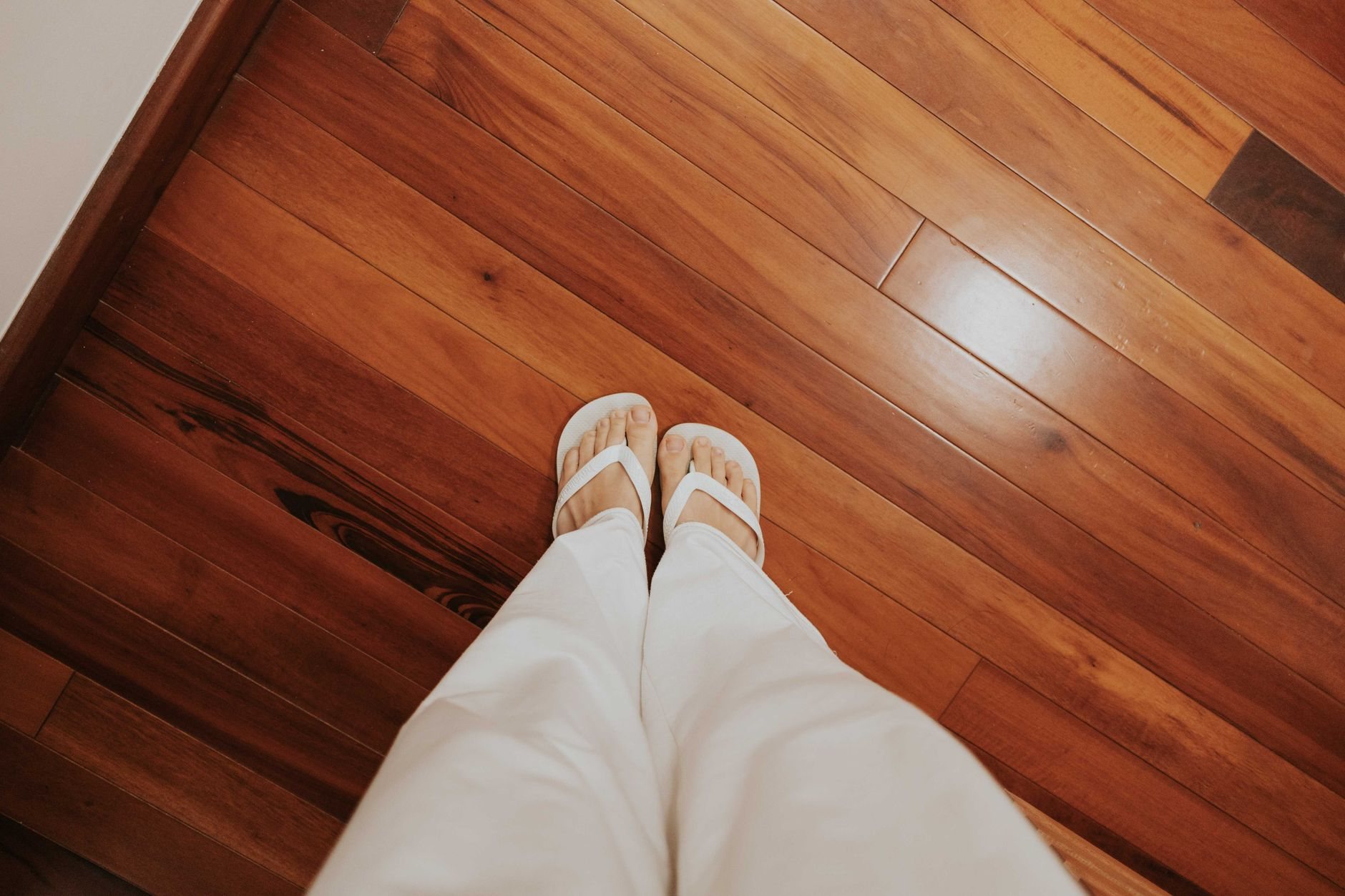
Dry air and hard sun: what Utah does to a refinished floor
Wasatch Front homes run very dry in winter, and solid boards shrink across their width, opening seasonal gaps. Filler applied in a dry January pops out when the boards swell in July, so we fill the gaps that are stable, leave hairline seasonal gaps alone, and tell you which is which. Low humidity also makes waterborne finish flash off fast, so we coat in sections with the HVAC held steady.
At our elevation the UV is intense. Oak that sat under a rug for ten years beside a south-facing window shows a sharp color line once the rug comes up. Sanding removes that line entirely — a recoat only seals in the color already there. In sunny rooms we’ll suggest a finish with UV inhibitors.
Older Provo, Orem, and Salt Lake homes often have original red oak strip or Douglas fir under the carpet. Fir sands fast but dents easily; red oak takes stain well and usually has thickness left for another pass. We’ll tell you what’s under there before you commit to a color.
What does hardwood floor refinishing cost in Utah County?
As a ballpark planning number, a full sand-and-refinish in Utah County typically runs roughly $3 to $6 per square foot with a natural finish; stain, board repairs, and stairs add to that. A whole house with stairs and custom color can run several times what a single main level does. These are budgeting ranges, not quotes.
What moves the number: board replacement, a stain (an extra day plus water-popping), the finish system, stairs priced per tread, closets with heavy edging, and whether carpet and tack strip come out first — see floor removal for how we price tear-out. Sequencing a refinish after painting and before final trim is where our renovation services earn their keep, as one piece of our flooring work. Our license is verifiable at dopl.utah.gov.
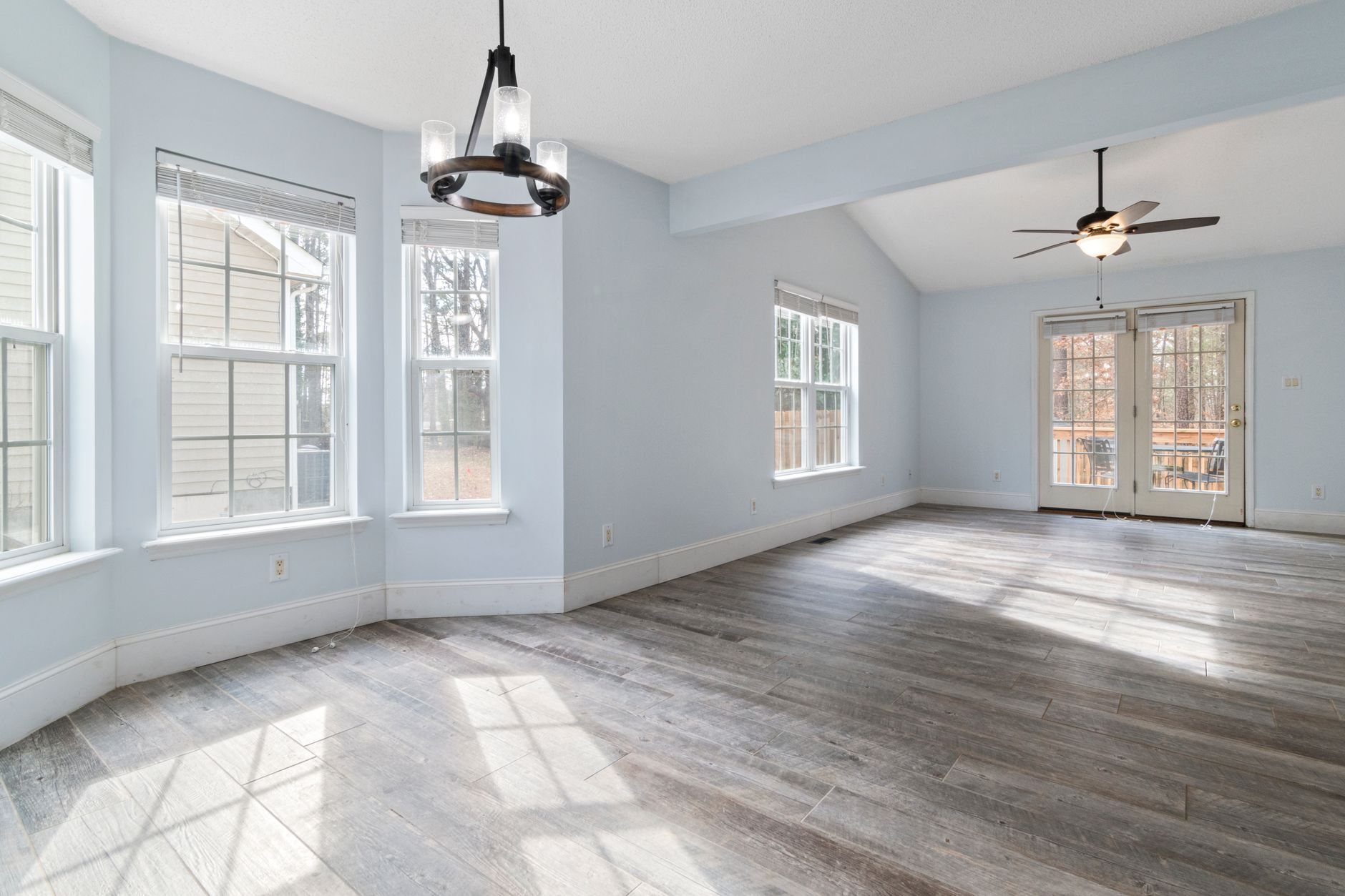
Questions we actually get
How many times can a hardwood floor be sanded and refinished?
A 3/4″ solid floor usually has wood for four to six full sandings over its life. We measure the wear layer at a register or doorway before quoting. Engineered floors with a 3mm-plus veneer can take one careful sanding; thinner veneers should be recoated, not sanded.
How long will we be out of the house?
Plan on three to five days for a typical main level with stain, one to two fewer without. Socks a day after the last coat, furniture after about three days, rugs after two to four weeks. Waterborne finishes shorten the odor and downtime; oil-modified finishes stretch it.
Can refinishing fix pet stains and dark water marks?
Sometimes. Surface gray from a short exposure often sands out. Black stains from urine or standing water have soaked through the board and won’t; those boards get cut out, replaced, and sanded flush. We mark each stain during the inspection and tell you which category it’s in.
Should we refinish before or after painting and other remodel work?
Sand after the dusty work is done and walls are painted, but before baseboard goes back on and before final touch-up paint. Fresh finish is the most fragile surface in the house for a few weeks, so we schedule it as late as possible and build cure time into the overall sequence.
Tell us what you’re working on
We reply within a couple of hours during business hours — a day at most. You’ll get a straight read on scope, sequence, and budget before anyone commits to anything.