
Wall-to-wall carpet installation in Utah County
Wall-to-wall carpet is broadloom cut from 12- or 15-foot rolls, laid over a separate pad, and power-stretched onto tack strip at every wall so it stays tight for years. Grandview Contractors installs it in bedrooms, basements, and whole homes across Utah County and Salt Lake County under a Utah DOPL B100 general contractor license, with seams, pad, and transitions decided before the first roll is cut.
When broadloom carpet beats its alternatives
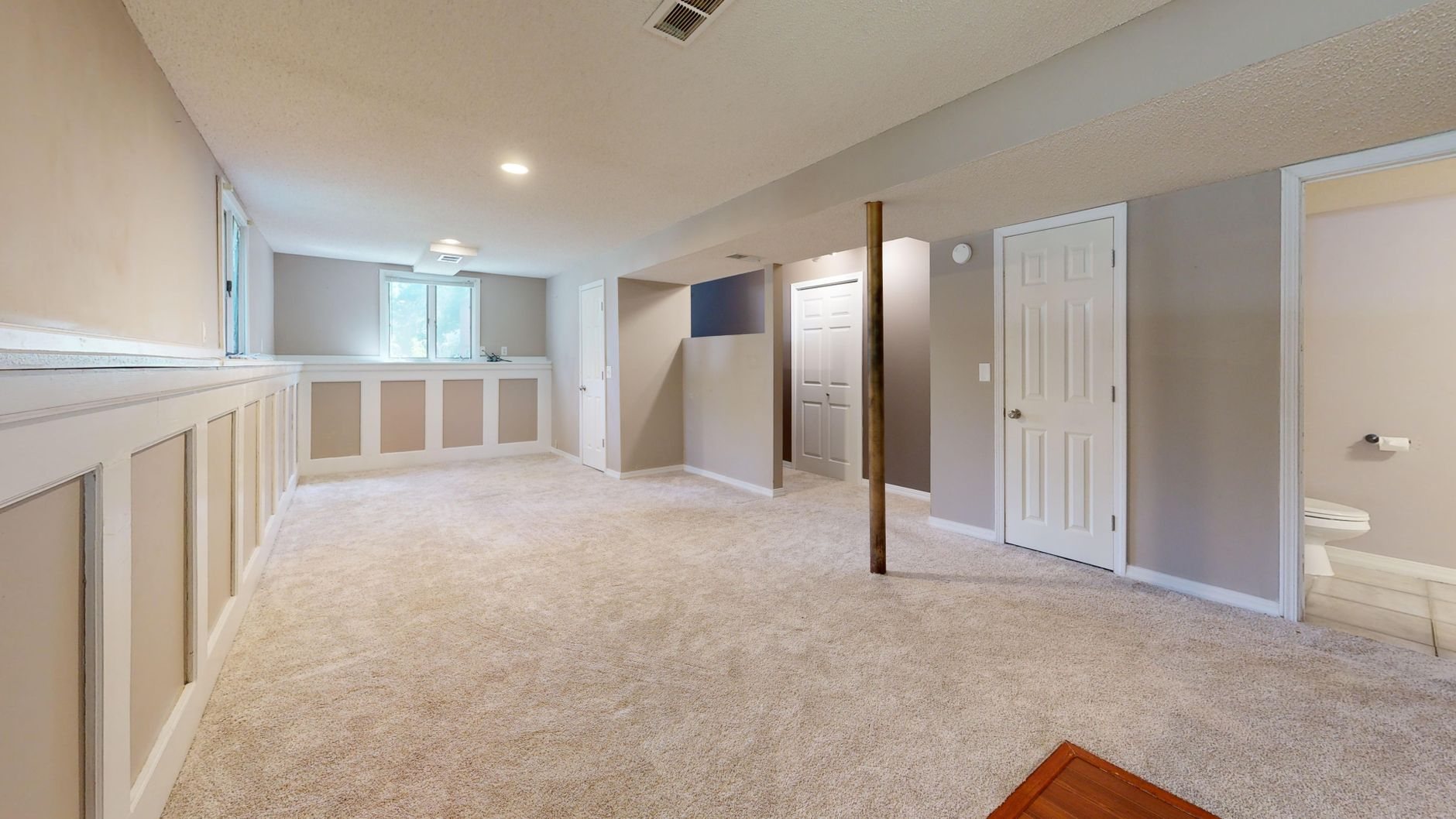
Wall-to-wall carpet is the right call when the room’s job is warmth, quiet, and comfort underfoot: bedrooms, playrooms, family rooms, and most finished basements. Pad and carpet together add real sound absorption between a basement and the floor above, and it’s the fastest whole-house floor to install — a 1,500-square-foot job is typically one or two days once the subfloor is ready.
It’s the wrong call for laundry rooms, mudrooms, and anywhere water shows up on purpose; there, luxury vinyl plank is the usual answer. For an office or a rental where one stain shouldn’t condemn the whole floor, carpet tile is replaceable square by square and worth comparing. Stairs are their own craft: a full wrap or a runner fitted tread by tread lives on our stair carpet page, and we scope stairs and broadloom together so the dye lot matches.
What a proper carpet install involves
- Fiber and construction. Nylon wears longest and recovers from furniture dents; polyester (PET) resists stains and costs less but mats sooner in hallways; triexta splits the difference. Cut pile (plush, frieze) and loop pile (berber) hide footprints differently, and the spec numbers that matter are face weight, density, and twist — not showroom hand-feel.
- Pad. Most residential carpet warranties call for a 7/16-inch rebond pad at 6 to 8 pounds per cubic foot. Thicker is not better: a soft pad lets the backing flex and seams peak. On a basement slab we specify a moisture-barrier pad; on stairs, a firmer, thinner one so the nosing stays crisp.
- Seam plan. Broadloom comes 12 feet wide, so any room wider than that gets a seam. We draw the seams before ordering: run them with the main light source, keep them out of doorways and traffic lanes, and keep pile direction consistent so the color reads the same from the hall. Patterned goods add a repeat to match, which changes the yardage.
- Tack strip and stretch-in. Tack strip goes down a pad-thickness off the wall, pad is fastened and taped, and the carpet is seamed with hot-melt tape before stretching. We power-stretch every room, not knee-kick it — the Carpet and Rug Institute’s CRI 105 standard requires a power stretcher for exactly this reason. Knee-kicked carpet is what ripples two summers later.
- Transitions and tuck. Carpet meets hard flooring at a transition set under the door’s closed position, and tucks under the baseboard gap rather than being trimmed short against it.
Where carpet fits in a Utah remodel
Carpet is the last finish in. Paint, baseboard, and doors go first, with baseboards set roughly 3/8 inch above the subfloor so the carpet tucks under cleanly. If old carpet is coming out, tear-out and disposal is its own line item, and it’s the moment to screw down subfloor squeaks — carpet hides a squeak from your eyes, not your ears.
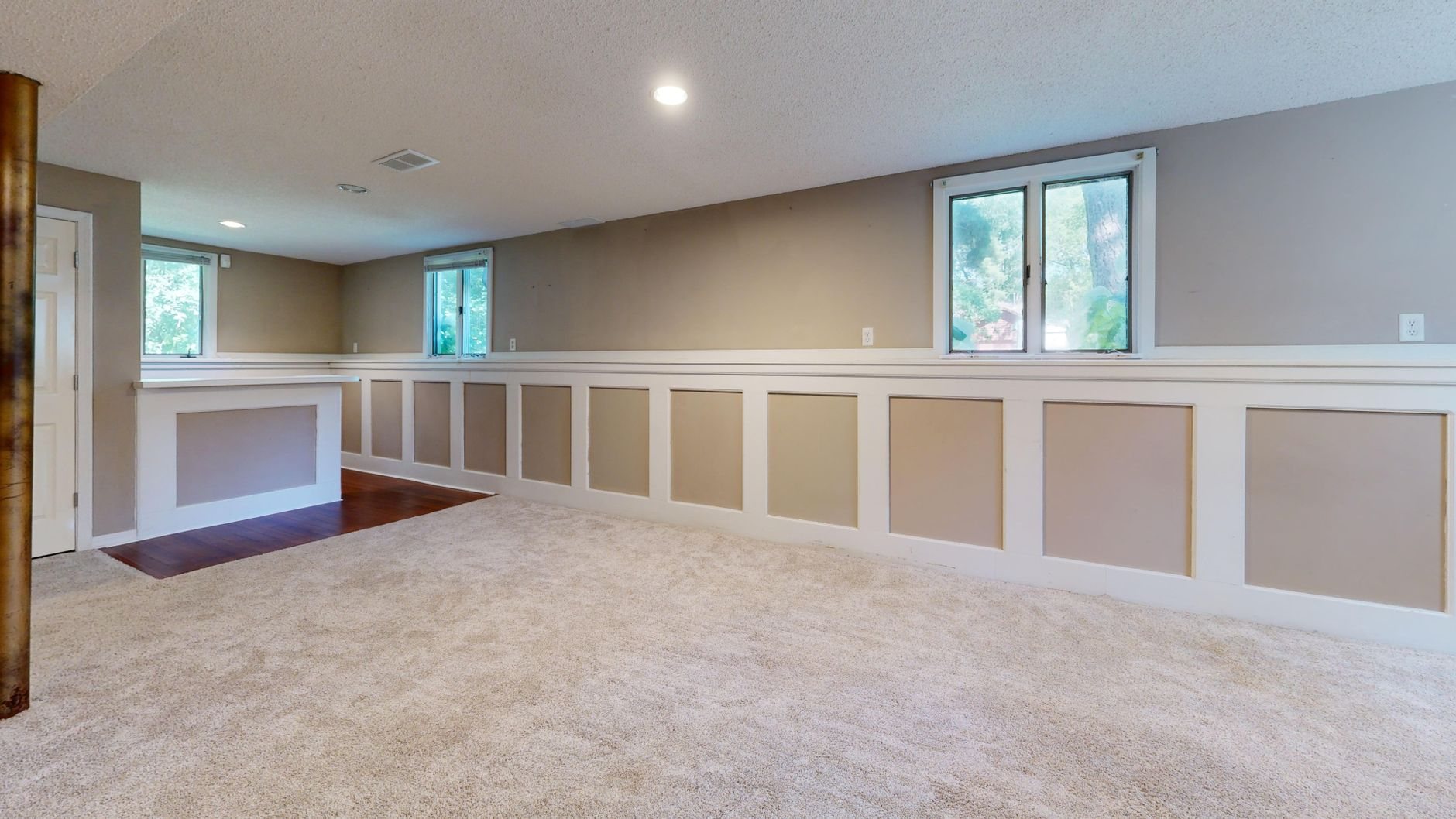
Most Utah County homes have a basement, and that’s where much of our carpet goes. Before carpet meets a slab we moisture-test it; the expansive and collapsible soils under much of the valley can wick moisture through concrete that looks dry. Humps over 3/16 inch in 10 feet get fixed first through subfloor leveling, because pad and carpet telegraph a hump rather than hide it. And since Utah sits on high-radon geology, test for radon before the basement is carpeted, not after — the EPA’s radon guidance is plain about below-grade living space. In a full basement finish, all of that is already in scope.

What does wall-to-wall carpet cost in Utah?
As ballpark planning numbers, installed carpet in Utah County runs roughly $3 to $6 per square foot for mid-grade polyester or nylon with standard pad, and roughly $6 to $10+ for dense nylon, patterned goods, or wool — budgeting ranges, not quotes. The levers: fiber and face weight, pad upgrade, tear-out and haul-away, the waste factor (10 to 15 percent for plain goods, more for patterns and odd-shaped rooms), stairs (priced per step), and furniture moving. Seam math matters too — a 13-foot-wide room wastes nearly a full foot along its whole length, which is why we sometimes recommend 15-foot goods or a different seam direction before a cheaper carpet.
Questions we actually get
Can new carpet go over the existing pad?
No. Pad compresses, absorbs spills, and loses density unevenly in traffic lanes; reusing it voids most carpet warranties and shows through within a year. New carpet always gets new pad, and tack strip is replaced wherever it’s rusted, loose, or missing teeth.
How long until I can put furniture back on new carpet?
Same day, once the stretch is complete and seams have cooled — usually within a couple of hours of the crew finishing a room. Vacuum before furniture returns to lift the pile, and expect some loose fibers from cut edges in the first few vacuumings. That shedding is normal.
Why is my estimate for a 12-by-14 bedroom more than 168 square feet?
Because carpet is sold by roll width, not room size. A 14-foot room cut from 12-foot goods needs a seam and an extra strip, and the offcut can’t always be used elsewhere. Estimates are built from a cut plan, which is why two installers can quote different yardage for the same room — ask to see it.
Does carpet need the baseboards removed?
Usually not. The carpet tucks into the gap under the baseboard; if the gap is too tight (common after a hard-surface floor comes out), we trim the pad back or adjust the base during tear-out. In a full remodel we set baseboards at carpet height from the start.
Related flooring work
Carpet is one option on our flooring installation page, part of Grandview’s renovation and build-out services. The work runs under one B100 license you can verify at dopl.utah.gov.
Tell us what you’re working on
We reply within a couple of hours during business hours — a day at most. You’ll get a straight read on scope, sequence, and budget before anyone commits to anything.