
Engineered Hardwood Flooring in Utah County
Engineered hardwood is real wood — a hardwood wear layer bonded to a cross-laminated plywood core — built to stay flat where solid planks cup or gap: over slabs, in basements, across radiant heat, and through Utah’s dry winters. Grandview Contractors installs it glue-down, floated, or stapled across Utah County and Salt Lake County under a Utah DOPL B100 general contractor license, licensed and insured.
When engineered beats solid hardwood, and when it doesn’t
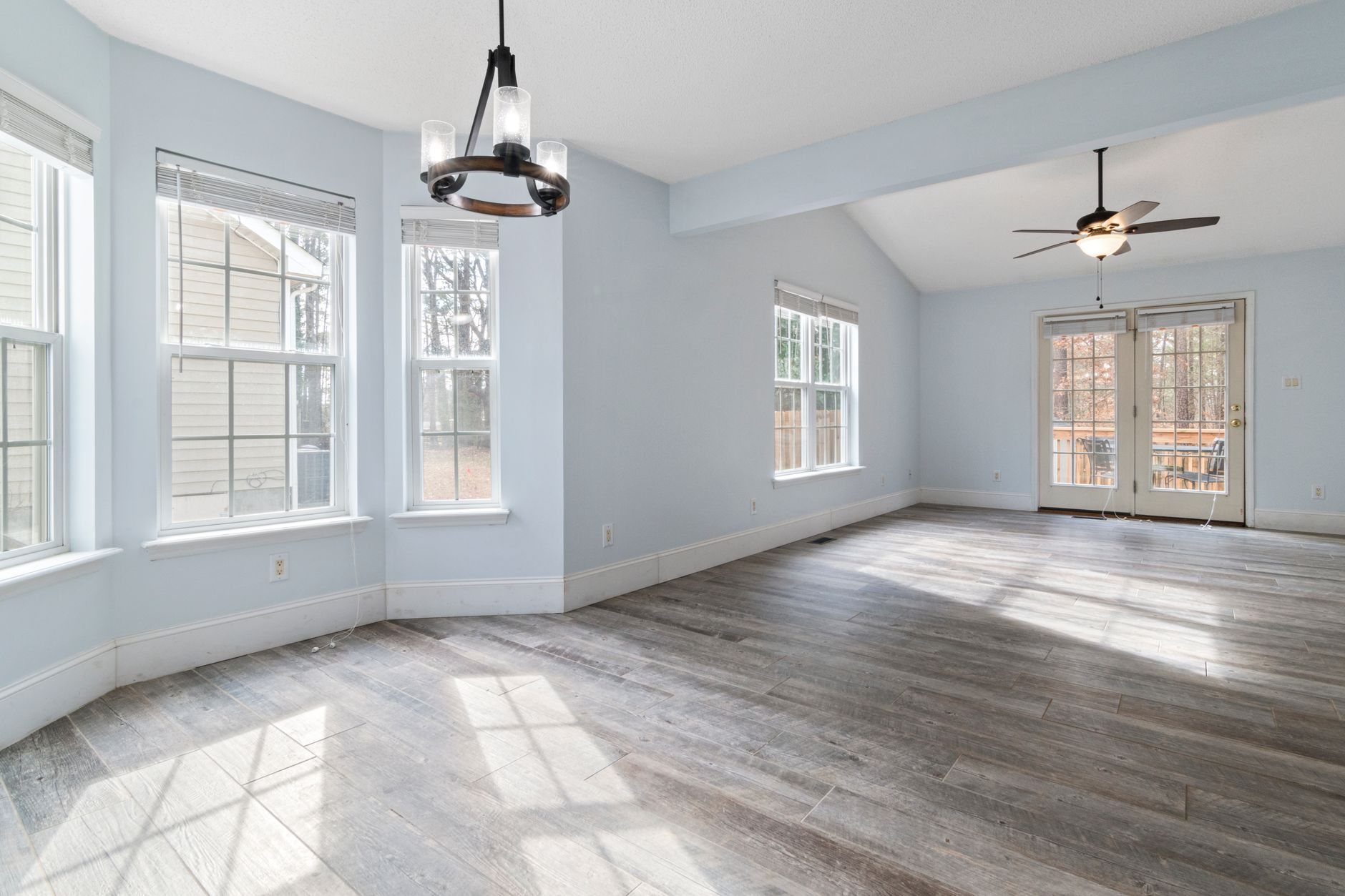
Engineered versus solid hardwood comes down to what’s under the floor and how dry the house gets. Solid wood wants a plywood subfloor above grade and humidity that holds all year. Engineered is the right call when either fails: a slab-on-grade main floor, a basement, radiant floor heat, or planks wider than five inches, where solid boards move too much to trust.
The dry-air argument carries real weight. Indoor humidity in a Wasatch Front home can sit in the teens from December through February. Solid oak shrinks across its width and opens gaps; an engineered plank’s cross-laminated core pulls against itself in both directions and moves a fraction as much.
It’s the wrong call where water lands on the floor regularly — a mudroom full of snow boots belongs in vinyl plank. Nearly all engineered flooring arrives prefinished; our prefinished vs site-finished page covers what that trades away.
What’s actually in an engineered plank
Wear layer. The hardwood on top runs from about 2 mm to 6 mm. A 2 mm veneer can be screened and recoated but not sanded; 3 to 4 mm takes one or two careful refinishes; 5 to 6 mm behaves like solid wood on the sander. It’s the one spec you can’t change later.
Core. Multi-ply plywood (birch or poplar, five to nine plies) is what we specify for slabs and basements. HDF cores are cheaper and flatter out of the box, but swell if they ever get wet — below grade, a gamble. Any core must meet TSCA Title VI formaldehyde limits.
Thickness and face. Planks of 1/2 inch and up can be stapled over plywood; 3/8-inch products are glued or floated. Sawn-face veneers read like solid lumber and cost more than rotary-peeled faces.
How we install engineered hardwood over slab, plywood, and radiant heat
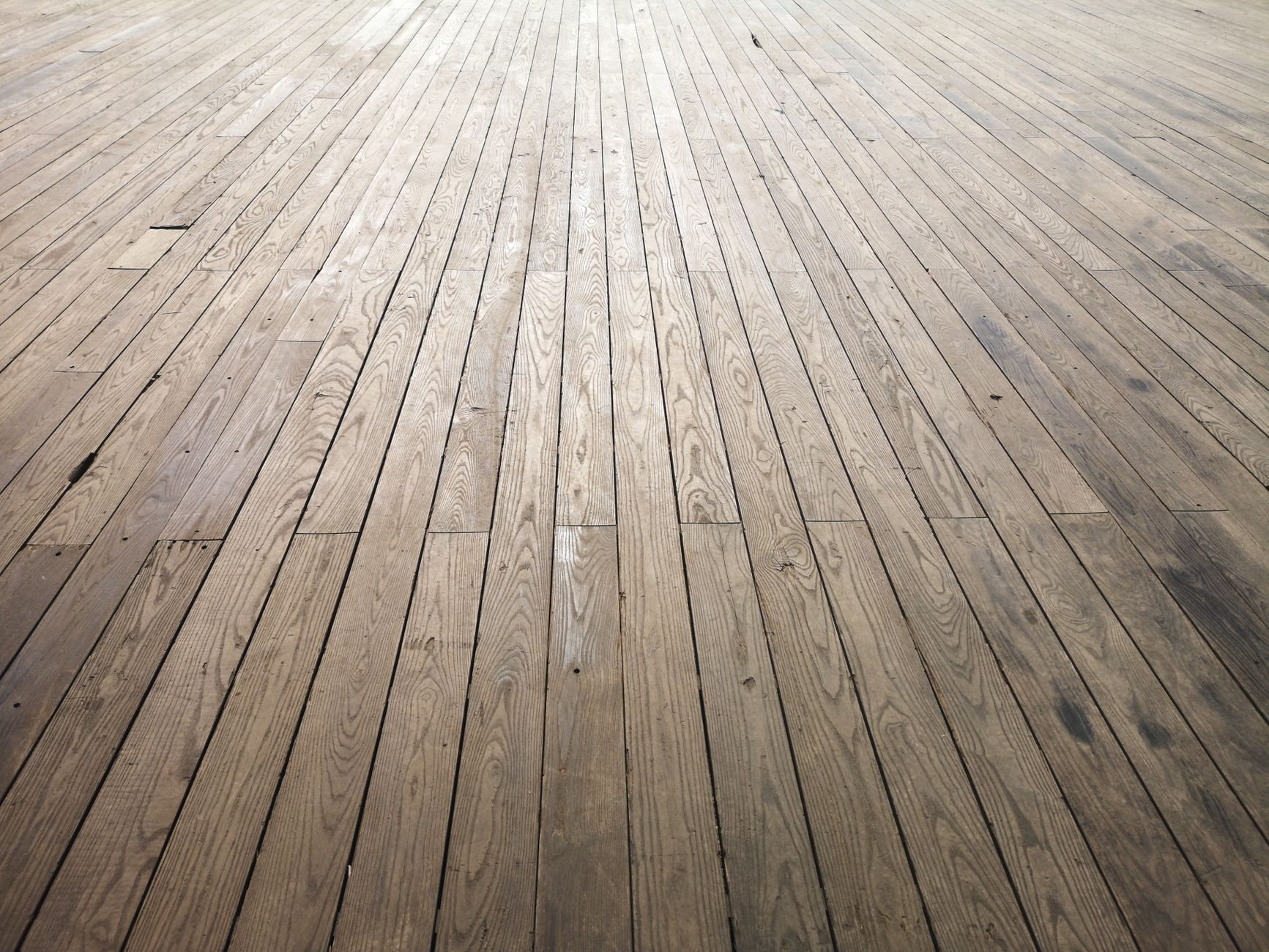
- Test the substrate, not the calendar. On a slab we run in-situ relative-humidity probes against the adhesive’s published limit; the expansive clay under many Utah County lots wicks moisture into slabs that look bone dry. Over plywood we meter subfloor and planks and install when they agree.
- Flatten. National Wood Flooring Association guidelines call for flatness within 3/16 inch over 10 feet; glue-down tolerates less. Grinding and self-leveler are line items from our subfloor prep and leveling scope, priced before planks are ordered.
- Condition the house, not just the boxes. Many engineered products go down straight from sealed cartons, but only into a home held at living conditions — HVAC running, 30 to 50 percent humidity — for a week. In a Utah January that usually means a humidifier is running before we are.
- Match the method to the substrate. Over a slab: glue-down with a urethane adhesive that doubles as a moisture barrier, or a floated click-lock floor over a vapor retarder and pad. Over plywood: stapled on 6-to-8-inch centers. Over radiant heat: glue-down or float, system run for several days first, surface temperature held under the manufacturer’s cap, usually about 85°F.
- Lay out from the longest sight line. First row to a chalk line, not a wall; end joints staggered at least six inches; a 1/2-to-3/4-inch expansion gap at every wall on a floating floor. We rack boards from several cartons at once so color variation spreads.
- Transitions and trim. Where engineered meets tile or carpet, the transition goes in before baseboard and shoe; the floor lands after paint primer and before final trim coats.
What does engineered hardwood flooring cost in Utah County?
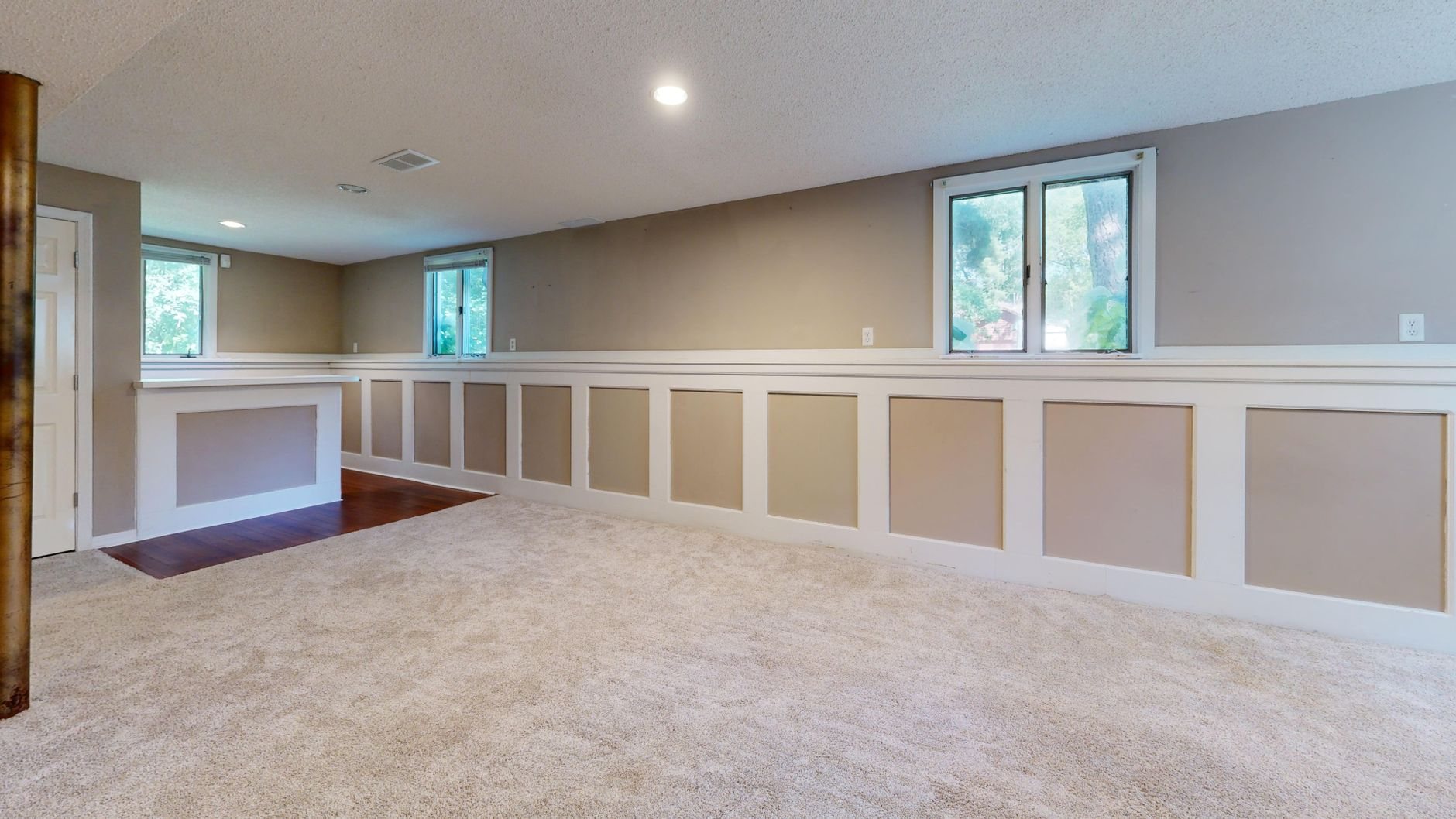
As ballpark planning numbers, most engineered hardwood installs along the Wasatch Front land roughly between $8 and $14 per square foot installed, with material about $4 to $10 of that for a 3-to-4 mm wear layer and more for 6 mm sawn-face wide planks. Budgeting ranges, not quotes; a written estimate follows a moisture test.
What moves the number on an engineered job: wear-layer thickness and veneer type, glue-down versus floating (moisture-barrier adhesive adds roughly $1 to $2.50 per square foot), and the slab reading. A slab that fails the adhesive’s limit needs an epoxy moisture-mitigation coat first — a real cost, and far cheaper than a floor that releases a year later.
Below grade, test for radon first. Utah sits on high-radon geology, the EPA recommends testing before finishing basement space, and mitigation routes more easily before the slab is covered. Our basement finishing scope folds that in.
Questions we actually get
Can engineered hardwood be sanded and refinished?
It depends on the wear layer. Anything 3 mm and up can usually be sanded once; 5 to 6 mm handles two or three refinishes like a solid floor. A 2 mm veneer should only be screened and recoated. We confirm thickness before you buy; it decides lifespan more than species.
Is engineered hardwood safe in a Utah basement?
Yes, with conditions: a plywood core rather than HDF, a slab that passes an in-situ humidity test, and a moisture-barrier adhesive or a vapor retarder under a floated floor. Wasatch Front basements also deserve a radon test before the slab is covered. Skip any of those and no warranty covers what follows.
Will it still gap in winter like my old solid floor?
Far less, but not zero. The cross-ply core limits movement to a fraction of solid wood’s, yet a home at 15 percent indoor humidity will still open hairline joints on wide planks. Holding the house at 30 to 50 percent humidity is part of the install, not an afterthought.
Glue-down or floating — which is better over a slab?
Glue-down feels and sounds like a solid floor, suits wide planks, and forgives small flatness defects; it costs more and is harder to remove. Floating is cheaper, faster, and reversible, but needs a flatter slab and can sound hollow underfoot. Main living level: usually glue-down. Basement bedroom: often a float.
Engineered hardwood is one of the hardwood options on our flooring installation page, inside the renovation and build-out family.
Tell us what you’re working on
We reply within a couple of hours during business hours — a day at most. You’ll get a straight read on scope, sequence, and budget before anyone commits to anything.