
Custom Hardwood Borders, Medallions & Inlays in Utah County
Hardwood floor inlays are contrasting pieces of wood (or metal) set flush into a floor: a border around a room, a medallion at the center of an entry, or a feature strip where one space becomes another. Grandview Contractors designs and installs them in Utah County and Salt Lake County under a Utah DOPL B100 general contractor license, usually as part of a hardwood install or full refinish.
When a border or medallion beats a pattern floor
Inlay work puts the detail where the eye lands and leaves the rest of the floor quiet. A two-strip walnut border in a dining room, a 36″ medallion inside a front door, a feature strip where hall meets great room: each costs a fraction of patterning the whole floor.
Choose a herringbone, chevron, or parquet floor when you want the pattern to be the room. Choose a wide-plank floor when the board itself is the statement. Choose a border, medallion, or inlay when one place deserves emphasis — an entry, a dining room, a landing, a reception area — and a straight-lay solid hardwood floor everywhere else.
Inlays also solve problems. A feature strip hides a change in flooring direction at a doorway; in an older Provo home, a border absorbs an out-of-square room so the field boards stay parallel to the longest wall. This work sits inside our flooring installation services and the renovation projects they belong to.
What installing a hardwood inlay involves
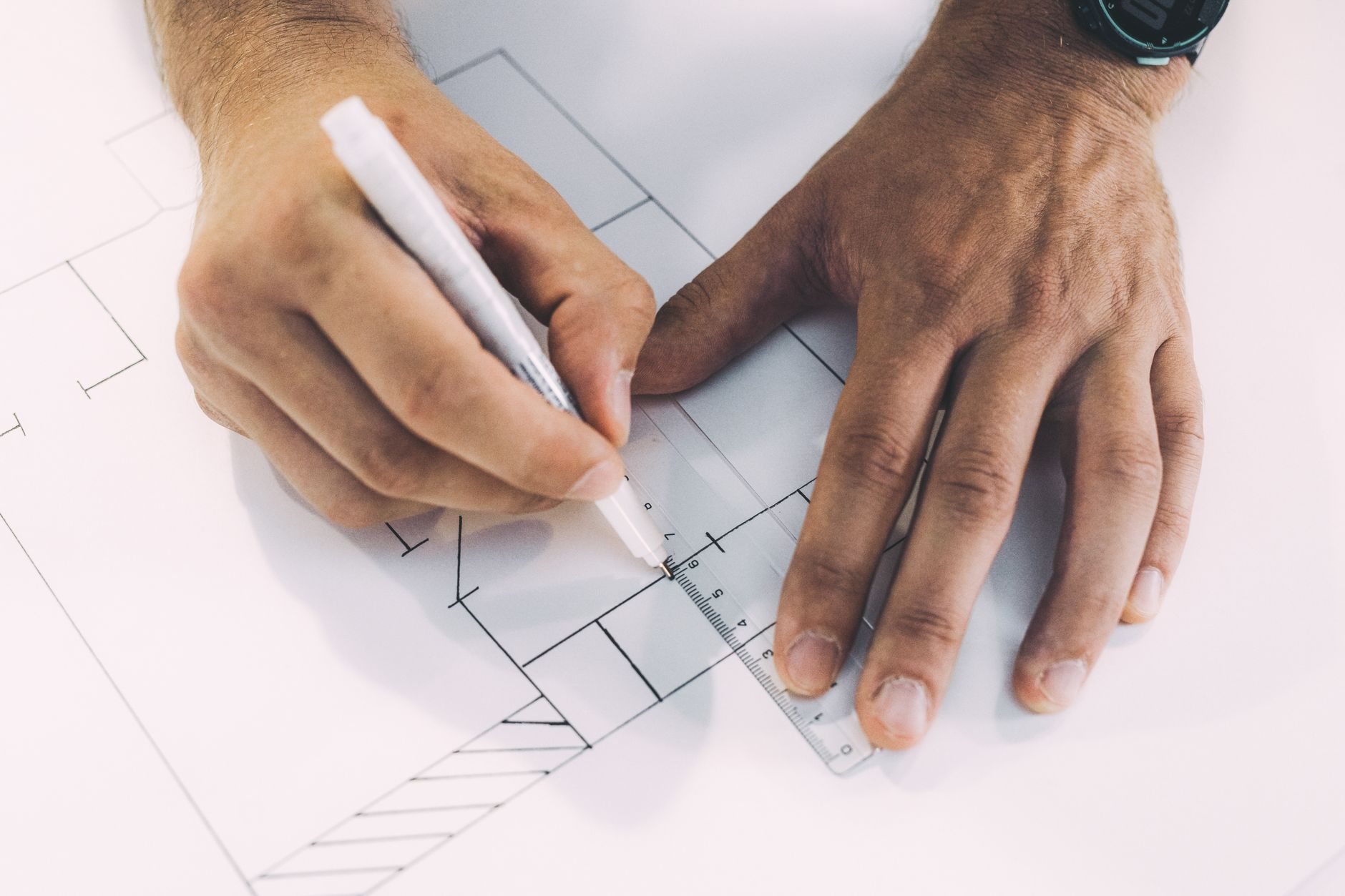
- Design on paper first. We draw the border width, corner treatment (mitered, keyed, or corner blocks), and medallion diameter against the room’s real dimensions and furniture plan. A medallion under a chandelier that’s off-center from the walls needs a decision before any wood is cut.
- Match thickness, not just species. Field boards, border strips, and medallion must share one thickness and wear layer, or sanding cuts through the thin one. We specify 3/4″ solid inlay stock for solid floors and matching-thickness engineered pieces for engineered floors.
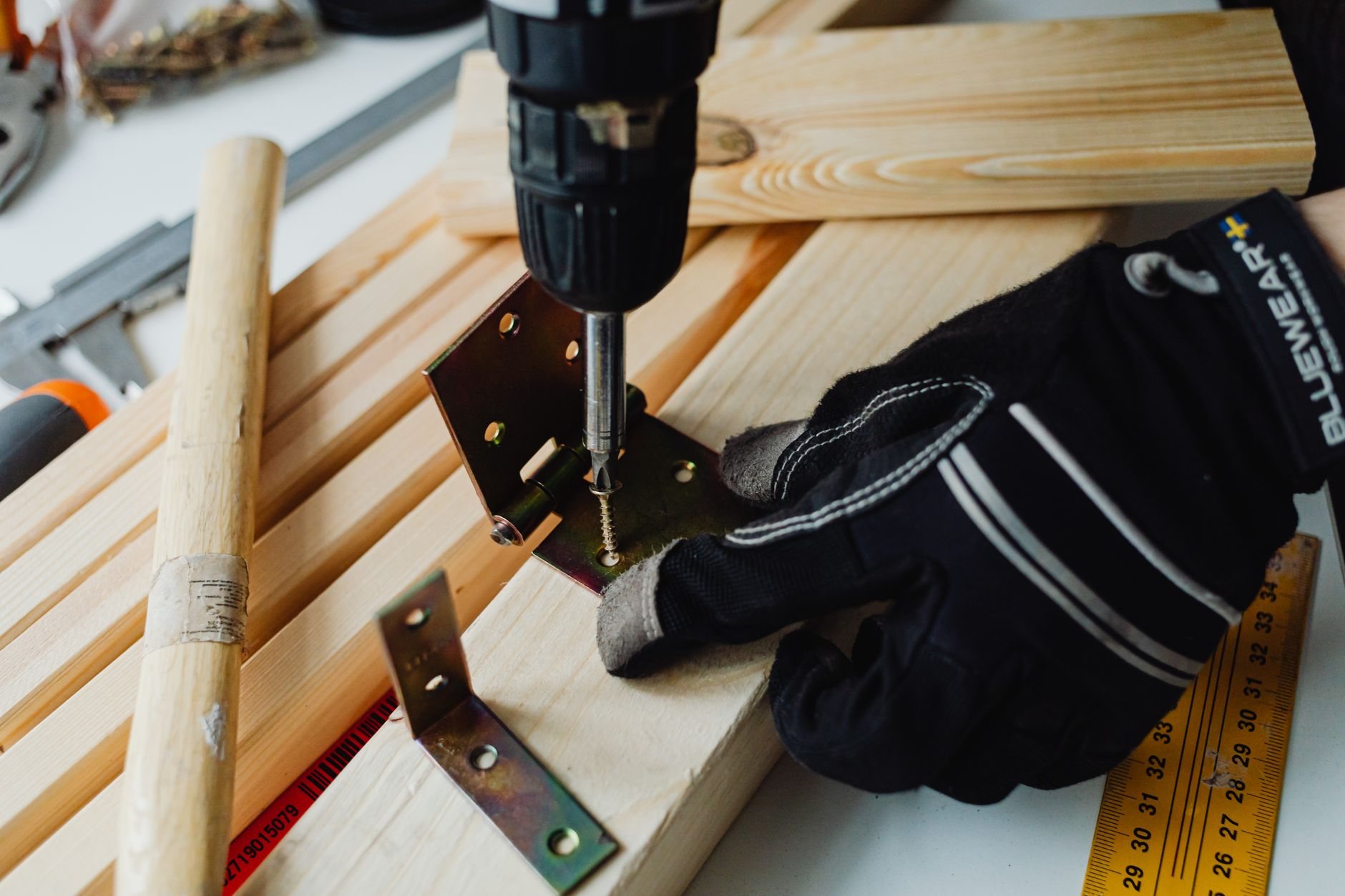
- Lay the field, then cut the recess. Field boards run through the inlay area and get fastened. A router on a template cuts the border channel or medallion pocket to exact depth.
- Set the inlay. Pre-assembled medallions (commonly 24″ to 48″ across) and border strips are glued into the recess, weighted, and left to cure. Brass or aluminum accent strips are set slightly proud and leveled with the wood.
- Sand flush and site-finish. Inlays only disappear into the floor when everything is sanded together and finished in place, which makes this almost always a site-finished floor.
Fastening, adhesive, and expansion details follow National Wood Flooring Association guidelines.
Species contrast, and how Utah light changes it
An inlay works on contrast: dark against light, tight grain against open grain. Usual pairings are walnut or wenge against white oak or maple, cherry against ash, and for medallions, maple and walnut with padauk or brass accents. Contrast that looks right on day one doesn’t stay that way, and our climate is why.
Utah’s elevation makes for intense UV, and species photo-shift at different rates. American walnut lightens over a few years in a sunlit room; cherry and most exotics darken. A walnut border against white oak in a south-facing Lehi living room can lose a surprising share of its contrast by year three. Where contrast needs to stay sharp, we lean toward stable pairings or a finish with UV inhibitors.
Movement is the other issue. Species expand and contract at different rates, and Utah winter interiors routinely drop below 20% relative humidity. Short medallion pieces move little, but a long border strip of a species that moves more than the field will open a hairline joint each January. We acclimate inlay components alongside the field boards and verify moisture content in both before the router comes out.
What do hardwood floor inlays and medallions cost in Utah?
As ballpark planning numbers, a prefabricated medallion runs from a few hundred dollars for a simple 24″ two-species piece to several thousand for a large, multi-species or metal-accented design, plus installation. Border work is priced per linear foot by strip count, species, and corner detail; a plain two-strip border costs far less than a keyed or mitered one. Figure the inlay as a line item on top of the floor itself, and treat all of this as budgeting guidance, not a quote.
What moves the price: species and piece count, custom versus catalog medallions, and whether an existing floor must be cut to receive the inlay. Adding a medallion to a floor that’s already being sanded and refinished is the economical moment; retrofitting into a finished floor means refinishing at least the room.
Questions we actually get
Can a medallion be added to my existing hardwood floor?
Usually, yes. We cut a pocket through the existing floor to the subfloor, set a medallion of matching thickness, then sand and refinish the room so the inlay sits flush. The constraint is thickness: a solid floor that’s been sanded several times may be too thin to match without stepping the medallion down.
Does an inlay work with a prefinished floor?
It can, but it won’t disappear into the floor. Prefinished boards carry a micro-bevel and a factory finish the inlay can’t match, so you see a line and often a height step. For the look most people want, field and inlay are sanded and finished together on site.
What drives the price of a border versus a medallion?
Borders are priced by linear foot and rise with strip count, corner complexity, and species. Medallions are priced per piece by size, species count, and metal accents. Both add site-finish labor. Retrofitting into a finished floor is the biggest single multiplier, because the room gets refinished.
Will the contrast between the woods fade?
Over time, yes, especially in rooms with big south- or west-facing windows at Utah’s elevation. Walnut lightens, cherry and most exotics darken, white oak yellows slightly. A UV-inhibiting finish slows it; pairing species that shift in the same direction keeps the contrast you paid for.
Related services
Inlay work is usually one step in a larger hardwood project — a new solid hardwood install, a full sand and refinish, or a room where new trim and millwork should match the border. The work runs under one B100 general contractor license you can verify at dopl.utah.gov.
Tell us what you’re working on
We reply within a couple of hours during business hours — a day at most. You’ll get a straight read on scope, sequence, and budget before anyone commits to anything.