
Prefinished vs Site-Finished Hardwood Flooring in Utah
Prefinished hardwood arrives with its finish already cured at the factory; site-finished hardwood goes in raw and is sanded, stained, and coated in your home. Grandview Contractors installs both across Utah County and Salt Lake County under a Utah DOPL B100 license, and we’ll tell you plainly which fits your schedule, your rooms, and the floor you want in ten years.
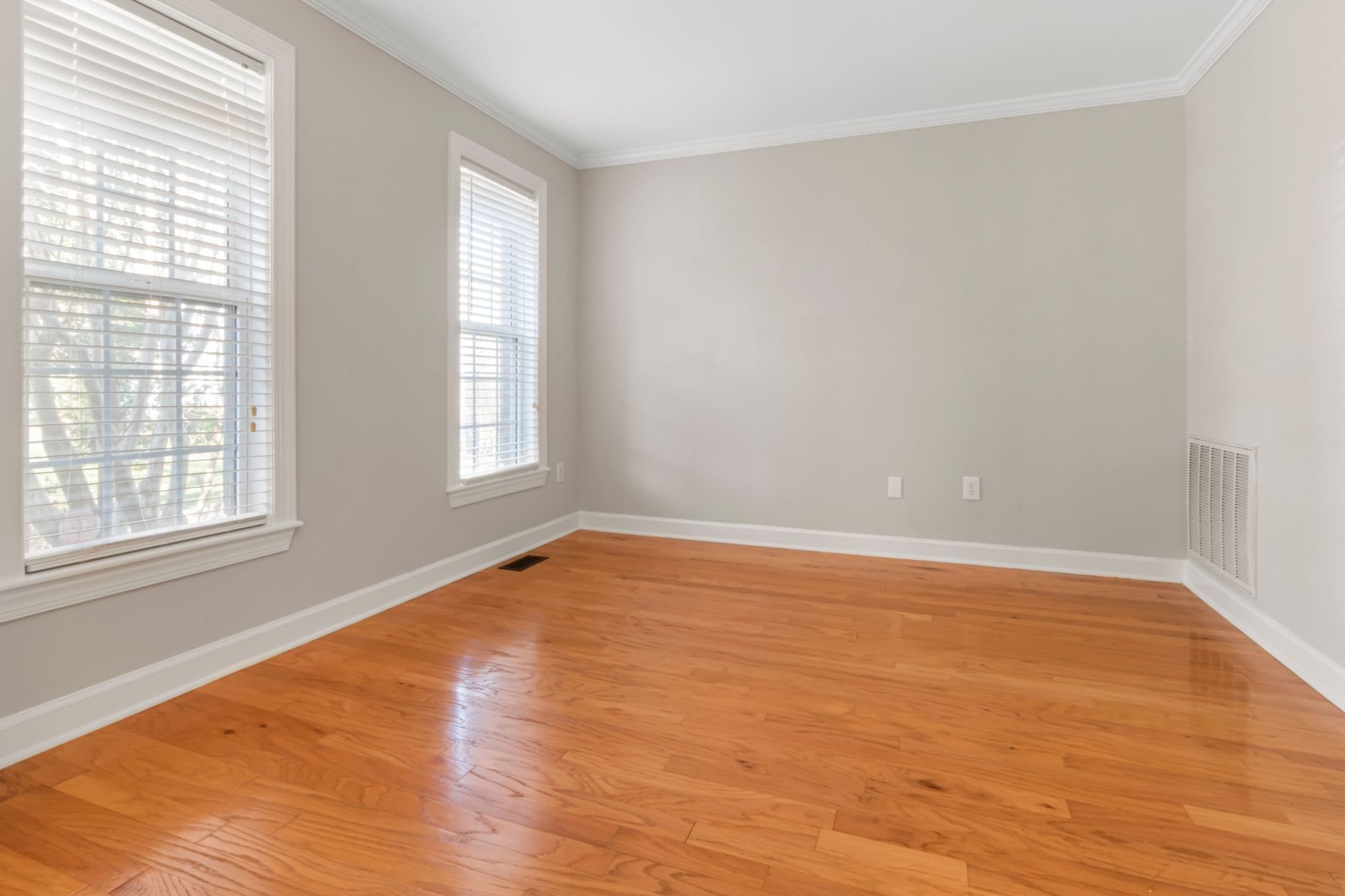
Which one is right for your project?
This isn’t about which wood to buy — solid hardwood and engineered hardwood both come either way. It’s about where the finish gets applied, which decides your dust, your downtime, your seams, and how the floor gets repaired later.
Prefinished makes sense when you’re living in the house during the work, when it’s one room or a rental on a tight turn, or when you want a factory warranty on the finish itself. It’s also the practical choice for engineered planks, which are mostly sold prefinished.
Site-finished makes sense when you want one continuous surface with no bevels, when you’re matching or extending an existing floor, when you want a custom stain, when you’re laying a pattern where edges meet at angles, or when the house is already empty for a larger remodel. And if your current floor is sound, the honest answer may be a sand-and-refinish of what you already own.
Two very different job sites
A prefinished install is a carpentry job. The boards carry a factory aluminum-oxide urethane finish, UV-cured in thin coats — harder and more uniform than anything applied in a living room — and a small edge bevel so slight height differences between planks don’t show. We acclimate the material, prep the subfloor, fasten the boards, and set transitions and base shoe. You walk on it the same day. No finish dust, no fumes.
A site-finished install is two trades in sequence. Unfinished boards go down the same way. Then the floor is machine-sanded flat — a drum or belt sander across the field, an edger along the walls, a buffer with progressively finer abrasives — so every board ends up flush with its neighbors and there are no bevels to catch dirt. Then the finish schedule: optional water-popping to open the grain for deeper stain, the stain, and two to three coats of sealer and topcoat with cure time and light abrasion between each. It runs on the finish’s clock, not ours.
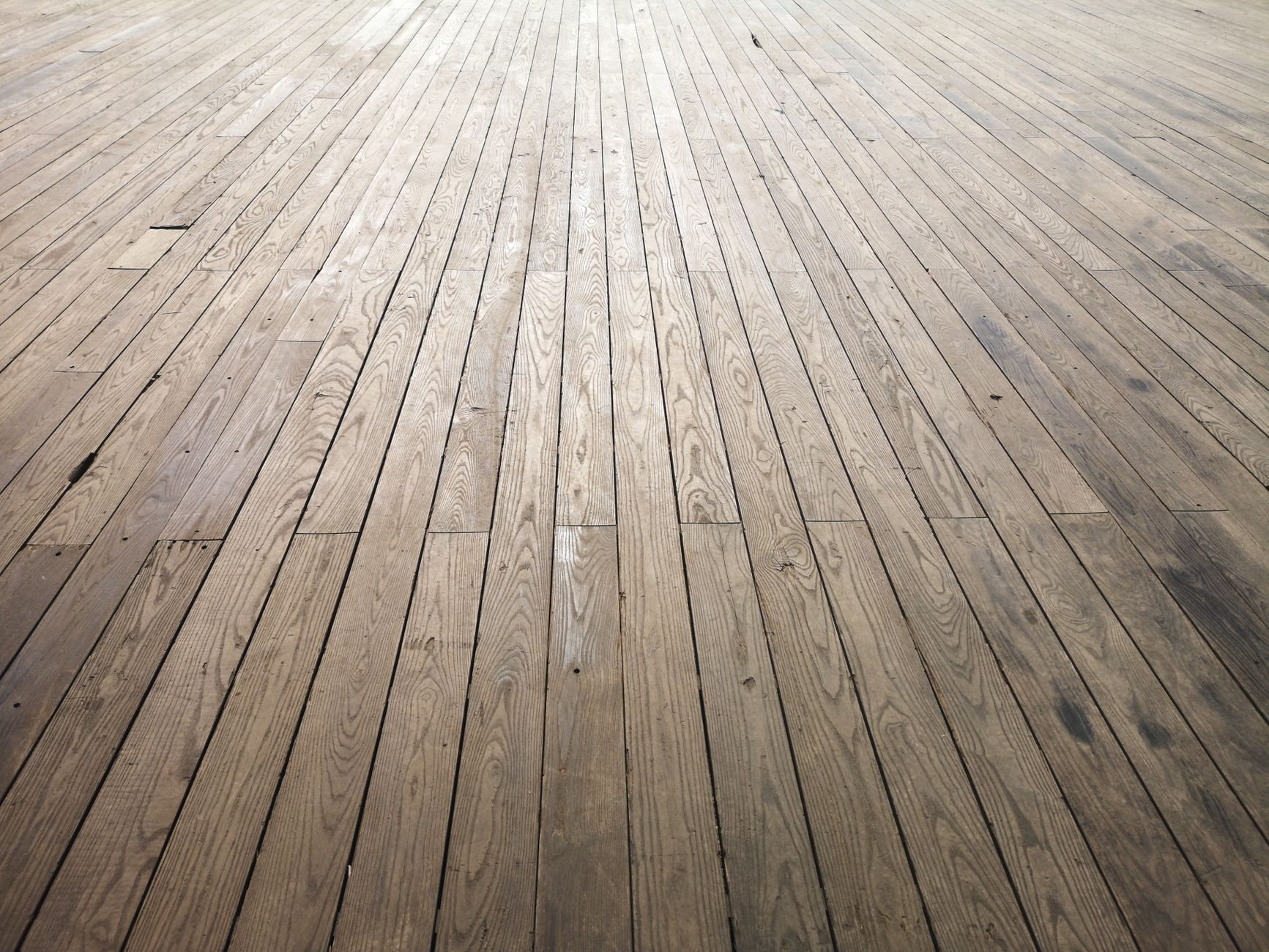
How Utah’s climate changes the site-finish decision
Low humidity dries finishes fast — good news until a water-based topcoat flashes before the applicator reaches the far wall and leaves lap marks. We work in sections and control the HVAC during application. In winter the same dryness has the wood at its narrowest, so we check moisture content before sanding; a floor finished at an extreme is gapped by spring.
Elevation matters too. Wasatch Front sunlight carries more UV than most of the country, and oil-modified polyurethane ambers steadily under it — a warm look, or a mismatch under rugs. Factory finishes with UV inhibitors resist that shift, so south-facing glass can tilt the decision toward prefinished, or toward a water-based site finish that stays clear.
Then the air. Oil-based finishes release volatile organic compounds for days, and the EPA notes that VOC concentrations run far higher indoors than out. Two-component water-based finishes are far lower in VOCs and nearly odorless, so they’re our default for occupied homes. Either way a site-finished floor means a ventilated house and empty rooms: socks-only traffic after about a day, furniture after several days, rugs after a few weeks. A prefinished floor skips all of it.
Repairs, recoats, and year ten
Prefinished floors win on day one and give a little back over time. The bevels collect dust and, in kitchens, whatever hits the floor. A damaged plank can be swapped for a board from the same batch — keep a box — but a blended spot repair isn’t realistic, since a factory finish can’t be duplicated on site. The aluminum oxide that made it durable also eats sanding abrasives, so a full refinish takes more passes, and a screen and recoat needs an adhesion test first.
Site-finished floors age more gracefully because they were made to be refinished. Scratches blend out, the flat surface recoats easily, and a full sand brings it back to bare wood for a new color. That’s why site-finishing is the standard for wide-plank floors and custom stains — floors meant to be maintained, not replaced.
Good work should not require detective work.
Does prefinished or site-finished hardwood cost more in Utah?
Installed, they land closer than people expect. Prefinished boards cost more as material but need no finishing labor. Unfinished boards cost less, then carry a sanding-and-finishing line that, as a ballpark Utah planning number, adds a few dollars per square foot depending on stain, finish system, and room count. Both typically fall inside the roughly $8 to $15+ per square foot installed range on our flooring installation page — a budgeting range, not a quote.
What moves the number: species and grade, custom stain or color matching, a multi-coat finish schedule, dust containment in an occupied house, and sequencing when finishing shares a calendar with interior painting and trim inside a larger renovation. The cost nobody prices is downtime — a week of rooms you can’t use. For some households that decides the whole question. Either way, the work runs under one B100 license you can verify at dopl.utah.gov.
Questions we actually get
Can you install prefinished hardwood and then sand it flat to remove the bevels?
Technically yes, and it almost never makes sense. You’d pay the prefinished premium, then pay again to sand off the factory finish — the hardest layer on the board. If a flat, continuous surface is the goal, buy unfinished boards and site-finish them from the start.
How long will we be out of the rooms with a site-finished floor?
Plan on roughly a week from the first sanding pass to light use, depending on the finish system and number of coats. Water-based finishes allow socks-only traffic in about a day and furniture in a few days; oil-based takes longer. Prefinished floors are walkable the day they’re installed.
Can a site finish match an existing prefinished floor in the next room?
Close, but rarely exact. We can tune a stain toward the existing color, but the factory sheen and the bevels won’t match. At a doorway, a transition strip hides the difference honestly; in one open space, consider refinishing both areas together so they age as one floor.
Which option is better for a house we’re living in during the remodel?
Usually prefinished. No sanding dust in the ductwork, no finish fumes, no closed-off rooms, and the floor is usable the same day. Site-finishing an occupied home is doable with containment, low-VOC finishes, and a phased schedule, but it costs more and asks more of you.
Tell us what you’re working on
We reply within a couple of hours during business hours — a day at most. You’ll get a straight read on scope, sequence, and budget before anyone commits to anything.