
Luxury Vinyl Plank Flooring in Utah County
Luxury vinyl plank (LVP) is a wood-look vinyl floor sold in planks that click together or glue down, and it is waterproof through its full thickness. Grandview Contractors installs LVP in kitchens, basements, rentals, and whole-house remodels across Utah County and Salt Lake County under a Utah DOPL B100 general contractor license.
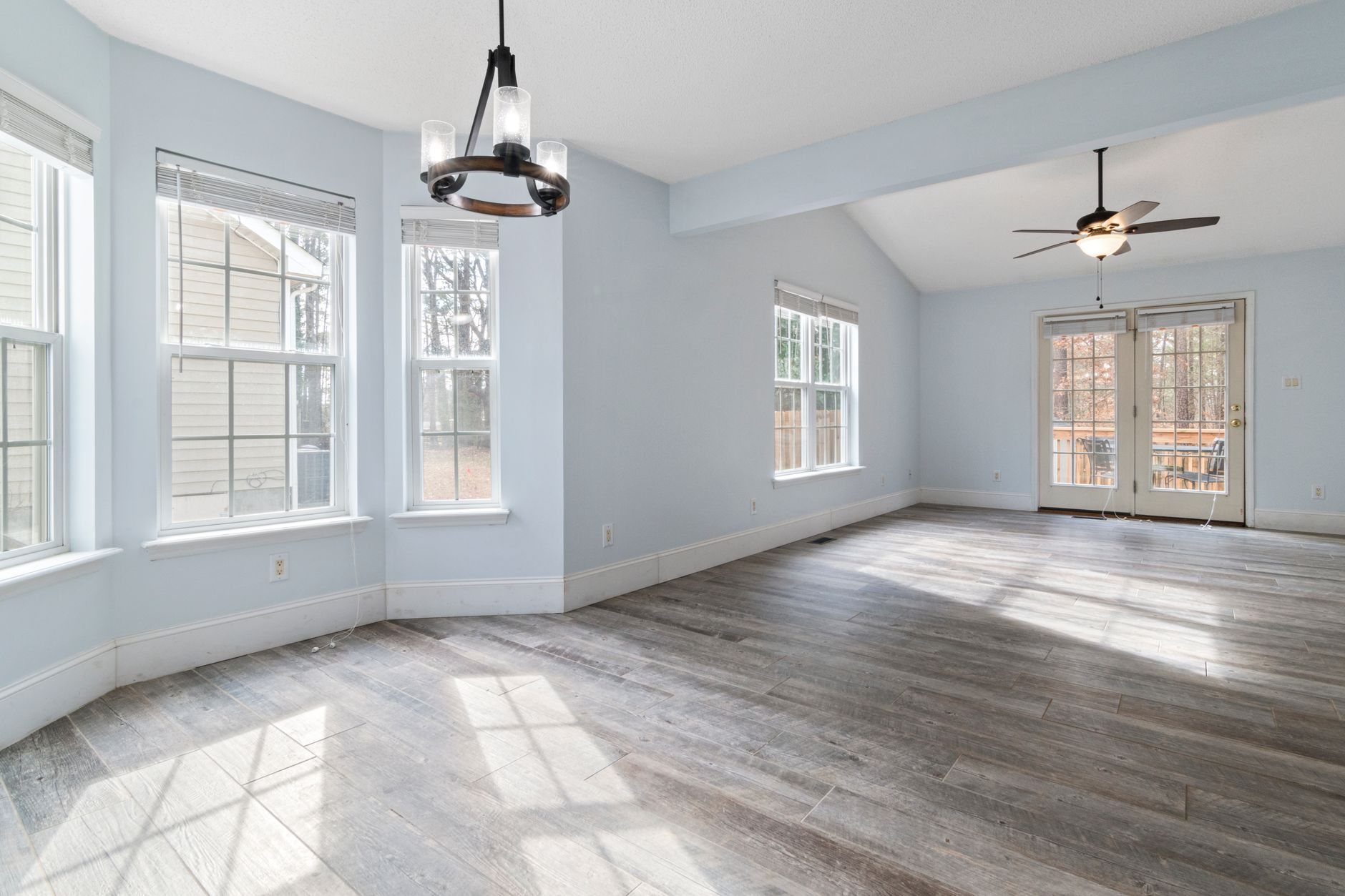
When LVP is the right floor, and when a sibling is
LVP is the floor we’re asked about most, for good reason. It shrugs off spills, dog nails, and the slush that walks in every Utah winter, it goes directly over a flat concrete slab, and it costs less than the hardwood it imitates.
It isn’t always the right answer. For a stone or ceramic look with grout lines, you want luxury vinyl tile. In a dry room on a tight budget, laminate is harder and more scratch-resistant for less money, but its fiberboard core swells the first time a dishwasher leaks. For a laundry room or rental bathroom where one continuous piece beats a hundred seams, sheet vinyl is simpler. And if you want wood that can be sanded someday, no vinyl replaces engineered hardwood.
Choose LVP when water, pets, kids, or a slab subfloor are in the picture and you want a wood look without wood’s upkeep. It’s one option within our flooring installation services, and we’ll say so if a different floor fits better.
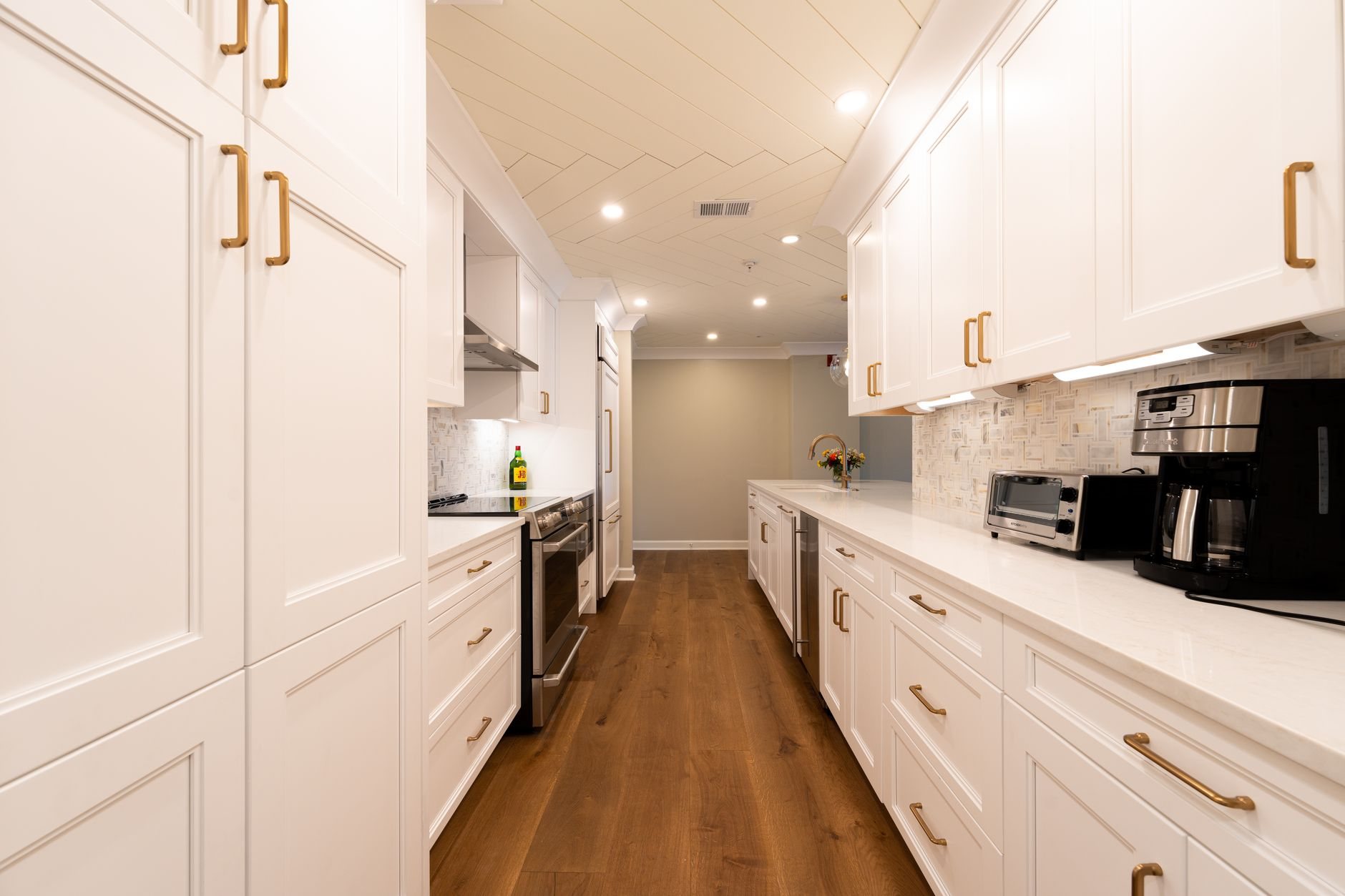
What an LVP installation involves
- Flatness and moisture. Most click-lock LVP manufacturers specify a subfloor flat to about 3/16 inch over 10 feet; rigid planks telegraph every hump and locking joints fail over every dip. We straightedge the floor and fix what’s out of tolerance through subfloor prep and leveling first. On slabs we test moisture. The expansive clay and collapsible soils common along the Wasatch Front keep slab moisture a live question in Utah County basements, and vinyl traps whatever’s underneath it.
- Acclimation. Planks sit flat in the room for 48 hours with the HVAC running. That matters most in January, when material arrives on a truck at 20 degrees and would expand into the walls once the house warms it.
- Floating or glue-down. Click-lock floating floors cover most homes. Glue-down earns its labor in commercial spaces, under rolling loads, and in open runs past 40 to 50 lineal feet, where floating LVP needs an expansion break. The trade-offs are on our glue-down vs floating vinyl page.
- Layout. Planks run with the main light source or the longest wall, end joints staggered at least 6 to 8 inches, first and last rows balanced.
- Install and trim. A quarter-inch expansion gap at every wall, cabinet, and pipe. Door jambs undercut so the plank slides beneath. On a floating floor, islands and built-ins go down first and the floor is gapped to them; pinning a floating floor is the leading cause of peaked seams. Transitions and flush stair nosings finish it.
Reading an LVP spec sheet
Two numbers on the box decide how the floor lives. Neither is the price.
- Wear layer, in mils. This is the clear top coat that takes the abuse. 12 mil is fine for bedrooms and guest rooms. For kitchens, mudrooms, dogs, and rentals we specify 20 mil: the difference between a floor that looks new at year eight and one scuffed by year three.
- Core type. SPC (stone-plastic composite) is dense, thin, and very stable. WPC (wood-plastic composite) is thicker and quieter underfoot but moves more with heat. In Utah that matters: our elevation makes for intense sun, and a floating WPC floor behind a wall of south-facing glass can expand enough on a July afternoon to buckle against a wall gapped on a cool morning. In sunrooms and big-window great rooms we lean SPC with a UV-stable finish.
What does luxury vinyl plank cost installed in Utah County?
As a ballpark planning number, most residential LVP in Utah County lands between roughly $4 and $8 per square foot installed, with material making up $2 to $5 of that. Rigid-core SPC with a 20 mil wear layer sits at the top of the range, thin flexible planks at the bottom. These are budgeting ranges, not a quote.
What moves the number is mostly below and around the planks. Tearing out glued-down vinyl or tile costs more than pulling carpet. Self-leveler on a wavy slab can add a dollar or two per square foot where it’s needed. Stairs are priced per tread. A house full of doorways means more transitions than an open plan of the same footage, and appliance moves, toilet pulls, and baseboard reinstallation each add labor a per-foot material price never shows.
Questions we actually get
Can LVP go over my existing tile or hardwood?
Often, yes. Floating LVP can go over tile, sheet vinyl, or wood if the surface is flat, sound, and dry, and the added height clears doors and appliances. Grout lines wider than about 1/8 inch need skim-coating or the plank joints will telegraph them. We check the height stack-up and price both routes.
Is LVP waterproof enough for a Utah basement?
The plank is. The floor system is only as dry as the slab under it. LVP won’t swell from a spill, but it will trap moisture rising through concrete, and that is where odor and adhesive failure start. We moisture-test slabs before installing; if the numbers are high, mitigation goes in first.
Is rigid-core SPC worth the extra cost over flexible LVP?
In most Utah rooms, yes. SPC’s dense core resists dents from furniture, hides minor subfloor imperfections, and stays dimensionally stable through the temperature swings our strong sun delivers. Flexible LVP still makes sense for budget rentals and low-traffic rooms, and the SPC premium is usually under a dollar per square foot.
Why do floating LVP floors peak or gap at the seams?
Almost always because the floor couldn’t move. A missing expansion gap, baseboard nailed through the planks, or an island screwed down through a floating floor pins it in place, and thermal expansion has nowhere to go but up. Gapping usually means the planks weren’t acclimated. Both are installation problems, not product problems.
Related services
LVP usually goes down late in a renovation or build-out, after paint and before baseboard. In a basement, our basement finishing team handles moisture and the slab before the floor becomes the question. Like every Grandview project, the work runs under one B100 general contractor license you can verify at dopl.utah.gov.
Tell us what you’re working on
We reply within a couple of hours during business hours — a day at most. You’ll get a straight read on scope, sequence, and budget before anyone commits to anything.