
Carpet tile installation in Salt Lake City
Carpet tile is modular carpet — 24-inch squares or 18-by-36 planks with a hard backing, set on a prepared slab with releasable adhesive so any single tile can be lifted and replaced. It is the right floor for offices, clinics, and common areas that need to stay open, and Grandview Contractors installs it across Salt Lake County and Utah County under a Utah DOPL B100 general contractor license.
When carpet tile beats broadloom, VCT, or vinyl
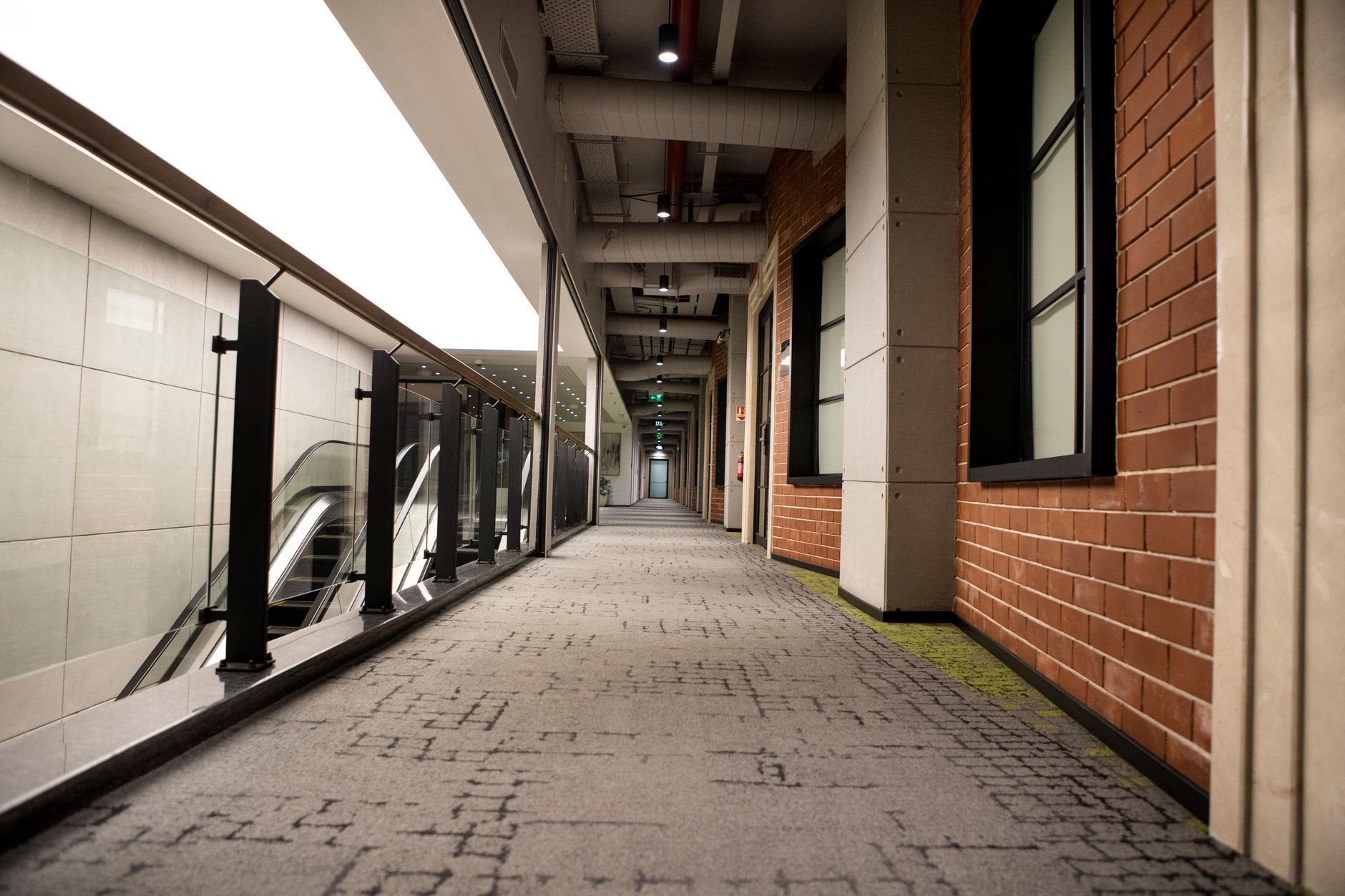
Choose carpet tile when the floor will wear unevenly and you want to fix the worn part, not the whole room. A coffee spill at the break-room door or a chair-caster trench under a workstation becomes a two-tile swap from the attic stock, not a seam repair or a re-stretch. It also fits occupied buildings, because it goes in by zone, overnight and over weekends, while the rest of the suite keeps working.
If the space is a home, a hotel corridor, or a conference room where you want a single uninterrupted surface with cushion underfoot, our wall-to-wall carpet installation is usually the better value. If the room sees rolling loads, wet mopping, or food service, you want a hard surface instead: VCT and commercial flooring for back-of-house and retail, or luxury vinyl tile where it needs to look like stone. Many Salt Lake City tenant improvements use two or three of these in one suite; we land the transitions at doorways, not mid-corridor.
Carpet tile sits inside our broader flooring installation services, sequenced after paint and before furniture.
What a carpet tile installation involves
A hard-backed tile telegraphs every ridge, and releasable adhesive will not hold on a dusty or damp slab. So the job begins below the tile.
- Test the slab. Most Salt Lake City offices sit on concrete, and in-slab relative-humidity probes tell us whether the adhesive will cure or peel. Expansive clay and collapsible soils along the Wasatch Front can move older slabs and wick moisture upward, so we test rather than assume.
- Prep the surface. Old VCT or glue-down carpet comes out through our floor removal service; cutback adhesive gets abated or encapsulated, cracks and control joints get filled, and high spots get ground. See subfloor prep and leveling.
- Choose the backing and pattern. Backings range from vinyl and thermoplastic to cushion-backed tiles that add acoustic value in open-plan offices. Pattern is set by the product: monolithic, quarter-turn, brick, or ashlar. Quarter-turn hides dye-lot variation; monolithic shows it.
- Lay out from the center. We snap chalk lines from the room’s true centerlines so the perimeter cuts come out balanced and no cut tile is narrower than half a tile. In corridors, the lines run off the dominant wall so the grid reads straight down the sight line.
- Set the tiles. Pressure-sensitive releasable adhesive is rolled and allowed to flash to a tack before tiles are placed; some systems instead use adhesive-free connector tabs at the corners. Pile direction follows the arrows on every tile. Tiles are set tight, not compressed, then rolled.
- Finish the edges. Wall base goes on after the tile so it covers the cut edge, and transition strips are set at every change in flooring type. Attic stock is left labeled by dye lot.
Two climate notes. Utah’s winter indoor air runs very dry, and static on carpet is a real complaint in server rooms and clinics, so specify static-control tile where it matters. And our elevation means intense UV through south-facing glass; solution-dyed nylon holds color better than piece-dyed in sunlit lobbies.
What does carpet tile cost to install in Salt Lake City?
As ballpark planning numbers, commercial carpet tile in Utah typically lands between roughly $4 and $9 per square foot installed, with material driving most of the spread: economy vinyl-backed tile sits at the low end, cushion-backed or designer plank product at the high end. Treat that as a range for budgeting, not a quote. What moves the number beyond the tile itself is the condition of the slab (moisture mitigation can add $2 to $4 per square foot on its own), removal and disposal of whatever is there now, the amount of furniture that has to be lifted and reset, and whether the work has to happen after hours. Pattern layout adds a little labor; a plan with many small rooms adds more, because the cut-to-field ratio climbs. We assess before we price.

Questions we actually get
Can carpet tile be installed over existing VCT or old glue-down carpet?
Over sound, well-bonded VCT, sometimes — after stripping the wax and confirming no tiles are loose. Never over old carpet or its cushion. Old cutback adhesive is the usual catch: it must be tested, then abated or encapsulated, before new releasable adhesive will bond.
How much attic stock should we keep for future replacements?
Order roughly 5 to 10 percent overage from the same dye lot and store it flat, indoors, and labeled. Replacement tiles from a later run rarely match exactly. In high-traffic suites we also suggest rotating a few field tiles into the worn zones periodically, which spreads wear and postpones the day you need that stock.
Can you install carpet tile while our office stays open?
Yes, and that is one of the main reasons to pick it. We phase the floor by zone, work evenings or weekends, lift and reset workstations in sections, and use low-VOC adhesives so the space is usable the next morning. The slab moisture test sets the schedule, so it comes first.
Does the pattern direction really matter?
It does. Every tile carries an arrow on the back, and the manufacturer specifies which layouts the product is designed for. Monolithic installs show dye-lot shifts more; quarter-turn and ashlar hide them but change the look. We confirm the pattern on the spec sheet and dry-lay a sample before adhesive goes down.
Related services
Carpet tile is usually one piece of a tenant improvement that also needs demolition, paint, and ceilings; our renovation and build-out services cover the rest under one contract. On the same floor, VCT and commercial hard-surface flooring handles the break rooms and utility areas, and stair carpet covers the connecting stairs. Every project runs under a single B100 general contractor license you can verify at dopl.utah.gov.
Tell us what you’re working on
We reply within a couple of hours during business hours — a day at most. You’ll get a straight read on scope, sequence, and budget before anyone commits to anything.