
Waterproofing & drainage services
Foundation membranes, French drains, sump pumps, vapor barriers, and wet-area waterproofing for homes and buildings across Utah County and Salt Lake County. Grandview designs and installs the whole water-management system under one B100 general contractor license — from the footing drain to the shower pan.
When waterproofing is the right call
Call us when water is already showing up — a damp basement corner every spring, efflorescence on foundation walls, a window well that fills during a storm, a musty smell that never quite leaves. And call us before it shows up: when you’re building new, finishing a basement, digging an addition, or replacing a deck over living space. Waterproofing installed during construction costs a fraction of waterproofing installed after the drywall is up.
Most leaks aren’t mysteries. Along the Wasatch Front, they’re usually the same short list: grading that slopes toward the house, downspouts dumping at the foundation, a footing drain that clogged or never existed, or hydrostatic pressure from spring snowmelt sitting against an unprotected wall. Utah’s summer monsoon makes it worse — a cloudburst can drop an inch of rain in an hour on ground that spent six weeks baking, and all of it goes looking for the lowest point on your lot.
The fix is a system, not a product. Surface grading, gutters and extensions, membranes on the wall, drains at the footing, a sump to move what still gets through, and vapor control under the slab all do different jobs. We figure out which pieces your building actually needs — and tell you plainly which ones it doesn’t. This work also pairs naturally with foundation repair, because water in the soil is behind most of the settlement and wall movement we diagnose.
Keeping water off the foundation
Foundation & below-grade waterproofing
Membranes, coatings, and drainage board on new and existing foundation walls — the primary barrier between soil moisture and your concrete.
ExploreExterior basement waterproofing
Excavate to the footing, clean and repair the wall, apply membrane and drainage board, and rebuild the drain. The permanent fix for chronic leaks.
ExploreInterior basement waterproofing
Interior drain channels, wall vapor management, and sump systems that control water without excavating — often the practical choice for finished lots.
ExploreFrench drain & drain tile
Perforated pipe in washed gravel, wrapped in fabric, sloped to daylight or a sump — for wet yards, interior perimeters, and retaining walls.
ExploreExterior footing drains
New or replacement perimeter drains at footing level that intercept groundwater before it builds pressure against the basement wall.
ExploreSump pump installation
Basins, pumps, discharge lines, and battery backups — sized for your inflow and installed so they run when the power and the storm arrive together.
ExploreWaterproofing above the footing
Below-slab vapor barriers
Heavy-mil barriers under new slabs that block soil moisture and support radon control — cheap insurance in Utah’s high-radon geology.
ExploreAbove-grade wall waterproofing
Coatings and drainage details for exposed foundation walls, planters, and walls that take wind-driven rain and sprinkler spray.
ExploreDeck & balcony coatings
Traffic-rated waterproof coatings for decks and balconies over living space — the detail that decides whether the room below stays dry.
ExploreBathroom & shower membranes
Sheet and liquid-applied membranes behind tile in showers, curbless bathrooms, and steam rooms — installed and flood-tested before tile goes on.
ExploreEgress window well drainage
Drains, gravel sumps, covers, and grading fixes for the window wells that flood basements one storm at a time.
ExploreDiagnose first, then build the system
- Find the source. We walk the lot and the basement — grading, gutters, wells, soil, and where the water actually enters. No proposal until we know the cause.
- Design the path. Water needs somewhere to go. We plan the route from roof to soil to drain to discharge, and check it against your lot’s slope and your city’s discharge rules.
- Scope honestly. Sometimes the fix is a $300 downspout extension, not a $30,000 excavation. You get the options in order of cost, with a straight recommendation.
- Install and test. Membranes get inspected before backfill, drains get verified for slope, sumps get flow-tested, and shower pans get flood-tested before tile.
- Close the loop. Final grading, restored landscaping or flatwork, and documentation of what’s buried where — for you and the next owner.
Why do Utah basements get water problems?
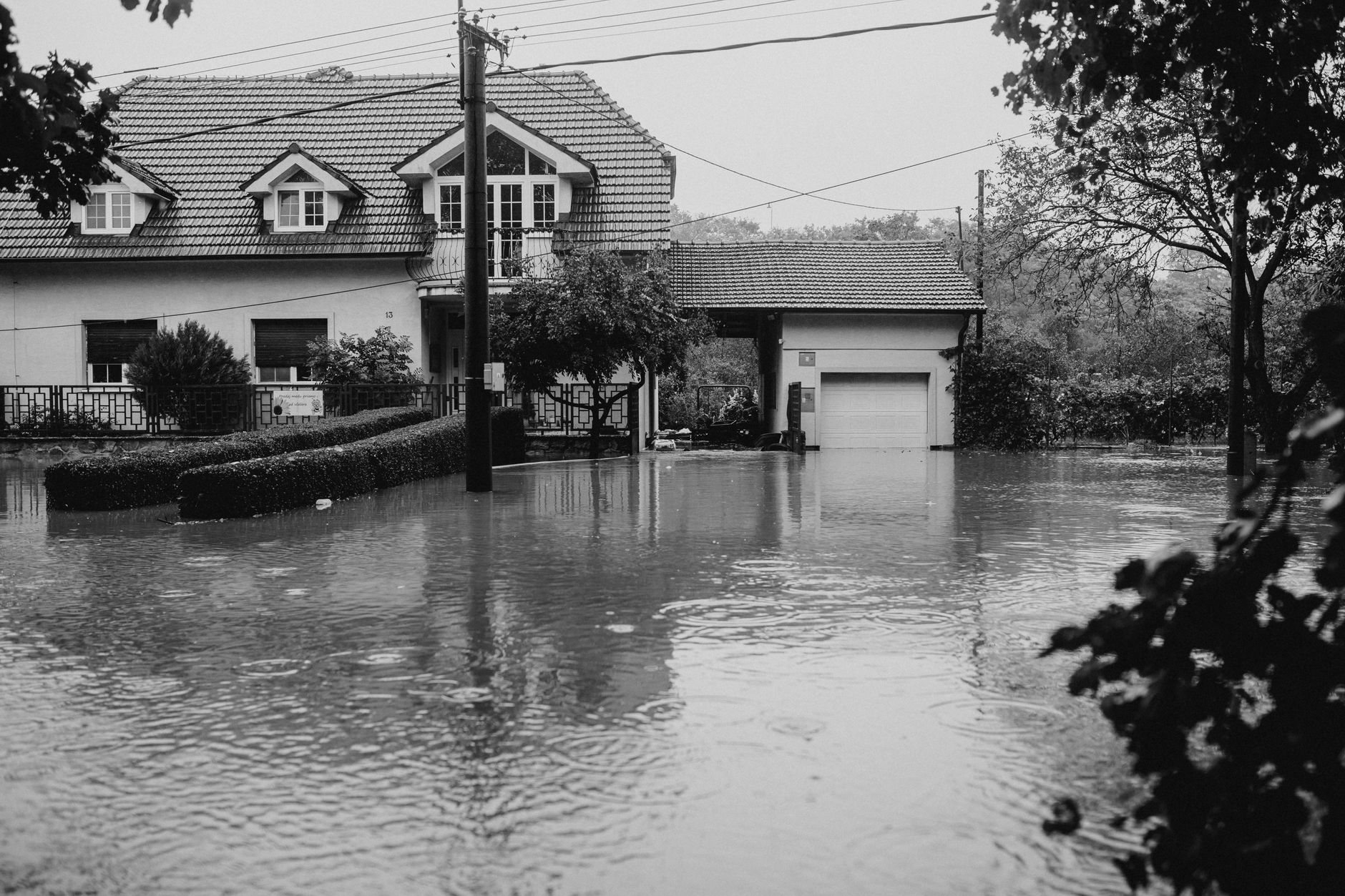
Three reasons, mostly: soils, snowmelt, and storms. Wasatch Front lots sit on expansive clays that swell when wet and collapsible bench soils that settle when saturated — both documented by the Utah Geological Survey — so water in the soil doesn’t just leak in, it moves the foundation itself. Spring snowmelt keeps that soil charged for weeks, and summer cloudbursts overwhelm lots graded for a drier climate.
Two more Utah realities shape how we build these systems. First, freeze–thaw: with 100-plus freeze-thaw days a year along the Front, any discharge line, well cover, or exterior detail has to survive water freezing inside it, which changes how we slope pipes and where we daylight them. Second, radon: much of Utah sits on high-radon geology, so below-slab work is a chance to add sealed vapor barriers and rough-in mitigation while the slab is open — see EPA’s radon guidance for why that matters in basements people actually live in.
New construction on fast-growth lots in Lehi, Saratoga Springs, and Eagle Mountain deserves special attention: many of these subdivisions sit on the bench soils most prone to movement, and getting the footing drain, membrane, and grading right on day one is far cheaper than excavating a landscaped yard in year six. If you’re planning a build, waterproofing decisions belong in the same conversation as excavation and grading and retaining walls — it’s all one water system. We see dependencies before they become delays.
Questions we actually get
Should I waterproof from the inside or the outside?
Outside is the true fix — it stops water before it touches the wall — but it requires excavation, which gets expensive when decks, driveways, or mature landscaping are in the way. Interior systems manage water that gets through and work well for many homes. We price both honestly and tell you which one your situation actually calls for.
What does basement waterproofing cost in Utah?
As ballpark planning numbers: downspout and grading fixes can run a few hundred dollars, interior drain and sump systems typically land in the $4,000–$15,000 range, and full exterior excavation and membrane work often runs $15,000–$40,000 depending on depth, access, and what has to be removed and restored. A site visit turns those ranges into a real estimate.
Can you waterproof in winter?
Interior work, sump installs, and wet-area membranes run year-round. Exterior excavation and membrane work is weather-dependent — frozen ground slows digging, and most membranes have minimum application temperatures. If waiting six weeks gets you a better installation, we’ll say so and schedule it.
My basement is already finished. Do I have to tear it out?
Not always. Exterior waterproofing fixes the problem from outside without touching the finished space. Interior systems usually require opening the bottom of the perimeter walls, which we repair as part of the scope. If moisture has been in the walls a while, we’ll check for damage worth addressing before it’s covered again.
Where this work usually leads
Waterproofing is part of the site, structure & envelope family, and it rarely travels alone. A dry basement is usually step one toward a finished one, chronic water often comes with settlement worth a foundation repair assessment, and roof runoff is where half of these problems start. Tell us the symptom — we’ll scope the system. Our B100 license is verifiable at dopl.utah.gov.
Tell us where the water shows up
We reply within a couple of hours during business hours — a day at most. You’ll get a straight read on the cause, the options in order of cost, and a real budget range before anyone commits to anything.