
Above-Grade Wall Waterproofing
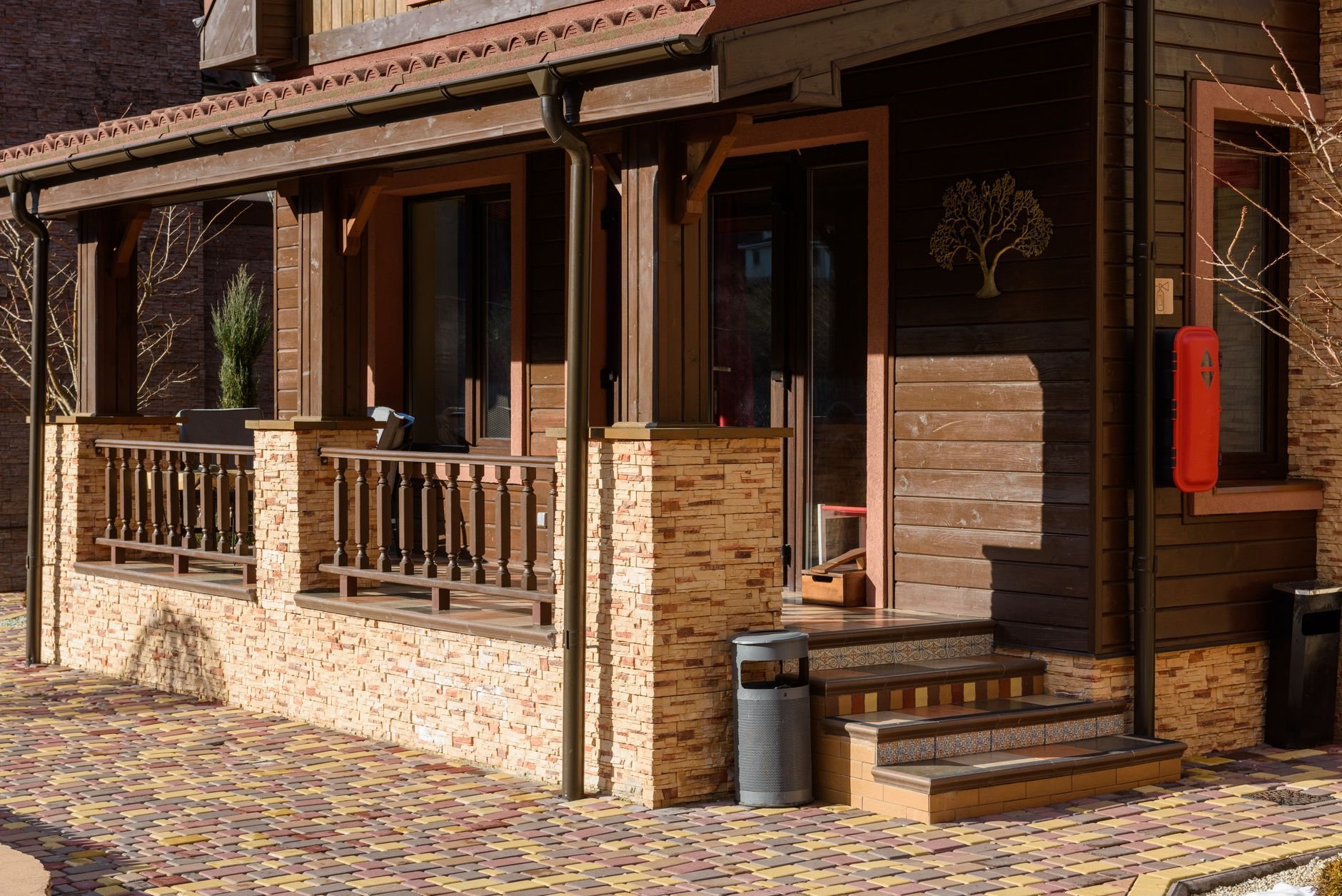
Above-grade wall waterproofing protects the concrete and block you can see: the exposed stem wall between dirt and siding, planter and retaining walls built against the house, and walkout walls that take sprinkler spray and wind-driven rain. Grandview cleans, patches, coats, and flashes these walls under a B100 general contractor license across Utah County and Salt Lake County.
When the problem is above the dirt, not below it
Most waterproofing happens underground. This page is for the wall you can see. A chalky white bloom at sprinkler height, flaking paint on the stem wall, a planter staining the siding above it, or a damp stripe inside where slab meets wall all mean water is getting in above grade — and digging to the footing won’t fix it.
The nearest alternatives do different jobs. Foundation and below-grade waterproofing is the membrane on the buried wall; exterior basement waterproofing is the excavate-and-rebuild version for chronic leaks. Deck and balcony coatings handle surfaces you walk on. Above-grade work costs less than any of them because nothing gets dug, and it’s the right first move when the symptoms line up with where sprinklers hit, snow piles, and roof splash lands.
What goes on the wall, and why
Exposed concrete is not waterproof. It absorbs water, and when that water freezes it pries the surface apart. With 100-plus freeze-thaw days a year along the Wasatch Front, the strip of stem wall between grade and siding takes more cycles than any other part of the foundation: wet from the sprinkler at night, frozen before dawn, thawed by noon.
The coating has to match the wall. On sound concrete that is simply absorbing water, a penetrating silane/siloxane sealer keeps it looking like concrete while making it shed spray. On pitted or patched walls, we parge with a polymer-modified cementitious coating, then top it with a breathable elastomeric or cementitious finish in a color that reads as foundation, not paint. On block planters and retaining walls, the soil face gets a true waterproofing coating — crystalline or fluid-applied membrane — and the exposed face gets the breathable finish so trapped moisture can leave.
Breathable matters: seal both faces of a wall and the first hard freeze pushes the coating off in sheets. Utah’s elevation and UV intensity chalk ordinary paint on south and west walls in a few seasons, so we spec coatings rated for UV exposure.
Fix the water path, then coat
- Trace the spray. We run the sprinklers and watch the wall. Heads that throw onto concrete get fixed before any coating goes on; otherwise the wall is wet again the first night.
- Check the transition. Current Utah-adopted code keeps wood siding clear of grade, and stucco needs a working weep screed. Where soil, mulch, or a planter has crept over that line, we pull it back and detail the gap.
- Prepare the surface. Pressure wash, remove efflorescence, grind loose material, and patch spalls with a bonded repair mortar. Cracks wider than a hairline get routed and sealed with flexible urethane, not buried under the finish.
- Add drainage where soil touches the wall. Planters and retaining walls against the house get weeps, a drainage mat, or a short perforated line to daylight. A coating with no drain behind it is a bathtub.
- Coat in the right weather. Two coats, within the product’s temperature window. Spring mornings on the Front can be too cold for cementitious coatings and July afternoons too hot; we schedule around both.
- Flash and close. Kick-out flashings where a roof meets the wall, sealed hose-bib and conduit penetrations, and downspout extensions that keep roof water off the finish.
What does above-grade wall waterproofing cost in Utah?
As ballpark planning numbers: cleaning, patching, and coating the exposed stem wall around a typical Utah County home usually lands between $1,500 and $6,000. Waterproofing a planter or short retaining wall against the house runs roughly $800 to $4,000 depending on whether drainage has to be added. None of this is a quote; a site visit turns it into one.
What moves the number: the condition of the concrete, linear feet of exposed wall, the coating system (a penetrating sealer costs far less than parge plus elastomeric), access around decks and shrubs, and whether sprinklers, grading, or gutters and downspouts need correcting first. If a retaining wall against the house is failing rather than leaking, that is a structural scope and we’ll say so first.
Questions we actually get
Can I just paint the exposed foundation?
You can, and it will peel. House paint forms a film that traps moisture in the concrete, and freeze-thaw pushes it off within a season or two. Use a breathable masonry coating or a penetrating sealer on a clean, patched wall, and keep the sprinklers off it.
Will coating the stem wall stop my basement from leaking?
Only if the leak is above grade. If water shows up at the slab edge after sprinklers run or a monsoon cloudburst, the exposed wall is often the entry point and a coating plus a grading fix solves it. If the wall weeps during spring snowmelt with sprinklers off, the problem is below grade and belongs to foundation or exterior basement waterproofing.
What about the white powder on the wall?
Efflorescence: minerals carried out of the concrete by water and left behind when it dries. Utah’s hard water makes it worse where sprinklers hit. We clean it, let the wall dry, and coat it so the minerals stop migrating.
My stucco goes all the way to the ground. Is that a problem?
Usually, yes. Stucco needs a weep screed with clearance above soil and hardscape so water behind it can drain out. Bury that line under mulch or a patio and water wicks up into the wall. We pull the grade back and handle the stucco repair and stem-wall coating as one scope.
This is one piece of our waterproofing and drainage services in the site, structure & envelope family; the storm that soaks a stem wall also fills window wells, so egress window well drainage often rides along. Our B100 license is verifiable at dopl.utah.gov.
Tell us what the wall is doing
We reply within a couple of hours during business hours — a day at most. You’ll get a straight read on whether the water is above grade or below it, and a budget range before anyone commits to anything.