How much does basement finishing cost in Utah? (2026 guide)
Most Utah basement finishes land between $40 and $70 per square foot in 2026 — roughly $40,000 to $70,000 for a typical 1,000-square-foot basement. A simple open family room can come in under that; a basement with a bathroom, wet bar, and egress bedroom can run well past it. These are honest ballpark planning numbers, not quotes — here is how the math actually breaks down.
What does basement finishing cost per square foot in Utah?
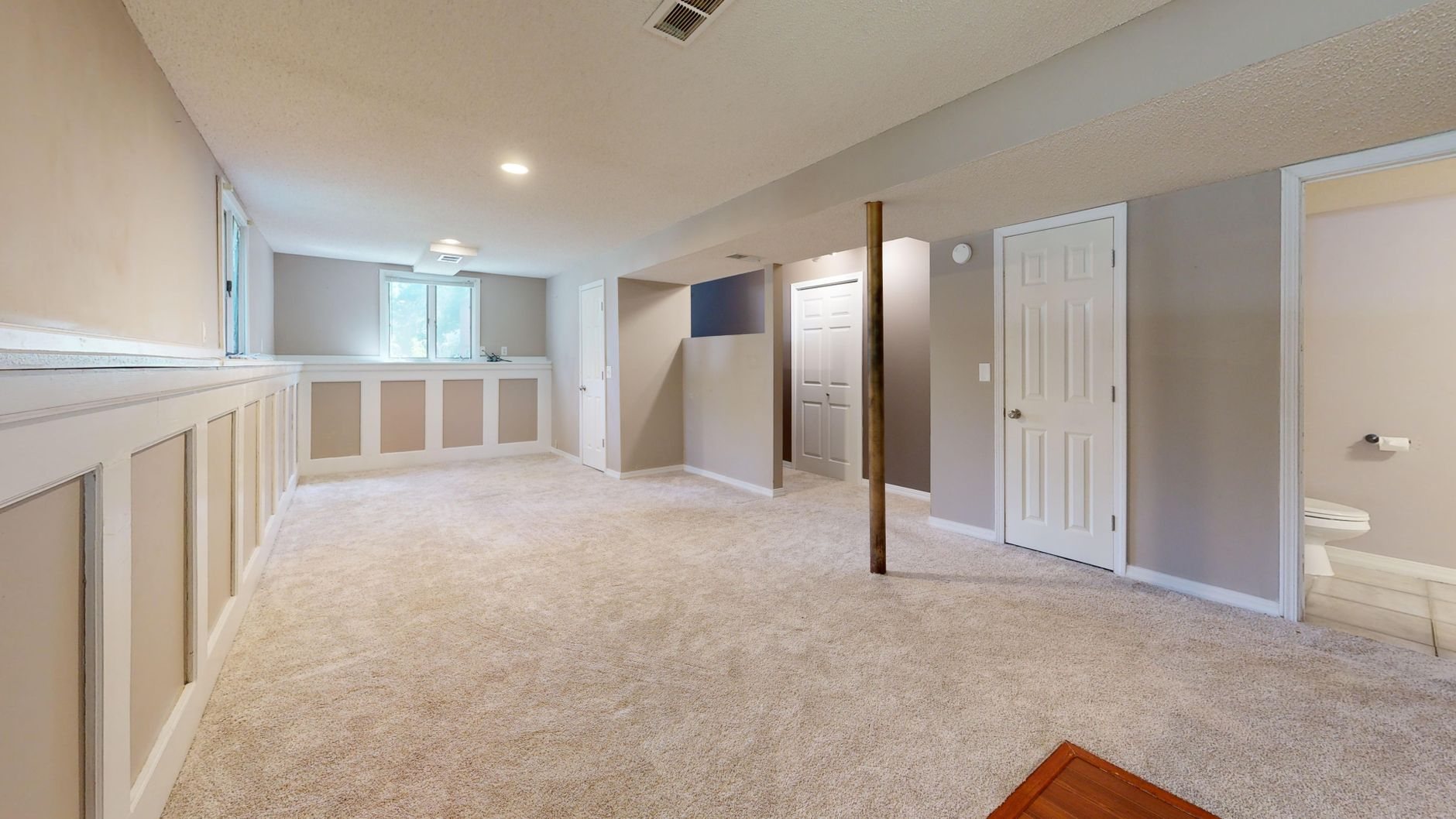
Plan on $40–$55 per square foot for a standard finish, $55–$75 for a mid-to-high finish, and $75–$100+ for basements with custom millwork, full baths, and specialty rooms. Utah labor rates sit a bit below the coasts, so we tend to land near the middle of national ranges — Angi’s 2026 data puts typical finishes at $32–$80 per square foot nationally.
All figures below are ballpark planning ranges for Utah County and Salt Lake County. Your basement’s existing conditions — ceiling height, mechanical layout, moisture history — move real pricing up or down, which is why the process runs consultation, then budget range, then a written estimate, and only then a fixed-price proposal.
| Finish tier | Ballpark $/sq ft | 1,000 sq ft total | What it typically includes |
|---|---|---|---|
| Basic finish | $40–$55 | $40,000–$55,000 | Framing, insulation, drywall, paint, carpet or LVP, standard lighting, HVAC extensions |
| Mid-range finish | $55–$75 | $55,000–$75,000 | Everything above plus a full bathroom, better flooring and trim, a bedroom with egress window |
| High-end finish | $75–$100+ | $75,000–$100,000+ | Custom cabinetry, wet bar or kitchenette, theater room, tile work, designer fixtures |
Partial finishes scale accordingly. A 600-square-foot basic family room and bedroom might land around $25,000–$35,000; finishing every corner of a 1,500-square-foot walkout with two baths will not.
How much do egress windows, bathrooms, and wet bars add?
The big three adders: an egress window typically adds $3,000–$6,000 installed, a full basement bathroom adds $12,000–$25,000, and a wet bar or kitchenette adds $6,000–$18,000 depending on plumbing runs and cabinetry. These sit on top of the per-square-foot base, and they are usually where budgets are won or lost.
Egress windows. Current Utah-adopted code requires an egress window in every basement bedroom — a legal bedroom needs a code-compliant exit, full stop. The cost covers cutting the foundation, the window and well, and excavation; 2026 national data averages around $4,200 per window, and Utah installs generally track that. Our basement egress window page walks through sizing and well drainage in detail.
Bathrooms. If your builder roughed in drains under the slab, a full bath can land near the low end. No rough-in means saw-cutting concrete and, if the drain sits below the sewer line, adding an ejector pump at $2,000–$5,500. Finish choices follow the same logic as any bathroom remodel — tile and glass move the number more than fixtures do.
Wet bars and kitchenettes. A sink, a run of cabinets, and a beverage fridge is a modest add. A true kitchenette with a range and full plumbing pushes toward the top of the range — and toward ADU territory. If you’re heading that direction on purpose, a basement ADU conversion is a different project with different code requirements, and it’s worth scoping it that way from day one.
What should you budget for radon and moisture pre-work?
Budget $150 or less for a radon test before you finish, $800–$2,500 for a mitigation system if you need one, and anywhere from a few hundred dollars to $10,000+ for moisture correction depending on what’s found. Testing first is cheap insurance — fixing either problem after drywall goes up costs multiples more.
Utah sits on high-radon geology; the Utah Geological Survey maps much of the Wasatch Front as elevated-potential terrain, and the EPA recommends mitigating at readings of 4 pCi/L or higher. Since a finished basement is where your family will actually spend time, test before finishing and rough in a mitigation pipe even if today’s reading is fine — it’s a cheap line item during framing.
Moisture is the other gate. Our valley soils include expansive clays that swell against foundation walls, and summer cloudbursts find every grading flaw. Efflorescence, damp corners, or hairline cracks that weep should be resolved through proper waterproofing first. Cracks that are widening or stair-stepping are a structural question — get a foundation repair assessment before you bury the evidence behind studs.
What do basement finishing permits cost in Utah?
Basement finish permits along the Wasatch Front typically run $500–$2,000, calculated from project valuation, plus plan review in some cities. The permit buys you framing, electrical, plumbing, mechanical, and insulation inspections — and a finished basement that appraises, insures, and resells as legal living space.
Timelines vary more than fees. Fast-growth cities like Lehi, Saratoga Springs, and Eagle Mountain process high volumes of residential permits and generally move basement finishes quickly; established offices in Provo, Orem, and Salt Lake City have their own rhythms. Verify current fees with your city’s building department — they shift year to year. We handle permitting on every project we run, and we coordinate and quality-check the licensed electricians, plumbers, and HVAC contractors whose work those inspections cover.
Skipping the permit to save $1,500 is a bad trade. Unpermitted bedrooms without egress are a life-safety problem, and unpermitted square footage becomes a disclosure headache the day you sell.
What moves the price most?
Five things move a Utah basement budget more than anything else: bathrooms and plumbing runs, egress windows, existing moisture or radon conditions, ceiling and mechanical obstructions, and finish level. Square footage matters less than people expect — the expensive parts of a basement are the wet ones and the ones that cut concrete.
- Plumbing scope. Every fixture group past the rough-in adds saw-cutting, drain work, and possibly an ejector pump.
- Concrete cutting. Egress openings, under-slab drains, and window wells all involve excavation or coring — priced accordingly.
- Existing conditions. Low ceilings, ductwork that needs rerouting, and moisture correction are the classic sources of mid-project surprises. We scope them up front. Problems happen. Surprises should not.
- Finish selections. LVP versus tile, paint-grade versus stained trim, canned lights versus a coffered ceiling — selections can swing the total 30% on the same floor plan.
- Specialty rooms. Theaters, gyms, and wet bars carry their own electrical, soundproofing, and cabinetry line items.
Is finishing a basement worth it in Utah?
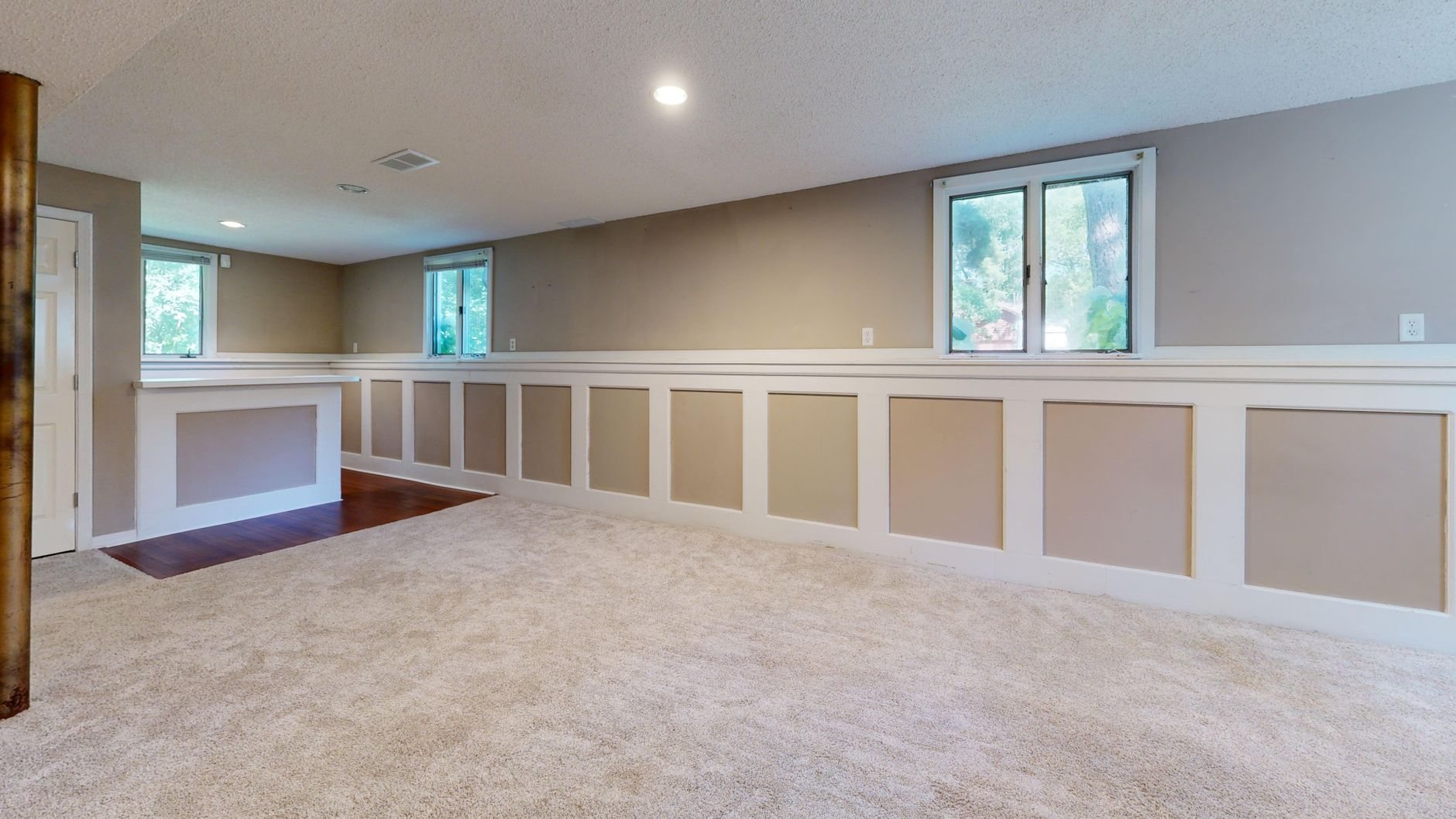
Usually, yes — basement finishing is one of the cheapest ways to add living space here. At $40–$70 per square foot, finished basement space costs a fraction of building an addition, and Utah’s housing stock makes finished basements an expectation, not a luxury, for resale. Growing families, multigenerational setups, and rental-minded owners all get real utility from the same square footage.
The honest caveat: cost recouped at resale depends on doing it right. Legal bedrooms with egress, permitted baths, and dry, radon-safe space appraise as living area. Unpermitted work often appraises as storage.
When should you hire a contractor versus DIY?
Painting, trim, and even flooring are fair DIY territory if you have the patience. Framing, electrical, plumbing, HVAC, egress cutting, and anything touching the foundation belong with licensed professionals — both for safety and because inspectors will check that work. Most homeowners who DIY a full basement spend 6–18 months on what a crew finishes in 6–10 weeks.
A general contractor earns their fee on basements with a bathroom, an egress window, or any moisture history — the projects where sequencing, inspections, and five trades have to land in the right order. That’s the core of our basement finishing work, and it sits alongside the rest of our renovation services. If you just need drywall hung in an already-framed room, hire a drywall crew and keep your money.
Grandview Contractors is a licensed and insured Utah general contractor (DOPL #14282236-5501) serving Utah County and Salt Lake County, from Payson to North Salt Lake.
Get a real number for your basement
Send us your square footage and what you want the space to do. We reply within a couple of hours during business hours — a day at most — with a straight read on scope, sequence, and a budget range before anyone commits to anything.