Retaining wall cost in Utah: engineered vs landscape walls
Most residential retaining walls in Utah run $25 to $60 per face square foot installed — roughly $4,000 to $9,000 for a 30-foot garden-height wall, and $15,000 to $40,000 or more once a wall passes four feet and needs a stamped engineered design. Those are ballpark planning numbers, not a quote. Here is what actually moves them.
How much does a retaining wall cost in Utah?
Plan on $25–$45 per face square foot for segmental block (SRW), $35–$60 for poured concrete, and $25–$55 for boulder walls, installed. A wall’s face area is length times exposed height, so a 30-foot wall standing 3 feet tall is 90 square feet — call it $2,500 to $5,500 depending on material, soils, and access. National cost surveys such as HomeGuide’s 2026 retaining wall data put the broad installed range at $20–$50 per square foot, and Wasatch Front pricing tends to sit in the middle to upper part of that band.
| Wall type | Ballpark installed cost (Utah, mid-2026) | Where it fits |
|---|---|---|
| Segmental block (SRW) | $25–$45 per face sq ft | The workhorse. Clean look, geogrid-reinforceable to serious heights, best value for most yards. |
| Poured concrete | $35–$60 per face sq ft | Structural situations: driveway surcharges, tight footprints, walls tied to foundations. |
| Boulder / rock | $25–$55 per face sq ft | Natural look on larger lots. Machine-set; price swings with boulder size and access. |
| Timber | $20–$35 per face sq ft | Cheapest up front, shortest life. We rarely recommend it for anything holding real soil. |
| Engineering + permit (walls 4 ft and up) | $1,500–$5,000 added | Geotechnical input, stamped design, city plan review, and inspections. |
All figures are honest ballpark planning ranges for Utah County and Salt Lake County, not quotes. Your site conditions set the real number.
When does a Utah retaining wall need an engineer and a permit?
In most Utah cities, a retaining wall needs a building permit and a design stamped by a licensed engineer once it reaches four feet, measured from the bottom of the footing to the top of the wall — not from grade. Shorter walls can trigger the same requirement if they carry a surcharge: a driveway, a slope, or another wall pushing on the soil behind them.
Draper’s retaining wall ordinance is a good example of how strict this can get — a permit is required over four feet from the footing, over 30 inches of exposed face, or for any wall supporting a surcharge. Other cities are looser. The thresholds vary enough that the only safe move is to verify with your city’s building department before you order block. That call is free; rebuilding an unpermitted wall is not.
What’s the difference between a landscape wall and an engineered wall?
A landscape wall is short — under roughly three feet of exposed face — retains a gentle grade change, and carries no surcharge. It’s a gravity structure: the weight of the blocks does the work. An engineered wall is anything taller or more loaded, and it’s a different animal: geogrid reinforcement extending back into the slope, a designed drainage system, compaction testing, and city inspections along the way.
That distinction is why two walls that look similar from the sidewalk can differ in price by a factor of three. The engineered wall isn’t more expensive because of the block. It’s the excavation behind it, the geogrid layers, the imported structural backfill, and the paper trail. If your project sits near the four-foot line, it’s worth pricing both a single engineered wall and two shorter terraced landscape walls — terracing often wins on cost if the lot has the depth for it, since each tier needs setback from the one below.
Why is drainage the hidden cost?
Drainage adds roughly $2–$6 per square foot to a wall — washed gravel backfill, filter fabric, and a perforated pipe daylighted somewhere sensible — and it is the least skippable line on the estimate. Nearly every retaining wall failure we’re asked to look at is a drainage failure first. Water builds up behind the wall, hydrostatic pressure loads it beyond design, and the wall leans, bulges, or bursts.
Utah is unusually hard on walls in this respect. Summer monsoon cloudbursts dump water fast onto soils that don’t absorb it, and 100-plus freeze-thaw days along the Wasatch Front mean any trapped moisture spends the winter expanding and contracting behind your block. Expansive clay makes it worse — it swells when wet and shoves on the wall directly. A wall with good drainage in clay soil outlives a wall with poor drainage in perfect soil, every time. When a bid comes in noticeably under the others, the drainage detail is usually where the money went missing.
What moves the price up or down?
Height is the big one, and it isn’t linear — doubling a wall’s height more than doubles its cost, because footing size, geogrid length, and backfill volume all grow with it. After height, five site factors do most of the damage or the saving:
- Slope above or below the wall. A slope pushing on the wall is a surcharge; it means longer geogrid, more excavation, and often an engineer even on shorter walls.
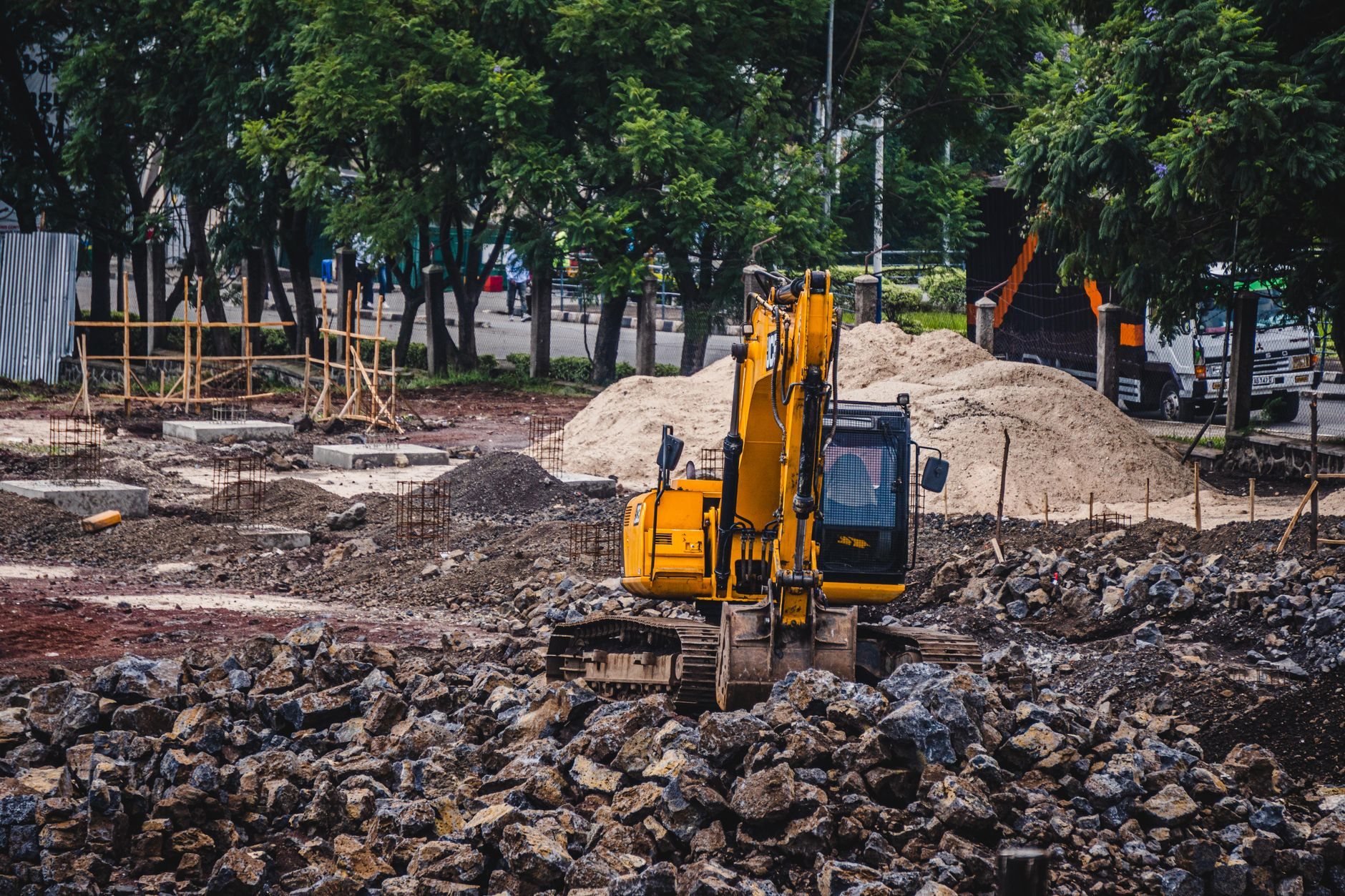
- Access. A backyard a skid steer can reach prices very differently from one where material moves by wheelbarrow. Tight bench lots in Provo and Salt Lake City hillsides are the classic budget-breakers.
- Soils. Expansive clay and the collapsible soils common on Wasatch bench lots — mapped by the Utah Geological Survey — can force deeper footings and imported structural fill. Sandy, well-drained ground is the cheap scenario.
- Demolition. Replacing a failed wall means removing it first and often re-excavating slumped soil behind it. Budget 15–30% on top of new-wall pricing.
- Spoils and haul-off. Every yard of soil the wall displaces has to go somewhere. Long hauls or dump fees show up as real money on bigger cuts.
Good excavation and grading is where several of these factors get cheaper at once — a properly cut bench, compacted in lifts, shrinks both the wall’s structural demands and the drainage problem it has to solve. On sloped lots we often pair wall work with erosion control so the finished grade sheds water away from the wall instead of into it.
Should you DIY it, hire a landscaper, or call a general contractor?
An honest sorting: a wall under about two feet, on flat ground, with nothing above it — that’s a fair weekend project or a job for any competent landscape crew, and you don’t need us. Between two and four feet, a landscaper or hardscape contractor who compacts base in lifts and installs real drainage is the right call; that work often folds neatly into a larger landscaping and hardscaping plan with patios and steps.
Call a general contractor when the wall crosses into engineered territory: four feet or taller, carrying a driveway or slope, replacing a wall that already failed, or tied into a bigger site problem like a wet basement or a settling foundation. Those projects need permits, an engineer, machine excavation, compaction testing, and someone accountable for the whole sequence. That’s what our retaining wall work looks like — one contract covering the engineering coordination, the dirt work, and the wall itself, alongside the rest of our site and structure services. We see dependencies before they become delays.
Whoever builds it, insist on three things in writing: base depth and compaction method, the drainage detail (gravel width, fabric, pipe, and where the pipe daylights), and — for anything near four feet — the engineer’s stamp. A wall built to those three standards is a 50-year structure. A wall built without them is a future demolition line item.
Get a straight number for your wall
Send us a few photos and rough dimensions and we’ll give you an honest read on whether you’re looking at a landscape wall or an engineered one — and a budget range to plan around. We reply within a couple of hours during business hours, a day at most.