
Stucco & EIFS contractor in Utah County
New stucco and EIFS installation, repair, re-coating, and full removal and replacement across Utah County and the Salt Lake Valley. Grandview builds and fixes stucco walls as complete assemblies — lath, moisture barrier, drainage, and finish — under one B100 general contractor license.
When stucco or EIFS is the right call
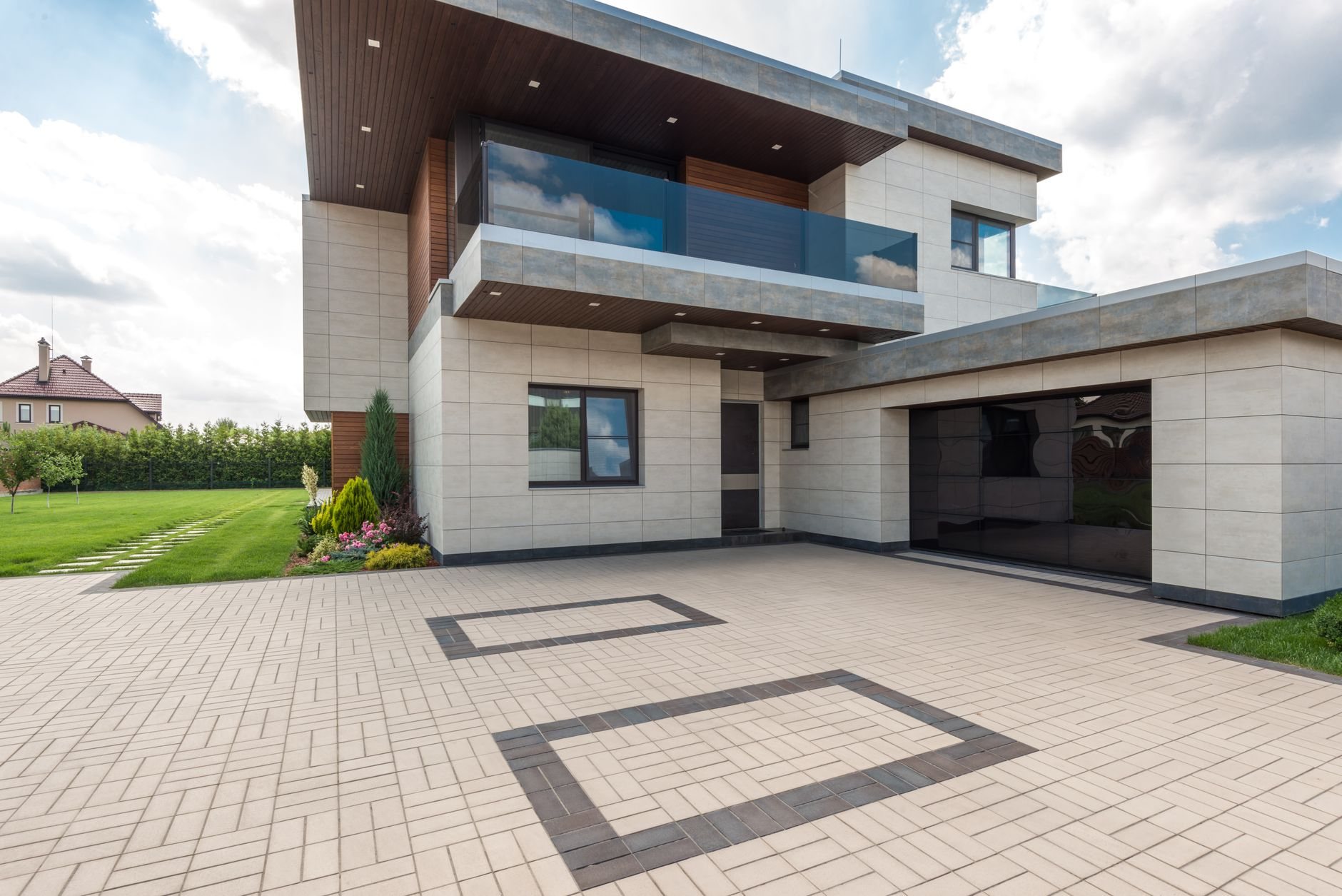
Stucco earns its popularity along the Wasatch Front honestly. It handles our intense high-elevation UV better than most painted claddings, it doesn’t mind dry heat, and a properly detailed system sheds weather for decades without much attention. If you want a masonry-look exterior without the cost of full masonry, cement stucco or EIFS is usually the conversation to have.
The catch is that stucco is an assembly, not a coating. Behind the finish you can see, there’s a weather-resistive barrier, metal or synthetic lath, a weep screed at the bottom of the wall, flashing at every window and roofline, and — in a good modern system — a drainage path for the water that inevitably gets behind the surface. Nearly every failed stucco wall we’re asked to look at failed in those hidden layers, not in the finish coat. That’s why we treat stucco as envelope work, in the same family as siding and waterproofing, rather than as a paint-adjacent trade.
Who calls us for this work: homeowners with cracking or staining stucco who want a diagnosis before a sales pitch, buyers and owners of homes with older EIFS that an inspector flagged, property managers with hail or sprinkler damage across multiple elevations, and builders and owners who want new stucco installed by a contractor who also handles the framing and openings behind it.
Eight stucco and EIFS scopes we take on
Traditional 3-coat stucco
Scratch, brown, and finish coats over lath — the thickest, most impact-resistant system, and still the benchmark for Utah exteriors.
ExploreOne-coat stucco systems
A fiber-reinforced base over foam sheathing that cuts install time and adds insulation value where the budget or schedule calls for it.
ExploreEIFS installation
Modern drainable EIFS — synthetic stucco with continuous exterior insulation and a designed path for moisture to exit the wall.
ExploreStucco repair & patching
Impact damage, woodpecker holes, water-damaged sections, and failed patches — cut back to sound material and rebuilt to match.
ExploreStucco re-coat & re-color
A new acrylic or cement finish coat over sound stucco — a fraction of replacement cost when the base layers are still good.
ExploreStucco crack repair
Hairline map cracking gets one fix; structural or moisture-driven cracking gets another. We diagnose the cause before selling the repair.
ExploreStucco removal & replacement
Full tear-off down to sheathing, substrate repair, and a new system — the honest answer when moisture has been in the wall for years.
ExploreLath & scratch-coat work
Weather barrier, lath, weep screeds, and base coats — the substrate work that decides whether a stucco wall lasts thirty years or ten.
ExploreDiagnose the wall before touching the finish
- Walk every elevation. We look at cracking patterns, staining, sealant joints, flashing, and the weep screed line — the wall tells you where water is going if you read all of it, not just the damaged patch.
- Identify the system. Three-coat, one-coat, and EIFS fail differently and get repaired differently. We confirm what’s actually on the wall before pricing anything.
- Scope cause and cure. If cracks trace back to settlement or flashing failures, we say so — patching over a moving substrate just sells you the same repair twice.
- Fix the assembly. Repairs go back in layers: barrier, lath, base coats, finish. Texture and color get matched to the surrounding field, with sample panels on larger re-coats.
- Close it out. Sealants tooled, penetrations flashed, site clean, and a written record of what was done and why.
Why does stucco crack and fade faster in Utah?
Three local forces do most of the damage: freeze–thaw cycling, UV intensity, and cloudburst moisture. The Wasatch Front sees roughly 100-plus freeze–thaw days a year, and any hairline crack that takes on water becomes a wedge — freezing water widens it a little more each cycle until a cosmetic line is an open joint. Our elevation also means harder UV than most of the country, which is why pigmented finish coats up here chalk and fade sooner than the same product would at sea level, and why re-color work is a routine part of stucco ownership rather than a failure.
Then there’s water in bulk. Utah’s summer monsoon can drop an inch of rain in an hour against a wall that spent six weeks bone-dry, and expansive clay soils under parts of the valley move foundations enough to telegraph stair-step cracks up through the cladding. A stucco system built for this climate needs a real drainage plane, an unblocked weep screed (buried weep screeds behind raised flowerbeds are one of the most common problems we find), flexible sealant joints at dissimilar materials, and finish products rated for the exposure. We build to current Utah-adopted code, and our license is verifiable at dopl.utah.gov.
What moves the cost
As ballpark planning numbers for the Wasatch Front: a re-coat over sound stucco typically runs a few dollars per square foot, new three-coat stucco commonly lands in the low-to-mid teens per square foot installed, and full removal and replacement costs the most because you’re paying for demolition, substrate repair, and a new system. The big variables are wall condition under the finish, stories and access, the number of openings and corners (detail work is where the labor lives), and whether flashing or sheathing repairs surface once the wall is open. We give a budget range after a site walk and a firm estimate once scope is defined — and if a re-coat will honestly do the job, we’d rather sell you the re-coat.
Questions we actually get
Is EIFS the same as stucco, and is it still a risky product?
EIFS is a synthetic system — foam insulation with a thin reinforced finish — while traditional stucco is cement over lath. Older barrier EIFS earned a bad reputation for trapping water. Modern drainable EIFS, installed with proper flashing and a drainage plane, is a code-recognized, energy-efficient cladding. The installation details matter more than the label.
Are cracks in my stucco a cosmetic issue or a structural one?
Depends on the pattern. Fine map cracking in the finish coat is usually cosmetic and handled with a repair or re-coat. Wide, stair-stepping, or recurring cracks — especially near corners and openings — often trace to settlement or framing movement, which means the substrate needs attention before the stucco does. We diagnose before we quote.
What drives the price difference between repair, re-coat, and replacement?
Condition of the layers you can’t see. If the lath, barrier, and base coats are sound, a repair or re-coat is economical. If moisture has been behind the wall — soft spots, staining below windows, rusted lath — replacement is the honest fix. Access, wall height, and the amount of flashing and trim detail move the number from there.
Can stucco work be done in a Utah winter?
Within limits. Cement stucco and most acrylic finishes need temperatures above roughly 40 degrees during application and curing, so the reliable season runs spring through fall. Cold-weather work is possible with tenting and heat on some projects, but if waiting a few weeks buys a better cure, we’ll tell you that plainly.
Where this work usually leads
Stucco rarely travels alone. Walls opened for replacement are the right moment to upgrade windows and doors, and stucco projects often pair with exterior painting on trim and accent surfaces. For the rest of the building shell — foundations, framing, roofing, siding — start at our site, structure & envelope hub.
Tell us what you’re working on
Cracking, fading, a flagged inspection, or a new build that needs a finish — we’ll give you a straight read on what the wall needs and what it should cost before anyone commits to anything. We reply within a couple of hours during business hours, a day at most.