
Stucco Repair & Patching
Stucco repair means cutting a damaged area back to sound material, rebuilding the barrier, lath, and base coats, and floating a new finish that blends with the wall around it. Grandview patches impact damage, holes, soft spots, and failed old patches across Utah County and the Salt Lake Valley under a B100 general contractor license.
When a patch is the right fix, and when it isn’t
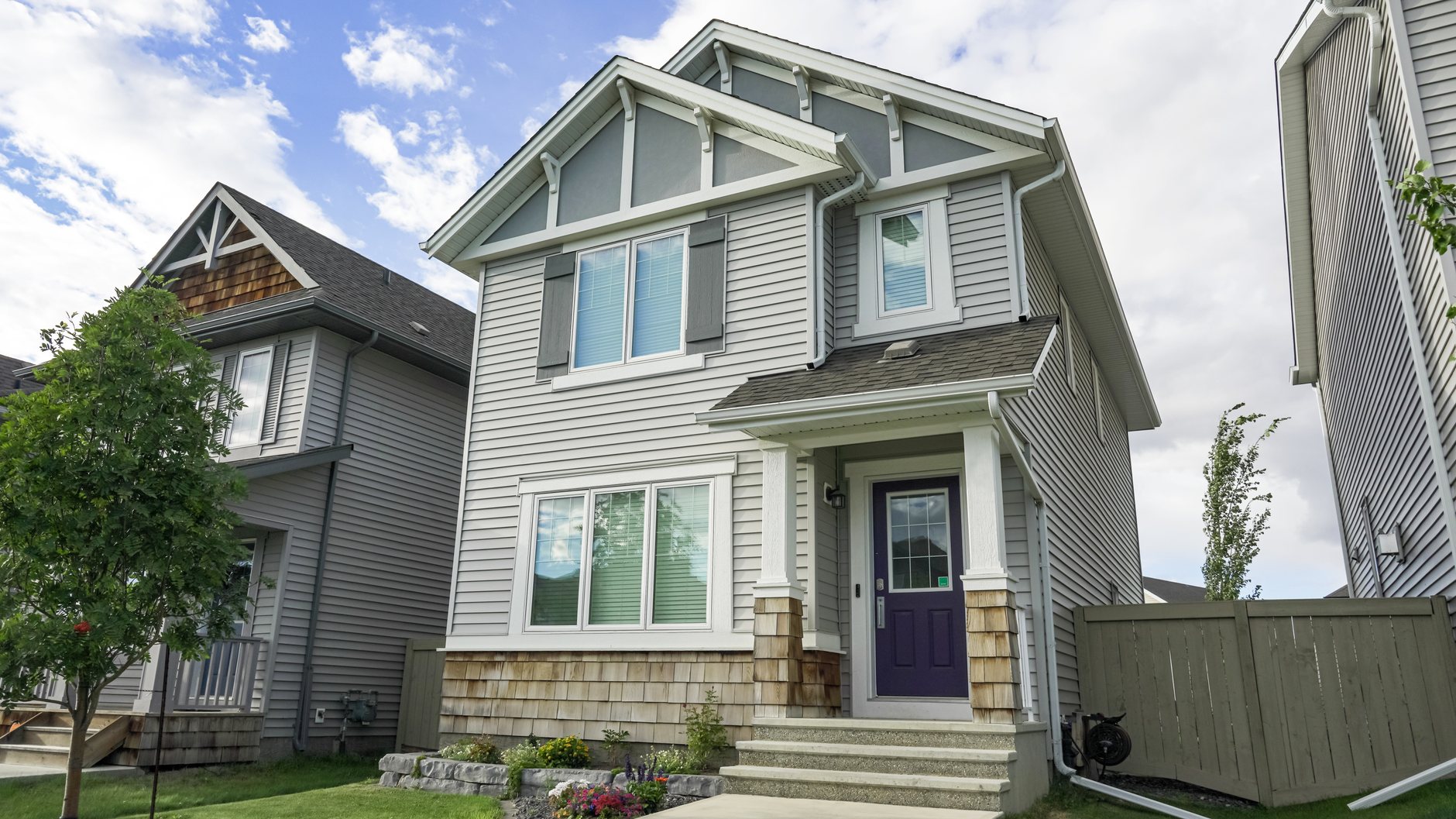
Patching is the narrowest of the eight scopes on our stucco and EIFS page, and the right one when damage is local and the wall around it is healthy: a ladder dropped against the garage, a hole left by a removed satellite dish, woodpecker work under the eave, a corner a sprinkler has soaked for three summers, or an opening left by new windows or an HVAC line set. There is a clear edge where bad stucco stops and good stucco begins, and the job is to rebuild what is inside it.
A patch is the wrong answer in three situations, and we will say which one you are in before quoting. A network of hairline or stair-step cracks rather than a broken-out area calls for stucco crack repair, which treats the pattern and its cause. A finish faded or stained over whole elevations is a re-coat and re-color job, cheaper per square foot than patching a dozen islands. And a wall soft across a wide area, with rusted lath or staining below several windows, has had moisture inside for years; the honest scope there is removal and replacement, not a bigger patch.
What a proper stucco patch involves
- Find the real edge. We sound the wall outward from the visible damage. Hollow or soft stucco goes into the cut even when it looks fine; a patch tied into loose material fails at the seam.
- Cut clean and square. The area is saw-cut to a straight-edged opening and removed down to the weather-resistive barrier. Ragged edges telegraph through the new finish.
- Rebuild the hidden layers. Torn building paper is lapped shingle-fashion, then new lath is fastened to framing and wire-tied to the existing lath with a generous overlap so patch and field move as one sheet.
- Base coats, with cure time. A scored scratch coat, then a brown coat brought flush with the wall, each moist-cured. On a south wall in Lehi in July that means misting for a day or two so it hydrates before it dries.
- Match the finish. Texture is reproduced by hand, whether sand float, dash, lace, or smooth acrylic. Color comes from a sample panel checked in daylight, not a chart indoors.
Why patches in Utah stand out, and how we keep them from doing so
The hardest part of stucco repair here is not the cement. It is the sun. At Wasatch Front elevation, UV fades pigmented finish coats faster than at sea level, so a ten-year-old wall is no longer the color on the bucket, and a patch mixed to the original color reads as a bright rectangle. We match the wall as it is today, sometimes with a custom tint and sometimes by recommending a fresh finish coat or stucco paint over the whole elevation so the repair disappears. We would rather say that up front than hand you a wall with a square on it.
Freeze-thaw is the second problem. With roughly 100 or more freeze-thaw days a year along the Wasatch Front, a patch that is not fully bonded at its perimeter takes on water, and that water becomes a wedge every night it freezes. So we lap the lath instead of butting it, seal the perimeter with a flexible joint wherever it meets a window frame, and schedule base coats for days above roughly 40 degrees.
The third is irrigation. Much of the stucco we patch in Utah County was damaged not by weather but by a sprinkler head throwing hard, mineral-heavy water at the bottom two feet of a wall every morning; if the head is not adjusted, the new patch goes the same way. A flowerbed built up over the weep screed gets flagged too, since a wall that cannot drain is a lath and substrate problem, not a cosmetic one.
What does stucco repair cost in Utah?
As ballpark planning numbers, not a quote: a single small patch on an accessible first-story wall usually lands in the low hundreds to around a thousand dollars, because the trip, cure visits, and color work cost about the same whether the hole is fist-sized or doormat-sized. Larger areas are priced per square foot and generally run higher per foot than new stucco, since cut-back, lath tie-in, and matching are all labor. Second-story access, hand-reproduced dash or lace texture, custom tinting, and sheathing or flashing repair found once the wall is open move the number up. Several patches on one visit cost less each than the same patches booked separately.
We give a budget range from photos and a site walk, then a firm estimate once we know how far the cut extends. Our license is verifiable at dopl.utah.gov, and the rest of the building shell starts at our site, structure & envelope hub.

Questions we actually get
Will the patch match the rest of the wall?
Texture, yes. Color, closely but rarely perfectly on a wall that has faded for years in Utah sun. We match the current color with a daylight sample panel, and we will say if a finish coat over the whole face is the only way to make the repair invisible.
Can you patch EIFS or one-coat stucco the same way?
Same principle, different materials. EIFS patches use matching foam, base coat, and mesh rather than cement and lath; one-coat systems need a compatible fiber-reinforced base. We identify the system first, because patching EIFS with three-coat cement creates a hard island that cracks at its edges.
Why did my last patch fail after a couple of years?
Usually one of three things: the cut was not taken back to sound material, the new lath was not tied to the old so the patch moved on its own, or the base coats dried too fast in summer heat and never cured. We open failed patches to see which it was, because the fix depends on the cause.
How long does a stucco repair take?
Plan on two to three visits over roughly a week for cement stucco: cut-back and scratch coat, brown coat after cure, then finish. We do not compress the cure to save a trip, since rushing it is the most common reason patches crack.
Tell us what you’re working on
Send a photo of the damage and we’ll give you a straight read on whether it’s a patch, a crack repair, or something bigger. We reply within a couple of hours during business hours, a day at most.