
Siding installation & replacement in Utah
Siding is weather protection first and curb appeal second. Grandview installs fiber cement, vinyl, and engineered wood siding across Utah County and the Salt Lake Valley — detailed for high-elevation sun, canyon wind, and a hundred-plus freeze–thaw days a year.
When siding replacement is the right call
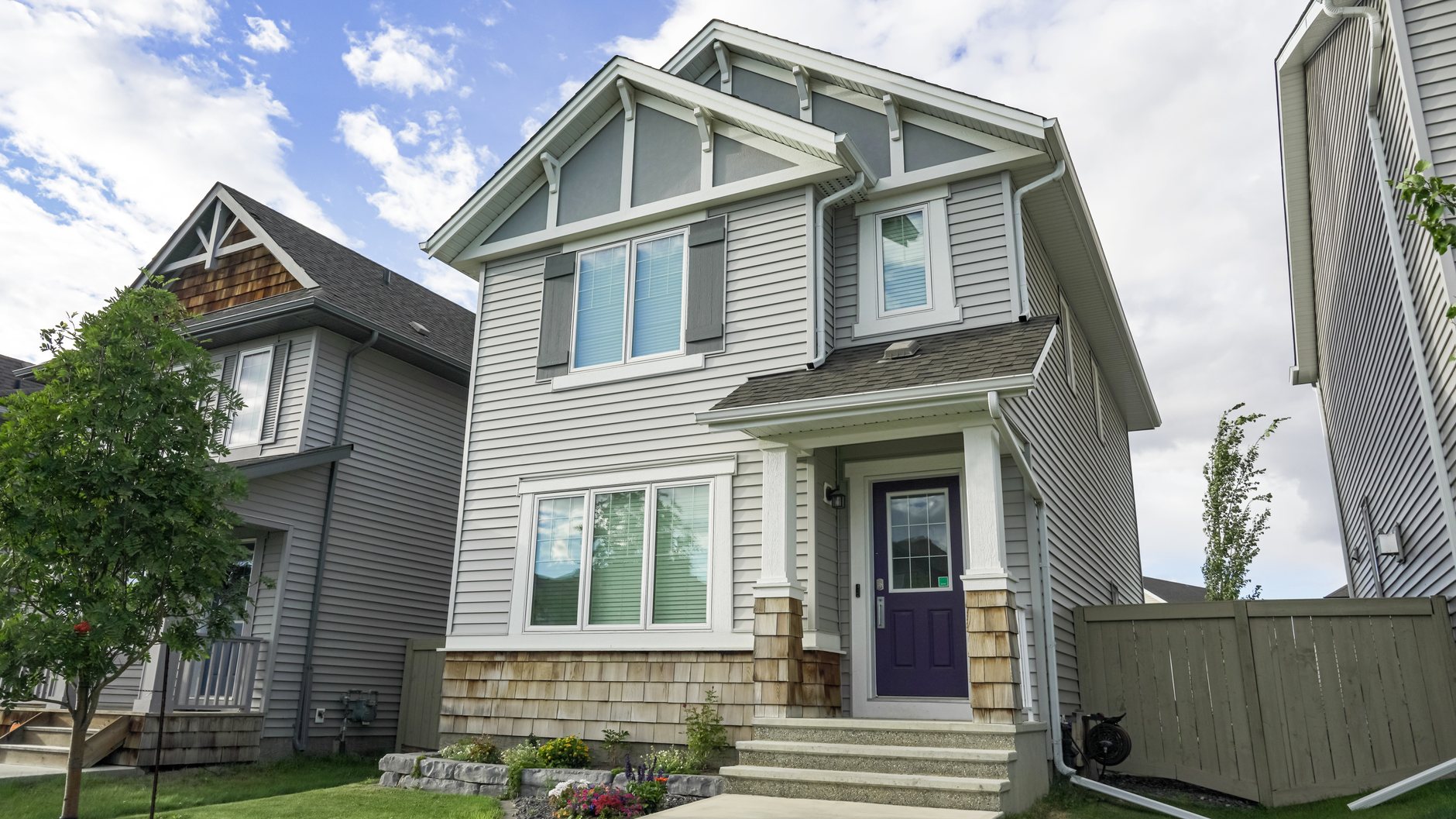
Most siding projects start one of three ways. The first is visible failure: panels that have warped, cracked, chalked, or faded unevenly, caulk joints that have split open, or paint that won’t hold more than a couple of seasons. Utah’s elevation is part of the story here — UV exposure along the Wasatch Front is measurably harsher than at sea level, and south- and west-facing walls take the worst of it. If one exposure looks ten years older than the rest of the house, that’s why.
The second is hidden failure. Soft spots around windows, staining on interior drywall, or a mold smell in an exterior wall usually means water is getting behind the cladding — a flashing or house-wrap problem, not just a cosmetic one. Replacing the siding is the opportunity to fix the drainage plane underneath, which is the part that actually keeps the wall dry.
The third is a project that forces the question: an addition that has to tie into the existing exterior, wind or hail damage after a storm, or a whole-exterior refresh before a sale. In all three cases the sequence and the details matter more than the brand on the box, and that’s the part we own.
Fiber cement, vinyl, or engineered wood — which fits Utah?
Fiber cement handles Utah’s UV intensity and temperature swings best and holds paint well, which is why it’s our most common recommendation for long-term owners. Vinyl costs the least and never needs paint, but it expands and contracts more and can turn brittle in hard cold. Engineered wood gives you real-wood character with better dimensional stability than solid lumber. Exposure, budget, HOA rules, and how long you plan to stay decide it.
Fiber cement
Cement, sand, and cellulose pressed into lap boards, panels, and shakes. It doesn’t burn, doesn’t feed insects, and shrugs off the sun that bleaches lesser claddings. It’s heavy and unforgiving to install — blind nailing schedules, gapping, and flashing details have to be right — which is exactly why installation quality matters more than the product warranty. Factory-primed boards get field-applied siding paint; pre-finished boards skip the painter but limit your color options.
Vinyl
The budget workhorse. Modern vinyl in a mid-grade thickness or better performs respectably here, provided it’s hung loose enough to move — vinyl expands and contracts noticeably across our summer-to-winter temperature range, and panels nailed tight will oil-can and buckle. On the coldest winter days it gets brittle, which affects both installation timing and how it takes an impact.
Engineered wood
Wood strands and resins formed into lap and panel siding that looks like the real thing without solid lumber’s cupping and checking. It’s lighter than fiber cement, faster to install, and takes fasteners well in high-wind detailing. Its weak point is water at cut edges — every field cut needs sealing, and the bottom edges near grade need the clearances the manufacturer specifies.
What a full siding replacement includes
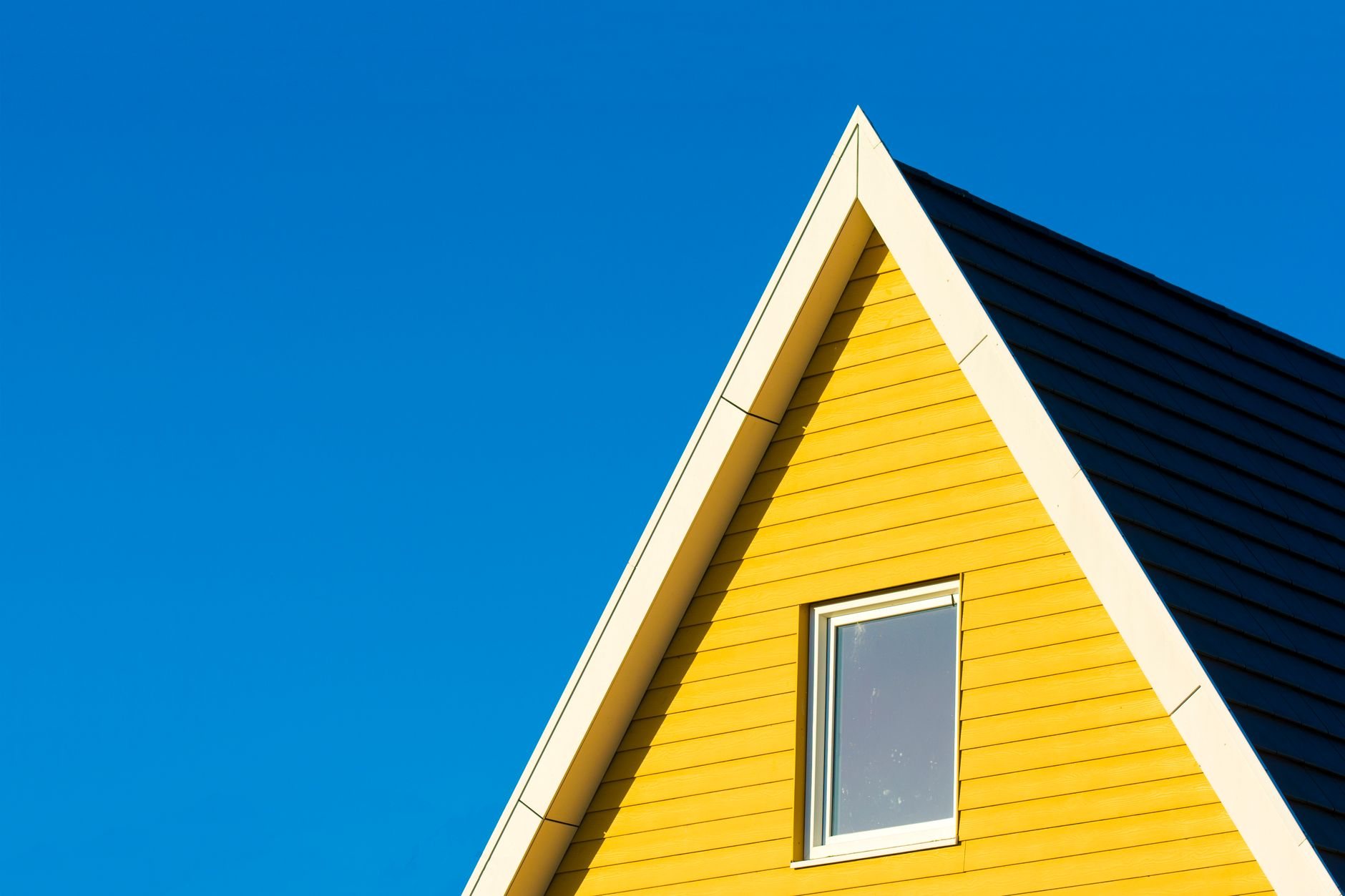
A real replacement is a wall-system rebuild, not a re-skin. Ours includes tear-off and disposal of the old cladding, inspection and repair of the sheathing underneath, a new weather-resistive barrier lapped and taped correctly, new flashing at windows, doors, and roof-to-wall intersections, the siding itself, and the trim, soffit, and fascia work that finishes the edges. Kick-out flashing where a roof dies into a wall is a small part that prevents an expensive rot problem — we treat it as non-negotiable.
Siding, trim, house wrap, and flashing are carpentry — core scopes we perform under our Utah DOPL-verifiable B100 general contractor license. Two pieces of the work regularly involve other trades, and we’re plain about that: field-painting factory-primed fiber cement is done by professional painting crews, and moving an exterior outlet, light, or service penetration is done by licensed electricians. In both cases Grandview holds the contract and manages those trades — we sequence, coordinate, and quality-check their work inside your project, so you still have one accountable contact.
If the same storm that wrecked your siding also took shingles with it, roofing and siding can run as one coordinated scope — flashing between the two systems is where separate contractors usually point fingers at each other.
How a siding project runs
- Walk the walls. We inspect every exposure, probe suspect areas, and check flashing at windows and rooflines. You get a straight read on repair versus replace.
- Define the scope. Material, profile, color, trim details, and what happens if we find rot — priced and in writing before work starts, along with any permit or HOA approvals.
- Tear off and inspect. Old cladding comes off, sheathing gets checked and repaired, and you see photos of anything we find before it’s covered again.
- Dry it in. Weather-resistive barrier, flashing, and penetration sealing — the layer that actually keeps the wall dry gets installed and checked before a single board goes on.
- Install and finish. Siding, trim, soffit, fascia, and caulking, fastened to the manufacturer’s high-wind schedule. Paint follows on field-finished fiber cement.
- Close out. Final walkthrough, magnetic nail sweep, haul-off, and your warranty and maintenance documentation in hand.
What does new siding cost in Utah?
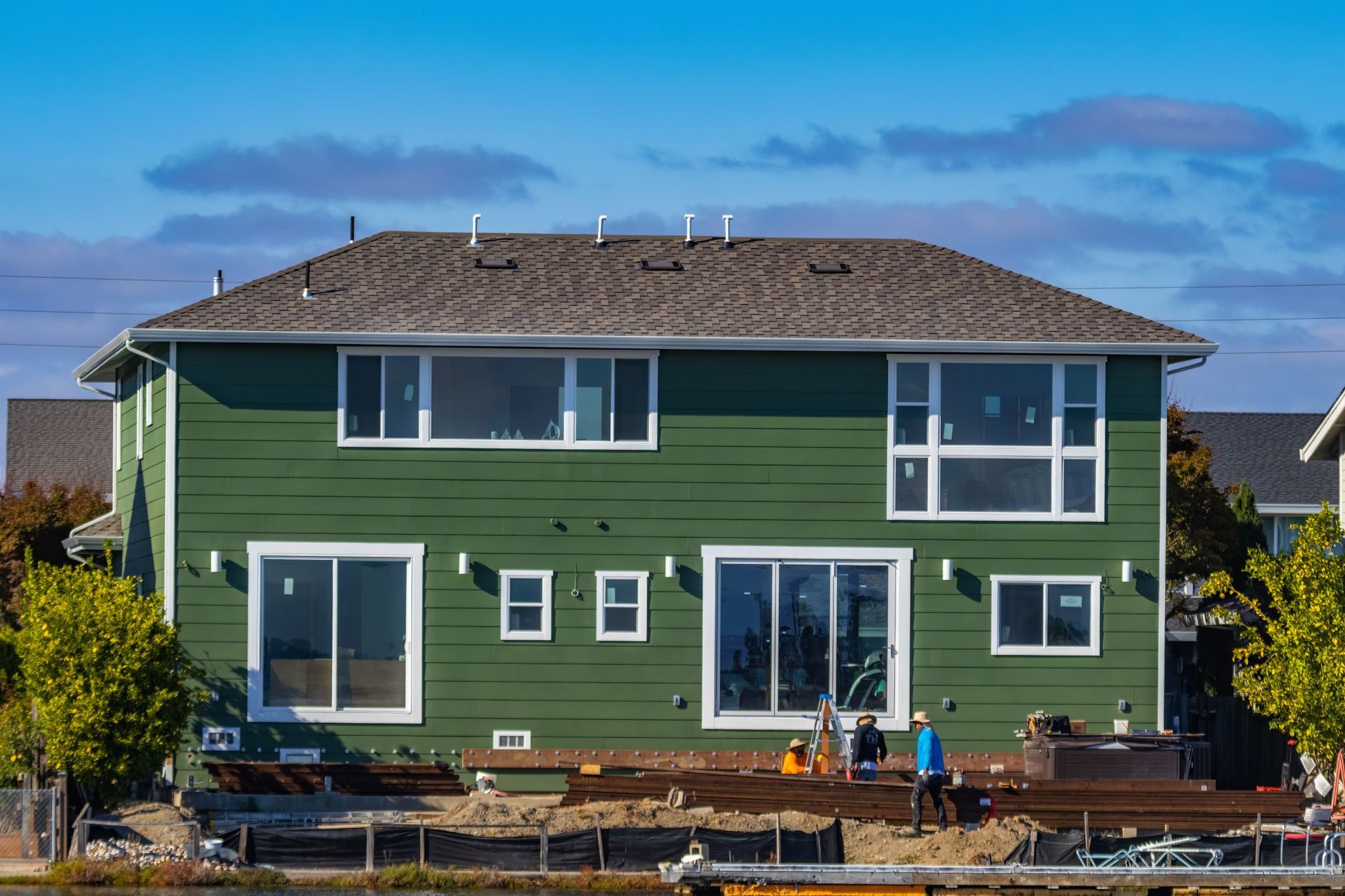
As ballpark planning numbers only: full siding replacement along the Wasatch Front typically runs about $6–9 per square foot installed for vinyl, $9–14 for engineered wood, and $10–15 for fiber cement, including tear-off, house wrap, and standard trim. A typical two-story home lands somewhere between roughly $18,000 and $45,000 depending on material and complexity. These are ranges to plan with, not quotes — a firm estimate follows a site walk and a defined scope.
What moves the number within those ranges:
- Height and access. Two and three stories, steep lots, and tight side yards add staging and time.
- What’s under the old siding. Rotted sheathing, multiple old layers, or asbestos-era materials change the tear-off scope. We price a discovery allowance up front instead of surprising you mid-project.
- Trim and architectural complexity. Gables, corners, band boards, mixed materials, and shake accents all add labor.
- Finish path. Pre-finished boards cost more per square but skip the painting phase; field-painted primed boards run the other way.
- Wind detailing. Homes in known gust corridors get upgraded fastening schedules — modest cost, outsized payoff.
One material note that earns its money here: exterior caulk and paint joints in Utah live through more than a hundred freeze–thaw cycles a year. Spending on high-movement sealants and correct joint design costs little now and decides whether the exterior still looks tight in year eight.
Questions we actually get
Will new siding hold up to canyon wind?
Yes, if it’s fastened for it. Canyon-wind events along the Wasatch Front — the kind Centerville and Farmington are famous for — can gust past what standard nailing schedules assume. We install to the manufacturer’s high-wind fastening specifications: tighter nail spacing, correct nail placement in the hem or nailing flange, and locked panel engagement on vinyl.
Can siding be installed in winter?
Usually. Fiber cement and engineered wood install fine in cold weather. Vinyl needs more care — it’s brittle below freezing and must be gapped for summer expansion, so we adjust handling and spacing. The real winter constraints are caulking and paint, which have minimum application temperatures; we sequence those phases around the forecast rather than forcing them.
Do I need a permit or HOA approval to replace siding?
Often one or both. Several Utah cities require a permit when siding replacement involves sheathing or structural repair; requirements vary, so verify with your city’s building department — we handle that as part of the project. In HOA-dense newer developments around Lehi, Saratoga Springs, and Eagle Mountain, architectural approval of material and color usually comes first, and we build that into the schedule.
What happens if you find rot under the old siding?
We document it with photos, price the repair against the discovery allowance we set in your contract, and get your written approval before covering anything. Sheathing repair is common around windows and roof-wall intersections where old flashing failed. Finding it is good news, oddly — it means the problem gets fixed instead of resealed behind new siding.
Can I repair one wall instead of replacing everything?
Sometimes, and we’ll tell you when. If damage is isolated and the profile is still manufactured, a single-exposure repair is a fair scope — south and west walls often age a decade faster than the rest of the house. The honest caveats: color match on weathered siding is imperfect, and if the underlying house wrap has failed broadly, partial repairs just relocate the problem.
Where siding work usually leads
Siding is one layer of the building envelope, and it rarely fails alone. The rest of the shell — excavation, foundations, concrete, decks, and roofing — lives under our site, structure & envelope services. If wind or hail is what brought you here, storm damage repair covers assessment and insurance-coordinated reconstruction. And if the new exterior is part of a bigger transformation, whole-home renovation puts inside and outside under one plan. And if your windows are aging on the same clock as your cladding, replacement windows install cleanest while the walls are already open.
Tell us what your exterior is doing
Send photos of the worst wall or just describe what you’re seeing. We reply within a couple of hours during business hours — a day at most — with a straight read on repair versus replace, material options, and a realistic budget range before anyone commits to anything.