
One-Coat Stucco Systems
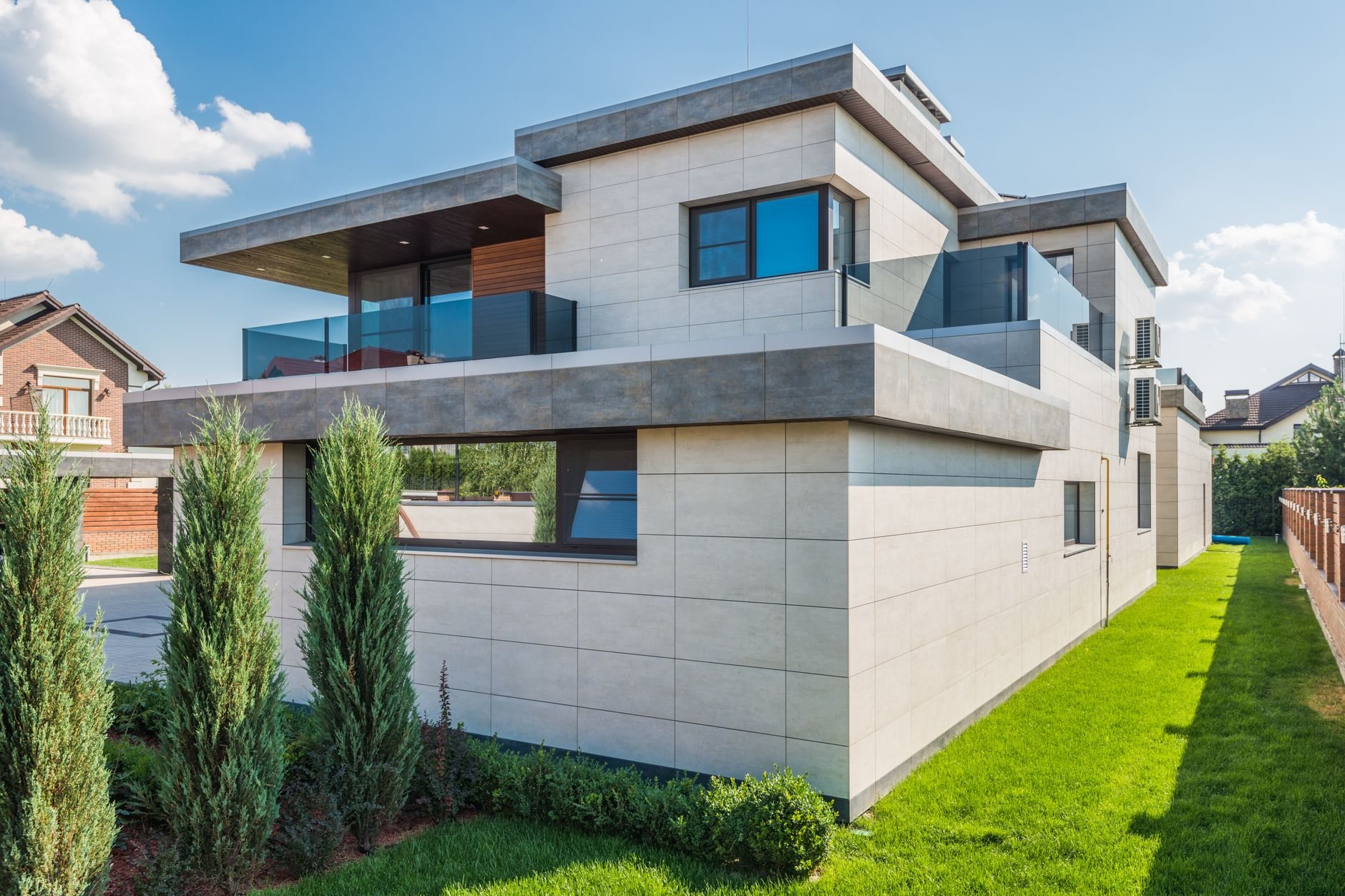
One-coat stucco is a fiber-reinforced cement base coat, roughly 3/8 inch thick, applied over foam sheathing and lath in a single pass, then finished with an acrylic or cement color coat. It suits new homes and additions in the Salt Lake Valley that want a cement stucco exterior with added insulation and a shorter install window, and Grandview installs it under a B100 general contractor license.
When one-coat stucco is the right choice
Pick one-coat when the wall is new or fully opened, the schedule is tight, and you want continuous insulation without going to a synthetic system. The base coat goes on in one pass instead of the separate scratch and brown coats of traditional three-coat stucco, which saves days of application and cure on a typical house. The foam layer underneath, usually one inch of EPS, breaks the thermal bridge through every stud, something a three-coat wall over paper and lath simply does not do.
Pick three-coat when impact resistance matters most. At 3/8 inch, a one-coat base is less than half the thickness of a 7/8-inch three-coat assembly, so it dents more easily at ground level and on commercial walls that take abuse. Pick EIFS when insulation is the main driver, since it carries thicker foam and a thin synthetic lamina rather than a cement base.
One-coat is also what most newer subdivisions in Lehi, Saratoga Springs, Eagle Mountain, and Herriman were built with, so it is the system we match when you add a garage or second story to a home built there. The new section should read as the same house, not a patch.
What a one-coat stucco installation involves
Every one-coat product is proprietary, so the manufacturer’s evaluation report governs the mix, lath, fastener length, base thickness, and cure. We build to that spec and to current Utah-adopted code, in this order.
- Weather barrier and flashing. Two layers of water-resistive barrier over wood sheathing, lapped shingle-fashion, with pan and head flashing at every opening and a weep screed at the base. If this layer is wrong, nothing above it saves the wall. It is the same substrate discipline covered on our lath and scratch-coat page.
- Foam sheathing. EPS board, typically one inch, set tight with staggered joints and sealed at penetrations. Continuous exterior insulation reduces heat loss through framing, which the U.S. Department of Energy describes as one of the more effective wall upgrades available.
- Lath through the foam. Self-furring woven or welded wire lath fastened through the foam and sheathing into the studs. Fastener schedule and penetration depth come from the manufacturer’s report, and on bench lots exposed to canyon-wind gusts we treat that as the floor, not the target.
- Accessories. Casing bead at openings, corner aid, and control joints laid out per the manufacturer’s panel limits, not the generic three-coat rule of thumb. Control joints are where the wall is allowed to crack on purpose, so we place them where they read as architecture.
- The one coat. Fiber-reinforced base mixed to spec, applied to the full 3/8-inch thickness, embedded into the lath, floated flat, then moist-cured for the period the manufacturer requires before any finish goes on. Rushing this cure is the most common shortcut on production homes, and it shows up later as map cracking.
- Finish coat. Acrylic finish with integral color for most Utah projects. At our elevation the UV load is harder than most of the country, and acrylic holds color and flexes with temperature better than a pigmented cement finish on a thin base.
What does one-coat stucco cost in Salt Lake City?
As a ballpark planning number, not a quote: one-coat stucco on a new or fully opened wall in the Salt Lake Valley commonly lands in the high single digits to low teens per square foot installed, usually a bit under three-coat because there are fewer coats to apply and cure. Foam thickness, finish type, and the number of corners and openings move the number more than wall area does.
Three things reliably push a one-coat price up. Season: cement base coats need roughly 40 degrees and rising through application and cure, so a late-fall job may wait for a weather window or carry tenting and heat. Matching: tying into an existing elevation means aligning foam thickness so the planes meet, then matching texture and color against a wall faded by a decade of Utah sun, which often means a sample panel and a wider re-coat. HOA approvals in newer developments add calendar time rather than dollars, but delay the schedule all the same.
We give a budget range after a site walk and a firm estimate once the spec, finish, and tie-in details are set. Our license is verifiable at dopl.utah.gov.

Questions we actually get
Is one-coat stucco worse than three-coat?
Not worse, different. One-coat trades thickness for speed and insulation. A properly installed one-coat wall with sound flashing and a full cure lasts as long as the home. Where it falls short is impact, so for walls that take hits, three-coat remains the better choice.
Does one-coat stucco need a cure period before the finish?
Yes, and skipping it is the usual cause of early cracking. The base coat must be moist-cured and left for the period the manufacturer specifies, typically several days, before finish is applied. In Utah’s dry summer air the surface dries fast while the interior is still curing, so we mist and protect the base rather than trusting it to look dry.
Can I add one-coat stucco to a house that already has three-coat?
You can, but the foam under a one-coat wall makes it thicker than three-coat over paper. On an addition we adjust the sheathing plane or foam thickness so the two finish flush, then match texture and color across the joint. The alternative is building the addition in three-coat, which we also do.
What is the thin cement layer on my new home, and is it a defect?
Probably not. Most production homes along the Wasatch Front built since the early 2000s carry a one-coat system over foam, and the 3/8-inch base is by design. Cracks, soft spots, or staining below windows point to flashing or cure problems rather than the system itself, and a site walk will sort out which.
Where this work usually leads
One-coat installs usually arrive inside a larger scope: an addition that also needs framing and openings, a new build pairing stucco with siding accents, or an older one-coat wall that needs a re-coat rather than replacement. For the full range of stucco and EIFS scopes, start at our stucco and EIFS page, or step back to the site, structure and envelope hub.
Tell us what you’re working on
New build, addition, or a one-coat wall you have questions about. We reply within a couple of hours during business hours, a day at most, with a straight read on scope, sequence, and budget before anyone commits to anything.