
Insulation Retrofits & Air Sealing
An insulation and air-sealing retrofit seals the gaps between living space and the attic, crawl space, and rim joist, then adds insulation over that sealed boundary. It’s the first scope we recommend for leaky Wasatch Front homes, and Grandview performs it under a Utah B100 license.
When sealing and insulating is the right first move
This scope fits the house whose problems live in the attic and basement rather than in the glass or the furnace. Cold rooms when the heat cycles off, frost under the roof deck, ice dams every February. In an older Provo, Orem, or Salt Lake home with four inches of settled attic insulation and an unsealed top plate, this returns more comfort per dollar than any other single upgrade.
It’s narrower than our building envelope improvements, which open the exterior for sheathing, weather barriers, and continuous insulation. It should happen before an HVAC efficiency upgrade: a sealed house needs smaller equipment, and sizing a heat pump for a leaky house locks in the leak. If the symptoms are vague, a blower-door test through energy audit and remediation tells you how much leakage there is and where. Drafts at the frame itself point to window and door efficiency upgrades instead.
What the work involves, in order
Air sealing comes first, always. Insulation slows conduction but does nothing to stop air moving through it, and in a Utah winter the stack effect pulls warm, moist house air up through every gap in the ceiling plane.
- Map the leaks. We walk the attic and basement for the usual offenders: top plates, plumbing and wiring penetrations, can lights, the flue and vent-stack chase, attic hatches, dropped soffits over kitchen cabinets, and open cavities above interior walls.
- Seal the ceiling plane. Small gaps get sealant; larger ones get rigid foam cut to fit and foamed at the edges; the flue gets a metal collar and high-temperature sealant, never foam. Old can lights get airtight covers or sealed IC-rated replacements; the hatch gets weatherstripping and an insulated lid.
- Seal the rim joist. The band where the floor framing meets the foundation is the second-biggest leak in most Utah basements. Each bay gets cut-and-cobble rigid foam or two-part spray foam, and any radon rough-in goes in first, since this is high-radon geology and the EPA’s radon guidance recommends testing every home.
- Protect the venting. Baffles go in at every rafter bay over the soffit vents so new insulation doesn’t choke the roof’s air path; a roof that can’t breathe builds ice dams.
- Insulate. Blown cellulose or fiberglass over the existing attic layer to the depth current Utah-adopted code calls for. Enclosed walls get dense-packed through small drilled holes.
- Test out and document. A second blower-door reading where a rebate requires one, photos of sealed penetrations before they’re buried, and the R-value record the utility wants.
Why a Utah attic punishes a skipped step
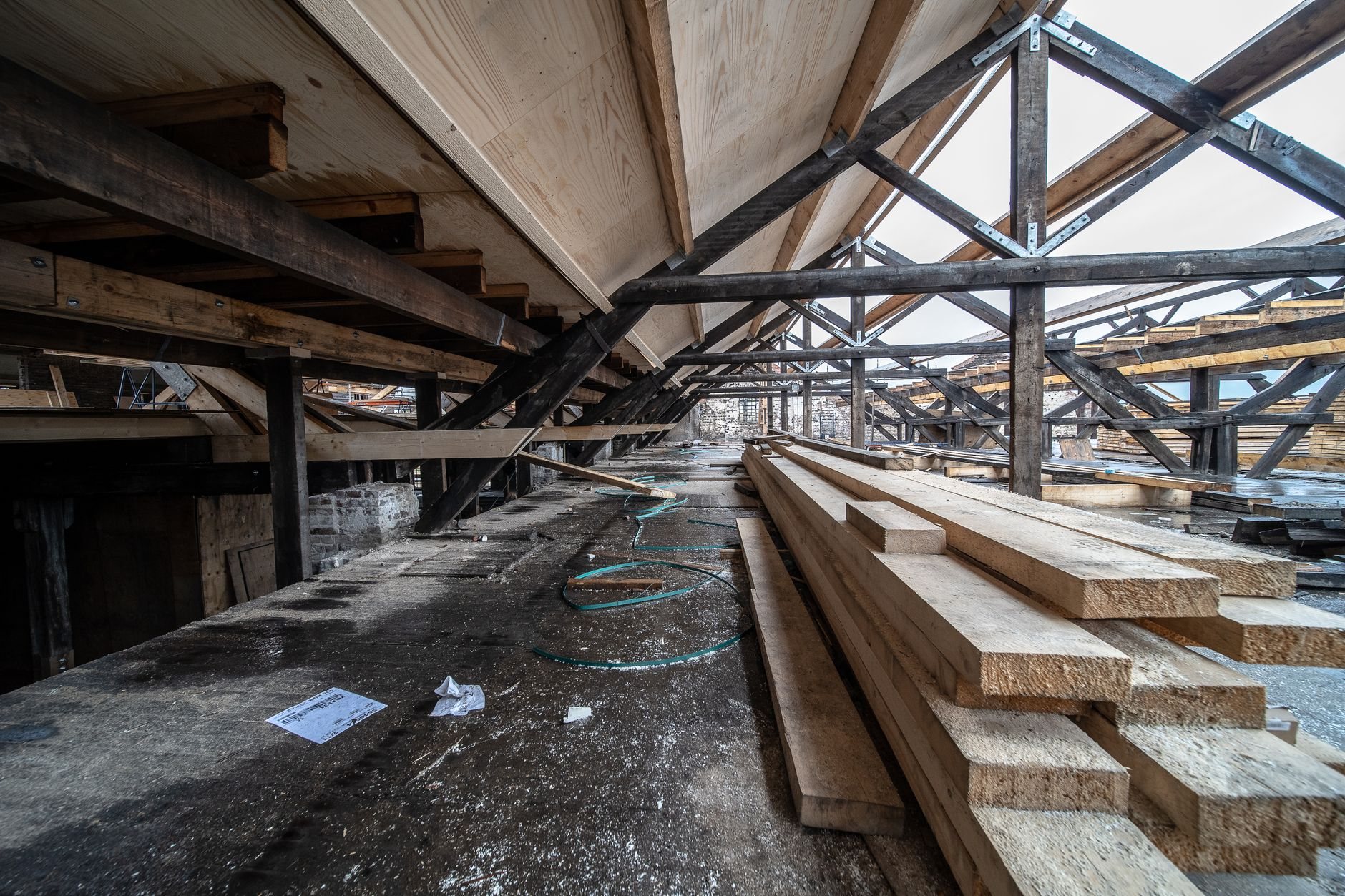
The Wasatch Front runs through a hundred-plus freeze-thaw days most winters. Indoor air leaking into a cold attic carries water vapor; it condenses on the sheathing, freezes, thaws the next sunny afternoon, and drips back onto the insulation. Over a few seasons that stains ceilings, mats down fiberglass, and feeds mold on the deck. A sealed ceiling plane breaks the cycle.
Canyon winds add a second argument: on the benches and through the Centerville and Farmington corridors, gusts pressurize one side of a house and pull air out of the other, and loose-fill alone wind-washes at the eaves. Baffles and sealed top plates keep the attic performing on a gusty night. The U.S. Department of Energy’s weatherization guidance treats sealing and attic insulation as a pair for this reason, and Utah utility rebates generally follow suit.
What moves the cost of an insulation and air-sealing retrofit
For a typical Utah County attic, air sealing plus blown insulation to current depth most often lands in the low-to-mid thousands; rim-joist sealing or dense-packed walls push it up. Ballpark planning figures, not a quote. The drivers:
- Attic access and headroom. A walkable attic seals fast. Low trusses, a closet scuttle, or ductwork laced through the space slow everything down.
- What’s already up there. Clean, dry batts get topped. Rodent damage or wet insulation means removal first; vermiculite means asbestos testing before anyone touches it.
- Rim-joist condition. Open bays are quick; a finished basement means removing and restoring drywall, or skipping that section and saying so.
- Wall work. Dense-packing existing walls roughly doubles an attic-only project, but it’s the only way to insulate a closed wall.
- Testing and rebates. Test-in and test-out add a modest line item that pays for itself as a rebate-qualifying upgrade.
Questions we actually get
Do I really need air sealing, or can I just add more insulation?
Insulation over an unsealed ceiling leaves the same drafts and, in a Utah winter, adds condensation on the sheathing, because the attic above the insulation is now colder. Sealing first costs a fraction of the insulation and delivers most of the comfort gain.
Can you insulate my walls without tearing out the drywall?
Usually. We dense-pack cellulose through small holes drilled from outside under the siding or inside through drywall, then patch. Balloon framing, knob-and-tube wiring, or partly insulated walls need a different plan, and we say which before quoting.
Will sealing the house trap moisture or make the air stale?
Sealing keeps moisture out of the attic, which is the goal. Fresh air is a ventilation job, not a leak’s job: if test-out shows the house tighter than its exhaust fans can serve, we add controlled ventilation, and in basements we plan radon testing.
What makes one attic cost twice as much as the next?
Access and what’s already there. A walkable attic with clean batts and few penetrations is a short job. The same square footage reached through a closet scuttle, with old can lights, ductwork, and damaged insulation to remove, is twice the labor. We price from a site visit.
This work sits inside our energy-efficiency and weatherization retrofit scope in the specialty capabilities family. Owners sealing the attic before panels go on pair it with a solar-ready retrofit; homes needing only the sealing half can read our air sealing and weatherization page. Our license is verifiable at dopl.utah.gov.
Tell us what you’re working on
Describe the cold room, the ice dam, or the gas bill. We reply within a couple of hours during business hours, a day at most, with a straight read on whether sealing and insulation is the right first dollar.