
Salt Finish Concrete in Utah
Salt finish concrete is a pitted, lightly textured surface made by pressing rock salt into fresh concrete and washing it out once the slab sets. It’s the right fit for pool decks, patios, and courtyards that need barefoot-friendly traction without the roughness of exposed aggregate, and Grandview pours it under a Utah B100 license.
Discuss a project Or call (385) 236-1741
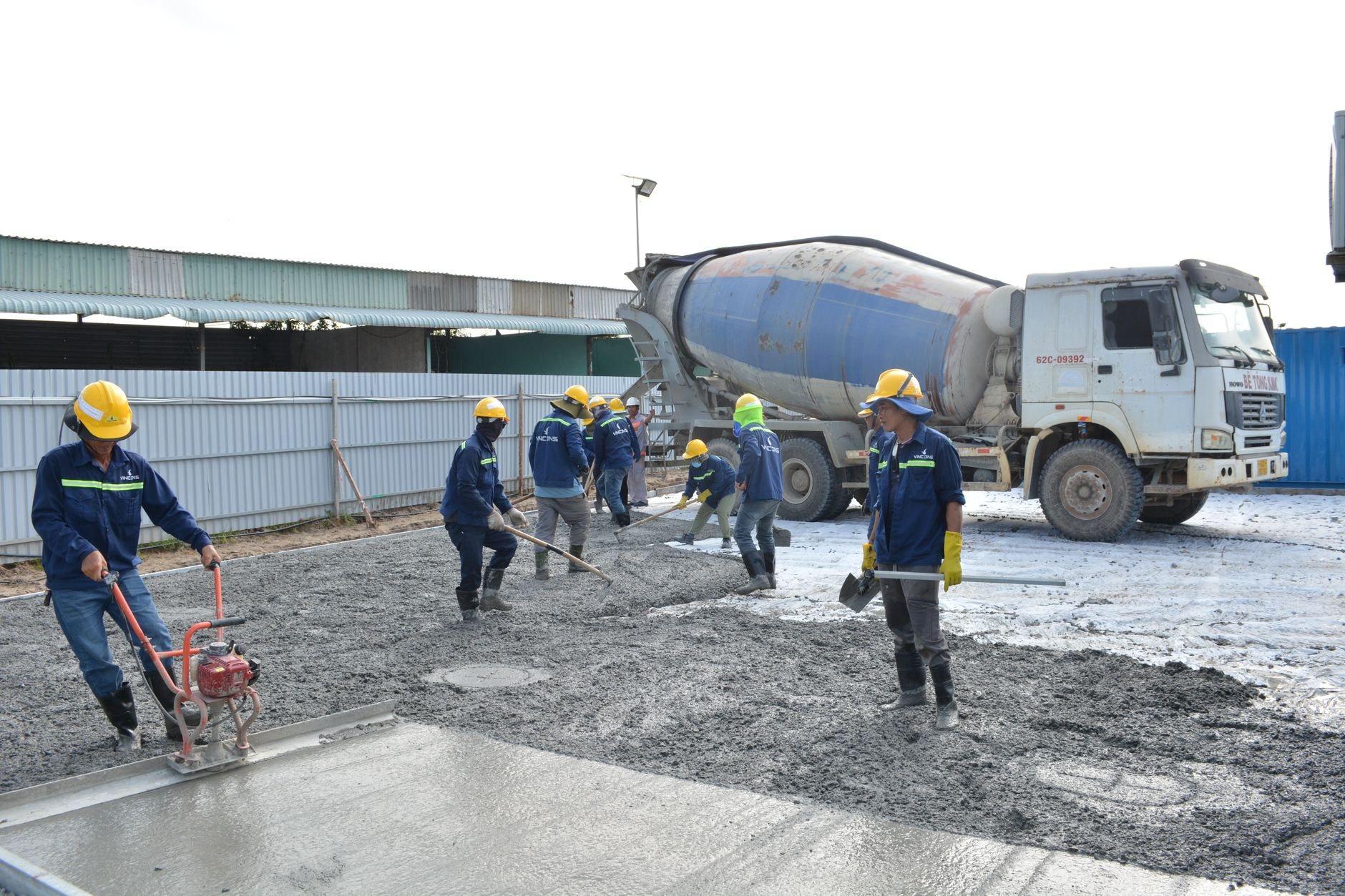
When a salt finish beats broom, exposed aggregate, or stamped
Choose salt finish when the surface will be walked on barefoot and wet, and you want a subtle, natural look rather than a pattern. The pits give traction, the surface between them stays smooth under a foot, and the read is closer to weathered stone than to a textured slab. It’s our usual answer for pool decks, hot-tub surrounds, and courtyards.
Against its nearest siblings: Broom finish costs less and sheds water better, but it’s coarse on bare feet and reads as plain flatwork. Exposed aggregate grips harder and tolerates deicers better, but it’s hard on knees and toes around a pool. Stamped concrete delivers a bigger visual change at a higher price and a stricter resealing schedule.
Driveways, front walks, and anything that will see deicing chemicals in January should not get a salt finish in Utah. The pits hold water, and that’s where freeze–thaw damage starts.
How a salt finish is made
The texture forms in a window of about an hour on pour day and can’t be redone afterward.
- Base, mix, and reinforcement. Compacted gravel, rebar or fiber as the slab calls for, and an air-entrained mix.
- Place, screed, and float. For a pool deck we steel-trowel lightly after floating so the surface between the pits is smooth, not sandy.
- Broadcast the salt. Coarse rock salt, roughly an eighth to three-eighths of an inch, is thrown by hand across the surface. Light broadcast reads speckled; heavy broadcast reads almost like travertine. Density is agreed from a sample before the truck arrives.
- Press it in. A roller or float seats each grain to about half its depth. Too early and the salt sinks and vanishes; too late and it won’t bite. We watch the slab, not the clock.
- Cure, then wash. After at least a day of set, the salt is dissolved and pressure-washed out, leaving clean pits.
- Seal. A penetrating sealer or a thin breathable acrylic, applied so it doesn’t pond in the pits. Thick film sealers whiten and peel where water collects.
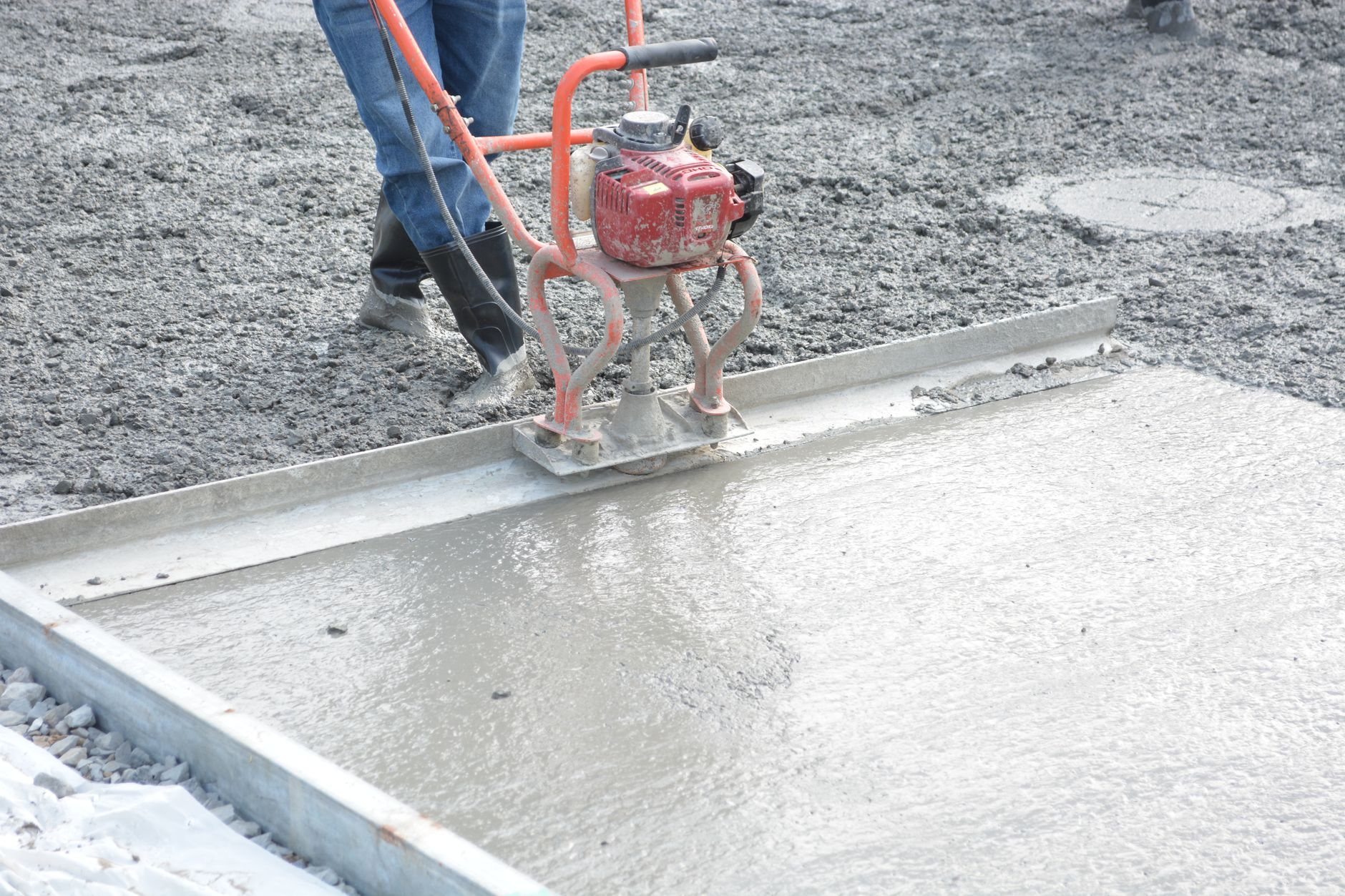

Salt finish and Utah winters — the honest part
A salt finish is a surface full of small cups. Along the Wasatch Front, with a hundred-plus freeze–thaw days most years, every one of them will fill with meltwater and freeze. That’s manageable only if three things are true: the mix is air-entrained so expanding ice has somewhere to go, the slab is pitched so water runs off, and nobody puts deicer on it.
A pool deck in Lehi or Sandy that drains toward the house will show scaling in the pits within a few winters, and a summer monsoon cloudburst will make the same point in July. We set grade at the forming stage; where the yard itself needs reshaping, our excavation and grading crew handles it in the same sequence.
Utah’s high-elevation UV is the other factor. The lighter mixes people like for pool decks, a pale gray or a buff integral color, stay cooler underfoot but show sealer wear sooner. Plan on resealing about every three years, a lighter schedule than stamped work because there’s no color hardener to protect.
The pour and everything under it run under Grandview’s contract and our Utah DOPL B100 general contractor license, verifiable at dopl.utah.gov.
What does salt finish concrete cost in Utah?
As a ballpark planning number, not a quote, a salt finish typically adds about $1 to $3 per square foot over plain broom-finished flatwork along the Wasatch Front, which puts most salt-finish pool decks and patios at roughly $9 to $15 per square foot installed. That’s well under stamped concrete; the salt is cheap and the extra labor is a broadcast, a roll, and a wash.
- Integral color. Pigment through the whole batch adds a per-yard material cost. A white-cement mix for a bright, cool pool deck costs more again.
- Pool coping and edges. Finishing cleanly up to coping, skimmers, and drains is slower hand work than an open field.
- Base and access. Expansive clay or soft fill means a deeper gravel section; no truck access means pumping.
- Sealer choice. A penetrating silane or siloxane sealer costs more per gallon than a cheap acrylic but behaves far better in the pits.
Ranges are for planning; the written proposal after a site walk is the number.
Questions we actually get
Is salt finish concrete slippery around a pool?
Less so than smooth-troweled concrete, and that’s the point. The pits break the water film under a wet foot and give it something to grip. We keep the surface between the pits lightly troweled and skip glossy sealers. It’s not as grippy as exposed aggregate, but far kinder to bare feet.
Can you salt finish my existing concrete?
No. The texture only forms in fresh concrete during the first hour or so after floating, so a cured slab can’t take it. If you want a similar look on existing sound concrete, a textured overlay can get close.
Will the salt in the finish damage the concrete?
The rock salt used to make the texture is washed out completely once the slab has set, so none of it stays in the concrete. The salt that causes damage is winter deicer, which multiplies freeze cycles at the surface. Keep deicers off, use sand for traction if you need it, and the surface holds up.
How consistent is the pit pattern?
Hand broadcasting is deliberately irregular, which is what makes it look natural instead of printed. Within a pour we keep density even with overlapping passes and match the sample you approved. On large pool decks we plan joints where a day-to-day change won’t be noticed.
Salt finish is one option within our decorative and stamped concrete work, part of the site, structure and envelope family. It’s often poured with a structural pool deck slab and the grading around it, on one contract and one schedule.
Tell us what you’re working on
Send a few photos and rough dimensions. We reply within a couple of hours during business hours, a day at most, with a straight read on finish, sequence, and budget before anyone commits to anything.