
Exposed Aggregate Concrete in Utah
Exposed aggregate concrete is a slab whose top layer of cement paste is removed after the pour, so the stone inside the mix becomes the walking surface. It’s the right finish for sloped walks, pool decks, and driveways where wet traction matters more than pattern, and Grandview installs it under a Utah B100 general contractor license.
Discuss a project Or call (385) 236-1741
When exposed aggregate is the right call, and when a sibling is
Exposed aggregate is the only finish in the decorative concrete family where the texture is stone rather than cement. A salt finish pits the paste; a broom finish ridges it; stamping presses a pattern into it. All three wear at the paste. Exposed aggregate wears at the rock, which is why we steer people toward it on a sloped bench-lot walkway, a pool surround, or a driveway that meets snow shovels every winter.
Choose it when traction and wear matter more than a specific look, when you want color from natural stone instead of pigment, and when you’re pouring new. It also hides the fine scaling Utah’s hundred-plus freeze-thaw days put on a paste-finished slab; there’s no smooth paste left to scale.
Two honest exceptions. For a flat surface under bare feet and patio furniture, a salt finish or integrally colored broom finish is kinder. And an existing slab can’t be exposed; a seeded resurfacing overlay is the closest substitute.
How the stone gets exposed
Three methods, chosen before concrete is ordered because each sets the look and the price.
- Surface retarder and wash-off. The standard method. The slab is placed, screeded, and bull-floated, then sprayed with a retarder that keeps the top eighth-inch of paste from setting while the slab below hardens. Next morning we pressure-wash and brush that soft paste away, leaving the stone standing proud. A light wash reads sandy and speckled; a deeper wash shows full pebbles.
- Seeded aggregate. Decorative stone is broadcast by hand onto the fresh surface, floated in until the paste just covers it, then exposed the same way. You choose the stone you’ll see independent of the structural mix, so a gray Wasatch Front load can carry a surface of black basalt or river rock.
- Abrasive blasting. Used on cured concrete; a flatter, matte exposure, and the fallback when weather takes the wash window away.
Timing is the whole trick. On a hot July afternoon along the Wasatch Front, retarder goes on within minutes of the final float. Wash too early and stone pulls loose; too late and the surface stays gray. So summer pours start at first light, and we watch the slab, not the clock.
Choosing the aggregate
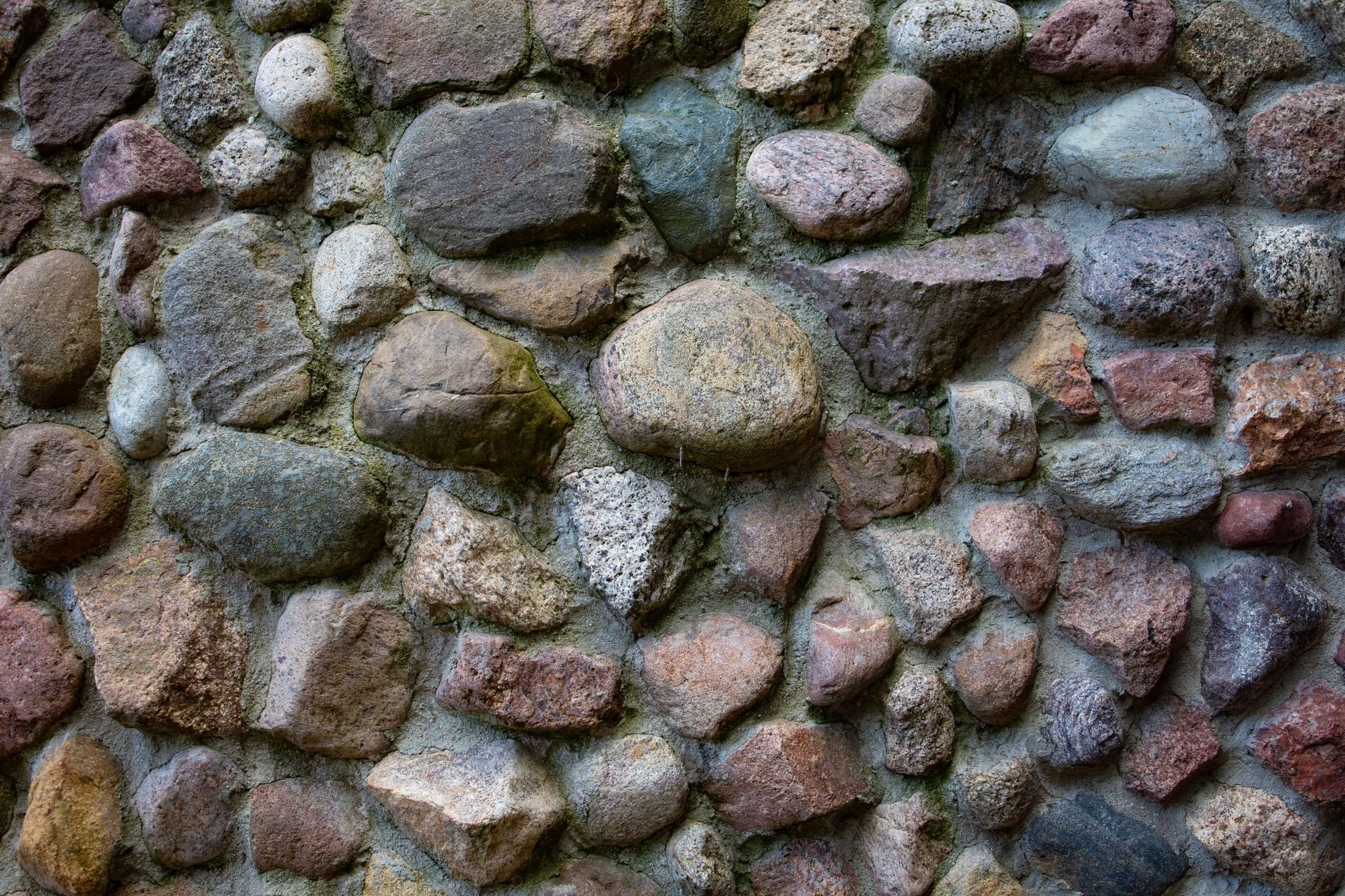
The stone is the finish, so it’s the decision that matters most. Three-eighths-inch pea gravel gives a fine, even texture that’s comfortable underfoot; three-quarter-inch stone reads bolder and grips better on a slope. Rounded river rock is gentler on bare feet than crushed stone, whose sharp edges suit a driveway more than a pool deck.
Color follows local supply. Utah County and Salt Lake County batch plants run on Wasatch Front pit gravels, which expose to a buff, tan, and gray mix that suits most stucco and stone-veneer exteriors. Dark basalt, white quartz, or red-browns are seeded and ordered separately, with a sample panel to approve first.
Under the stone, the slab is built like any exterior flatwork: compacted gravel base, four inches for walks and five to six for driveways, rebar or fiber, and an air-entrained mix. Air content matters more here than on a troweled slab, because washing removes the dense surface skin and leaves the paste around each stone exposed to freeze-thaw. Entrained concrete handles that; a bargain mix does not.
What does exposed aggregate concrete cost in Utah?
As a ballpark planning number, not a quote, exposed aggregate along the Wasatch Front typically runs about $10 to $16 per square foot installed for a retarder-and-wash finish on the stone already in the mix, between broom-finished flatwork and stamped. Seeded decorative stone adds roughly $2 to $5 per square foot.
- Exposure method and stone. Retarder wash on local mix aggregate is the base case. Seeding adds imported stone, often with a minimum order, plus a second hand pass on the day labor is most time-critical.
- Sealer. A low-build acrylic sealer darkens the stone and locks the smaller pebbles in. It’s in our scope; at Utah’s elevation and UV it needs renewing every two to three years.
- Slope and drainage. Sloped walks are the natural home for this finish, but the pitch has to send a summer cloudburst off the slab, not along the house; regrading is its own line.
We work in stages: a conversation, a budget range after a site walk, then a firm written proposal. The work is performed under Grandview’s Utah DOPL B100 license, verifiable at dopl.utah.gov.
Questions we actually get
Is exposed aggregate slippery when wet or icy?
Wet, no. The stone gives it the best traction of any decorative finish, which is why we recommend it for pool decks and sloped walks. Ice is slick on any surface, though this texture holds sand well. Skip deicing salts the first winter.
Will the stones come loose over time?
A few of the smallest pebbles can pop in the first season, usually at edges or where the wash went deep. After that a sealed surface stays stable for decades. Widespread stone loss points to a wash that came too early or a mix lean on cement, prevention problems rather than maintenance ones.
Can you match a new exposed aggregate section to an existing one?
Closer than most finishes, because the color comes from stone rather than weathered pigment. We identify the aggregate in the existing slab, match size and source where the pit still produces it, and pour a sample first. A control joint at the seam helps two pours read as one.
How deep should the exposure be for a driveway versus a patio?
Driveways and sloped walks want a medium to deep exposure, roughly a third of the stone showing, for tire grip and winter traction. Patios and pool decks do better with a light exposure that leaves the stone mostly in the paste, so bare feet and furniture find a flatter surface. We set the depth on a sample panel first.
Tell us what you’re working on
Exposed aggregate is one finish within our site, structure and envelope work, often poured alongside a new pool deck. We reply within a couple of hours during business hours, a day at most, with a straight read on scope, sequence, and budget before anyone commits to anything.