
Integrally Colored Concrete in Utah
Integrally colored concrete is flatwork with pigment batched into the entire mix at the ready-mix plant, so the color runs the full depth of the slab instead of sitting on top of it. It’s the right choice for patios, walks, and driveways that need an even, warm tone that can’t chip, peel, or wear through — Grandview pours it under a Utah B100 general contractor license.
Discuss a project Or call (385) 236-1741
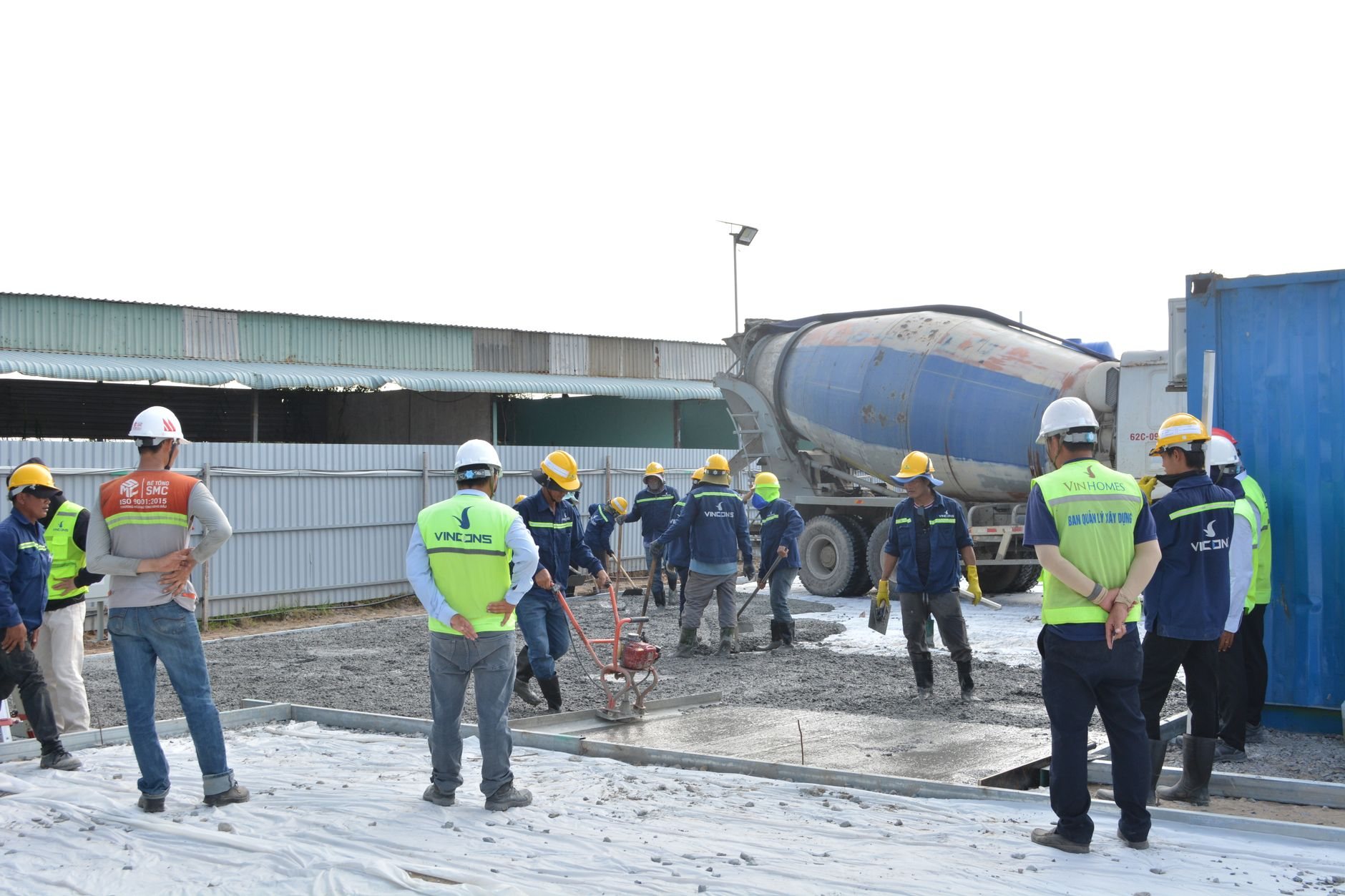
When integral color is the right call — and when a sibling finish is
Choose integral color when the surface will take abuse — snow shovels, tire scrub, dragged chairs — and you want the same color showing afterward. Because pigment is in every cubic inch, a chipped edge reveals tinted concrete, not gray. That’s why we recommend it for driveways, garage aprons, and front walks first.
The nearest alternatives trade that durability away. Acid and water-based stains give deeper, mottled variation and work on existing slabs, but they wear where feet and tires do. Shake-on color hardener — the method behind most stamped concrete — gives a brighter palette, but only in the top eighth-inch. Plain broom-finish flatwork is cheapest, and gray. Exposed aggregate gets its color from the stone; we often add integral pigment so the paste between stones reads buff or charcoal instead of cement gray.
The honest limit is palette. Integral pigments produce earth tones — buffs, tans, sandstone, terra cotta, browns, charcoals, a few muted greens and slate blues. True reds, bright blues, and pure whites aren’t achievable at sane dosages in gray cement. Want a brick-red driveway? We’ll steer you to a stain and tell you why.
What goes into an integrally colored pour
Base, forms, reinforcement, and joints match any structural slab — our decorative concrete page covers that. What changes is the mix.
- Pigment type and dose. Synthetic iron-oxide pigments meeting ASTM C979, dosed as a percentage of cement by weight — usually 1 to 5 percent, never above the standard’s 10 percent ceiling, past which pigment weakens the paste. Suppliers such as Davis Colors publish dose charts by cement content, not cubic yard, and we order off the cement weight.
- One mix ticket for the whole job. Every truck gets the same cement source, fly ash percentage, aggregate, pigment lot, and water-to-cement ratio. Change one between loads and the color shifts.
- No water at the curb. Water added on site is the biggest cause of color variation; it lightens and streaks the paste. On a 95-degree July afternoon in Lehi a finisher wants a wetter load, so we specify a water-reducing admixture at the plant instead.
- Air entrainment, unchanged. The Wasatch Front sees a hundred-plus freeze-thaw days a year; a colored slab that scales is still a defect, just a tinted one.
- Consistent finishing. Hard troweling darkens pigmented concrete; floating at different moisture leaves bands gray would hide.
- Curing matched to the color. Where most colored jobs go wrong. Plastic sheeting blotches wherever it touches; ordinary curing compounds can yellow. We use a cure-and-seal formulated for colored concrete, then a final sealer after cure.
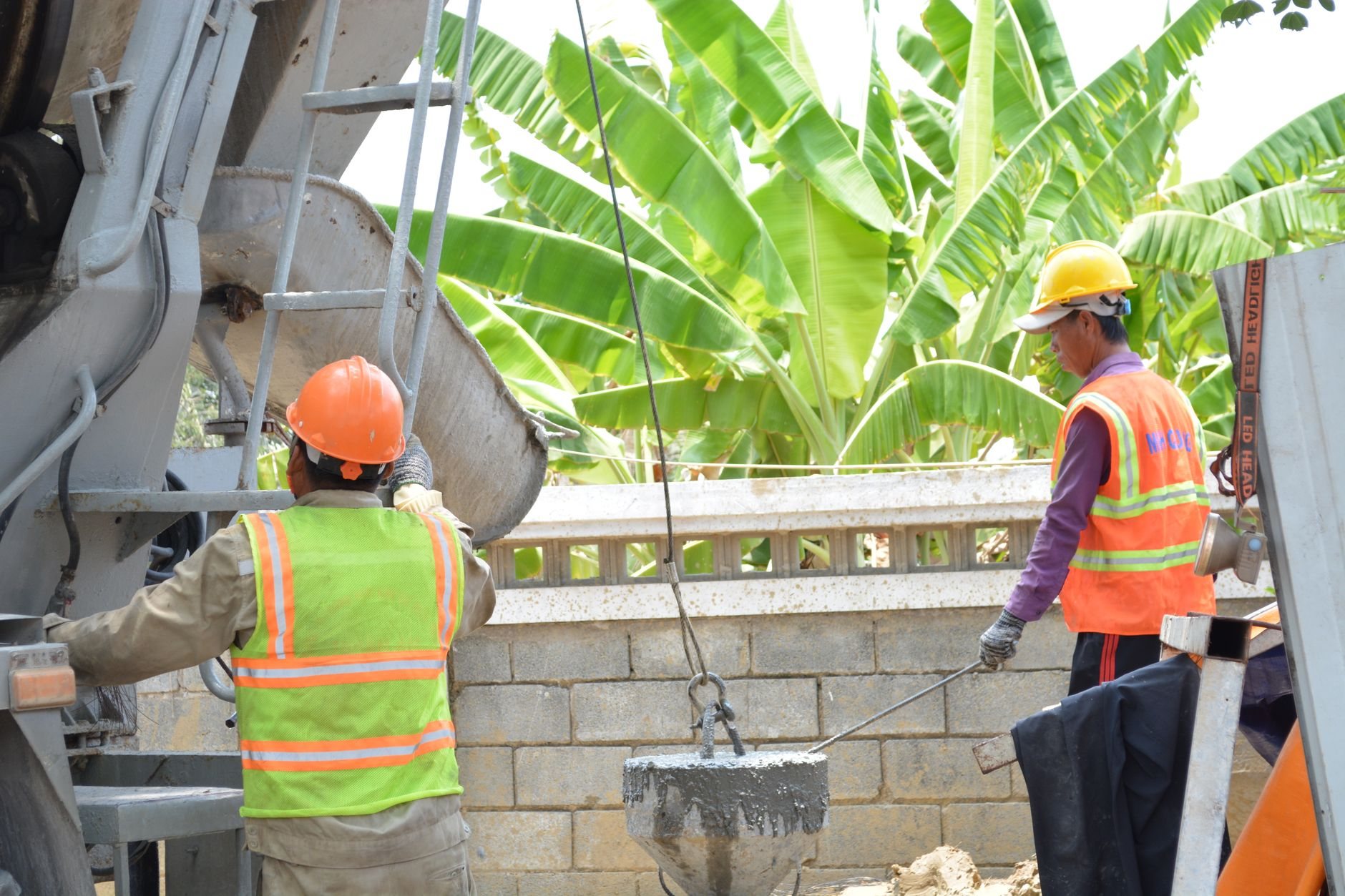
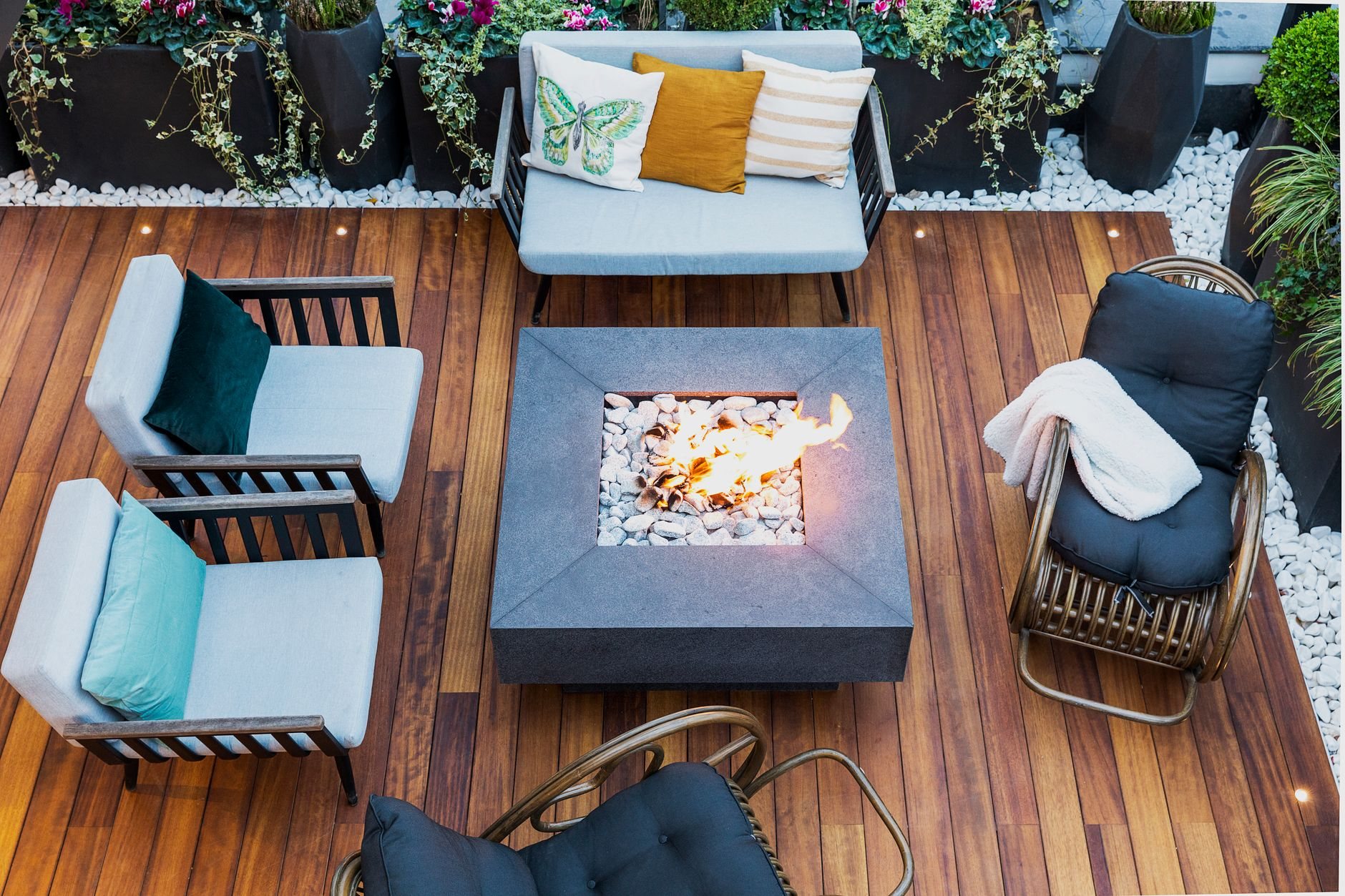
Why two colored slabs never match perfectly — and how we close the gap
A color chip is ink on paper; your slab’s tone comes from pigment plus gray cement, local aggregate, slump, finishing, and cure. So we pour a sample panel on site with the actual mix before you approve a color. We also pour the whole visible area in one placement from one plant on one day wherever possible; when we can’t, the stop lands at a control joint or border so the eye reads design, not a color change.
Efflorescence — a white haze of calcium salts drawn to the surface — is common on new concrete along the Wasatch Front, where hard water and alkaline soils feed it, and shows far more on charcoal than buff. It washes off; it isn’t pigment failing. Deicer scaling is not normal — salt multiplies freeze cycles at the surface. Use sand the first winter.
Iron-oxide pigments are UV-stable, which matters at Utah’s elevation. What fades is the sealer; reseal every two to three years and the tone holds for decades.
What does integrally colored concrete cost in Utah?
As a ballpark planning number — not a quote — integral color adds roughly $1 to $3 per square foot over plain gray flatwork along the Wasatch Front. A colored broom-finish patio or driveway usually lands around $10 to $15 per square foot installed, against $14 to $22 for stamped work. The slab prices like any driveway or flatwork job; color is the increment.
- Dose and shade. Dark charcoals and deep browns need two to three times the pigment of a light buff; pigment is priced by the pound.
- White cement base. Pastels and clean light tones need white cement instead of gray, which raises mix cost substantially.
- Single-day staffing and access. One large placement means a bigger crew that day; pumping into a tight backyard adds more.
We work in stages: a conversation, a budget range after a site walk, then a firm written proposal. Ranges are for planning; the proposal is the number.
Questions we actually get
Can you add integral color to my existing concrete?
No. Integral color goes into the mix at the plant, so it only exists in new concrete. For a sound existing slab, a stain or colored overlay is the path. If the slab is cracked or heaving, replacing it with a colored pour is usually the better answer, and we’ll say so.
Why does my new colored concrete have a white haze?
That’s efflorescence: soluble salts carried to the surface as the slab dries. It’s most visible on dark colors and common in the first year on the Wasatch Front. It is cosmetic, not a pigment defect. Most weathers away; a mild efflorescence cleaner removes the rest, and sealing after full cure slows it.
Can integral color be combined with stamping or exposed aggregate?
Yes, and the best results often do. An integrally colored base under a stamped pattern means a chip shows tone instead of gray, with the release agent supplying the accent. With salt finish or exposed aggregate, integral pigment tints the paste between the texture or stone.
Why did a colored driveway come out a different shade from the sample?
Almost always water or cure. Water added at the truck lightens the paste; plastic sheeting or an unmatched curing compound blotches or yellows it. Occasionally it’s a second load from a different plant. We control all three — admixture instead of water, color-matched cure, one mix ticket — and a sample panel shows you the real thing.
One finish within our site, structure and envelope family, performed under our Utah DOPL B100 license, verifiable at dopl.utah.gov.
Tell us what you’re working on
Send rough dimensions and the color family you have in mind. We reply within a couple of hours during business hours — a day at most — with a straight read on finish, sequence, and budget before anyone commits to anything.