
Concrete Overlays & Resurfacing in Utah County
Concrete resurfacing bonds a thin polymer-modified cement overlay — usually an eighth to three-eighths of an inch — over a structurally sound slab, giving a scaled, pitted, or tired surface a new finish without demolition. It’s the right move for driveways, patios, and garage floors that are solid but ugly, and Grandview installs overlays under a Utah B100 license.
Discuss a project Or call (385) 236-1741
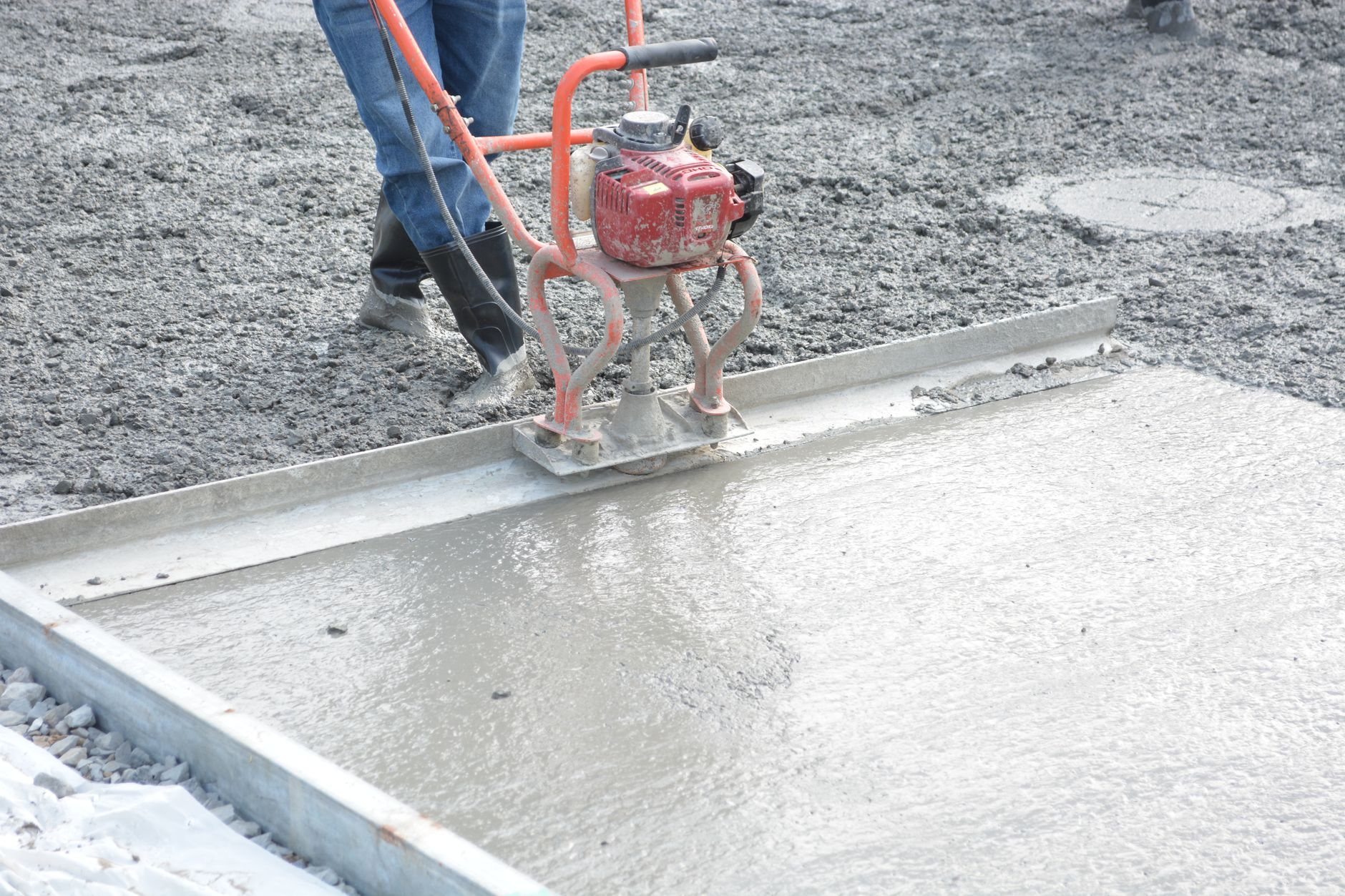
Is resurfacing the right fix, or should the slab go?
An overlay fixes the top quarter inch of a slab and nothing below it, so the first question is whether the concrete underneath has earned a second surface.
Good candidates: scaling from deicers, a flaking or pitted finish, a hairline crack map that doesn’t move, or a sound broom finish you’d rather see stamped. The Wasatch Front’s hundred-plus freeze–thaw days a year produce exactly this damage on slabs poured without enough air entrainment — the body is fine, the skin isn’t.
Bad candidates: cracks with a vertical offset, corners that rock, sections settled toward the house, or spalling deeper than about half an inch. Those are base and soil problems, common on the expansive clays and collapsible bench soils along the valley edges, and an overlay inherits them. A settled-but-intact slab can often be lifted with polyurethane leveling first and resurfaced after. A slab that’s breaking up goes to replacement, and we’ll say so rather than sell you a finish on a failing base.
Among its neighbors: a micro-topping is thinner — a skim coat measured in sixteenths — and lives mostly indoors; polyaspartic and epoxy are resin coatings that protect but don’t rebuild texture; new stamped concrete is a fresh pour when the old slab is beyond saving. Resurfacing is the cement-based middle: thick enough to hide damage and take a stamp, thin enough to skip the jackhammer.
What a resurfacing job involves
- Inspect and sound the slab. Tap-test for hollow spots, check cracks for movement, measure pitch away from the foundation. This visit decides whether the job is an overlay at all.
- Mechanical surface prep. Diamond grinding or shot blasting strips sealers, paint, and weak paste and opens a profile the overlay can grip. Pressure washing isn’t prep; an overlay on an unprofiled slab delaminates in sheets, usually the second spring.
- Crack and spall repair. Cracks are routed and filled — flexible polyurea if they move, rigid epoxy if they don’t; pits are patched and feathered. Existing control joints stay open and are re-cut through the finished overlay; bridging one guarantees the crack reappears.
- Bond coat and overlay. A primer or scratch coat, then the polymer-modified overlay — squeegeed for a broom or knockdown texture, trowel-placed up to three-quarters of an inch for a stampable topping. The polymer gives a thin layer flexibility and low permeability; plain sand-cement at this thickness would crack and drink water.
- Texture, color, seal. Knockdown spray, broom, or stamp mats; integral color or stain; then a UV-stable sealer with anti-slip grit on walking surfaces. Foot traffic in a day, vehicles after about a week.
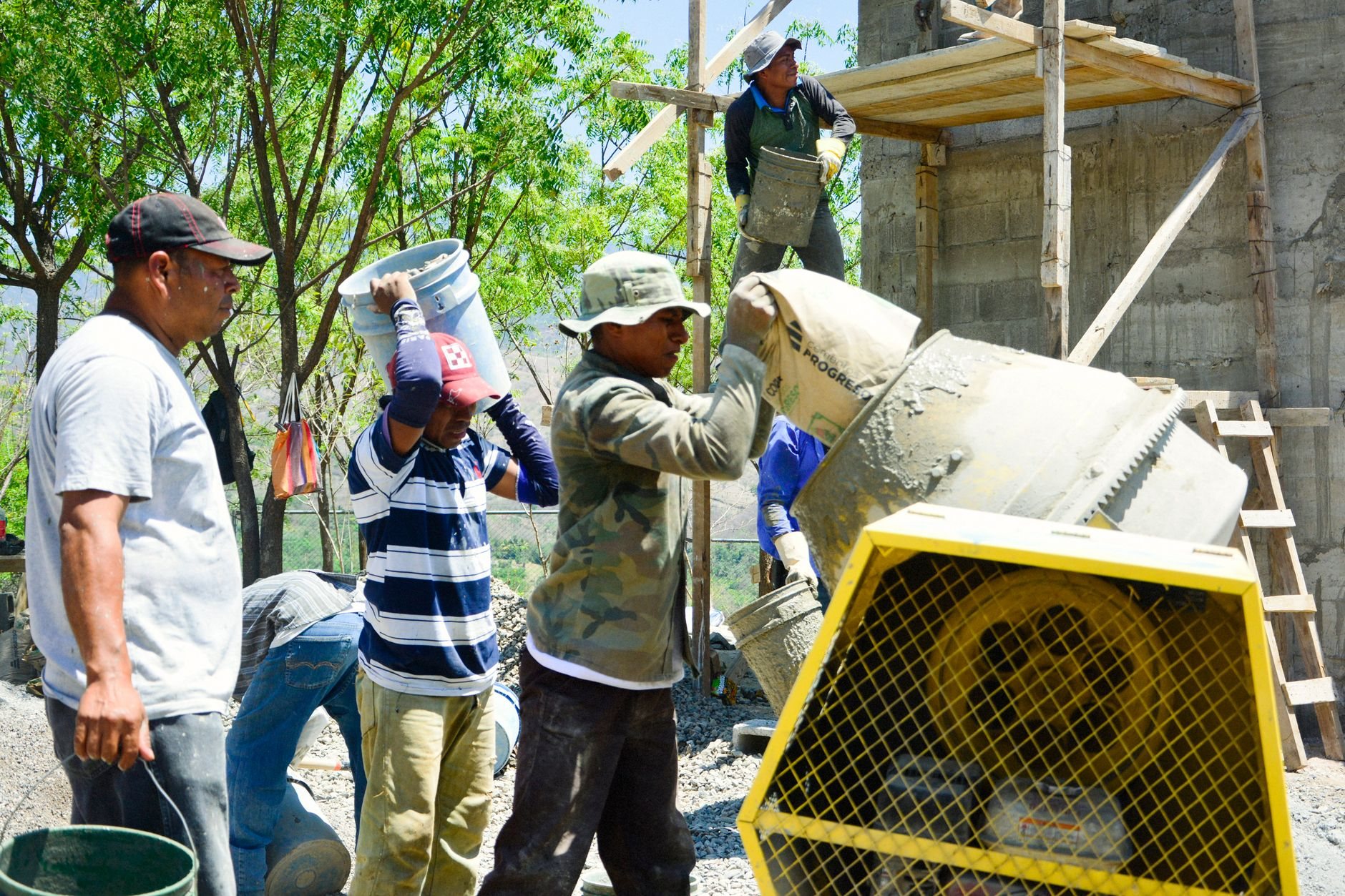
Overlay thickness and texture options
The right overlay depends on how much damage you’re hiding and how the surface will be used.
- Broom overlay (about 1/8 in.). The driveway and sidewalk standard: a squeegee coat, broomed for traction, that makes a scaled slab read as newly poured. Lowest cost.
- Knockdown or spray texture (1/8 to 1/4 in.). Sprayed through a hopper gun and troweled flat on the peaks. Cool underfoot and slip-resistant — the usual choice for pool decks and south-facing patios.
- Stampable overlay (1/4 to 3/4 in.). Takes the same slate, flagstone, and plank mats used on new pours. The stamping window is shorter than on fresh concrete, so these run as small crews on sized sections.
Exterior overlays in Utah need a freeze–thaw rating and a sealer built for elevation UV; a product sold for Phoenix patios will chalk and scale here. We also hold application to a surface temperature of roughly 50 to 85°F — spring and fall mornings, not a July afternoon on a sun-baked driveway or the marginal week before Thanksgiving.
What does concrete resurfacing cost in Utah?
As a ballpark planning number — not a quote — a broom or knockdown overlay on a sound Wasatch Front slab typically runs about $4 to $8 per square foot installed, and a stamped overlay about $9 to $15. New broom-finished flatwork runs roughly $8 to $12 and new stamped concrete $14 to $22, demolition and base included. Resurfacing wins on cost precisely when the base is still doing its job.
What moves the number inside those ranges:
- Prep intensity. Old sealer, paint, or heavy deicer scaling means more grinding or blasting time.
- Crack and spall count. Priced by the foot and the patch. A hairline map is quick; a dozen open cracks and pitted corners is a half day before any overlay goes down.
- Leveling first. Settled sections mean a polyurethane lift as its own line item ahead of resurfacing.
- Texture and color. Knockdown is the base case; stamped with two colors and a border is the high end.
- Size and access. Small cut-up areas cost more per foot; equipment minimums don’t scale down.
We work in stages: a conversation, a budget range once we’ve seen the slab, then a written proposal. The work is performed under Grandview’s contract and our Utah DOPL B100 general contractor license, verifiable at dopl.utah.gov. Resurfacing is one of several finishes on our decorative concrete page, within the broader site, structure & envelope family.
Questions we actually get
How long does a concrete overlay last?
A properly prepped and sealed exterior overlay should last 10 to 20 years before it needs more than resealing. What cuts that short in Utah: skipped mechanical prep, deicing salt the first winter, and a sealer worn through. Reseal every two to three years and use sand for traction, and the overlay ages like the slab under it.
Will the cracks come back through the overlay?
Moving cracks will, which is why we fill them with flexible polyurea and, where possible, treat them as joints rather than hiding them. Stable hairline cracks, filled and overlaid, generally stay hidden. If a slab has active cracks from soil movement, we’ll tell you an overlay is a short-term fix.
Can you resurface a garage floor that sees hot tires and road salt?
Yes, with the right system. A cementitious overlay handles tire heat better than paint, but salt-laden snowmelt is the real enemy, so we spec a freeze–thaw-rated overlay and a urethane or polyaspartic topcoat, not a basic acrylic sealer. If you need protection rather than texture, a polyaspartic coating alone may be cheaper.
What’s the difference between resurfacing and leveling?
Leveling lifts a slab that has sunk; resurfacing replaces the finish on one that hasn’t. They solve different problems and are often done in sequence — lift first, then overlay. An overlay cannot fix a trip edge or a slab pitched toward your foundation. If yours has both problems, we’ll scope both up front.
Tell us what you’re working on
We reply within a couple of hours during business hours — a day at most. You’ll get a straight read on whether your slab is a resurfacing candidate and a budget range before anyone commits to anything.