
Stamped Concrete in Utah County
Stamped concrete is fresh concrete that’s colored, then pressed with texture mats so the slab reads as flagstone, slate, brick, or wood plank for a fraction of what the real material costs to lay. It’s the right pick for patios, walks, pool surrounds, and driveway borders, and Grandview installs it under a Utah B100 general contractor license.
Discuss a project Or call (385) 236-1741
When stamping is the right finish, and when a sibling is
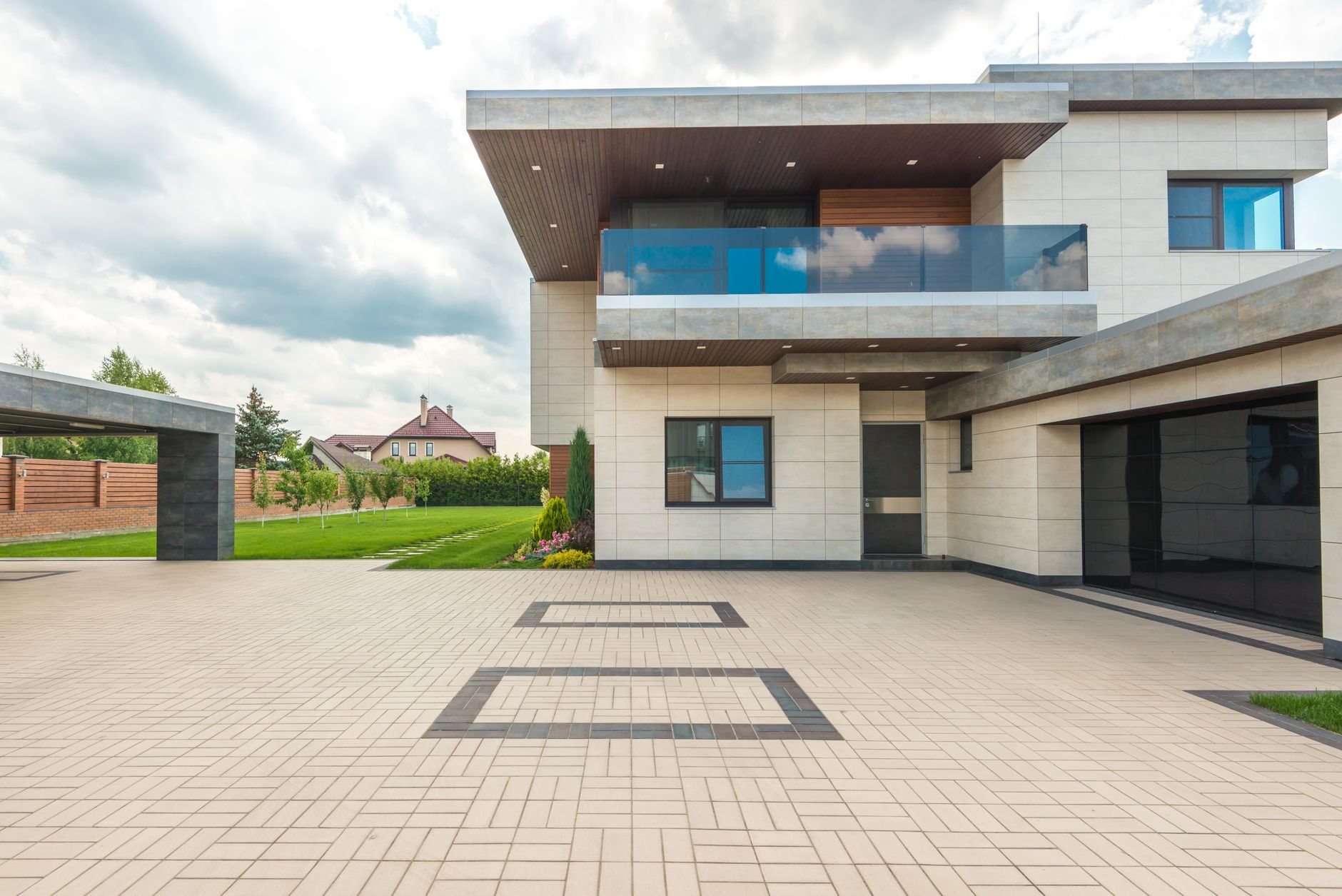
Stamping is the only decorative finish that changes the shape of the surface itself. Stains change color but leave the slab flat. Exposed aggregate adds texture from the stone in the mix, but no pattern. Stenciling lays a pattern on top in a thin layer rather than pressing one into full-depth concrete.
Choose stamped when you want a specific pattern, you’re pouring new concrete so the texture goes into the full section, and the surface is mostly level. It also pairs well with a plain field: a broom-finished patio with a stamped slate border costs far less than stamping the whole thing and often looks more deliberate.
Choose something else in three honest cases. A sound slab that only needs color should be stained. A sloped or wet surface gets better traction from exposed aggregate or a salt finish. And if budget decides, broom-finished flatwork in a colored mix does the same structural job for roughly half.
How a stamped pattern is actually built
The pattern is built in layers, and each layer is decided before the truck arrives. Base color comes from integral pigment mixed through the load or from a dry color hardener broadcast onto the wet surface and floated in; hardener gives a denser surface and a wider palette, integral costs less and can’t wear through. Over that goes a powdered release agent in a darker tone, which keeps the mats from sticking and settles into the grout lines so the pattern reads as stone instead of a repeating rubber print.
Then the mats. Ashlar slate is rectangular and easy to joint. Random flagstone hides mat seams best but makes control joints harder to disguise. Wood plank runs in long boards we orient with the slope so water follows the grain. Herringbone brick mostly shows up as borders. Where a full mat won’t fit, along the house or on steps, texture skins carry the surface across without a visible stop.
- Pattern, color, and border locked from samples. Nothing changes once concrete is ordered.
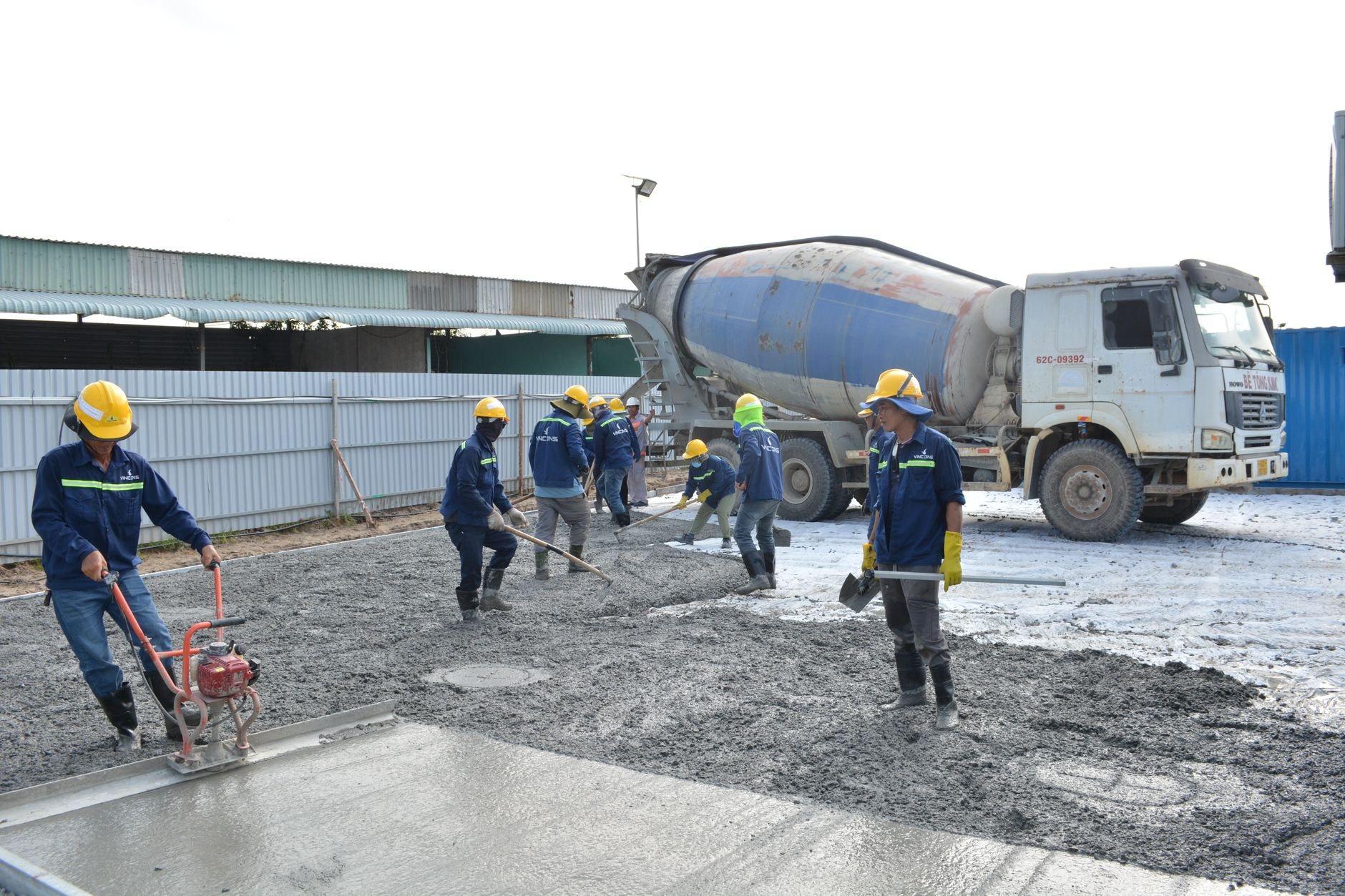
- Base, forms, and pour. Compacted gravel, forms pitched away from the house, rebar or fiber, then an air-entrained mix. Patios pour at four inches; stamped driveways at five to six, because the pattern adds no strength.
- Release and stamp. When the surface takes a thumbprint without slumping, we work from the layout line across the slab, tamping each mat and overlapping registers so seams disappear. On a warm Wasatch Front afternoon that window is under an hour, which is why July pours start at first light with a crew sized to finish inside it.
- Wash and cut. Next day we pressure-wash excess release to the antiquing level you approved, then saw control joints along the pattern’s own grout lines.
- Cure, then seal. A solvent-based acrylic sealer with anti-slip grit. Utah’s elevation makes UV the main enemy of color, and the sealer is the sacrificial layer that takes it.
Stamped driveways need a few different calls
Deep-relief patterns hold snow and ice in the grout lines, and shovel blades catch on them. We steer driveways toward lower-relief patterns, a grit-loaded sealer, and often a stamped border around a broom-finished field. Deicing salt scales a stamped surface just as it scales plain concrete, only the repair costs more. Sand the first winter.
What does stamped concrete cost in Utah County?
As a ballpark planning number, not a quote, stamped concrete along the Wasatch Front runs about $14 to $22 per square foot installed for one pattern and one color on a new patio. Stamped driveways sit toward the top because of the thicker section. A stamped border on a broom-finished field usually blends out to $10 to $14 overall.
- Pattern count and color passes. A second pattern, a contrasting border, or hand-applied accent color all add labor in the one hour when labor is most time-critical.
- Color system and thickness. Broadcast hardener costs more than integral pigment; a six-inch driveway section costs more than a four-inch patio before any pattern is involved.
- Shape, access, and demolition. Cut-up patios need more texture-skin work; a pump or an old slab to remove each add a line item.
We work in stages: a conversation, a budget range after a site walk, then a firm written proposal. The work is performed under Grandview’s Utah DOPL B100 license, verifiable at dopl.utah.gov.
Questions we actually get
Stamped concrete or pavers for a Utah patio?
Stamped usually costs less installed and has no joints for weeds. Pavers can be lifted and re-laid if the base settles and never need resealing. On expansive clay or soft fill where movement is likely, pavers are more forgiving; on a well-prepared base, stamped gives a cleaner, continuous surface for the money.
Can you stamp a pattern into my existing patio?
Not directly. Stamping needs plastic concrete, so an existing cured slab gets a stamped overlay instead: a thin engineered topping that’s colored and textured like new work. That’s a resurfacing job, and it inherits every crack in the slab beneath it, so we inspect before recommending it over replacement.
Will the stamped color fade?
The pigment doesn’t fade; the sealer protecting it wears off. At Utah’s elevation that takes two to three years, after which the release-agent antiquing lightens and the surface looks chalky. Reseal when water stops beading and the color comes back. Skipping it for five years is how stamped patios end up pale.
How soon can we use a new stamped patio?
Foot traffic after about two days, furniture at a week, and no vehicles on a stamped driveway for at least seven days. Sealing happens once the slab has dried out, often two to four weeks after the pour, and the sealer needs a day or two before heavy use.
Where stamped work usually fits
Stamping is one finish within our decorative concrete scope, part of the site, structure and envelope family. A stamped patio is a structural concrete patio pour with the pattern specified up front.
Tell us what you’re working on
Send a few photos, rough dimensions, and the pattern you have in mind. We reply within a couple of hours during business hours, a day at most, with a straight read on scope, sequence, and budget before anyone commits to anything.