
Decorative & stamped concrete in Utah County
Stamped, stained, and exposed-aggregate concrete for patios, walkways, pool decks, and entries — poured on a properly prepared base, in air-entrained mixes built for Utah winters. Grandview installs decorative concrete under a Utah B100 license — and we’ll tell you plainly what each finish costs to own, not just to pour.
Who decorative concrete is right for
Decorative concrete makes sense when you want the look of stone, slate, or brick at a lower installed cost than the real thing, with fewer joints for weeds than pavers. A stamped patio reads as flagstone from ten feet away; exposed aggregate gives a walkway real texture and traction; stains turn a plain gray slab into something you chose on purpose.
It’s the right fit for patios, front walks and entries, pool surrounds, courtyards, and driveway borders where you want curb appeal without paver maintenance. It pairs naturally with a new deck or a terraced yard with retaining walls — we often sequence those scopes together, because the grading and drainage decisions overlap.
It’s the wrong fit in a few honest cases. If you want a surface you can lift and re-lay after settling, pavers win. If budget is strictly minimal, plain broom-finished concrete flatwork does the structural job for less. And if you won’t reseal every two to three years, skip stamped color work; unsealed stamped concrete in Utah’s high-elevation UV fades faster than most people expect. We’d rather tell you that now than sell you a patio you’ll resent.
Stamped, stained, or exposed aggregate — which finish fits?
Stamped concrete gives the strongest visual change and the widest pattern range; exposed aggregate gives the best traction and the easiest maintenance; stains give color without changing texture. Most Utah projects land on stamped for patios, exposed aggregate for driveways and pool decks, and stain for refreshing existing slabs. Many of the best results combine two — a stamped field with a broom-finished border, for example.
Stamped concrete
Fresh concrete gets integral color or a broadcast color hardener, a release agent in a contrasting tone, then texture mats pressed in before the slab sets — ashlar slate, random flagstone, wood plank, cobble. The release agent settles into the grout lines, which is what makes the pattern read as real stone instead of a repeating rubber print. The stamping window is short — on a warm Utah afternoon, maybe an hour of workable surface — so decorative pours are sized and staffed differently than plain flatwork.
Exposed aggregate
The paste at the surface is retarded and washed off after the pour, revealing the stone within the mix — local buff and gray gravels, or seeded decorative stone. The result is durable, slip-resistant, and forgiving of fine surface wear. It’s our usual recommendation for sloped walks and pool surrounds, where wet-surface traction matters more than pattern.
Stains and integral color
Acid stains react with the concrete itself and produce mottled, stone-like variation; water-based stains give more predictable, uniform color. Integral color — pigment mixed through the whole batch — costs less and can’t chip off, but offers a narrower palette. Stains are also the practical option for existing concrete that’s sound but visually tired.
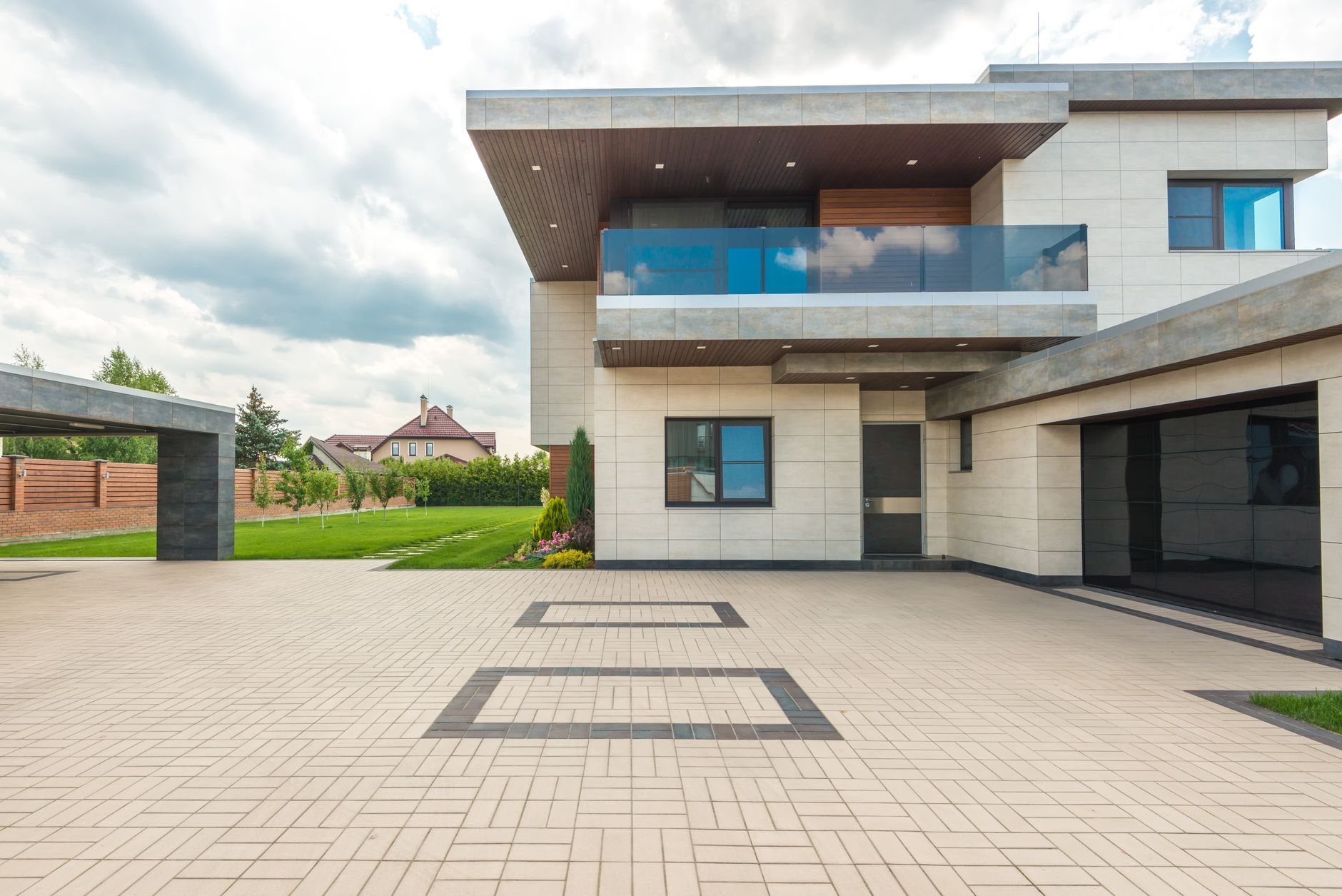
What’s included in a decorative pour
The decorative layer is the last ten percent of the job. The ninety percent underneath is identical to a structural pour, and we don’t shortcut it because the surface is pretty. A stamped patio on a poorly compacted base cracks exactly like a plain one — it just costs more when it does. What’s in scope:
- Base preparation. Excavation to grade and a compacted gravel base. Much of the Wasatch Front sits on expansive clay or collapsible bench soils, and the base section is what stands between your pattern and the ground moving under it.
- Air-entrained mix design. The Wasatch Front sees roughly a hundred-plus freeze–thaw days a year. Air entrainment gives freezing water in the slab somewhere to expand besides the surface — the difference between a patio that lasts and a pattern that scales off in sheets.
- Reinforcement and joint layout. Rebar or fiber per the slab’s job, and control joints planned around the pattern so cracking happens where we told it to, not through your flagstone field.
- Color, stamping, or aggregate exposure. Color hardener or integral color, release agent, mats, and an experienced stamping crew — or the retard-and-wash cycle for exposed aggregate.
- Cure and seal. Proper curing, then sealer once the slab is ready. Sealer deepens the color and protects it from UV and deicers; it’s part of the scope, not an upsell.
- Drainage. Utah’s summer monsoon can drop an inch of rain in an hour, and a patio pitched toward your foundation is a problem no pattern fixes. Where regrading is needed, our excavation and grading crew handles it in the same sequence.
Everything above is performed under Grandview’s contract and our Utah DOPL B100 general contractor license, verifiable at dopl.utah.gov.
How a decorative concrete project runs
- Site walk and layout. Soils, slopes, truck access, and where water goes. You get a straight read on whether your site needs base work beyond the standard section.
- Finish and pattern selection. Pattern, color, border, and sealer sheen — decided from samples before scheduling, because none of it can change after the mats come out.
- Fixed proposal. Square footage, mix, reinforcement, finish system, and joint plan in writing.
- Prep and forming. Demo of old surfaces if needed, excavation, compacted base, forms, and reinforcement — checked before we order concrete.
- Pour and finish day. The choreographed part: color, stamping or exposure, and joints, timed to the weather. We won’t pour decorative work into conditions that will compromise it, even if that means moving your date.
- Cure, seal, walkthrough. Sealer once the slab is ready, then a walkthrough with the maintenance schedule in plain terms.
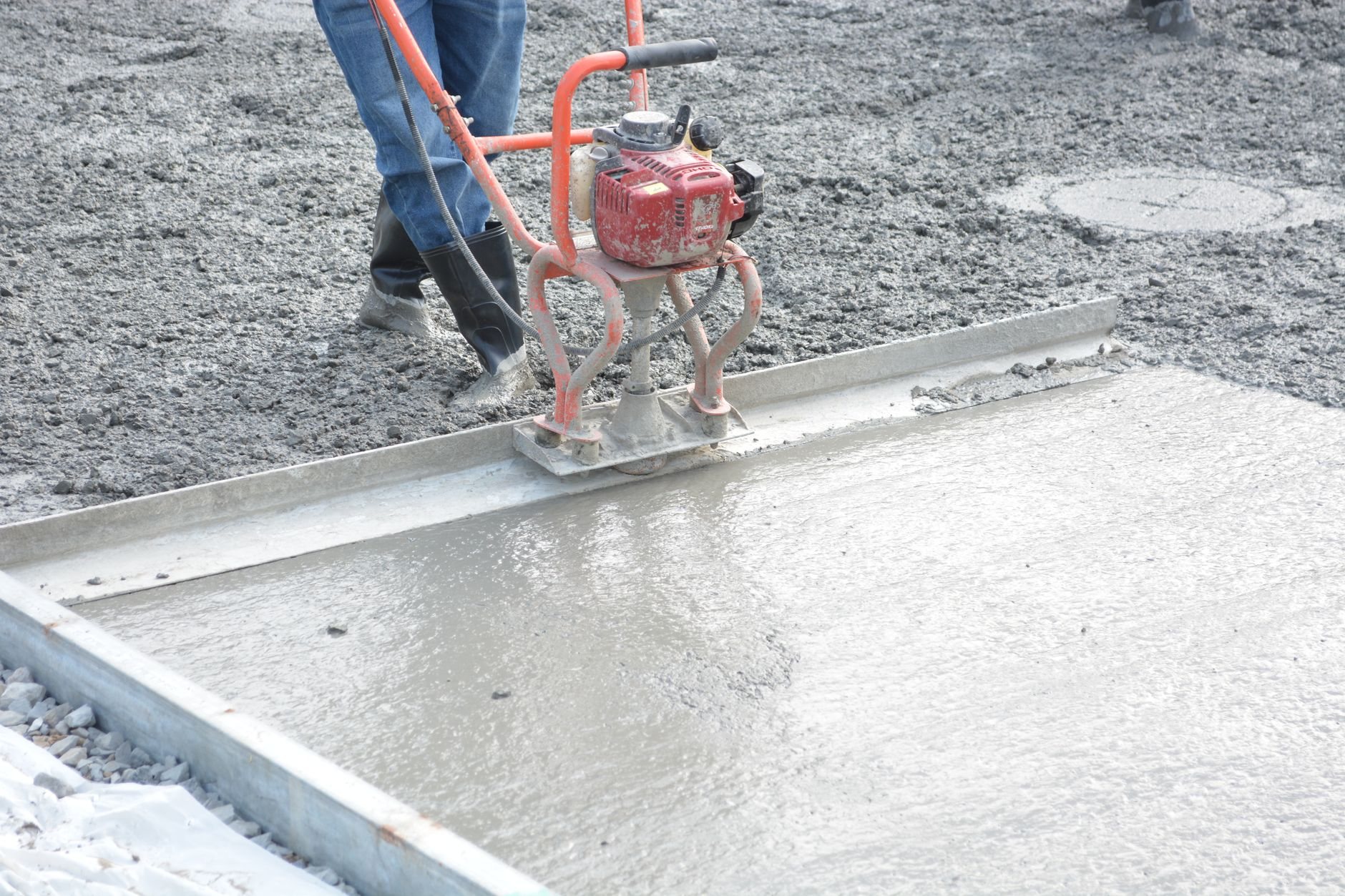
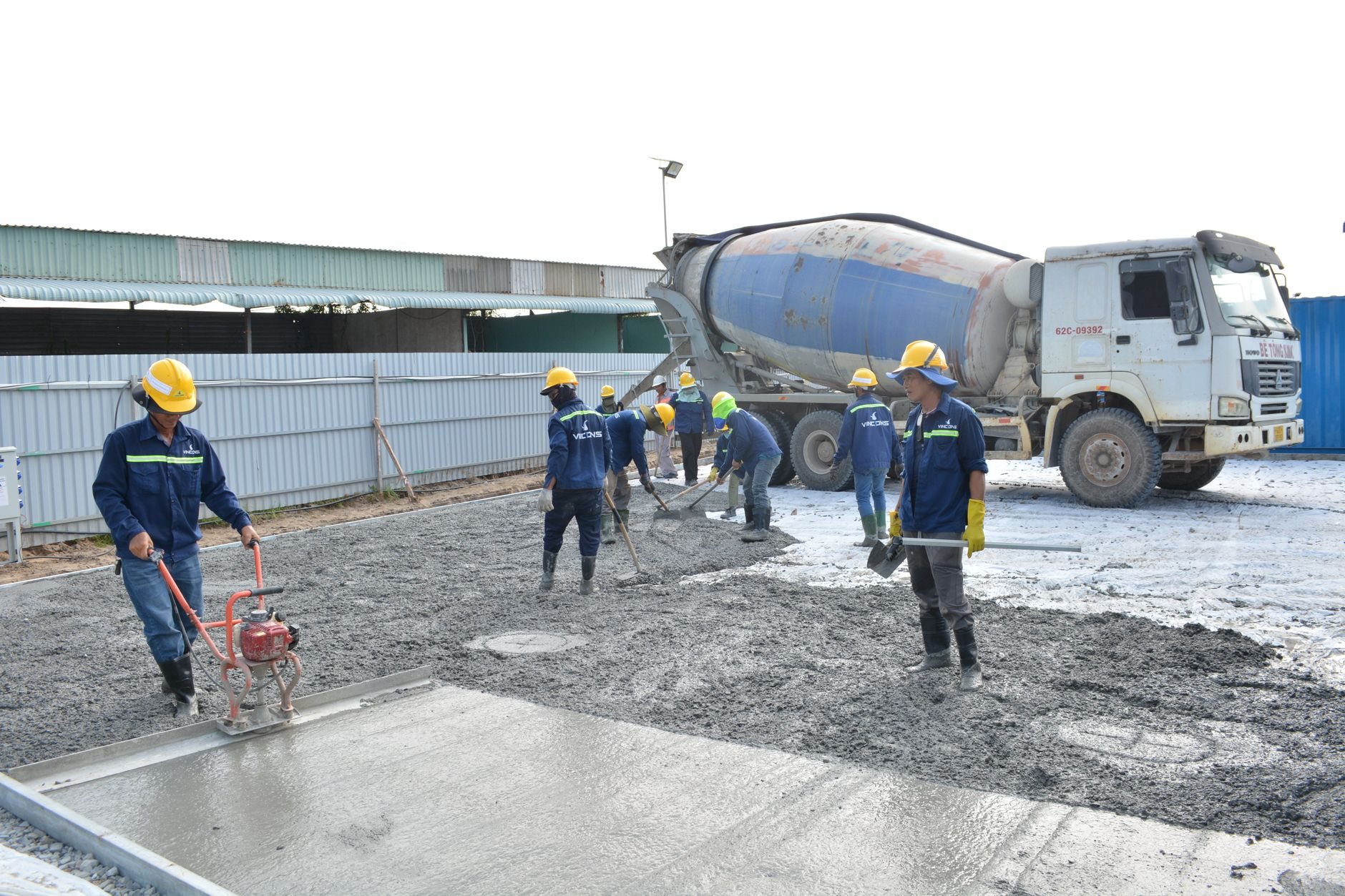
What does stamped concrete cost in Utah?
As a ballpark planning number — not a quote — stamped concrete along the Wasatch Front typically runs about $14 to $22 per square foot installed, compared with roughly $8 to $12 for plain broom-finished flatwork. Exposed aggregate usually lands between the two, and staining an existing sound slab is the least expensive path to a finished look.
What moves the number within those ranges:
- Pattern and color complexity. One pattern, one color is the base case. Multiple patterns, hand-applied accents, or a second border finish add labor on the day labor is most time-critical.
- Site and base conditions. Expansive clay or soft fill can mean over-excavation and a deeper gravel section. Tight backyard access that forces pumping adds cost too.
- Demolition. Removing an existing patio or driveway is its own line item — larger removals fall under our demolition scope.
- Size and shape. Small, cut-up areas cost more per foot than large simple ones; crew and equipment minimums don’t scale down.
- Season. Decorative pours want moderate temperatures. Shoulder-season scheduling is often cheaper and better for the finish than peak July or a marginal November window.
We work in stages: a conversation, a budget range after a site walk, then a firm written proposal. Ranges are for planning; the proposal is the number.
How long does stamped concrete last in Utah — really?
The slab itself should last decades; the decorative surface lasts as long as you maintain the sealer. In Utah that means resealing roughly every two to three years, keeping deicing salts off it — especially the first winter — and accepting that hairline cracks and gradual color softening are normal, not defects. Owners who do those three things keep patios looking sharp for twenty-plus years.
Here’s the honest version of each, because this is where decorative concrete gets oversold:
Sealer is a schedule, not a one-time coat. Utah’s elevation means stronger UV than the same latitude at sea level, and sealer is the sacrificial layer between that sun and your color. When water stops beading on the surface, it’s time. Resealing is a straightforward job — skipping it for five years is how stamped patios end up chalky and pale.
Deicers are the main winter threat. Freeze–thaw cycling is hard on any exterior concrete here, and salt makes it worse by multiplying freeze cycles at the surface. Use sand for traction, avoid deicing chemicals entirely the first winter, and go easy afterward. This is the most common cause of the surface scaling we’re asked to diagnose.
Concrete cracks; the plan decides where. Control joints worked into the pattern layout mean movement happens along lines your eye reads as design. A hairline crack elsewhere is cosmetic and normal on Utah soils. Cracks that offset vertically are a base or soil problem — a different conversation, and one we’ll have with you honestly.
Questions we actually get
Can you stamp or stain over my existing concrete?
Sometimes. A structurally sound, well-drained slab can take a stain or a stamped overlay — a thin engineered topping that’s colored and textured like new work. But overlays inherit every crack and movement problem in the slab beneath, so we inspect first. If the base slab is failing, honest advice is usually to replace rather than resurface.
Is stamped concrete slippery when wet or icy?
Smooth-troweled stamped surfaces can be, especially with a glossy sealer. We manage it by choosing textured patterns for walking surfaces, adding a fine anti-slip grit to the sealer, or steering pool decks and sloped walks toward exposed aggregate, which has naturally strong traction. Tell us how the surface will be used and we’ll match the finish to it.
When can decorative concrete be poured in Utah?
Reliably from about April through October along the Wasatch Front. Stamping needs a workable temperature window — hot July afternoons set the surface too fast, and cold snaps compromise curing and color. We schedule decorative pours around the forecast and will move a date rather than stamp into bad conditions. A slightly later pour beats a permanently flawed pattern.
What makes one stamped concrete bid higher than another?
Usually the parts you can’t see in the rendering: base depth and compaction, air-entrained mix quality, reinforcement, crew size on pour day, and whether curing and sealing are included or extra. A low bid that thins the base section costs more within five Utah winters than the difference between the bids. Ask every bidder to specify the base and the mix.
Can you match a repair or addition to my existing stamped patio?
We can get close, and we’ll be honest that exact matches are rare. Your existing surface has weathered, and dye lots and release agents vary. We test-match color on a sample area first, and where the addition allows it, we design a border or joint line so the eye reads two sections as intentional rather than as a patch.
Where this work usually fits
Decorative concrete is one scope in our site, structure and envelope family. Projects often pair it with structural driveways and flatwork or retaining walls on sloped lots — one contract, one schedule, one team accountable for how it all drains and ages together.
Tell us what you’re working on
Send a few photos and rough dimensions, or just describe the space. We reply within a couple of hours during business hours — a day at most — with a straight read on finish options, sequence, and a realistic budget range before anyone commits to anything.