
Broom Finish Concrete in Utah County
Broom finish is the standard textured surface for exterior concrete: a stiff-bristle broom pulled across the slab after floating leaves fine parallel grooves that give traction wet, icy, or snow-packed. It’s the right finish for most Utah driveways, walks, aprons, and working patios — and Grandview pours and finishes it under a Utah B100 general contractor license.
Discuss a project Or call (385) 236-1741
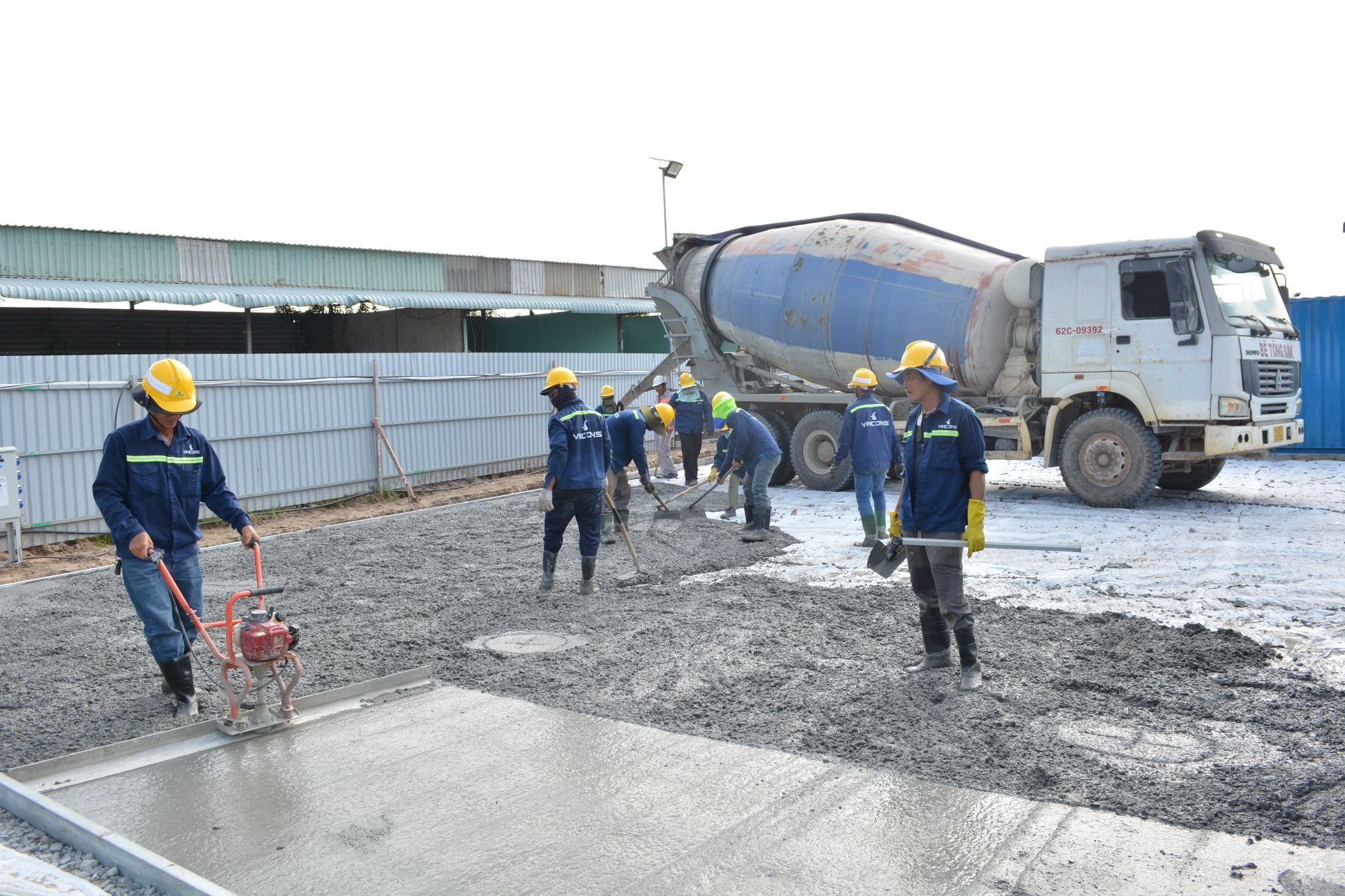
When broom finish beats the decorative options
Broom finish is the plain-spoken member of the decorative concrete family. It adds no color and no pattern. What it adds is grip, and where exterior slabs spend four months under snow and ice, grip matters most.
A salt finish looks softer and suits pool decks, but its shallow pits hold water, and water that freezes in a pit works at the surface every cycle. Exposed aggregate grips harder, costs more, and shovels worse. Stamped concrete wins on looks and commits you to a resealing schedule. A hard steel-trowel finish belongs indoors; on exterior air-entrained concrete it seals the surface and is the most common reason a Utah driveway flakes in its second winter.
Choose broom finish when the slab slopes, gets shoveled or plowed, has to match a city sidewalk or curb, or frames a stamped or colored field as a quiet border. It’s the default for structural driveways and flatwork.
What a proper broom finish involves
Base, forms, reinforcement, and mix are the same as any exterior slab; we don’t thin them because the finish is simple. Much of Utah County sits on expansive clay and collapsible bench soils, so the compacted gravel section is doing more than the texture ever will, and the mix is air-entrained because the Wasatch Front sees a hundred-plus freeze–thaw days a year. The finish is where the detail lives:
- Screed and bull-float. Struck off to grade and floated once with a magnesium float — never a steel trowel on exterior work, so the surface stays open enough for the entrained air to do its job.
- Wait for the bleed water. Brooming into a wet sheen tears the paste and leaves a weak skin; too late and the bristles skate without biting. On a July afternoon in Lehi the window is minutes; in a cool October it stretches to an hour. Reading it is most of the craft.
- Edge and joint first. Edges get a radius tool so corners don’t chip. Control joints are tooled or saw-cut to about a quarter of the slab depth, eight to twelve feet apart on a four-inch walk, and go in before the broom so the texture runs cleanly up to them.
- Choose the broom. Texture depth is decided before pour day. Soft horsehair leaves a fine texture for patios and entries; medium or coarse nylon leaves deeper grooves for driveways, ramps, and anything that sees tires on ice.
- Broom across the traffic. Grooves run perpendicular to travel — across a drive, across a walk, and always across the fall on a slope, never down it. Each pass is one straight pull with a slight overlap, no scrubbing. We are fond of straight lines and straight answers.
- Cure, then protect. Curing compound or wet cure for the first week; cars stay off roughly seven days, full strength at about twenty-eight. The first winter gets sand for traction and no deicing salt.
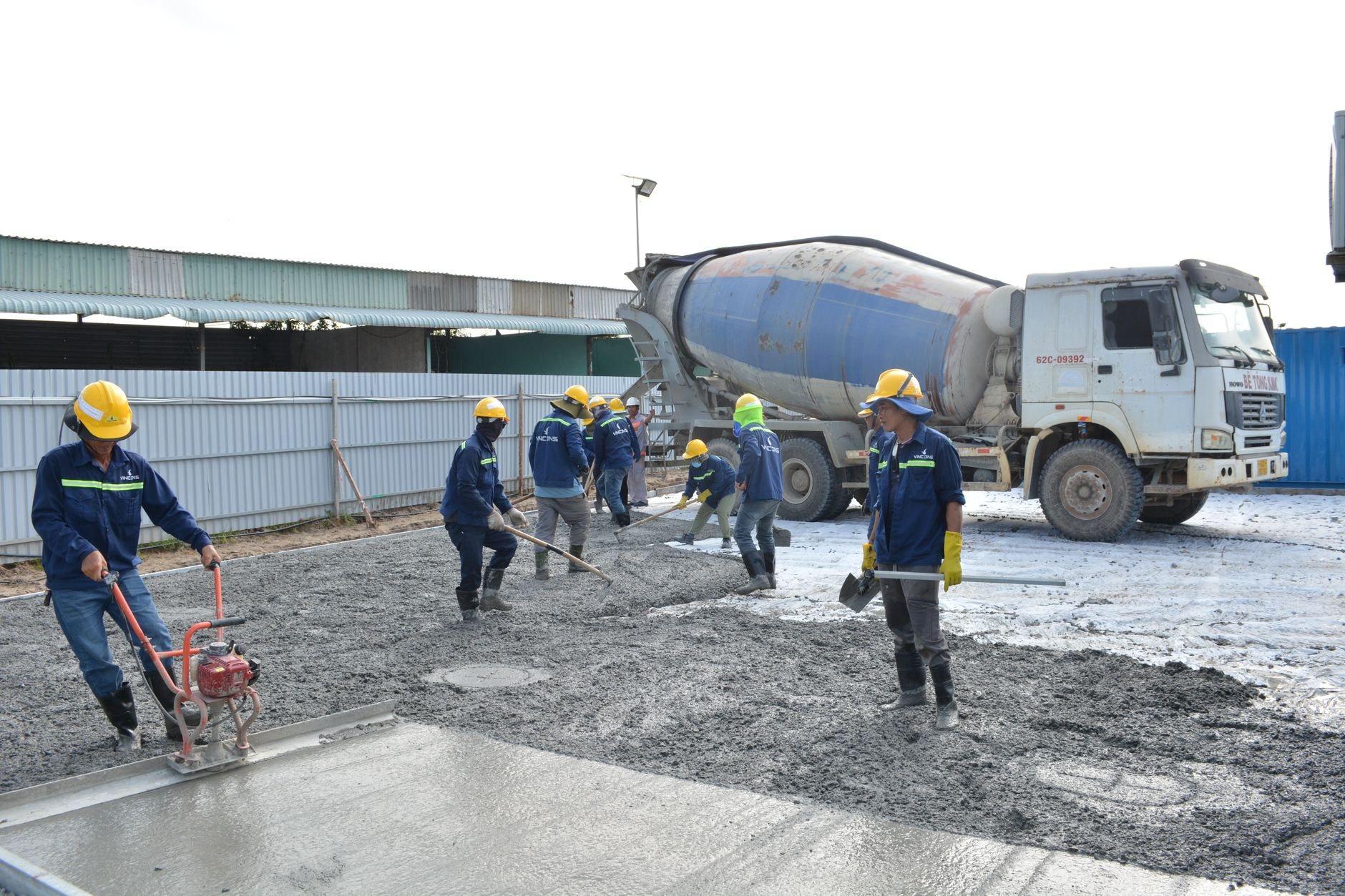
Where a broomed border meets a colored or stamped field, a tooled joint separates the two — which is where the slab wants to move anyway. All of it is performed under Grandview’s contract and Utah DOPL B100 license, verifiable at dopl.utah.gov.
What does broom finish concrete cost in Utah County?
As a ballpark planning number — not a quote — broom-finished exterior concrete along the Wasatch Front typically runs about $8 to $12 per square foot installed, the least expensive finish in the family. The broom adds nothing to the price; what moves the number is everything under it.
- Thickness and reinforcement. A four-inch walk and a six-inch driveway built for trucks or an RV are different pours with different rebar.
- Base work. Clay or soft fill can call for over-excavation and a deeper gravel section — the most common surprise on bench lots.
- Demolition. Breaking out and hauling an old slab is its own line item.
- Access. A backyard the truck can’t reach means pumping or wheelbarrows.
- Extras. Integral color, a stamped border, or a penetrating siloxane sealer for deicer resistance — each modest, each priced separately.
Our sequence is a conversation, a budget range after a site walk, then a written proposal. The range is for planning; the proposal is the number.
Questions we actually get
Why is my broom-finished driveway flaking after one winter?
That’s surface scaling, and it almost always traces to one of three things: a mix that wasn’t air-entrained, a surface that was steel-troweled or over-worked and sealed in bleed water, or deicing salt applied the first winter. A correctly placed broom finish on an air-entrained mix handles Utah winters for decades.
Can a broom finish be colored?
Yes. Integral pigment mixed through the batch gives a broomed slab an even buff, gray, or tan that can’t chip or wear off. The texture softens how color reads, so we sample it first. Stains over a broomed surface are possible but patchier than over a smooth one.
How coarse should the texture be?
Match it to use. Fine horsehair for patios, entries, and anywhere feet go bare. Medium nylon for sidewalks and flat driveways. Coarse for sloped drives, ramps, and loading areas where tires need to bite on ice. Coarser texture hides float marks better but holds more dirt and sweeps harder.
Will a broom finish hide cracks?
No. It hides float marks, not cracks. Cracking is controlled by base, reinforcement, and joint layout, which is why joints go in before the broom. A flush hairline crack is normal on Utah soils; one that offsets vertically is a base or soil problem and a different conversation.
Where this work usually fits
Broom finish is one scope in our site, structure and envelope family — usually the border beside a stamped field, or the driveway, walk, and apron pours scheduled with the rest of a site under one contract.
Tell us what you’re working on
We reply within a couple of hours during business hours — a day at most. You’ll get a straight read on scope, sequence, and budget before anyone commits to anything.