
Concrete Pool Decks in Utah County
A concrete pool deck is the slab around an in-ground pool from the coping outward — poured over consolidated backfill, sloped away from the water, jointed against the shell, and finished to stay grippy when wet. Grandview forms, pours, and finishes pool decks across Utah County under a B100 general contractor license.
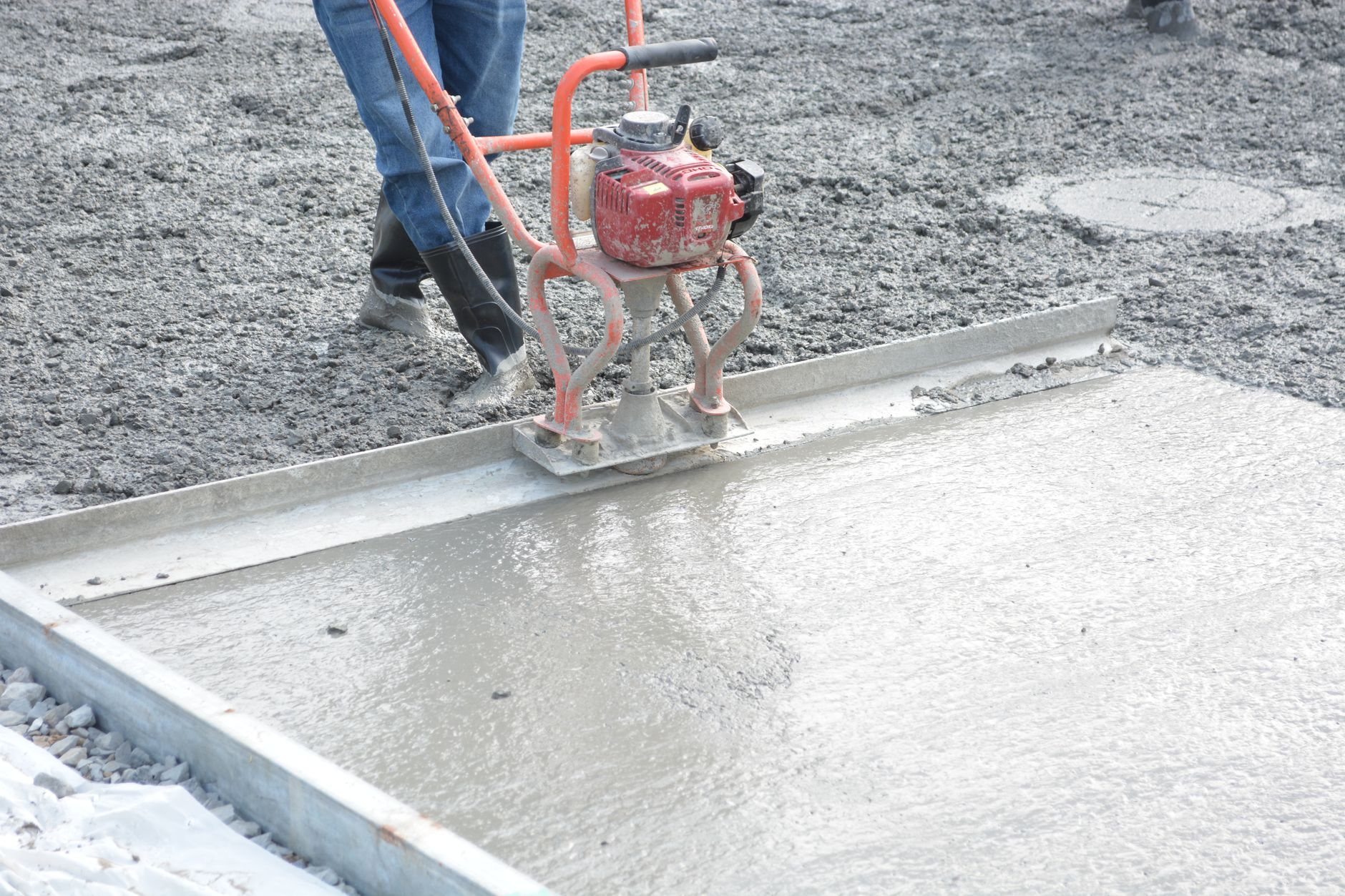
When a pool deck is the right scope, and when it isn’t
A slab with no water beside it is a concrete patio — same mix and finish options, none of the pool-specific joints, bonding, or drainage. A pad for a spa belongs on the hot tub and spa pad page, where the load is concentrated rather than spread. If the hole hasn’t been dug yet, start with pool excavation.
Pool decks reach us three ways: a homeowner whose pool builder has set the shell and coping; a pool builder who needs a flatwork crew that pours clean against their coping on schedule; or an older deck that has settled or cracked at the corners. It’s one scope within our concrete driveway and flatwork service, inside site, structure and envelope.
One honest note on scope. The pool shell, plumbing, and equipment are the pool contractor’s work. Grandview’s part is the concrete from the coping out — and where needed, we hold the contract and coordinate the licensed electrician who installs the bonding grid the deck is poured around.
What goes into a pool deck pour
- Wait for the backfill. The soil around a new shell is loose fill from the dig, and in Utah County that is often clay or bench soil that settles the first time it gets wet. We want it compacted in lifts before anyone forms over it. Pouring too early is why pool decks drop at the coping in their second summer.
- Bonding grid and sleeves. Current Utah-adopted electrical code requires an equipotential bonding grid in the concrete near the water, installed by a licensed electrician and inspected before the pour covers it. Conduit sleeves for lighting and post sleeves for the barrier fence go in at the same time.
- Base, forms, and slope. Road base compacted over the fill; forms set so the deck falls away from the pool at an eighth to a quarter inch per foot, with a slot drain where it runs toward the house.
- Expansion joint at the coping. A full-depth joint between deck and bond beam, filled with backer rod and flexible mastic, so the two can move independently without cracking the coping or tile line.
- Reinforcement and pour. Rebar or mesh on chairs, then an air-entrained exterior mix at four inches, thickened under a slide or diving-board stand.
- Joints, cure, seal. Control joints cut from each pool corner outward and at ten-foot intervals, then a proper cure and a penetrating sealer.
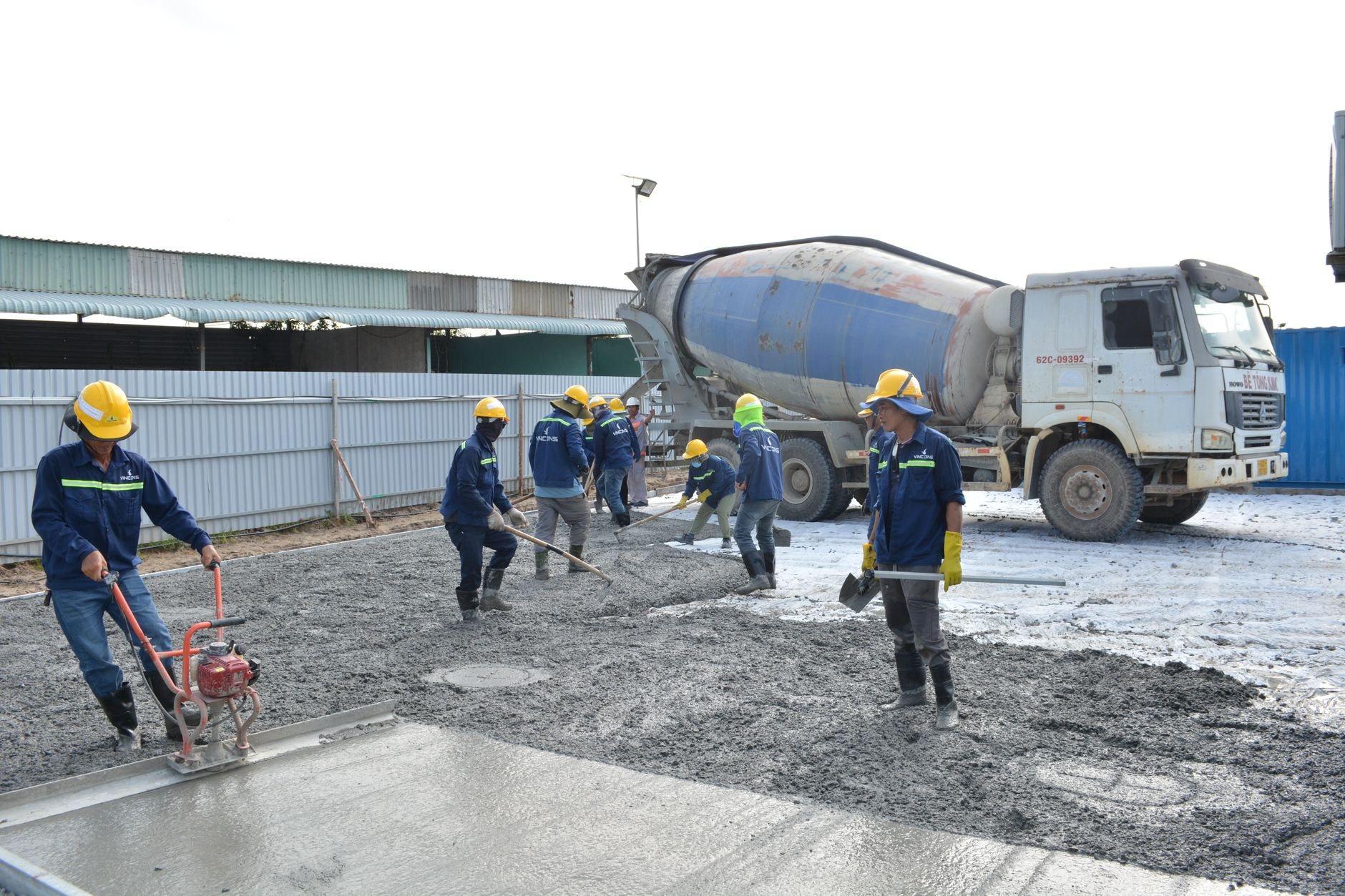
Which finish works around a pool in Utah?
Three things decide it: grip when wet, heat under bare feet, and freeze–thaw. A light broom finish is the default and best value. A salt finish or light exposed aggregate adds texture. A steel-trowel finish is the wrong answer next to water, however good it looks dry.
Color matters more here than on a driveway. Utah’s elevation puts stronger UV on a pool deck than most of the country, so dark integral color runs hotter in August and fades sooner; natural gray, sand, and buff stay walkable. For pattern or color, our decorative concrete finishes carry over; a stamped pool deck gets a non-slip additive in the sealer as standard, not as an option.
Every pool deck we pour is air-entrained. Pools here sit full and covered through 100-plus freeze–thaw days a year, and the deck edge nearest the water stays damp longer than any driveway. Keep deicers off it entirely; a pool deck shouldn’t need them.
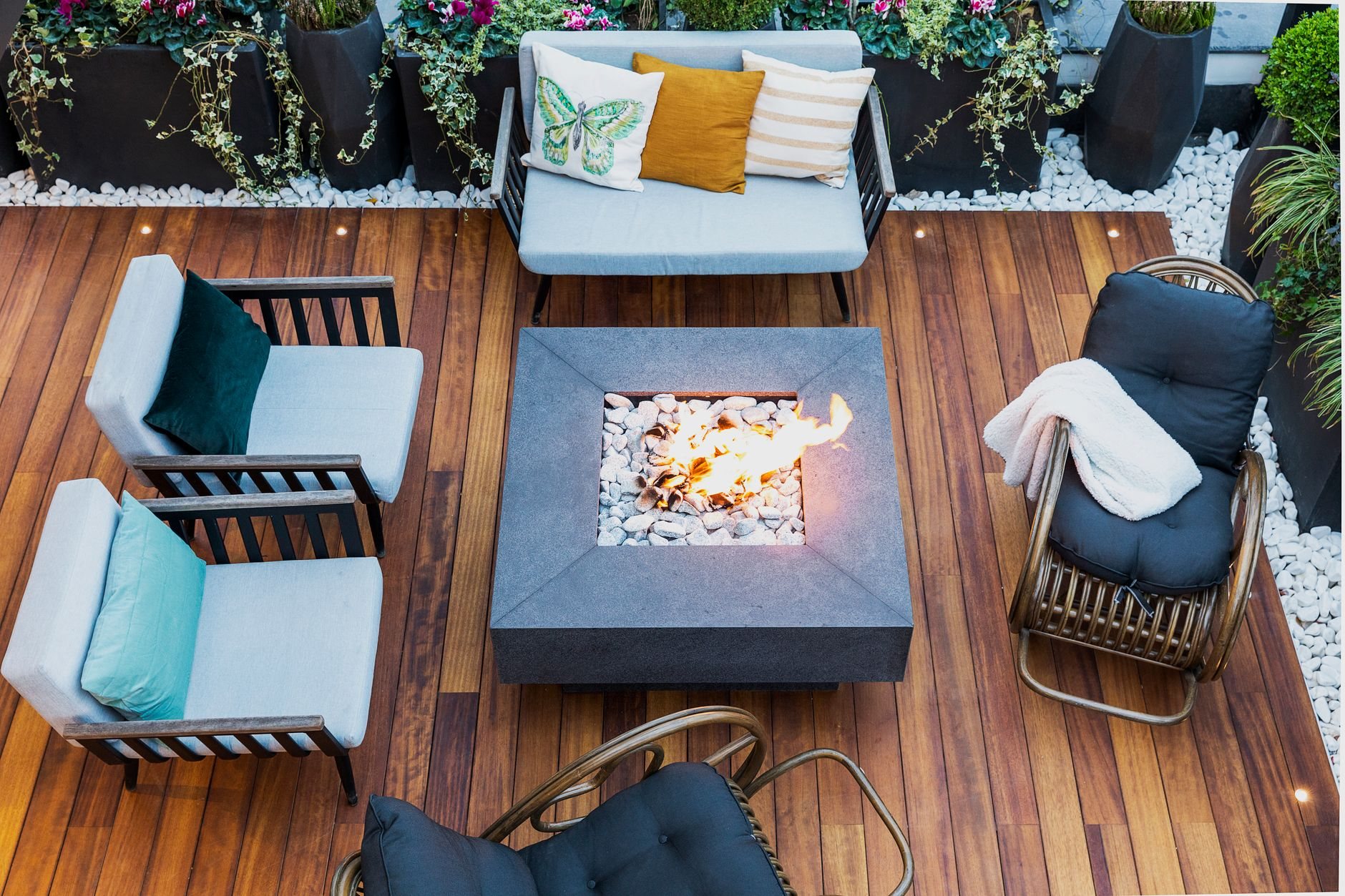
What does a concrete pool deck cost in Utah County?
As a ballpark planning number, a plain broom-finished concrete pool deck in Utah County typically runs about $10–$16 per square foot installed — a step above patio flatwork because of the expansion joint, drains, sleeves, and bonding inspection. A 600–1,000 square foot wrap around a residential pool usually lands in the $7,000–$15,000 range; decorative finishes add to that. Planning figures, not a quote.
- Backfill condition. Unconsolidated fill may need over-excavation and imported road base. Utah Geological Survey mapping of collapsible and expansive soils explains why this line differs between a Lehi bench lot and a Provo valley lot.
- Drainage. A slot drain on the house side, tied to a daylight outlet, is often the difference between a dry basement and a wet one after a monsoon cloudburst.
- Geometry. Freeform pools mean curved forms and more hand-finishing than a rectangle.
- Tear-out and approvals. Replacing a deck means sawcutting at the coping without damaging the shell. HOA-governed developments across northern Utah County often add design review for the finish.
Questions we actually get
How long after the pool is set can the deck be poured?
It depends on the backfill, not the calendar. If the fill was compacted in lifts, the deck can go in once the plumbing has passed its pressure test and the bonding grid is inspected. If it was dumped loose, we’d rather compact it properly than pour over fill that will settle.
Does the deck have to be bonded to the pool?
Yes. Current Utah-adopted electrical code requires an equipotential bonding grid in the deck concrete near the water, connected to the pool’s steel and equipment. A licensed electrician installs it and it’s inspected before the pour. Grandview coordinates that installation and sequences the pour around the inspection.
Why did my old pool deck crack at the corners of the pool?
Re-entrant corners concentrate stress, and a slab poured around a rectangle with no joint at those corners cracks there almost every time. The fix is a control joint cut from each pool corner outward, plus an expansion joint at the coping so the slab moves without taking the tile line with it.
Can the deck slope toward the pool so I can hose it off?
No. The deck must fall away from the water so runoff, sunscreen, and lawn chemicals don’t wash into the pool. We slope away from the coping and catch water on the far side with a drain or lawn edge. Hosing down still works; it drains outward.
Tell us about the pool
Send us the pool dimensions and a photo of the coping. If a walkway or retaining wall needs to sequence ahead of the deck, say so. We reply within a couple of hours during business hours — a day at most — with a straight read on scope, timing, and budget.