
Stainless steel railings in Utah County
Stainless steel railings are fabricated from corrosion-resistant 304 or 316 alloy and finished bare — brushed or polished — so there is no paint or powder coat to chip, chalk, or peel. Grandview fabricates and installs stainless stair rails, guardrails, and handrails for homes, commercial entries, and multifamily buildings across Utah County and Salt Lake County under a Utah DOPL B100 license.
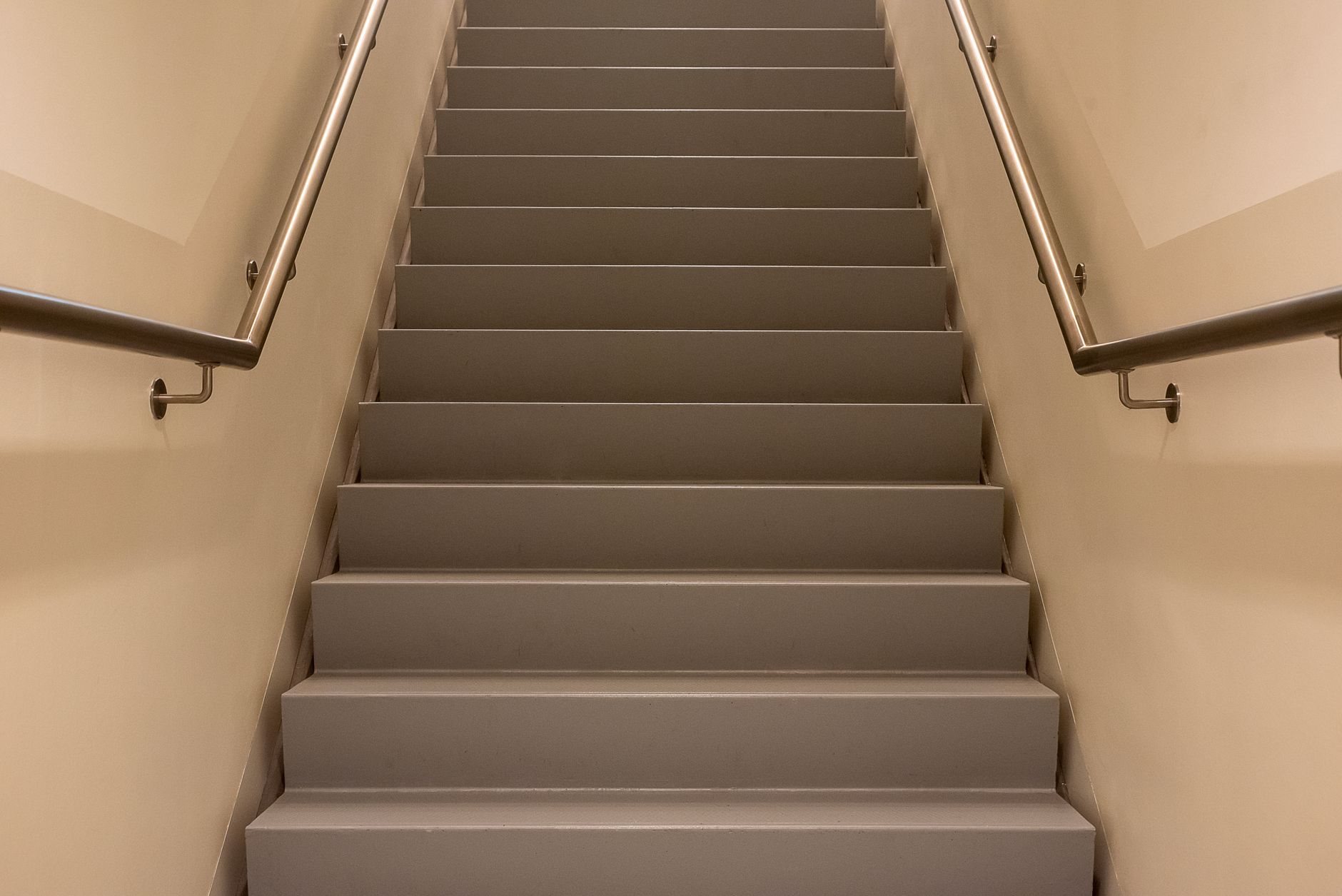
When stainless is the right railing, and when it isn’t
Stainless earns its price in three situations. Where the finish has to look the same in year fifteen without repainting: commercial lobbies, restaurant entries, medical offices. Where bare metal is the design — brushed stainless next to glass, concrete, or white oak reads cleaner than any coated steel. And where hands are on the rail constantly; powder coat wears through at the grip points of a busy handrail, stainless just gets a little more polished.
It isn’t always the answer. If you want a painted color, a powder-coated fabricated steel guardrail gets there for roughly half the money. If weight is the issue, aluminum railings won’t rust either, though they dent and can’t be polished back. A cable railing already uses stainless cable; the question is whether the posts should match. And stainless frames carry most of the glass railing systems we build, since standoffs and base shoes come in stainless anyway. Code heights, anchoring, and finishes across every material live on our metal railings and handrails page.
What stainless railing fabrication involves
Stainless is not steel with a nicer surface. It cuts, welds, and finishes differently, and that is where the cost difference lives.
Grade. Interior and sheltered rails are 304 stainless. Anything that sees de-icing salt — exterior stairs, entry ramps, parking-structure guardrails — gets 316, whose molybdenum resists the chloride pitting that leaves 304 with brown “tea staining” after a couple of winters. We spec grade per rail, so one job can run 316 outside and 304 inside.
Profile. Round tube is the default: 1½- or 2-inch posts with a 1½-inch top rail, which lands in the graspable range current code and the ADA standards require on commercial handrails. Wall thickness runs heavier than it appears, because stainless posts carry the same 200-pound top-rail load as any railing and thin tube flexes.
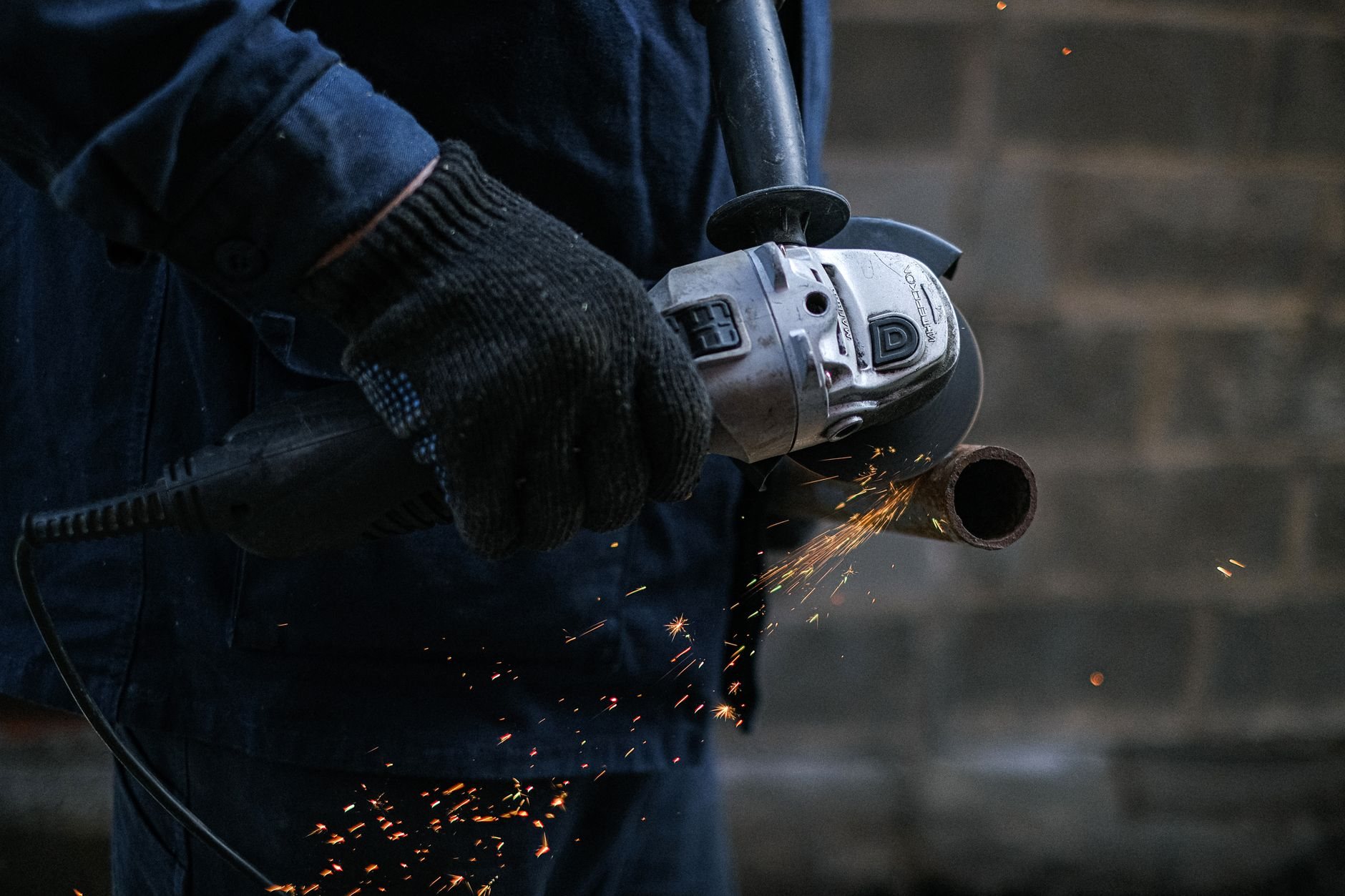
Welding and cleanup. Stainless is TIG-welded with matching filler and back-purged so the inside of the weld doesn’t sugar. The craft is in the rework: welds are ground flush and re-grained to match the #4 brushed finish so a joint reads as a continuous line, not a shiny patch. Heat tint — the straw-to-blue band every weld leaves — comes off with pickling paste, then the rail is passivated. Stainless also picks up iron from any disc or clamp that has touched carbon steel, so stainless tooling stays dedicated; skipping that rule is why new rails show rust freckles in six months.
Stainless outdoors along the Wasatch Front
Three local conditions shape exterior stainless. High-elevation UV, which chalks powder coat on a south-facing rail within a few seasons, does nothing to bare stainless — a real argument for it on sun-exposed entries. De-icing salt is the opposite story: exterior stairs in Provo, Orem, and Salt Lake get salted November through March, and chloride is the one thing that attacks stainless, so those rails get 316 and a smooth finish that rinses clean instead of holding salt. Our hard water spots polished stainless wherever sprinklers hit it; brushed hides it.
Anchoring matters as much as alloy. A hundred-odd freeze-thaw days a year will spall concrete around a post pocket that holds water, so base plates get sealed and sloped, with stainless or coated anchors — never a plain-steel anchor corroding against a stainless post. A stainless rail on a failing slab edge is still a failing railing.
What do stainless steel railings cost in Utah?
As ballpark planning numbers only: fabricated and installed stainless railings in Utah typically run about $300–$600 per linear foot for brushed 304 tube with picket, bar, or cable infill, and $500–$900 or more per foot for 316 exterior systems, mirror polish, curved runs, or stainless-framed glass. Short runs cost more per foot because finish labor doesn’t shrink with length. The proposal after a site visit is the real number.
Grade is the first lever — 316 costs meaningfully more per pound, so we use it only where salt or moisture justify it. Finish is the second: #4 brushed is the baseline; mirror polish adds buffing hours at every weld. Weld count matters more than on painted steel because every joint is blended rather than hidden under coating, so a picket rail with sixty welds costs more to finish than a cable rail with twelve. Curves need formed tube. And mechanical fittings versus fully welded joints is a real choice — fittings cost less; welded looks better.
Questions we actually get
Will stainless steel railings rust in Utah?
Properly fabricated, no — but stainless isn’t rust-proof. Rust spots on a new rail almost always come from carbon-steel contamination during fabrication or from de-icing salt on a 304 rail that should have been 316. We isolate stainless tooling, passivate every rail, and spec 316 for salted exposures. A yearly wash with mild detergent keeps an exterior rail clean.
Is 304 or 316 stainless right for my railing?
Indoors and under cover, 304 is correct and cheaper. For an exterior stair, entry, or balcony that sees sidewalk salt, snowmelt, or pool chemicals, 316 is worth the premium because it resists the chloride pitting that stains 304. We specify grade per rail, so one project can mix them where it makes sense.
Can you add a stainless cap rail or handrail to a railing I already have?
Usually. A stainless cap rail on a glass, cable, or masonry guard is a common upgrade, as is a graspable stainless handrail on a stair that only has a decorative guard. We confirm the existing posts or wall can take the load and the height lands within current Utah-adopted code before fabricating.
How long does a stainless railing take compared with painted steel?
Plan on three to five weeks from field measurement to installation, versus two to four for painted steel. There’s no powder-coat lead time, but weld blending, re-graining, and passivation take longer per joint. Installation is a day or two; the time goes into making the welds disappear.
Commercial entries that need continuous, graspable rails are covered under ADA-compliant handrails; when the stair itself is new, our steel stairs scope carries the railing with it. Everything else we fabricate lives on the specialty capabilities hub.
Tell us about the stainless railing you need
Send a photo of the stair, entry, or balcony and whether it’s indoors or out — that settles the grade question before we talk. We reply within a couple of hours during business hours, a day at most, with a realistic budget range and a straight answer on whether stainless is worth it for your spot. Licensed and insured; verify our B100 at dopl.utah.gov.