
Custom metal railings & handrail installation in Utah
Grandview fabricates and installs interior and exterior metal railings — stair rails, deck and balcony guardrails, ramp handrails, and ADA-compliant systems — across Utah County and Salt Lake County. Field measurement, fabrication, finishing, and anchored installation run under one contract and one Utah DOPL B100 license.
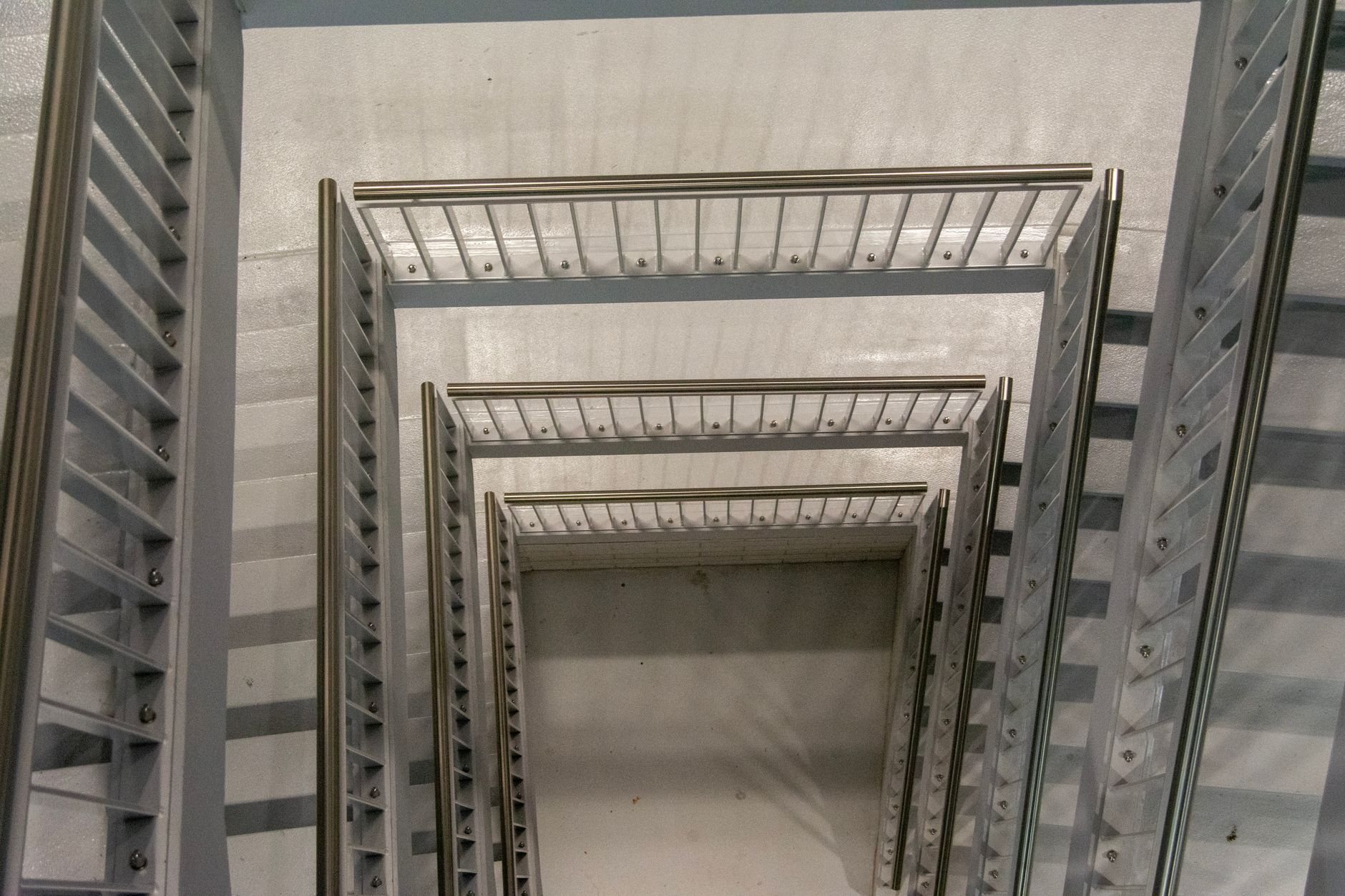
Who hires us for railing and handrail work
Most railing calls fall into a few buckets. Homeowners replacing a wobbly wood or builder-grade rail with something that feels permanent. Deck and balcony owners whose guardrails have rotted, rusted at the post bases, or never met code in the first place. Property managers with exterior stair rails on multifamily buildings that failed an inspection or an insurance walkthrough. And commercial owners who need graspable, code-height handrails on entries, ramps, and stairs — often as part of an accessibility upgrade.
Railings also arrive inside larger Grandview projects: a new deck that needs a guardrail, a basement stair that needs a handrail before final inspection, a tenant improvement with a mezzanine edge to protect. Either way it’s the same fabrication and the same standard. We take railing work as a standalone scope too — you don’t need a full remodel with us to hire a railing contractor.
We are fond of straight lines and straight answers. Railings demand both.
What a railing project with Grandview includes
We fabricate railings from steel — flat bar, tube, and pipe profiles — with picket, horizontal, or cable infill. Field measurements go straight to the fabrication table, so a rail built for your stair fits your stair, not a drawing’s idea of it. Glass infill panels come from dedicated suppliers; we design the frames, order the panels, and set them.
Finishing is matched to where the railing lives. Interior rails typically get shop primer and paint or a clear-coat over raw steel if you like the industrial look. Exterior rails get powder coating or hot-dip galvanizing — both happen at dedicated finishing facilities, and we manage that step, including the schedule it adds. Installation covers layout, core-drilling or surface-mount base plates, epoxy anchors into concrete, blocking and lag connections into framing, and a final plumb-and-rattle check on every post.
- Interior stair rails, wall-mount handrails, and open-side guardrails
- Exterior deck, balcony, porch, and stair guardrails
- ADA-compliant handrails for ramps, entries, and commercial stairs
- Repairs: loose posts, rusted bases, and code-height extensions
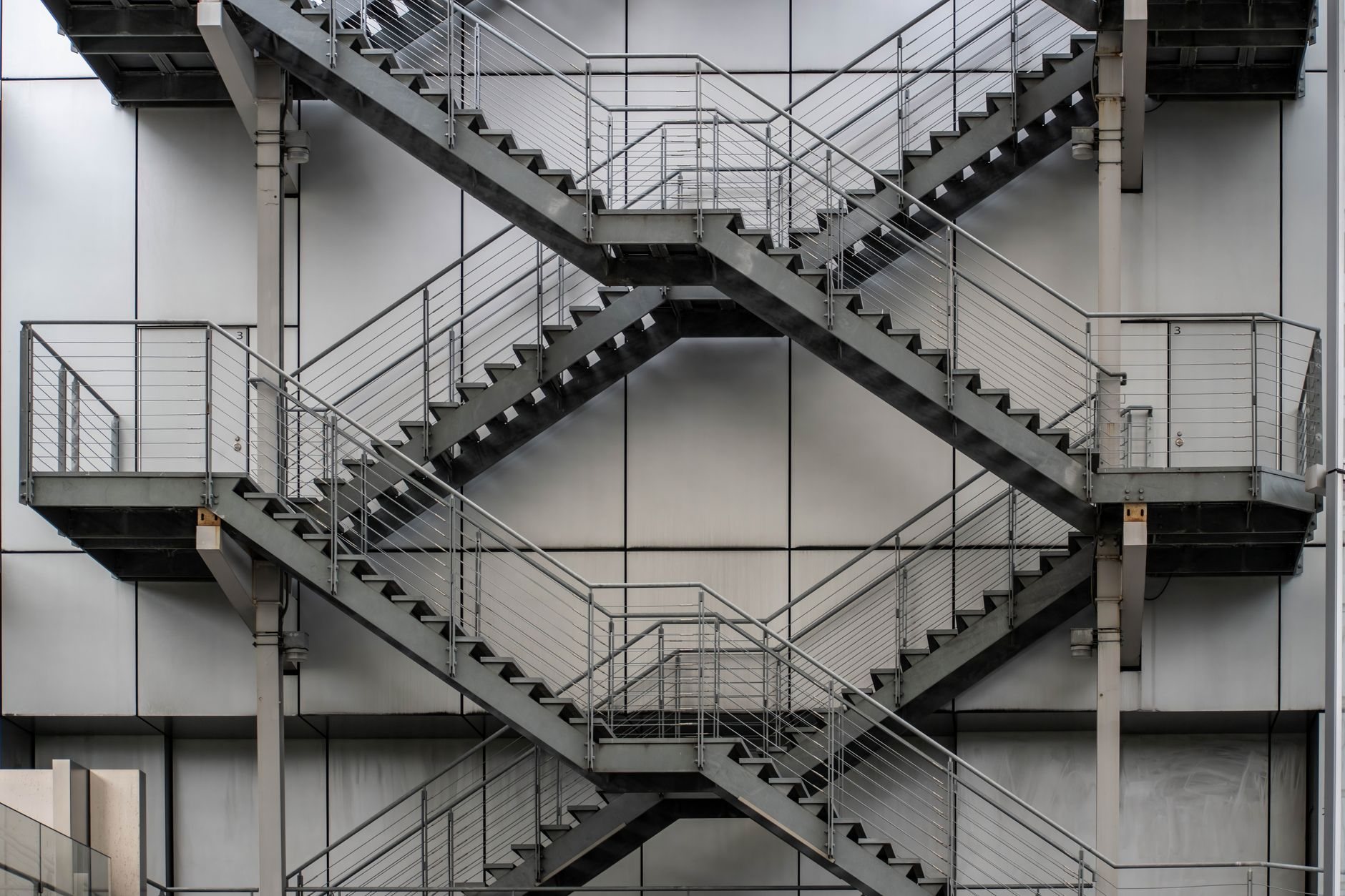
How tall does a railing need to be in Utah?
Under current Utah-adopted code, a guardrail protecting a drop of 30 inches or more must be at least 36 inches tall in homes and 42 inches in most commercial and multifamily settings. Stair handrails sit 34 to 38 inches above the tread nosings, and openings in the infill generally can’t let a 4-inch sphere pass through.
A few more rules in plain language. Stairs with four or more risers need a handrail, and that handrail has to be genuinely graspable — a round profile roughly 1¼ to 2 inches in diameter, or an equivalent shape your hand can close around. A 2×6 laid flat on top of a guardrail doesn’t qualify, which surprises a lot of deck owners at inspection time. On stairs, the triangle formed by the tread, riser, and bottom rail has its own opening limit, slightly more forgiving than the 4-inch rule elsewhere.
One thing worth knowing before you modify an old railing: a rail that was legal when built is usually grandfathered, but replacing or substantially altering it typically triggers current code. Requirements and interpretations vary a little by city, so verify with your building department — or let us handle that conversation, which is the usual arrangement.
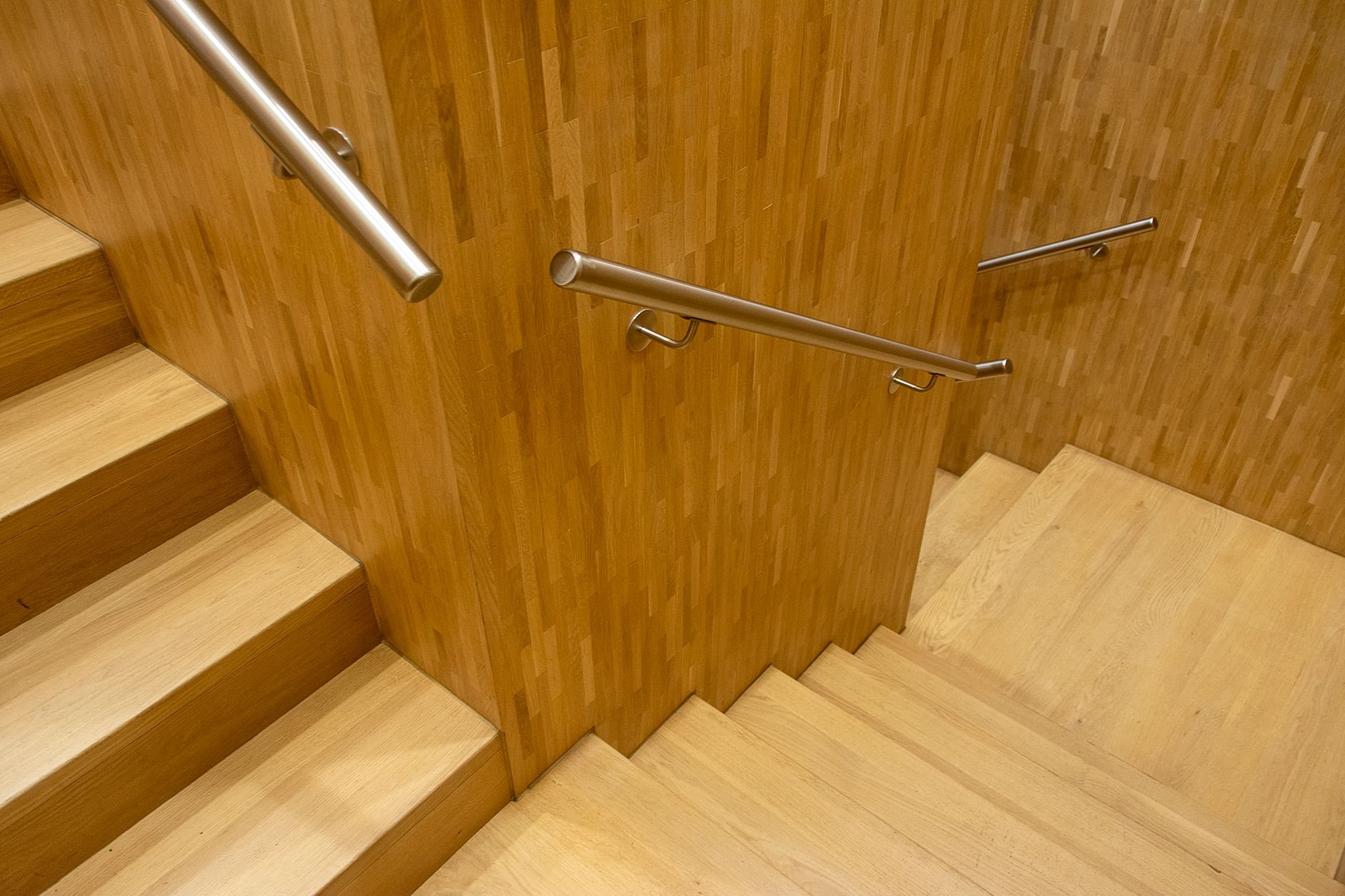
What makes a handrail ADA-compliant?
An ADA-compliant handrail is continuous along the full stair or ramp, mounted 34 to 38 inches high, graspable — round, 1¼ to 2 inches in diameter — with about 1½ inches of clearance from the wall, per the federal ADA accessibility standards. It extends 12 inches past the top and bottom of the run and returns to the wall or post so nothing catches a sleeve or a bag strap.
Ramps that rise more than 6 inches need handrails on both sides. These details matter on commercial storefronts, medical and dental offices, churches, and rental properties, where an entry rail is often the difference between a building someone can use and one they can’t. We fabricate ADA rails as standalone scopes and as part of broader ADA accessibility retrofits — ramps, door hardware, and bathroom modifications handled together.
How a railing project runs
- Measure. We field-measure the stair, deck, or ramp — every rise, run, and out-of-level condition. Old buildings are rarely square; the railing has to be built for the one you have.
- Design. You pick profile, infill, and finish from real options with real prices. Drawings show heights, spacing, and anchor points before any steel gets cut.
- Fabricate. The railing is welded, ground, and fit-checked as sections sized to move through your building and install cleanly.
- Finish. Powder coat, galvanizing, or primer and paint — chosen for the exposure, not the invoice.
- Install. Posts anchored to concrete or framing, sections joined, welds touched up, and every rail load-tested by the least gentle person on the crew.
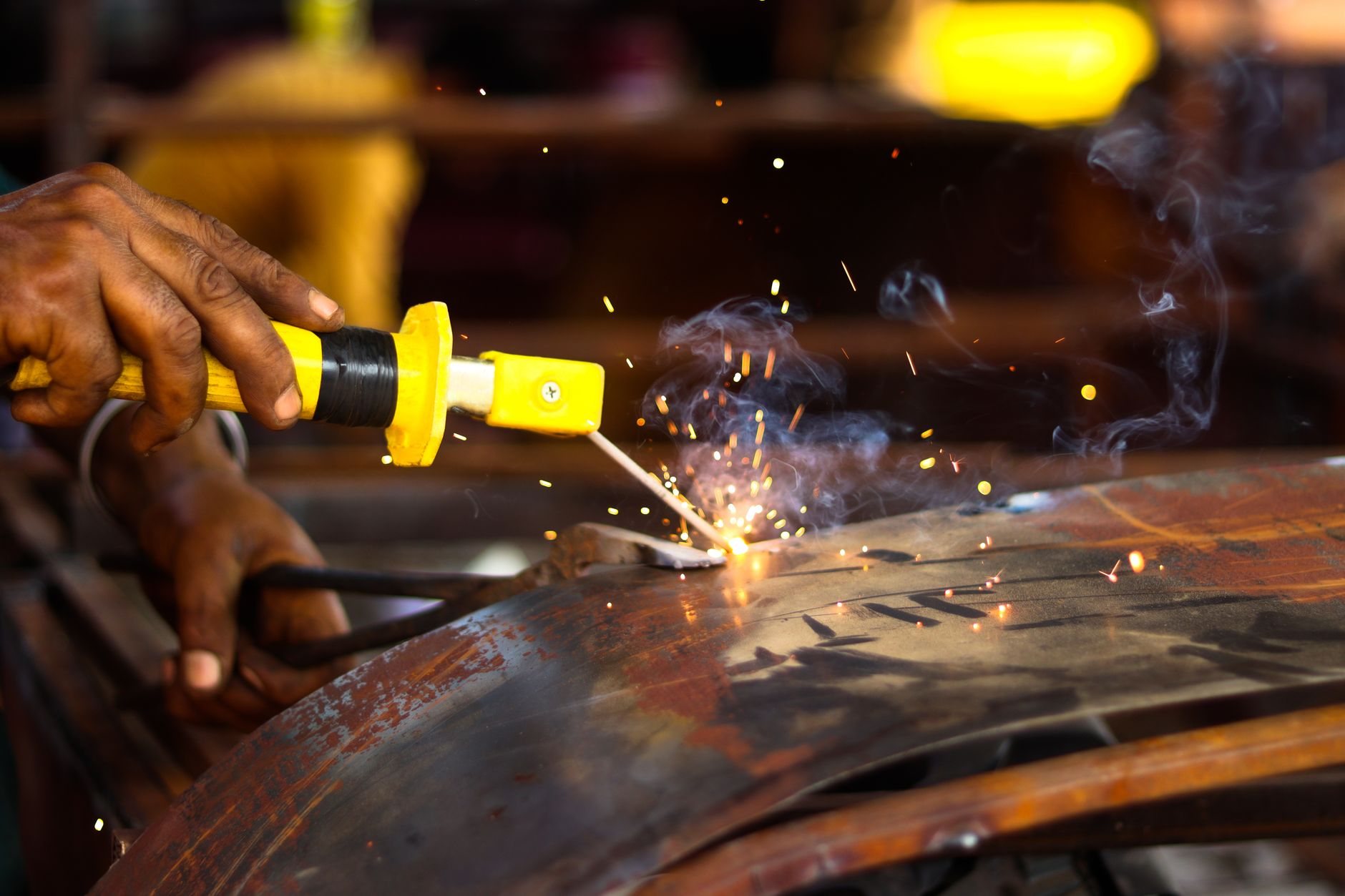
Built for Utah exposure, not a catalog photo
Exterior railings along the Wasatch Front live a harder life than the same railing would in most states. Our elevation means stronger UV, which chalks and fades cheap paint in a few seasons — it’s why we push powder coating or galvanizing for anything south-facing. The Wasatch Front also cycles through roughly a hundred freeze-thaw days a year, and the failure point is rarely the rail itself: it’s the concrete around the post. Water gets into a core-drilled pocket or under a base plate, freezes, and spalls the slab edge until the post loosens. We detail post bases to shed water, use epoxy anchors sized for the actual pull-out loads, and flag concrete that’s too deteriorated to anchor into before we bolt to it. If your porch slab or deck framing can’t hold a railing to code loads — a 200-pound push at the top rail — we tell you that first, because a solid rail on a failing base is a cosmetic repair wearing a safety label.
What do custom metal railings cost in Utah?
As ballpark planning numbers only: straightforward shop-primed steel railings in Utah typically run about $100–$250 per installed linear foot. Powder-coated exterior guardrails with picket or cable infill commonly land around $250–$400 per foot. Curved rails, stainless, and glass infill can go well beyond that. Your number depends on the site, so treat these as orientation, not a quote.
What moves the price? Length helps you — setup, drawings, and mobilization spread across more feet. Curves and radius work cost more than straight runs because every bent section is custom-formed and fit. Infill matters: simple vertical pickets are the baseline, cable and glass add hardware and labor. Finish adds real money — powder coating and galvanizing cost more up front than paint and repay it in maintenance you never do. Anchoring conditions count too: sound concrete is quick, deteriorated concrete or long lag-and-blocking runs into old framing are slower. After a site visit you get a firm proposal, not a per-foot guess.
Questions we actually get
Can you replace just the railing without rebuilding the stairs or deck?
Usually, yes — if the structure underneath can carry code loads. We check stair stringers, deck rim joists, and concrete condition before quoting, because a new railing is only as strong as what it’s bolted to. If the rim joist is soft or the slab edge is spalled, we’ll scope that repair honestly rather than anchor into it and hope.
Do I need a permit to replace a railing?
Often not for a like-for-like replacement, but the new rail still has to meet current code heights and opening limits. Railings that are part of a new deck, stair, or structural change are permitted with that work. Rules vary by city — fast-growing Lehi and Saratoga Springs process things differently than established Provo or Salt Lake City — so we confirm with your building department as part of the job.
Is powder coating worth the extra cost over paint?
Outside, almost always. Powder coating is baked onto the steel at a finishing facility and stands up to Utah’s high-elevation UV and freeze-thaw swings far better than field-applied paint, which typically needs recoating every few years. Indoors, paint or a clear coat is often the sensible choice. The finish should match the exposure, and we’ll tell you when the cheaper option is the right one.
How long does a custom railing take?
A typical residential railing runs two to four weeks from field measurement to installation — roughly a week for drawings and approval, one to two weeks for fabrication and finishing, and a day or two on site. Powder coating adds facility lead time. Installation itself is fast; the precision happens before we show up.
Can you match the wrought-iron style on an older home?
Yes, within honest limits. We fabricate to match profiles, picket spacing, scroll patterns, and finish color closely enough that most people can’t pick out the new section. True hand-forged detail can be replicated but costs more than standard fabrication. And if the original rail sits below current code height, an extended or replaced section generally has to come up to current Utah-adopted code.
Related metalwork and structure
Railings often travel with other scopes. If the stair itself needs replacing, our steel stairs work covers straight, switchback, and spiral runs from shop drawings to anchored installation. For driveway and pedestrian gates built for canyon-wind country, see custom steel gates and fences. New guardrails frequently arrive on top of a new deck — that’s our deck construction scope. And the full range of fabrication, from moment frames to mezzanines, lives on the specialty capabilities hub.
Tell us about the railing you need
Send a photo of the stair, deck, or ramp and rough dimensions if you have them. We reply within a couple of hours during business hours — a day at most — with a straight read on options, code requirements, and a realistic budget range. Licensed and insured; verify our B100 at dopl.utah.gov.