
Aluminum railings in Utah County
Aluminum railings are guardrails and handrails built from 6061 and 6063 alloy tube and extrusions — about a third the weight of steel, and they never rust. Grandview fabricates and installs welded and pre-engineered aluminum railings on decks, balconies, rooftops, and exterior stairs across Utah County under a Utah DOPL B100 license.
When aluminum is the right railing, and when it isn’t
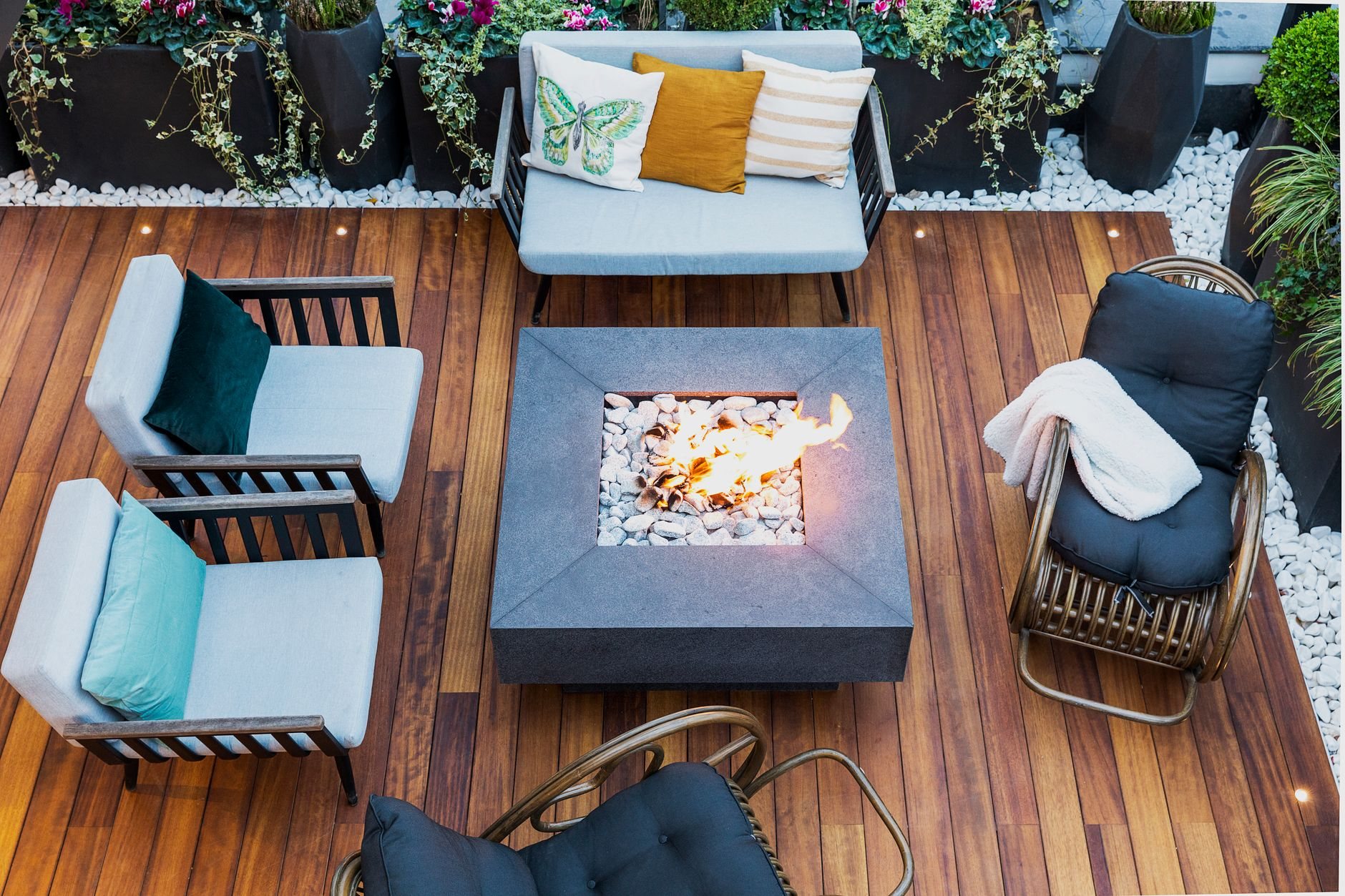
Aluminum earns its place outdoors. It forms its own protective oxide, so a scratch through the finish doesn’t start the rust bloom a steel guardrail shows at the same spot. That makes it the usual answer for deck and balcony guardrails that take snow and de-icer every year, for pool enclosures, and for multifamily balcony replacements where the owner is done paying for repaints.
Weight is the other argument. A 50-foot welded aluminum guardrail goes up a stair with two people, which matters on rooftop decks and older wood-framed balconies.
It isn’t the right call everywhere. Aluminum has roughly a third of steel’s stiffness, so long spans and heavy commercial stairs usually go steel. For scrollwork, see ornamental wrought iron; for a bare-metal finish that stays bright, stainless steel railings cost more and look like what they are. The full range, interior rails and ADA handrails included, is on our metal railings and handrails page.
What an aluminum railing is actually made of
There are two ways to build one. A welded aluminum railing is fabricated like a steel rail: posts, top rail, and pickets cut from 6061-T6 tube and bar and TIG-welded into sections on the bench. A pre-engineered extruded system uses 6063 extrusions — posts, rails, and picket channels that assemble with internal brackets — cut to your dimensions. Welded gives you any picket pattern or radius you can draw. Extruded is faster, cheaper per foot, and carries published load ratings.
Welding aluminum has a trait most people don’t know about: the heat-affected zone beside each weld loses a good share of the alloy’s tempered strength. Steel doesn’t do this. So a welded aluminum guardrail is sized for the metal at the welds — thicker walls, gussets at post-to-rail joints, and posts every 5 to 6 feet rather than the 8 feet steel can manage — so it still takes the 200-pound top-rail load current Utah-adopted code requires. Filler alloy is chosen for the finish, because the wrong one shows as dark weld lines after anodizing.
Architectural-grade powder coat is the default finish for Utah exteriors; clear or bronze anodizing is the choice when you want the metal itself to show. Field paint on aluminum is a maintenance plan, not a finish, and we don’t offer it.
Keeping aluminum away from the things that corrode it
Aluminum doesn’t rust, but it corrodes when it touches the wrong metal in the presence of water. Pressure-treated deck lumber is the main offender: the copper in modern treated wood eats aluminum where the two meet, so every post base on treated framing gets an isolation gasket or barrier tape and every fastener is stainless or rated for treated lumber. Bare steel brackets are the second offender, so hardware is stainless or aluminum throughout. Skip it and the post bases go white and chalky within a few winters, helped along by the de-icer on every exterior stair from Payson to North Salt Lake.
Movement is the other design item. Aluminum expands about twice as much as steel, and a south-facing Wasatch Front deck swings from below zero in January to well over 100°F in July — close to an inch of growth and shrink on a 50-foot run, so long runs get slip joints rather than cracked anchors. Our elevation adds strong UV, which is why we spec the higher powder-coat grades on anything facing south or west instead of the economy coating that chalks in a few seasons.
Freeze-thaw cycling, roughly a hundred days a year here, attacks the concrete around the post rather than the aluminum, so core-drilled posts get epoxy-set and surface plates get sloped grout that sheds water. On decks, posts through-bolt to blocking or the rim joist with stainless hardware.
How an aluminum railing project runs
- Measure and check the base. We field-measure every run and note what the posts anchor to — treated lumber, composite over joists, or concrete — because that decides the hardware.
- Choose welded or extruded. Straight runs with standard pickets usually go extruded; radius work and custom patterns go welded. You see both prices before deciding.
- Fabricate and finish. Sections are built, test-fit, and sent out for powder coat or anodizing — typically three to five weeks from measurement to install for welded, two to three for extruded.
- Install with isolation. Gaskets, stainless hardware, slip joints where runs are long, then a push-test on every post. Problems happen. Surprises should not.
What do aluminum railings cost in Utah?
As ballpark planning numbers, pre-engineered extruded aluminum railing installed in Utah typically lands around $80–$160 per linear foot. Custom welded aluminum with an architectural powder coat commonly runs $175–$350 per foot, roughly in line with powder-coated steel, and more for radius sections or anodizing. Treat these as orientation, not a quote.
What moves it: welded versus extruded is the biggest swing. Pickets are the baseline; cable infill in aluminum posts or glass panels in aluminum frames add hardware and labor. Sound concrete anchors quickly; retrofitting blocking into an old deck frame is slower, and a soft rim joist gets scoped as deck repair rather than bolted to. Related fabrication lives on the specialty capabilities hub.
Questions we actually get
Can an aluminum railing be as strong as steel?
Strong enough for code, yes. Aluminum is less stiff than steel, so the rail is designed around it: heavier wall tube, closer posts, and gussets at welded joints to make up for weld-zone softening. It meets the same 200-pound top-rail load; what it can’t match is steel’s long spans.
Will aluminum railing corrode on my pressure-treated deck?
Only if it’s installed wrong. Copper-based wood treatment corrodes aluminum on direct contact, and ordinary steel screws do the same. We isolate every post base from treated lumber with a gasket or barrier membrane and use stainless or treated-lumber-rated fasteners throughout.
Should I choose welded or pre-engineered aluminum railing?
Choose extruded if your runs are straight, post spacing is regular, and standard pickets suit the house; it costs less and carries published load ratings. Choose welded for a radius, a custom picket pattern, unusual post locations, or a rail that reads as fabricated rather than assembled.
Tell us about the deck or balcony you’re railing
Send a photo and rough lengths. We reply within a couple of hours during business hours — a day at most — with a straight read on welded versus extruded, finish, and a realistic budget range. Licensed and insured; verify our B100 at dopl.utah.gov.