
Metal Handrail Fabrication & Install in Utah
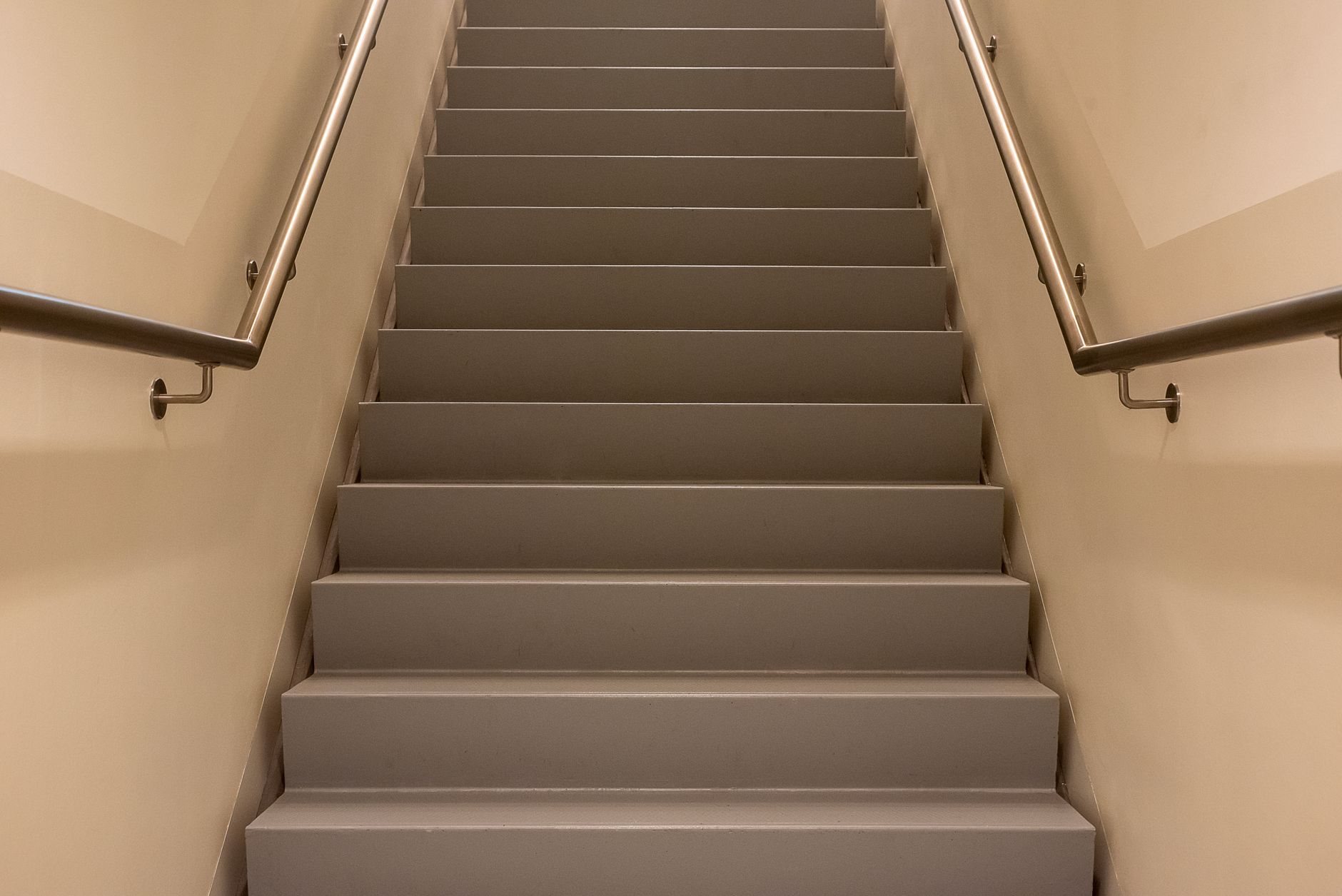
A fabricated metal handrail is the graspable rail your hand follows up a stair or ramp, built to the exact rake, landings, and turns of your run rather than cut from stock lengths. Grandview fabricates and installs steel handrails for homes, multifamily stairs, and commercial entries across Utah County and Salt Lake County under a Utah DOPL B100 license.
When handrail fabrication is the right scope
This page is about the rail you hold, not the barrier that keeps you from falling. If an open stair or balcony edge needs a 36- or 42-inch barrier with pickets or cable, that’s steel guardrail fabrication. If the rail only runs along a finished wall on brackets, the simpler wall-mounted handrail scope usually fits. If a public entry or ramp must pass an accessibility review, our ADA-compliant handrail page covers the extensions, returns, and clearances that review checks.
Custom fabrication earns its cost when the run isn’t simple: a stair that switches back at a landing, a rail that turns a corner without a break, a post-mounted rail down the middle of a wide commercial stair, or an exterior stair where a bolted-together kit would rust at every joint within a few winters. It also fits when the handrail has to match a new fabricated steel stair. For profiles, infill, and finishes in general, start at our metal railings and handrails overview.
What goes into a fabricated handrail
The profile comes first. Most of our handrails are 1½-inch Schedule 40 steel pipe — about 1.9 inches outside diameter — or 1¼- to 1½-inch round tube, because both land inside the graspable range current Utah-adopted code and the ADA accessibility standards describe: roughly 1¼ to 2 inches across, a shape a hand can close around.
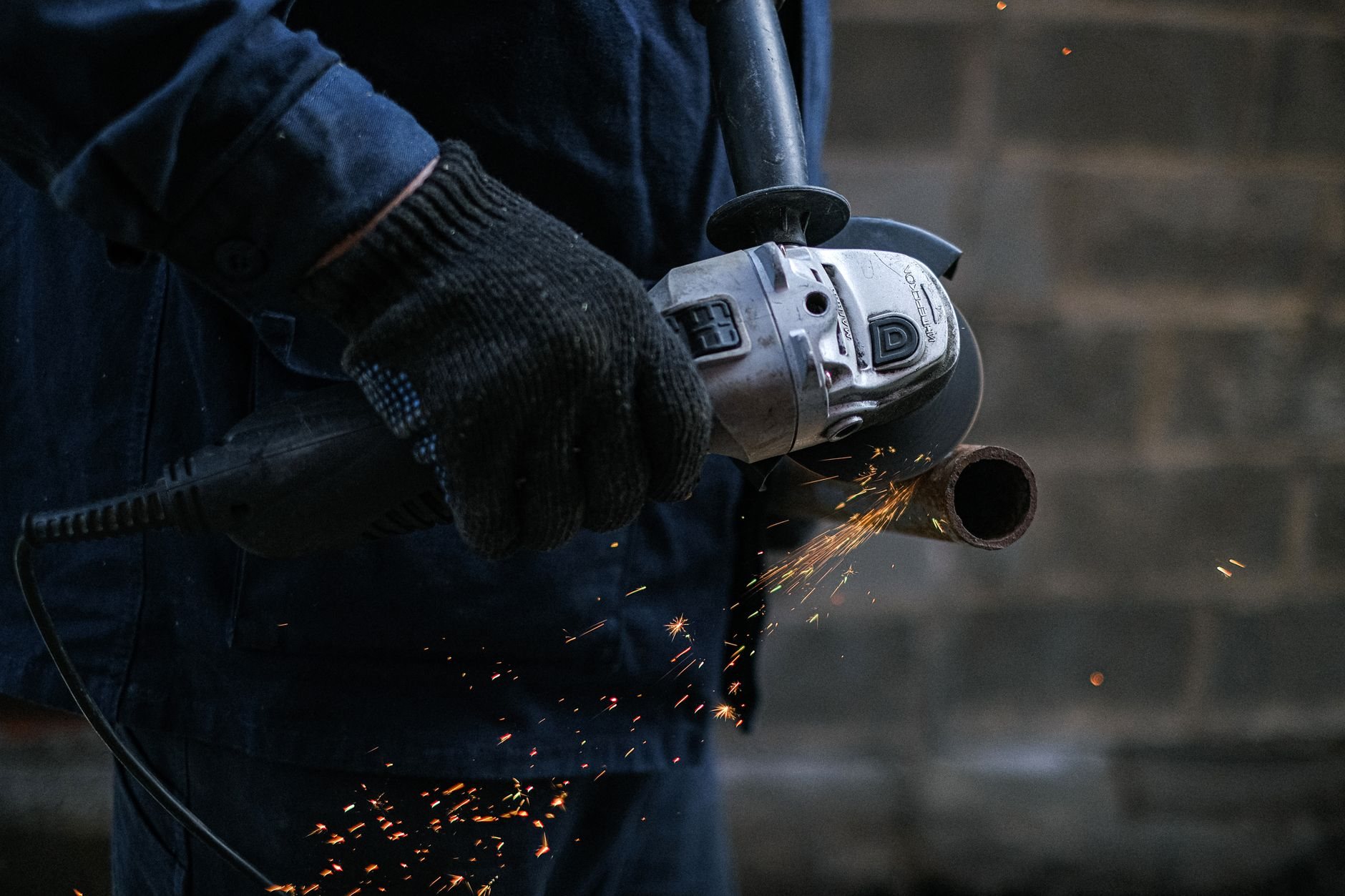
Then the geometry. Every stair has a rake angle set by its rise over run, and that angle changes at every landing, winder, or flight with a different pitch. We field-measure each transition and fabricate the bends to match: a gooseneck where the rail rises to clear a landing, a mitered or rolled easing where it turns level, and a return at each end that curls back to the wall or post so nothing snags. Pipe joints get welded, ground flush, and feathered until your hand can’t find them. That grinding is most of the labor on the invoice.
Support spacing follows load. Wall brackets sit about every 4 to 6 feet on blocking or studs, never drywall alone. Post-mounted rails anchor to the stringer or concrete with plates and anchors sized to the code pull-out load. Exterior handrails on concrete steps get a base detail that sheds water, because along the Wasatch Front a core-drilled post holding a puddle through a hundred freeze-thaw days a year loosens the concrete around it long before the steel fails.
How a handrail fabrication project runs
- Measure the run. Rise and run of every flight, landing depths, wall plumb, and where blocking or solid concrete actually is.
- Draw the bends. A simple elevation shows rail height, bracket or post locations, extensions, and each transition. You approve it before pipe is cut.
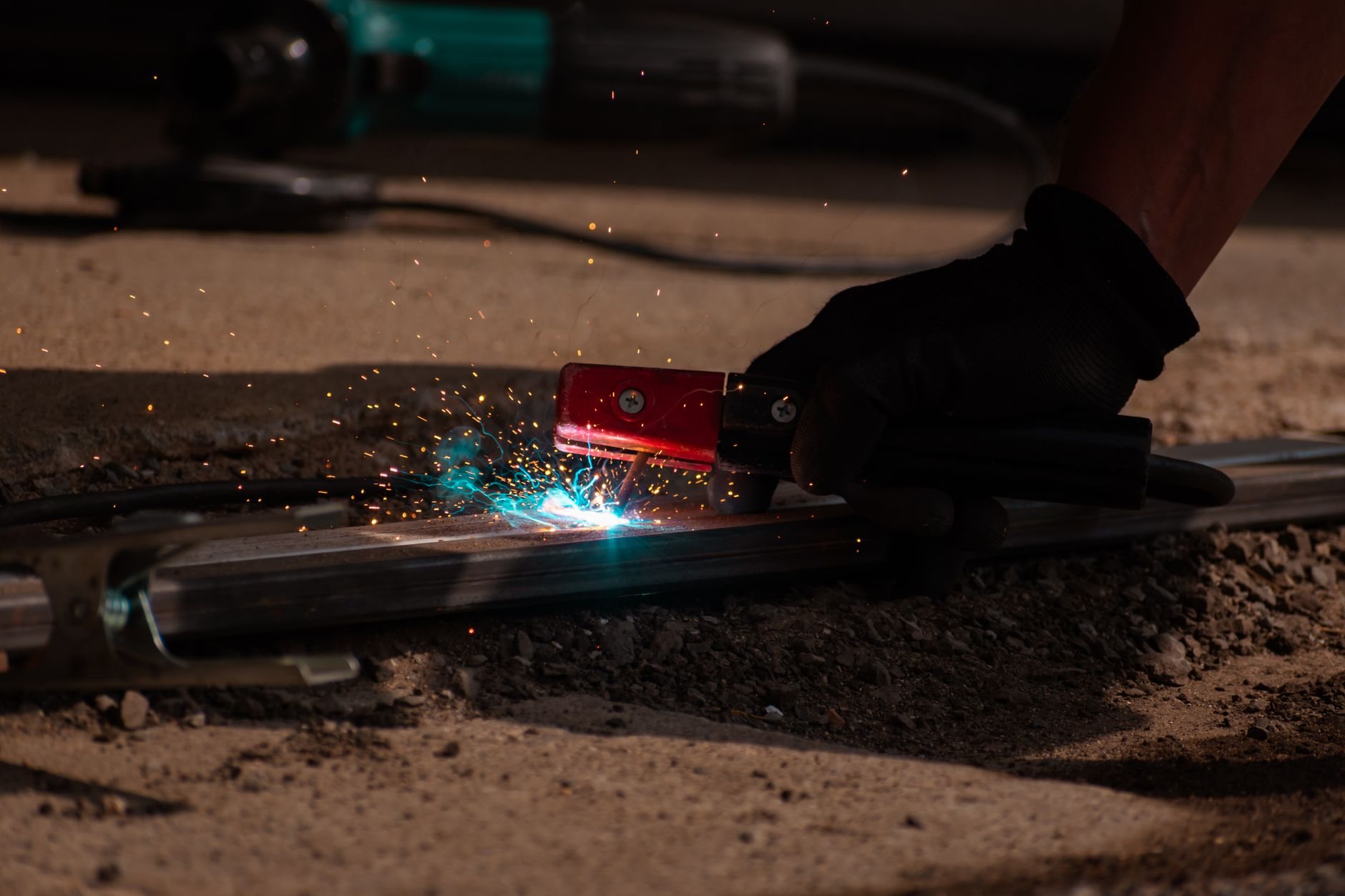
- Fabricate in sections. Long runs are built in pieces that fit through doors and stairwells, with concealed sleeve splices placed away from where hands naturally rest.
- Finish for the exposure. Interior rails get primer and paint or a clear coat. Exterior rails get powder coating or galvanizing, because at Utah elevation the UV alone chalks ordinary paint in a few seasons.
- Install and load-check. Brackets lagged into blocking, posts anchored, splices pinned, welds touched up, and the rail leaned on hard before we call it done.
What does a fabricated metal handrail cost in Utah?
As ballpark planning numbers only: a straight, shop-painted steel handrail on wall brackets typically runs about $60–$120 per installed linear foot in Utah. Post-mounted or continuous rails with goosenecks, returns, and landing transitions more commonly land around $120–$220 per foot, and powder-coated exterior work sits toward the top of that. Treat these as orientation; a site visit produces a firm proposal.
What moves the number is transitions, not footage. A rail with two landings and a corner has four or five fabricated bends, each measured, cut, welded, and ground; a straight 12-foot run has none. Returns and extensions add a bend each. Round pipe costs more than square tube because every joint is coped and blended. Exterior finishing adds facility time but removes repainting from your calendar. Anchoring counts too: new blocking in an open wall is quick, while an older plaster wall or a spalled concrete step takes longer and may need repair first.
Questions we actually get
Can you fabricate a handrail to match a stair that isn’t square or level?
Yes — that’s the main reason to fabricate rather than buy a kit. We measure each flight’s actual rake and each landing’s elevation, then bend and weld the rail to follow them. Settled stairs in older Provo and Salt Lake homes are routine; the rail is built for the stair you have.
Does the handrail have to be continuous around landings?
On stairs with four or more risers, current Utah-adopted code expects the handrail to run continuously along the full flight, and on commercial and multifamily stairs it generally carries through intermediate landings too. Interruptions at newel posts are allowed in some residential cases. We detail this in the drawing so inspection doesn’t become a redesign.
Should I choose steel, stainless, or aluminum for the rail?
Painted or powder-coated steel is the workhorse and the most economical to fabricate. Stainless suits food-service, medical, and heavy-contact settings — see stainless steel railing fabrication. Aluminum won’t rust, which helps outdoors; our aluminum railing page covers the trade-offs.
How long from measurement to an installed handrail?
A typical interior handrail runs two to three weeks: a few days for drawings and approval, one to two weeks for fabrication, and a day on site. Powder coating or galvanizing adds about a week of facility lead time. In fast-growing Lehi or Saratoga Springs, inspection scheduling sometimes takes longer than the steel.
Tell us about the stair or ramp
A photo of the run and rough rise-and-run numbers are enough to start. We reply within a couple of hours during business hours — a day at most — with a straight read on profile, code, and budget. Licensed and insured; verify our B100 at dopl.utah.gov. More metalwork lives on the specialty capabilities hub.