
Wall-Mounted Handrails in Utah County
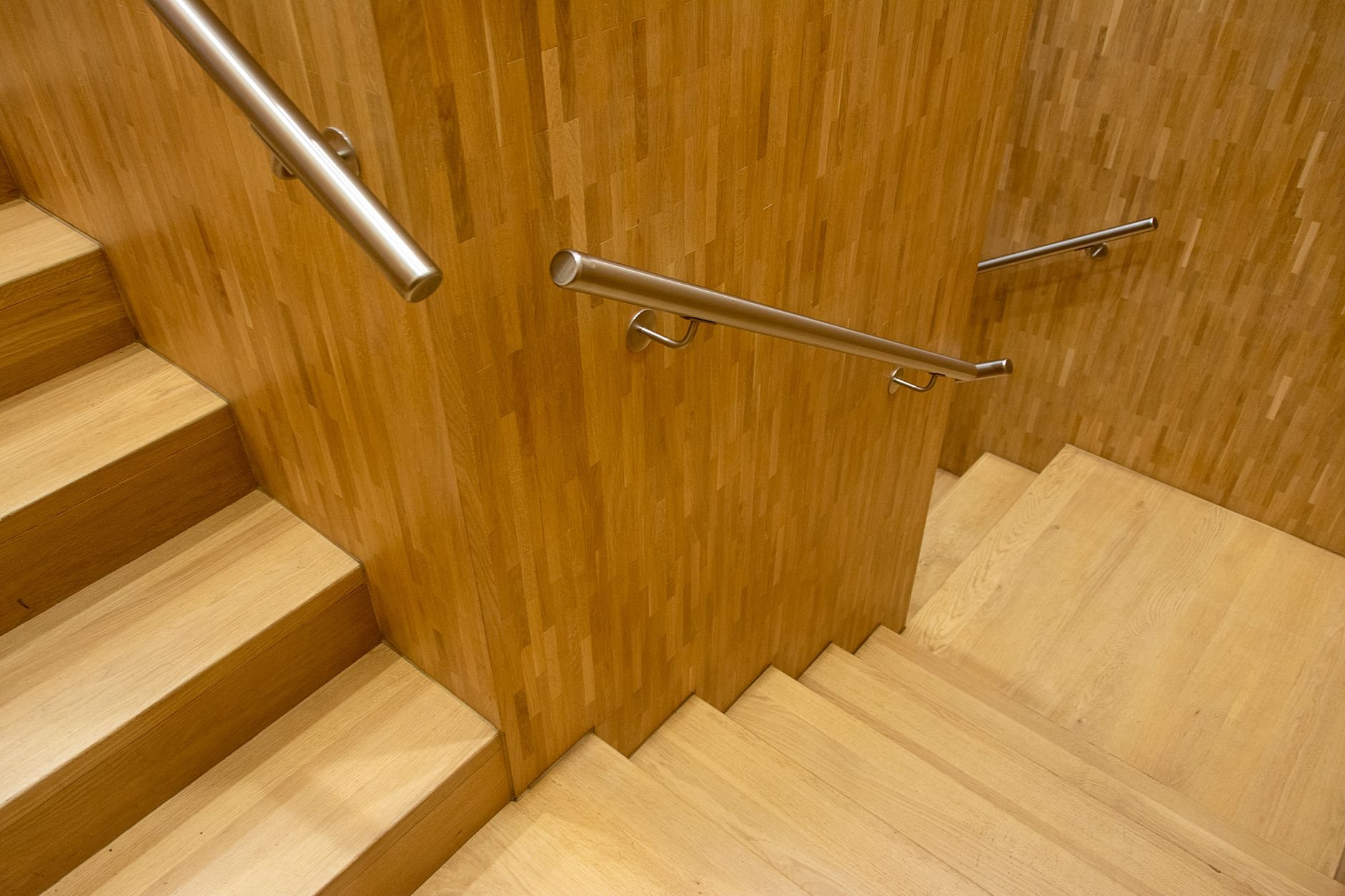
A wall-mounted handrail is a graspable steel rail held off the wall on brackets — no posts, no infill — for enclosed stairs, basement runs, corridors, and ramps that already have a wall on one side. Grandview fabricates and installs them across Utah County and Salt Lake County under a Utah DOPL B100 license, from blocking and brackets through returns and finish.
When a wall-mounted handrail is the right choice
If the stair has a wall beside it, a wall-mounted rail is almost always the cleanest fix — the lightest handrail we build, with the full tread width left usable. The most common call is a basement stair — most Wasatch Front houses have one, and it needs a graspable rail before a basement finishing project passes final inspection. Close behind are multifamily stairwells and commercial back-of-house stairs built with a wall and nothing else.
A stair open on one side needs a rail that stops a fall, not just one to hold, so that side belongs to guardrail fabrication. A rail that stands on its own posts — a landing edge, a porch step with no wall — is covered under metal handrail fabrication. Public ramps and entries, where extensions and clearances get stricter, live on our ADA-compliant handrails page.
What goes into a wall-mounted rail
The rail is usually 1½-inch round steel tube or 1¼-inch schedule 40 pipe — both inside the graspable range current Utah-adopted code expects, roughly 1¼ to 2 inches across. Flat bar reads sharper in a modern interior; we shape it with a rounded grip so it passes graspability rather than just resembling a handrail. Welded brackets hold the rail about 1½ inches off the wall — less and knuckles hit drywall, more and the bracket becomes a lever.
Ends matter more on a wall rail than on any other type. The rail runs continuously from top riser to bottom and returns to the wall so nothing catches a sleeve or a bag strap. Returns are bent and welded in the shop, not capped with an elbow that works loose in a year. Switchback stairs get one continuous rail wrapped around the inside landing corner wherever geometry permits. Finish is primer and paint or clear coat indoors, powder coat on exterior walls.
How the brackets attach to the wall
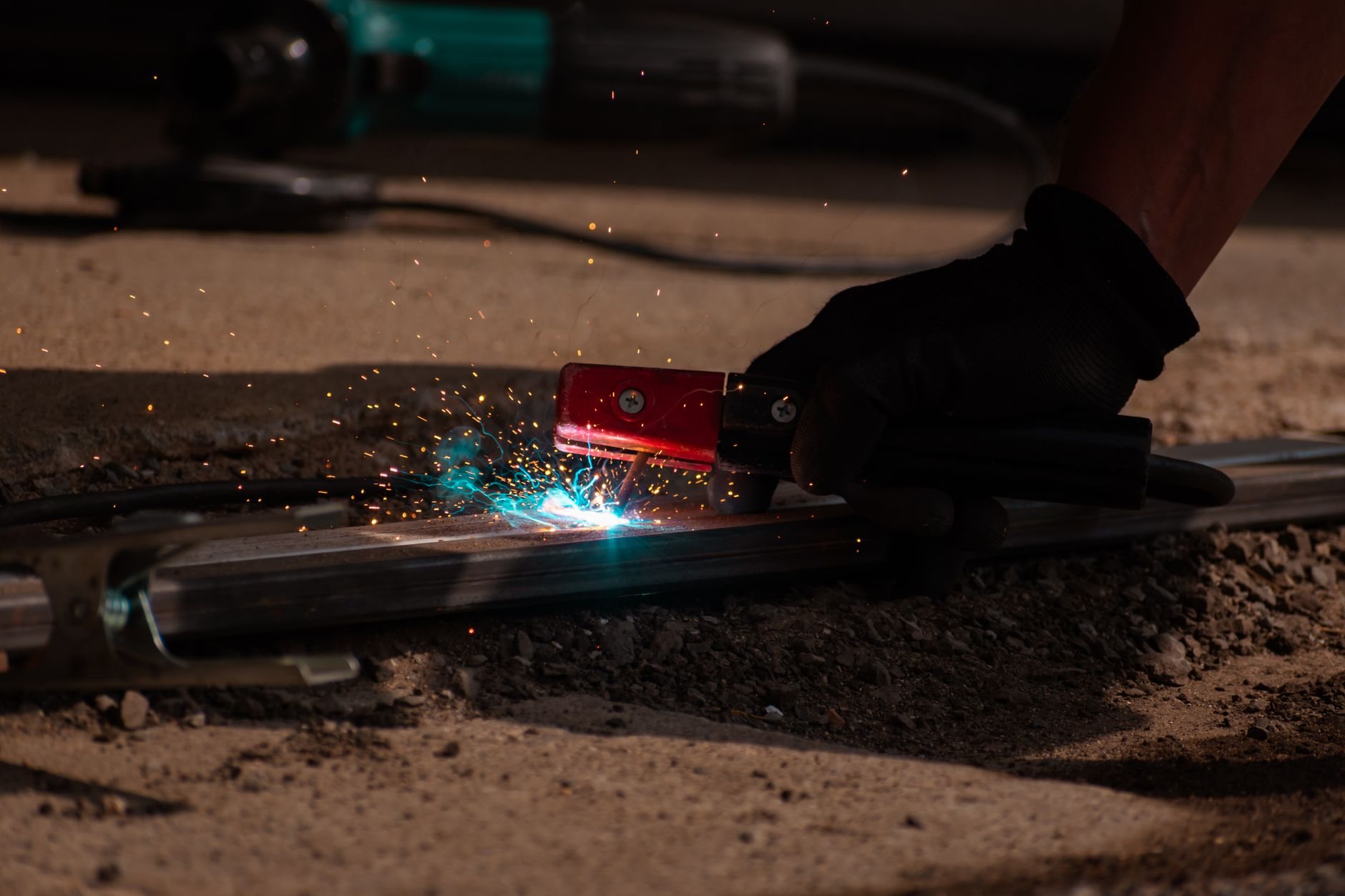
A wall rail is only as good as what the bracket screws into. Drywall alone holds nothing; the rail has to carry roughly 200 pounds at any point, straight into the wall structure. So the first job on site is finding out what the wall is made of.
- Locate structure. On a framed wall, brackets land on studs — typically every 48 inches or closer. Where the ideal spot falls between studs, we open the drywall, add solid blocking, and patch. On an unfinished basement stair we set blocking before drywall goes up — the cheapest moment to do it.
- Anchor masonry. Brick and block stairwells, and stucco or CMU walls at exterior entry steps, get sleeve or wedge anchors. No plastic anchors — they pull out under a real fall.
- Set height and line. The rail sits 34 to 38 inches above the tread nosings. Older stairs are rarely consistent riser to riser, so we measure every nosing and set one straight line that stays in range.
- Hang and finish. Sections go on the brackets, field welds are ground and touched up, and the rail is pushed on hard before we leave.
Exterior wall rails add one Utah wrinkle. Bracket penetrations through stucco or masonry are a water path, and with roughly a hundred freeze-thaw days a year along the Wasatch Front, a wet anchor pocket is how a rail works loose by its third winter. We seal every exterior penetration and powder coat the rail against high-elevation UV.
What does a wall-mounted handrail cost in Utah?
As ballpark planning numbers, a straight run of shop-primed steel wall rail on a framed interior stair typically lands around $60–$130 per linear foot installed in Utah, putting most basement stairs in the several-hundred to low-thousands range. Powder coating, masonry anchoring, and rails wrapped around landings push toward the top of that band. A site visit produces a fixed number.
Wall construction is the biggest driver: open framing is fast, finished drywall needing blocking and patching takes longer, masonry is slower still. Each return or corner adds shop time. On multifamily work, repetition drives the per-landing price down sharply. Permits are rarely needed for a like-for-like replacement, but a rail inside a basement finish is inspected with that permit — and timelines differ between fast-growing Lehi or Saratoga Springs and established Provo or Salt Lake City departments.
Questions we actually get
Can you mount a handrail if my stair wall is drywall with no blocking?
Yes. Brackets go into studs where layout allows; where it doesn’t, we cut small openings, add solid blocking, patch, and mount into it. What we won’t do is hang a rail on drywall anchors alone — it has to hold a falling adult.
Does a basement stair need a handrail to pass inspection?
Under current Utah-adopted code, any stair with four or more risers needs at least one graspable handrail, and a basement stair almost always qualifies. Inspectors check height, continuity, grip, and safe ends. A missing or non-graspable rail is one of the most common final-inspection holds on basement finishes.
How far does the rail extend past the top and bottom step?
Residential code wants the rail continuous from top riser to bottom riser, with returns to the wall. Where a rail serves a public or commercial stair, the federal ADA accessibility standards call for a 12-inch horizontal extension at the top and a sloped extension one tread deep at the bottom. We fabricate extensions to the standard that applies to your building.
Can a wall rail match an existing post-mounted railing?
Usually. We match profile, finish, and color, and build brackets to the same visual weight as the existing posts. Where a wall rail picks up from an open-side guardrail at a landing, the transition is one continuous line, not two rails ending near each other.
Tell us about the stair
A photo of the run and a rough length is enough. We reply within a couple of hours during business hours — a day at most — with a straight read on bracket layout, code dimensions, and budget. If the stair itself is the problem, see steel stairs; the full metal railings and handrails range is on the specialty capabilities hub. Licensed and insured; verify our B100 at dopl.utah.gov.