
Natural Slate Roofing
Natural slate is quarried stone split into roofing shingles, hung on copper or stainless nails, and expected to outlast the house it covers. It’s the roof for owners who want a hundred-year material on a structure that can carry it, and Grandview installs it in Utah County under a B100 general contractor license.
When natural slate is the right call, and when a sibling is
Natural slate makes sense when three things are true at once: the roof is steep enough (we don’t put slate below a 4:12 pitch), the structure can carry three to four times the weight of asphalt, and you plan to own the building long enough to care about a roof that lasts 75 to 150 years. Historic homes, stone and brick custom builds, and churches along the Wasatch Front are the usual candidates.
If the look matters more than the stone, synthetic and composite slate gets you the profile at a quarter of the weight and well under half the cost, with no structural upgrade. If you want a masonry roof on a tighter budget, concrete tile and clay tile are heavy, durable, and cheaper per square. If snow shedding on a bench lot is the main driver, standing-seam metal does that with far less mass. Our roofing services page covers the full range.
What a natural slate installation involves
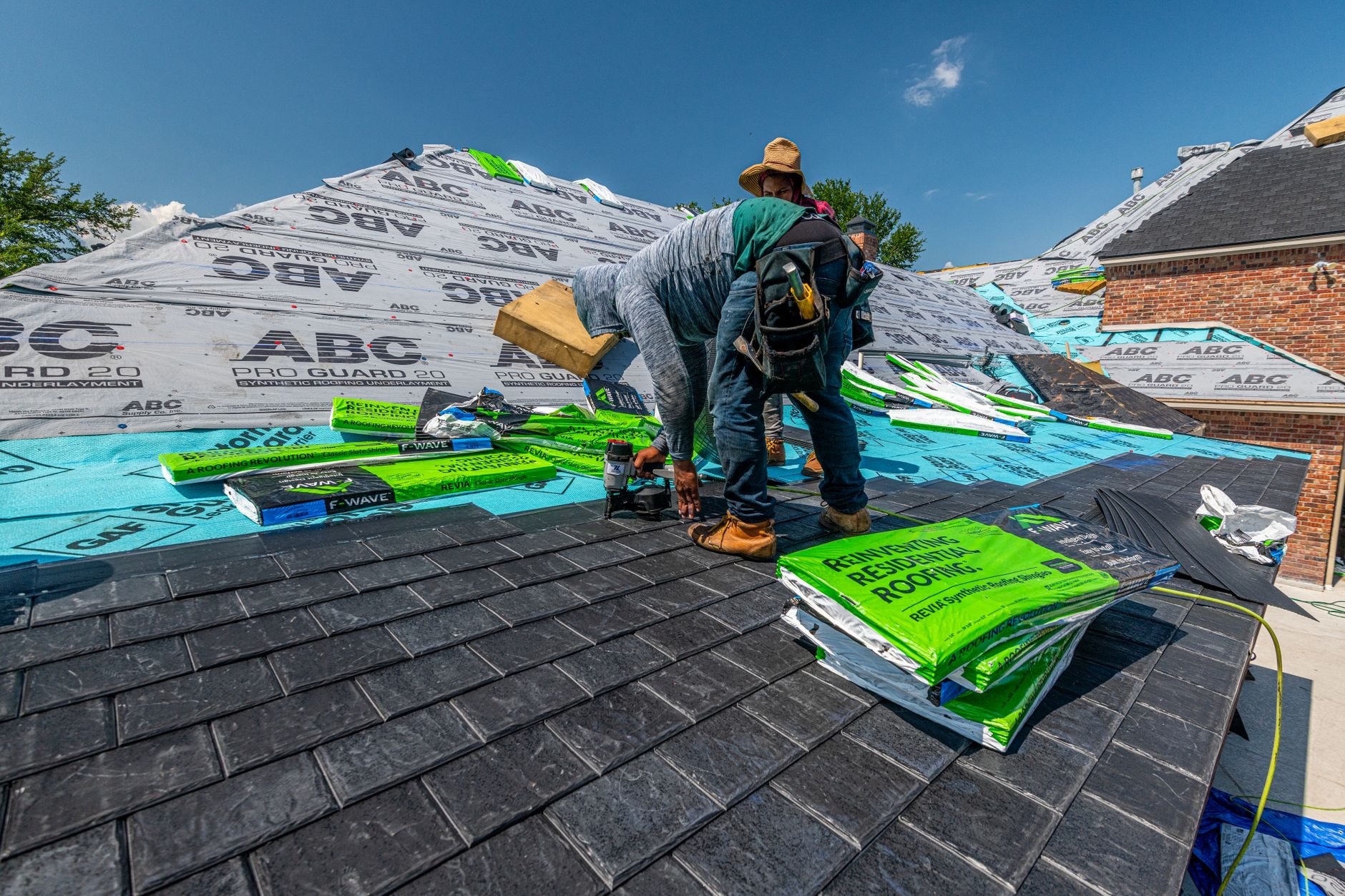
Every slate is nailed twice through pre-punched holes, and the nail has to hang the slate rather than clamp it: driven tight, it cracks the stone; left proud, it cracks the slate above. The crew works off roof jacks, because walking the field breaks slates. These are the specifics we hold the install to.
- Grade S1 stone only. Roofing slate is graded under ASTM C406 by absorption and durability; S1 is rated for 75-plus years. We spec S1 from established North American quarries (Vermont and Virginia, usually) in unfading or weathering colors chosen on purpose, and skip soft imported stock. Utah’s hundred-plus freeze–thaw days a year will find a bad slate quickly.
- Headlap set by pitch. Three inches of headlap at 8:12 and steeper, four inches between 4:12 and 8:12. Exposure is calculated from slate length and that headlap, not from whatever makes the courses come out even.
- Copper flashings, copper nails. Galvanized metal fails in 30 years under a roof built for 100. We use 16- or 20-ounce copper or stainless for valleys, step and counter-flashing, boots, and ridge, with copper or stainless nails throughout. Valleys stay open so they can be inspected for the life of the roof.
- Ice barrier and underlayment. Ice-and-water membrane at eaves, valleys, and penetrations, with heavy felt or a slate-rated synthetic across the field. Details on our underlayment and ice-and-water shield page.
- Snow guards. Slate is slick, and a bench lot in Alpine or Draper stacks real snow on it. Bronze pad- or pipe-style retention over entries and walks keeps a winter slide from tearing the gutters off.
Structure first: can your roof carry slate?
Standard quarter-inch slate weighs around 900 to 1,100 pounds per square (100 square feet); heavier textural slates run 1,500 and up. Architectural asphalt is about 250 to 350. Most Utah trusses were sized for asphalt, so a slate conversion starts with a structural review, not a sample.
Two Utah conditions make that review matter more here. Design snow loads on bench lots run meaningfully higher than on the valley floor, and slate’s dead load stacks on top of that. A heavier roof also raises the building’s seismic mass; near the Wasatch fault, mapped by the USGS earthquake hazards program, the engineer checks that the added weight doesn’t push lateral loads past what the walls and connections were designed for.
Reinforcement usually means sistered rafters, added purlins, or new trusses on an addition, folded into the same contract through our roof truss and framing work, and the engineer signs off before the first slate goes on. After that: permit, tear-off to the deck, copper flashings and dry-in, then slating, ridge, and snow guards. We see dependencies before they become delays.
What does a natural slate roof cost in Utah County?
As a ballpark planning number, installed natural slate in Utah County typically runs about $20 to $40 per square foot of roof area, before any structural reinforcement. For many single-family homes that lands between $60,000 and $150,000. Per year of service, it’s often the cheapest roof we install.
- Slate grade, thickness, and quarry. Thicker and graduated slates cost more to buy, ship, and hang. Freight from Vermont or Virginia is a real line item.
- Structural reinforcement. From a few sistered rafters to new trusses. The engineer’s review tells you this number early.
- Copper quantity. Cut-up roofs with many valleys, dormers, and chimneys use a lot of copper, and copper tracks commodity pricing.
- Pitch, height, and access. Steep three-story roofs need more staging and slower production.
These are planning numbers, not promises. A budget range follows a site visit; a firm estimate follows the structural review. You can verify our B100 license through Utah DOPL while you compare bids.
Questions we actually get
Can my existing roof structure hold natural slate?
Not without checking. Slate weighs three to four times what asphalt does, and most Utah trusses were sized for asphalt plus snow. An engineer reviews rafters, trusses, and bearing walls against the slate dead load and your lot’s snow load, and tells you whether reinforcement is needed before we price the roof.
Does hail or canyon wind damage slate?
Slate is hard but brittle. Large hail can crack individual slates; wind rarely moves a properly nailed one. Repairs are piece by piece: a slate ripper pulls the broken slate, a new one goes in on a copper hook, and the roof is whole again. No field replacement, no color-matching a whole slope.
What actually fails first on a slate roof?
The flashing and the fasteners, almost never the stone. Galvanized valleys and steel nails give out decades before S1 slate does, which is why we use copper or stainless for both. Specified that way, the roof’s first real maintenance is usually a flashing renewal a lifetime from now.
Is synthetic slate a reasonable alternative?
Often, yes. Composite slate weighs about what asphalt does, needs no structural upgrade, and costs a fraction of natural stone, with a 40- to 50-year expected life instead of a century. If the structure or the budget can’t take natural slate, it’s the honest next answer.
Tell us what you’re working on
A slate roof starts with a structural question, and we’d rather answer it before you fall in love with a sample. We reply within a couple of hours during business hours, a day at most. The rest of the building envelope lives under site, structure & envelope.