
Synthetic & Composite Slate Roofing
Synthetic slate is a molded polymer tile that reproduces quarried slate at roughly a fifth of the weight, so it goes on a conventionally framed roof without reinforcement. Grandview scopes, sequences, and quality-checks composite slate installations across Utah County and Salt Lake County under a B100 general contractor license.
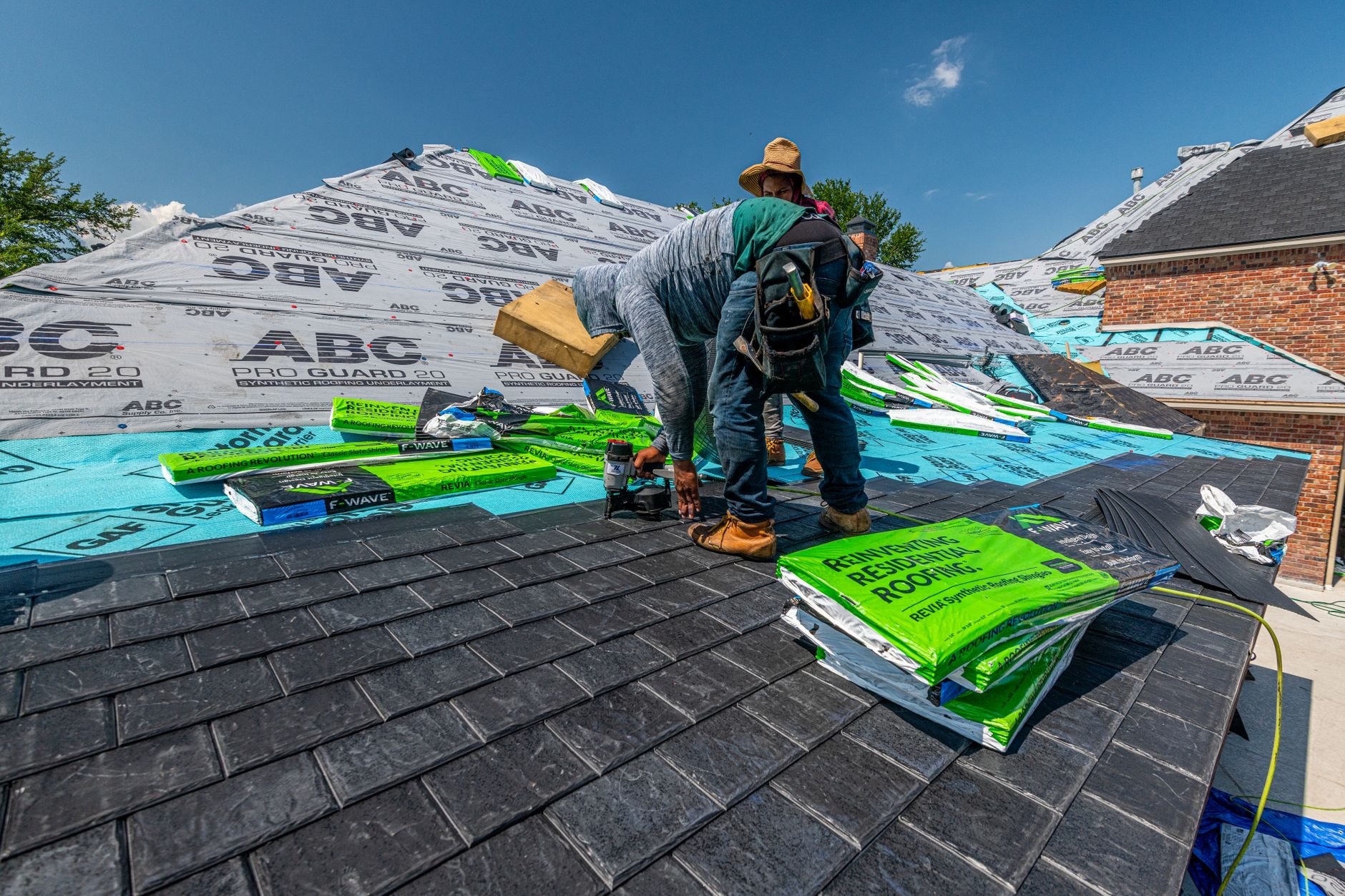
When composite slate is the right call, and when a sibling is
Choose synthetic slate when you want the shadow lines and random-width texture of a slate roof on a house that was framed for asphalt. A natural slate roof weighs 800 to 1,000 pounds per square (100 square feet); most composite slate lines land between 150 and 250 pounds per square. For most Utah homes that difference is the whole decision, because reinforcing trusses to carry stone often costs more than the roofing itself.
It is also the right call on bench lots where hail is part of every summer. Natural slate chips under hail and can delaminate after enough freeze–thaw cycles; a polymer tile flexes. Most composite slate carries a Class 4 impact rating, which puts it in the same insurance conversation as Class 4 impact-resistant shingles, with a far more convincing appearance.
Pick a sibling when the budget stops short of the composite premium: a slate-cut designer shingle gets you partway there for about half the installed cost. If snow shedding matters more than the slate look, stone-coated metal tile is the closer comparison. And on a historic restoration where the material has to be real, we will tell you plainly that it should be natural slate.
What a synthetic slate installation involves
Who does the work: Grandview holds the contract and manages licensed roofing crews experienced with the tile system we spec. We select the product with you, sequence the tear-off and dry-in, and check the installation against the manufacturer’s instructions — on a composite roof, the nailing and exposure rules are the warranty. Our license is verifiable through Utah DOPL.
Material. The tiles are injection-molded polymer, sometimes blended with rubber, cast from molds of actual quarried slate so no two tiles in a bundle share a surface. Manufacturers such as DaVinci Roofscapes publish Class A fire and Class 4 impact ratings with 50-year limited warranties. We spec lines with UV stabilizers through the full tile, not a surface coating; at Utah’s elevation the sun is harder on polymers than at sea level, and a surface-only UV package chalks on the south slope years before the north.
Deck and underlayment. Tear-off to the deck, soft sheathing replaced at a unit price you see in advance, then self-adhered ice and water membrane at the eaves to at least 24 inches inside the heated wall — two courses on a typical Utah County overhang. Composite slate sheds water through tile laps rather than a sealed surface, so the synthetic underlayment above the membrane is a second roof, and we spec it that way.
Fastening and exposure. Each tile takes two corrosion-resistant ring-shank nails through factory slots, driven snug but not countersunk — overdriving is the most common installer error on composite slate, and it cracks the tile head where you can’t see it. Exposure runs 7 to 10 inches depending on product and pitch, with a 6-inch course offset to keep the look random. In the canyon-wind corridors from Alpine through Draper we use the manufacturer’s high-wind schedule; most lines are rated to 110 mph.
Hips, ridges, and snow. Composite slate has molded hip and ridge caps that match the field tile; an asphalt ridge on a slate-look roof is the detail that gives the whole thing away. Because the tile face is smooth, snow lets go all at once rather than melting off gradually, so on any slope that empties over a walkway, garage door, or gas meter we install bar snow retention anchored into rafters.
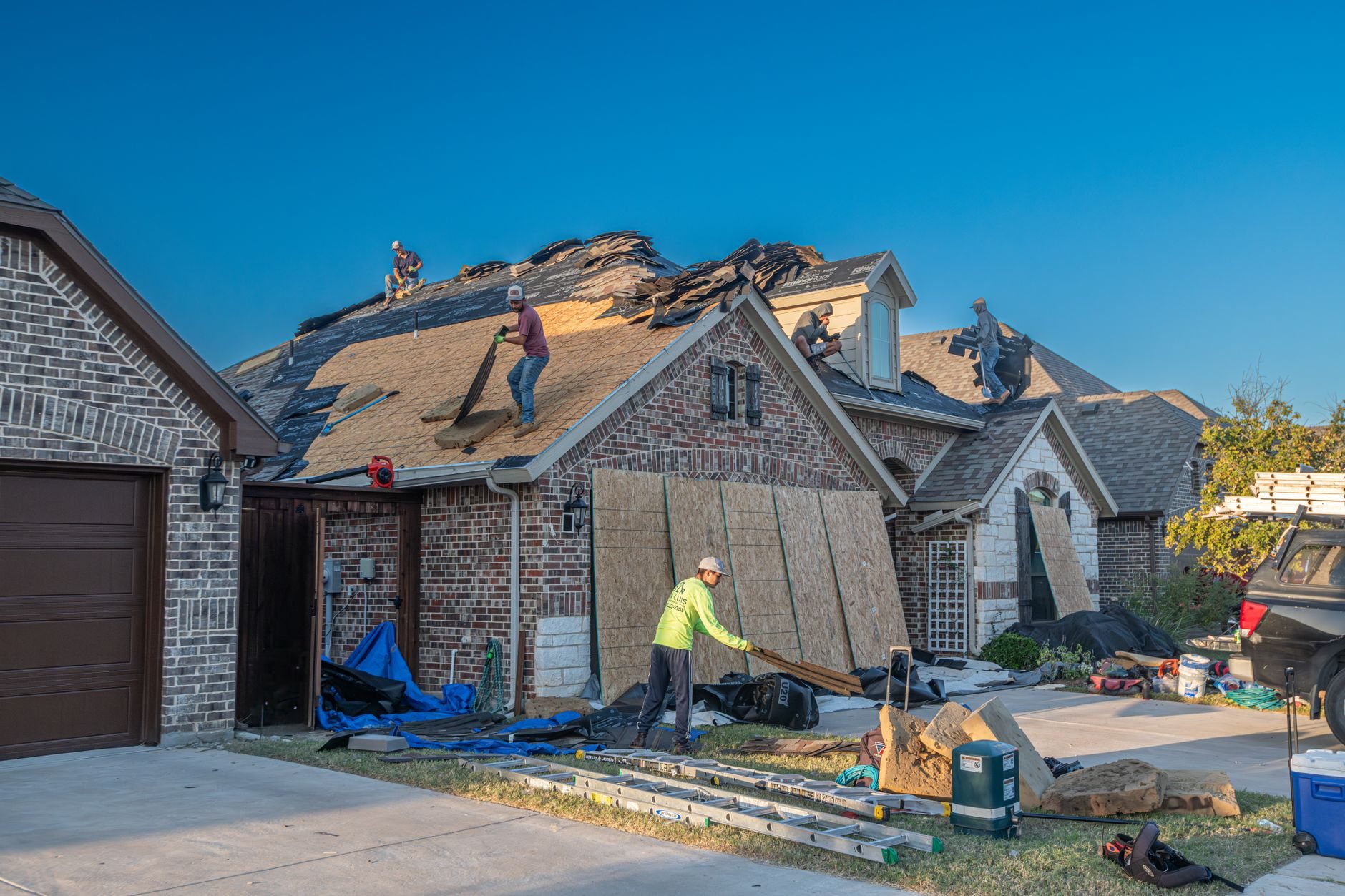
Scheduling. Composite slate is special-order with two- to six-week lead times, so we pull the permit and schedule tear-off against the delivery, not the other way around. Polymer tiles also stiffen below about 40°F and crack more easily under the nail gun, so a midwinter install on a bench lot means warming bundles or waiting for a thaw window. Once tiles are on site, a single-family roof usually takes two to four days.
What does synthetic slate roofing cost in Utah County?
As a ballpark planning number, installed composite slate in Utah County typically runs about $9 to $15 per square foot of roof area — roughly $25,000 to $45,000 for many single-family homes. That is two to three times architectural asphalt and about half of natural slate once reinforcement is counted. A firm estimate follows an inspection.
What moves the number:
- Product line and blend. Multi-width, multi-color blends cost more per square than single-width tile and take longer to lay out.
- Pitch and cut-up. Hips, valleys, and dormers multiply the number of cut tiles and matching accessory pieces.
- Snow retention. Rafter-anchored bars add cost but are not optional over doors and walkways.
Drivers common to every system — access, disposal, flashing counts — are covered on the roofing overview; the wider envelope context lives under site, structure & envelope.
Questions we actually get
Can you tell synthetic slate from real slate from the street?
From the curb, rarely — the molds are cast from quarried slate and good lines mix several widths and shades. Up close, the giveaway is the edge: polymer tiles have a uniform thickness and stone does not. Matching hip and ridge caps matter more to the illusion than the field tile.
Does my roof need reinforcement for composite slate?
Almost never. At 150 to 250 pounds per square, composite slate weighs about the same as architectural asphalt and well under the design load of a standard truss roof. We still check deck and trusses at inspection; a roof that has carried two layers of shingles often has other problems worth catching.
Will the color fade in Utah sun?
All polymer roofing weathers; the question is how evenly. Lines with UV inhibitors through the full tile fade slowly and uniformly and typically carry fade coverage in the warranty. Surface-coated tiles can chalk on south and west slopes within a decade at our elevation, which is why we do not spec them.
What drives the price beyond the tile itself?
Roof complexity and snow retention are the two biggest variables after product choice. Every hip, valley, and dormer adds cut tiles and accessory pieces, and rafter-anchored snow bars over entries are a line item we consider required on bench lots.
Tell us what you’re working on
We reply within a couple of hours during business hours — a day at most. You’ll get a straight read on scope, sequence, and budget before anyone commits to anything.