
Roof underlayment & ice-and-water shield installation
Underlayment is the water-resistive layer between your roof deck and the shingles above it; ice-and-water shield is the self-adhering membrane that seals the eaves, valleys, and penetrations where ice dams and wind-driven rain get through. Grandview installs both under a B100 general contractor license, within a re-roof or as the dry-in on a new roof, specced for the ice dams Utah builds.
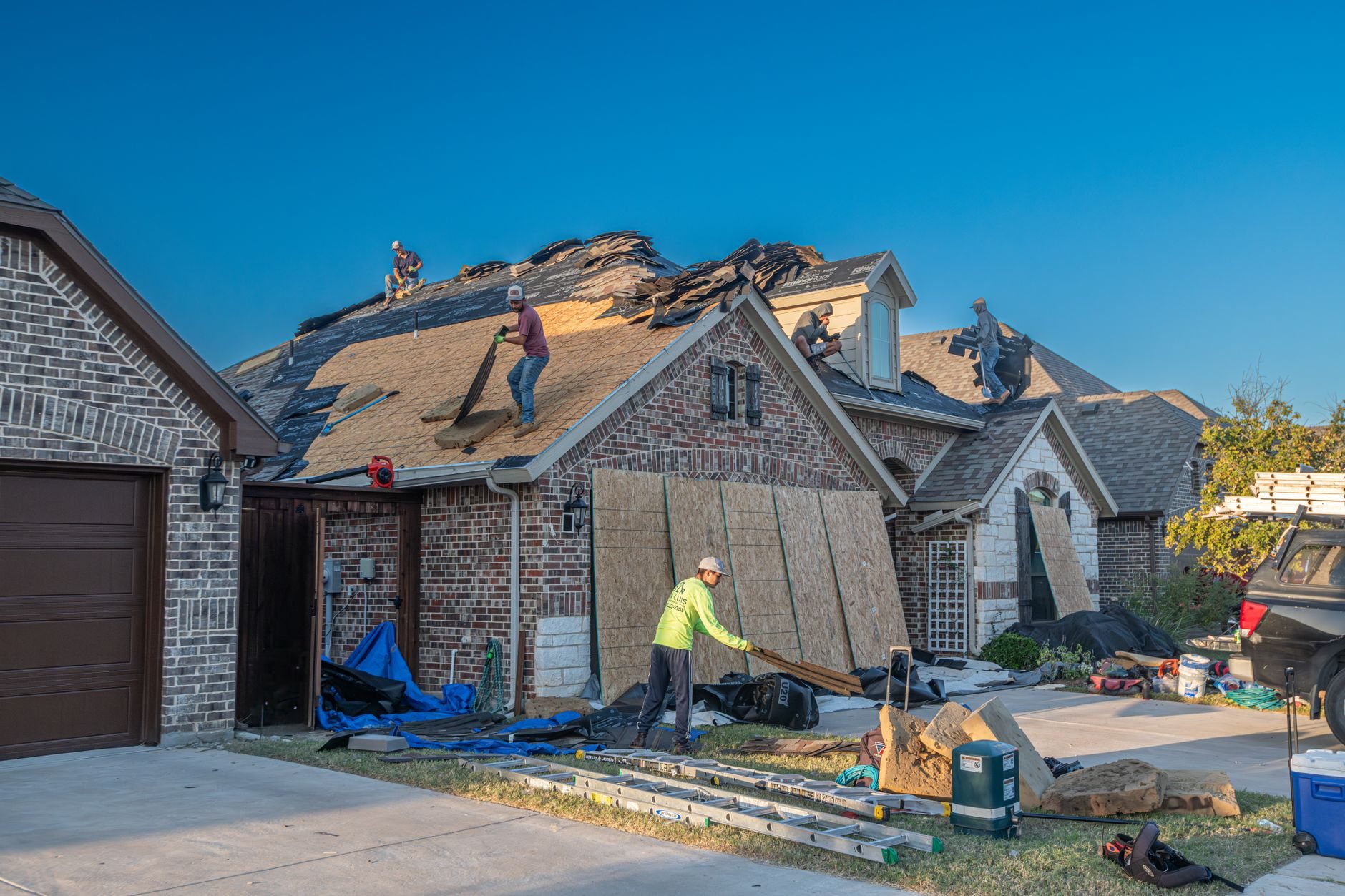
When the underlayment is the real question
Nobody calls about underlayment on its own. They call because a ceiling stained in February along the north eave, or because a re-roof estimate said “felt” and they want to know if that’s enough.
This is the right page if your roof covering is coming off anyway — a roof replacement is the only time the deck is exposed and the membrane can go down properly — or if a leak keeps returning at an eave or valley after the shingles were patched, which is usually membrane that stops short. Water at a chimney, wall, or pipe is a roof flashing repair. And if the ice dam itself is the recurring problem, membrane keeps it outside, but roof ventilation and attic air sealing are what stop it forming.
What goes on the deck, and where each layer stops
Two materials, two jobs. Ice-and-water shield is a rubberized-asphalt sheet that bonds directly to the sheathing and self-seals around every nail driven through it. Synthetic underlayment is a woven polypropylene sheet, cap-nailed, that sheds water behind the shingles across the field of the roof. Asphalt felt wrinkles when wet, tears in wind, and degrades fast under UV at Utah’s elevation; we spec synthetic unless your shingle’s warranty says otherwise.
Where the membrane goes matters more than the brand. Our standard Wasatch Front layout:
- Eaves, to 24 inches inside the warm wall. Current Utah-adopted code requires an ice barrier at the eaves in areas with a history of ice damming, measured from the exterior wall — not the roof edge. With 24-inch overhangs that means two full courses, not one. Bench lots in Alpine, Draper, and Cottonwood Heights hold snow longer, and we often run a third course there.
- Valleys, full length, centered. A 36-inch strip down every valley before the field sheet laps over it. Valleys carry the most water and freeze first.
- Around every penetration. Plumbing vents, flues, and skylight curbs each get a membrane square before the flashing goes on; when a pipe boot fails, that square keeps the failure out of your drywall.
- Roof-to-wall transitions and low-slope sections. Below a 4:12 pitch, and behind every sidewall step-flashing run, membrane replaces underlayment entirely.
- Rakes on high-wind exposures. Homes facing canyon mouths in Centerville and Farmington get membrane at the rakes too; wind-driven rain travels uphill under lifted shingles.
Everything else gets synthetic underlayment, with the membrane always beneath the field sheet, never on top.
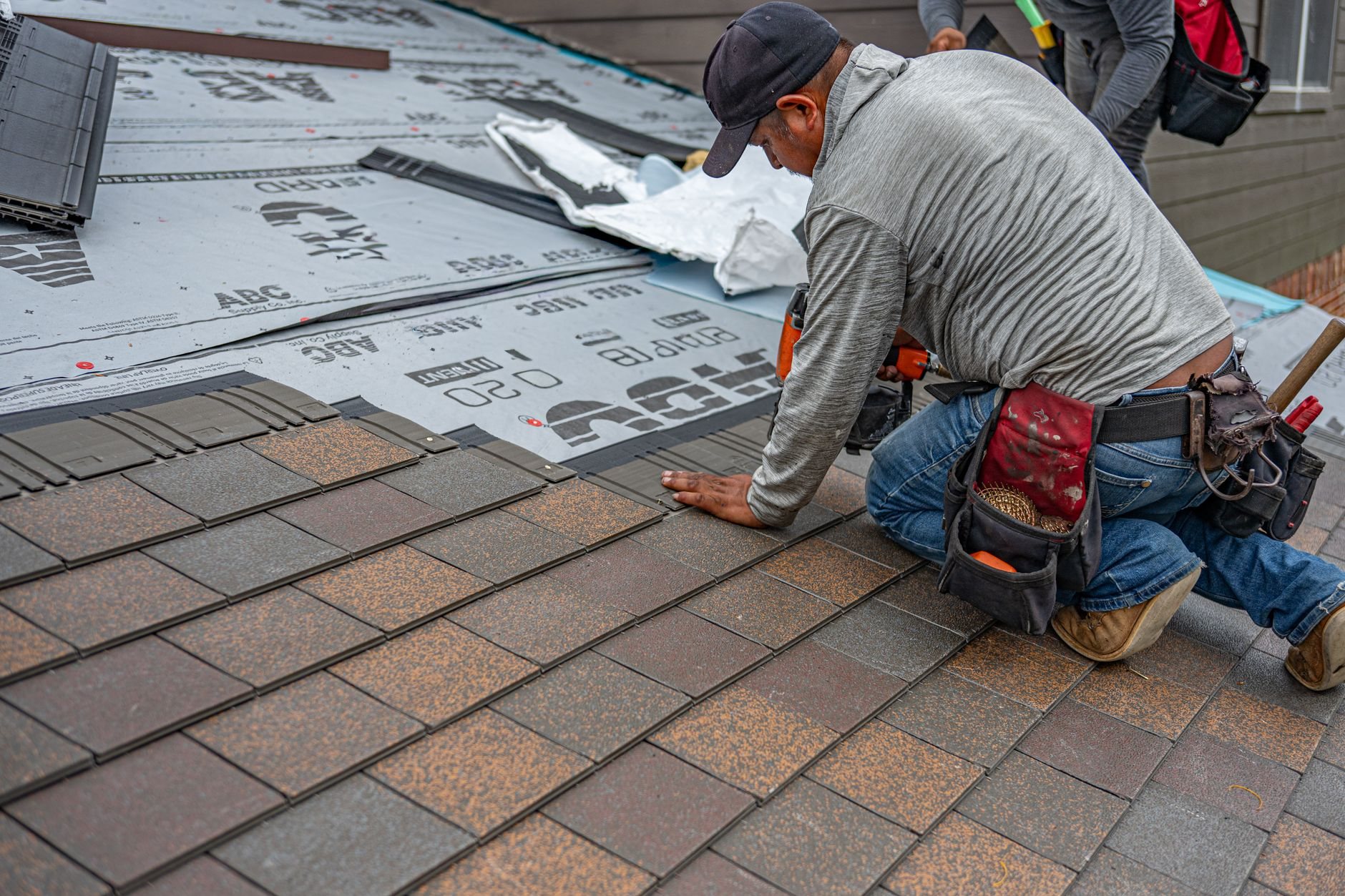
How the dry-in runs on install day
- Deck check. Membrane bonds to clean, dry, sound sheathing or not at all. Soft OSB gets replaced, at the unit price in your scope, before the first roll opens.
- Drip edge at the eaves. Drip edge first at the eaves so the membrane laps over it; at the rakes the order reverses.
- Membrane, bottom up. Eave courses first, then valleys, penetrations, and transitions. Each sheet is rolled firmly so the adhesive wets out; a cold north slope sometimes means waiting for sun or priming the deck.
- Field underlayment. Synthetic sheet from the eave up, 4-inch side laps and 6-inch end laps, cap-nailed tighter in high-wind zones.
- Photograph before cover. Every slope gets photographed before shingles go on. You get those photos — the only proof the ice barrier exists once the roof is finished.
A full dry-in is a half day to a day on most homes, and the roof is watertight from that point even if the covering waits.
What does ice-and-water shield cost in Utah?
As a ballpark planning number, ice-and-water shield installed within a re-roof runs about $1.50 to $3.00 per square foot of covered area, and synthetic underlayment about $0.40 to $0.80 — on a typical Utah County home, roughly $800 to $2,000 of membrane and $500 to $1,000 of underlayment inside the roofing contract. As a standalone job it means removing and reinstalling the covering, which rarely pencils.
- Coverage area. Eave-and-valley-only is the floor; full-deck membrane, which some owners choose on shaded or low-slope roofs, multiplies the material line.
- Overhang depth and pitch. Deep overhangs and shallow pitches push the warm-wall line further up the roof, adding courses.
- Valleys and penetrations. A cut-up roof with six valleys uses far more membrane per square than a simple gable.
- High-temperature membrane. Under standing-seam metal, standard membrane can soften and bleed; a high-temp product costs more and is the right spec.
These are planning numbers, not promises. A written scope with real figures follows the inspection.
Questions we actually get
Is ice-and-water shield required in Utah?
Along the Wasatch Front, yes in practice. Current Utah-adopted residential code requires an ice barrier at the eaves wherever ice has a history of forming along them, extending at least 24 inches inside the exterior wall line. Every city from Payson to North Salt Lake has that history; verify specifics with your city building department.
Will ice-and-water shield stop my ice dams?
It stops the water a dam backs up from reaching your ceiling; it doesn’t stop the dam. Ice dams form when attic heat melts roof snow that refreezes at the cold eave, and the fix is air sealing, insulation, and balanced ventilation — the Department of Energy’s air-sealing guidance is a good start. We recommend doing both while the roof is open.
Can you install membrane over my existing shingles or felt?
No. Self-adhering membrane needs a clean, dry, bare deck to bond; over old roofing it voids the warranty and traps moisture. If the roof isn’t coming off, a roof leak repair at the failure point is the honest option, and the membrane upgrade waits for the next replacement.
Does the membrane need to be covered quickly?
Yes. Most membranes are rated for 30 to 90 days of UV exposure, synthetic underlayment for 60 to 180, and at 4,500-plus feet that clock runs faster. We sequence the dry-in so the covering follows within days; on an architectural shingle roof it’s usually the same week.
We scope underlayment inside the full roof system — see roofing for replacement, repair, and material choices, or the wider site, structure & envelope family. Our B100 license is verifiable at Utah DOPL.
Tell us what your eaves are doing
A stain that shows up every February, or a re-roof quote that’s vague about what goes under the shingles — we’ll inspect, photograph, and give you a straight read. We reply within a couple of hours during business hours, a day at most.