
Pool Equipment Enclosures in Utah
A pool equipment enclosure is a screen, shed, or small room that hides the pump, filter, and heater, knocks down the noise, and keeps the gear serviceable through a Utah winter. Grandview designs and builds them under a B100 general contractor license, sized around the equipment you actually own rather than a catalog drawing.
When an enclosure is the right call
Pool equipment is loud and usually parked on the side of the house closest to a bedroom window or a neighbor’s patio. If you can hear the pump from the dinner table, an enclosure is the fix. It’s also the right call when the HOA has asked you to screen the pad, or when a heater and salt cell are taking a beating from sun and sprinkler overspray.
It is not the same project as a pool house or cabana. A cabana is a building for people. An equipment enclosure is a building for machines, and the rules flip: airflow over comfort, access over looks, nothing sealed tight. If you want both, we design the equipment bay into the cabana’s back wall so one roof does two jobs.
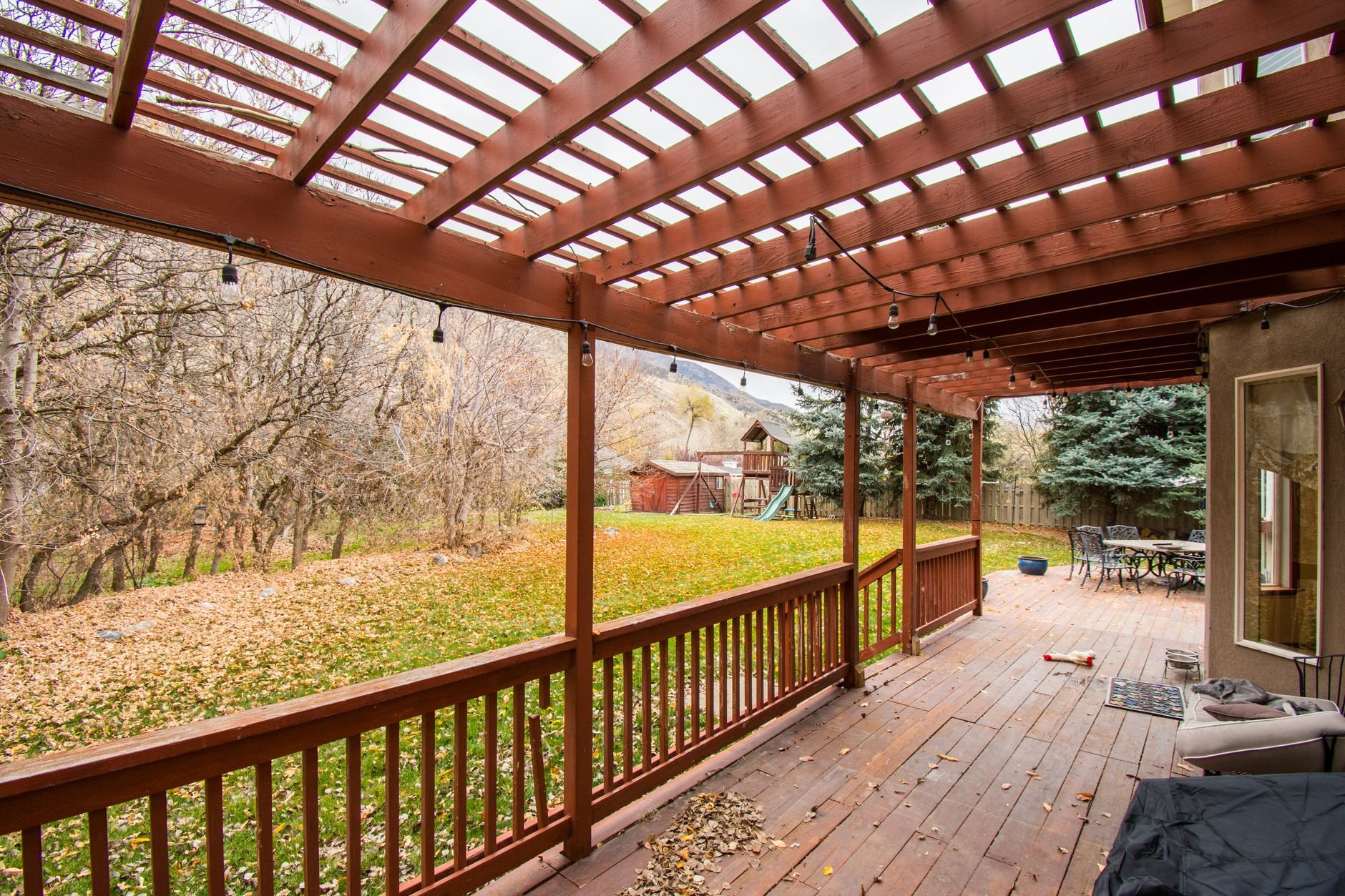
Three variants cover nearly every yard. An open-top screen is three slatted walls on posts — cheapest, best airflow, hidden from the deck but not from upstairs. A roofed lean-to adds a shed roof and a gate, shading the heater and keeping snow off the pump. A full equipment room is a small shed with a lockable door, finished floor, and a light — the choice for automation panels and anyone who services their own pool in January. Any of them can match a nearby covered patio or screened patio.
What goes into a pool equipment enclosure
Clearances come first. A gas pool heater needs combustion air and a clear exhaust path, and every manufacturer publishes minimum distances to walls and overhangs — we lay the enclosure out to those numbers before framing. Heat pumps need even more open air around the coil. A cartridge filter needs headroom to lift the element straight out of the tank, often a foot and a half or more, which rules out a low roof directly over it.
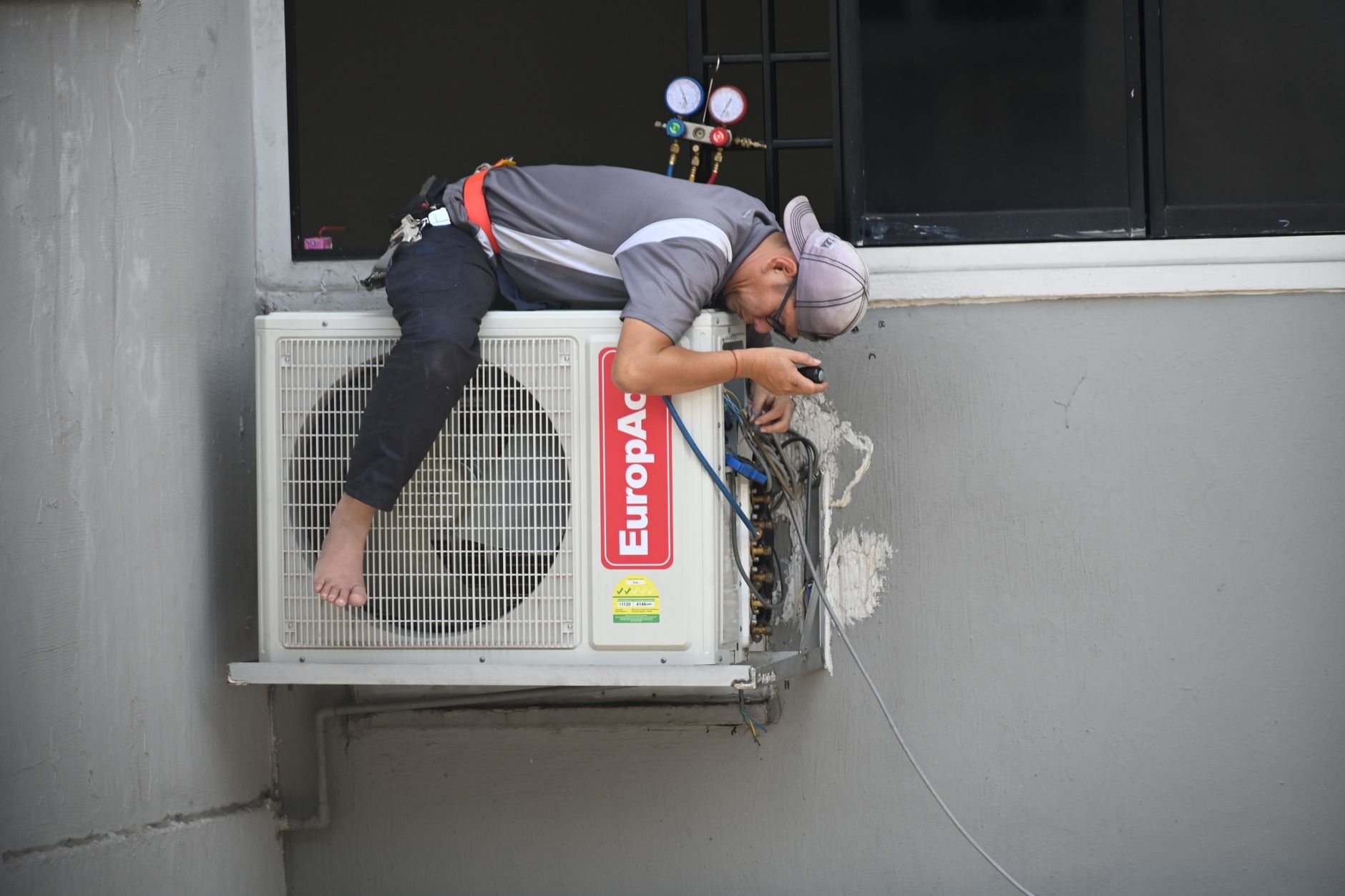
The service path is a design decision. A pool tech should reach the pump basket, pressure gauge, multiport valve, and filter clamp without crawling. We build at least one removable or hinged panel wide enough to walk a replacement filter tank through, and keep the automation panel at eye level by the door. Winterizing in Utah means pulling drain plugs every fall, so the plugs face the open side.
Drainage and the pad. Backwash, a leaking pump seal, and the fall drain-down all put water on the floor, so the pad slopes out of the enclosure and slatted walls stay off the slab where they’d wick. Along the Wasatch Front that pad sees a hundred-plus freeze-thaw days a year; any new concrete under the equipment is an air-entrained mix.
Air and chemicals. Slatted or louvered walls with open bottoms keep air moving across the motor and heater. Chlorine, acid, and salt never share a sealed space with that equipment — the vapor corrodes terminals and heater cabinets faster than weather does. A full equipment room gets a separate ventilated chemical cabinet, or no chemicals at all.
Materials. Cedar slat screens are the common choice and take a UV-rated finish, because Utah’s elevation bleaches raw cedar grey within a couple of seasons. Powder-coated aluminum louvers and composite boards cost more and skip the refinishing. Beside a stucco or block house, a low masonry wall with a slatted top blends in better than wood. In canyon-wind corridors like Centerville and Farmington, louvers get through-bolted hardware, not finish nails.
Electrical. Pumps, lights, and heaters sit on bonded, GFCI-protected circuits, and a new enclosure often means relocating a disconnect or adding a light and outlet. Grandview holds the contract and coordinates licensed electricians for that work; we sequence it, keep the bonding intact, and quality-check it before the panels go on. If you’re replacing the pump at the same time, federal efficiency rules pushed most new pool pumps to variable-speed models, which run quieter at low speed.
What drives the cost of a pool equipment enclosure in Utah?
Footprint, roof, and electrical. An open-top cedar screen on posts is a short project; a roofed room on a new pad with a door and relocated disconnect is a small building. As ballpark planning numbers, not quotes: slatted screens commonly land in the low thousands, roofed lean-tos several thousand more, and a finished equipment room with electrical and a new pad can reach the mid-teens.
- Equipment count — a heater plus a spa pump means a bigger footprint
- New concrete pad versus a sound existing one
- Roofed or open — a roof adds snow-load framing on bench lots and often a permit
- Cedar slats, composite, aluminum louvers, or a masonry base
- Electrical scope: a light and outlet versus relocating the disconnect
An enclosure is often built alongside a pool safety fence or new pool deck concrete; combining them gets the pad poured before the fence posts go in. For the pool itself, see in-ground pool construction; for every shelter we build, pergolas and outdoor structures and the site, structure, and envelope hub. Our B100 license is verifiable at dopl.utah.gov.
Questions we actually get
Can you fully enclose a gas pool heater?
Not tightly. A gas heater needs combustion air and an unobstructed exhaust path, and the manufacturer’s clearances to walls and overhangs govern the layout. We design louvered walls and roof height to those published distances and confirm them against your installed model before framing.
How much quieter will the pump be?
Noticeably, but an enclosure blocks line-of-sight sound rather than erasing it. Solid lower panels with a slatted top do the most, and a sound-dampening liner on the house-facing wall helps. A variable-speed pump at low RPM usually cuts more noise than the enclosure itself.
Does a pool equipment enclosure need a permit in Utah?
Often not for an open-top screen, often yes for a roofed structure or one with new electrical — thresholds vary by city, so verify with your local building department. Electrical changes on pool circuits are inspected regardless. We confirm the requirement at the site visit and handle the application when one is needed.
Will the enclosure get in the way of winterizing?
It shouldn’t, and that’s a design test we apply. Drain plugs, the filter clamp, and the blow-out port face the open or hinged side, the roof leaves headroom to pull the filter element, and the floor drains out, not in. If a tech has to remove panels every fall, the enclosure was laid out wrong.
Tell us what you’re working on
We reply within a couple of hours during business hours — a day at most. You’ll get a straight read on scope, sequence, and budget before anyone commits to anything.