
Post-Tension Slab Foundations & Cable Installation in Utah County
A post-tension slab is a monolithic concrete foundation reinforced with high-strength steel cables that are tensioned after the concrete cures, squeezing the slab into compression so it bridges ground that heaves or settles instead of cracking with it. It’s the slab for expansive clay lots and large single-level buildings, and Grandview builds them across Utah County under a DOPL B100 general contractor license.
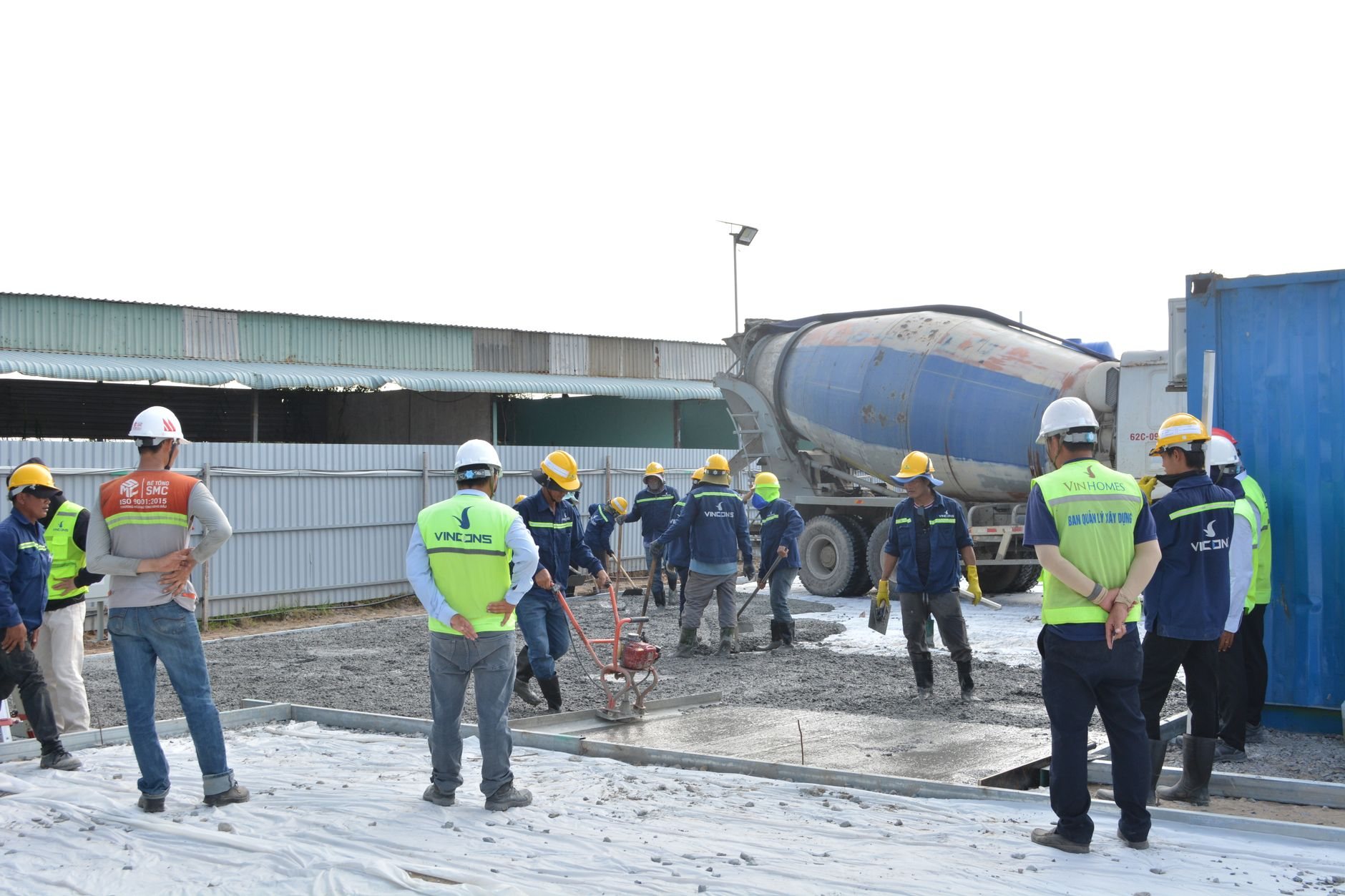
When a post-tension slab beats a conventional slab
A conventional slab-on-grade foundation uses rebar or mesh to hold cracks together after they form. A post-tension slab is designed so they don’t form: once the tendons are stressed, the slab sits under roughly 100 to 150 psi of compression and behaves as one stiff plate, spanning soft spots and resisting seasonal swelling.
That’s why it earns its keep on expansive clay. Much of the Utah County valley floor, from Lehi through Orem to Springville, sits on clays that swell when saturated and shrink when dry; the Utah Geological Survey maps them at geology.utah.gov. When the geotech report calls for tolerating differential movement, the engineer’s options are over-excavation and imported fill, lifting the structure onto a pier-and-beam or grade-beam system, or stiffening the slab itself with post-tensioning. The PT slab is often the cheapest of the three.
It also suits warehouses and commercial pads regardless of soil, where fewer control joints mean fewer places for forklifts to chip. A modest garage on stable gravel is better served by a plain slab or stem-wall foundation, and a PT slab is a single-level system by nature.
What’s actually inside a post-tension slab
Residential and light-commercial PT slabs use unbonded monostrand tendons: half-inch, seven-wire steel strand rated at 270 ksi, greased and sealed in a plastic sheath so it slides through the concrete when pulled. Each tendon ends in a steel anchor cast into the slab edge — a fixed dead end on one side, a stressing live end on the other. The engineer lays out two perpendicular tendon grids, usually two to five feet apart, in one of two slab shapes:
- Ribbed slab. A four-to-five-inch slab stiffened by perimeter and interior beams trenched into the subgrade, typically 12 to 30 inches deep on a 10-to-15-foot grid. The standard design on heaving soils.
- Uniform-thickness slab. A thicker flat plate with a thickened edge and no interior ribs, chosen where movement is mild or the floor is a commercial pad.
Under both sits a compacted, moisture-conditioned subgrade and a vapor retarder; on clay, steady soil moisture under the slab matters as much as the steel inside it. Tendons ride on chairs at the engineer’s profile heights, with rebar only around anchors, re-entrant corners, and openings. Detailing follows the Post-Tensioning Institute’s slab-on-ground standards (post-tensioning.org), which Utah engineers reference by name on the drawings.
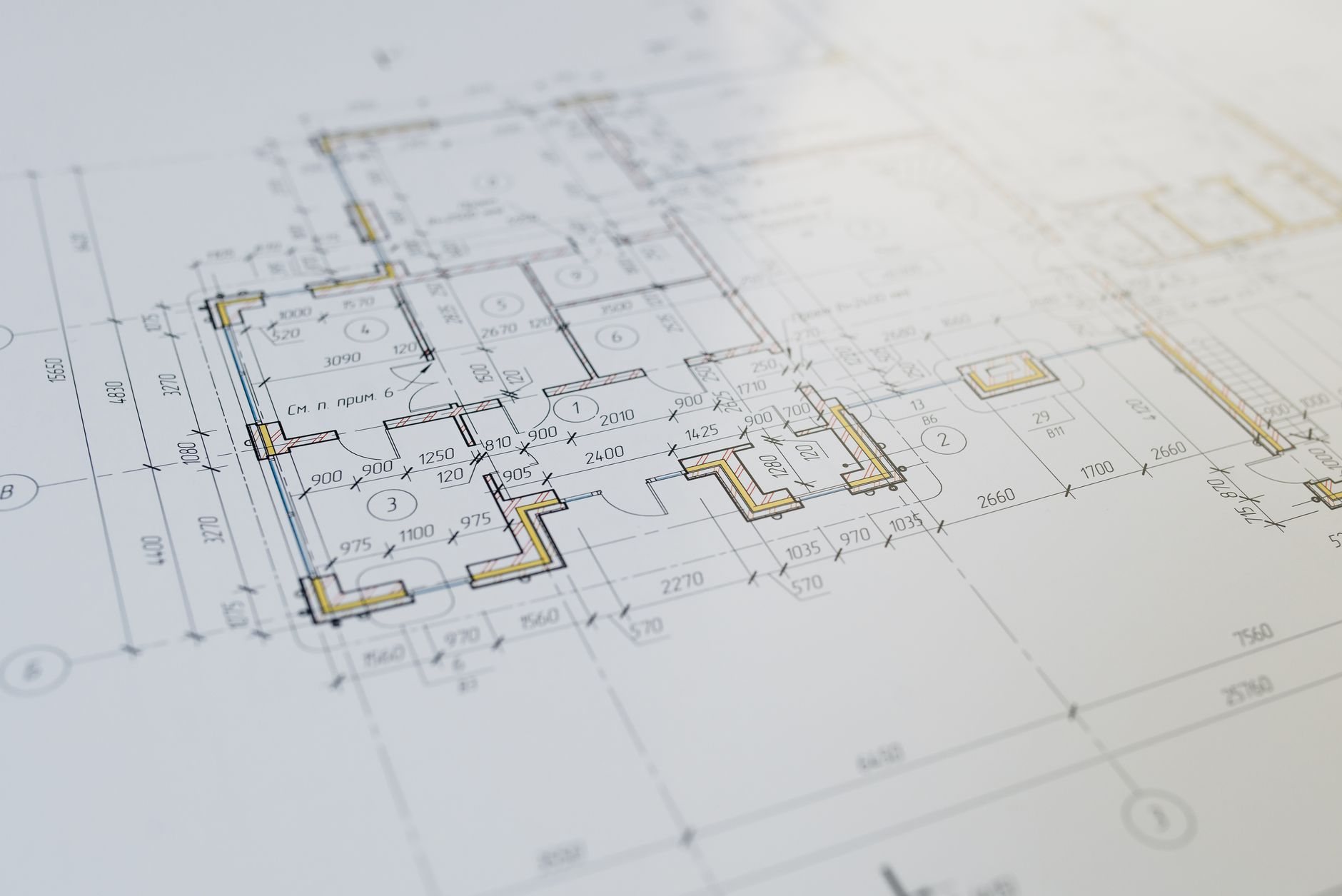
How the pour and the stressing are sequenced
- Prepare the pad. Trench the beams, compact, and moisture-condition the subgrade per the geotech. Every plumbing sleeve and conduit goes in now, because nothing gets cut into this slab later.
- Place tendons and anchors. Tendons are laid to the stamped plan, chaired to profile, and live-end anchors nailed to the forms with pocket formers. The special inspector checks placement before the truck is called.
- Pour monolithic. Slab and beams go in one continuous placement, pumped, vibrated around every anchor, and finished. Exposed edges get an air-entrained mix, because the Wasatch Front sees 100-plus freeze–thaw cycles a year.
- Stress the cables. Once field-cured cylinders confirm the concrete has reached the specified strength — commonly 2,500 to 3,000 psi, three to seven days after the pour — a hydraulic jack pulls each tendon to roughly 33,000 pounds. Every strand’s elongation is measured and recorded; the engineer compares it to the calculated value, and anything out of tolerance is restressed before work moves on.
- Cut, cap, and grout. Tendon tails are cut, anchor pockets get grease caps and non-shrink grout, and the slab edge gets its permanent post-tensioned warning stamp. Framing starts when the engineer signs the stressing report.
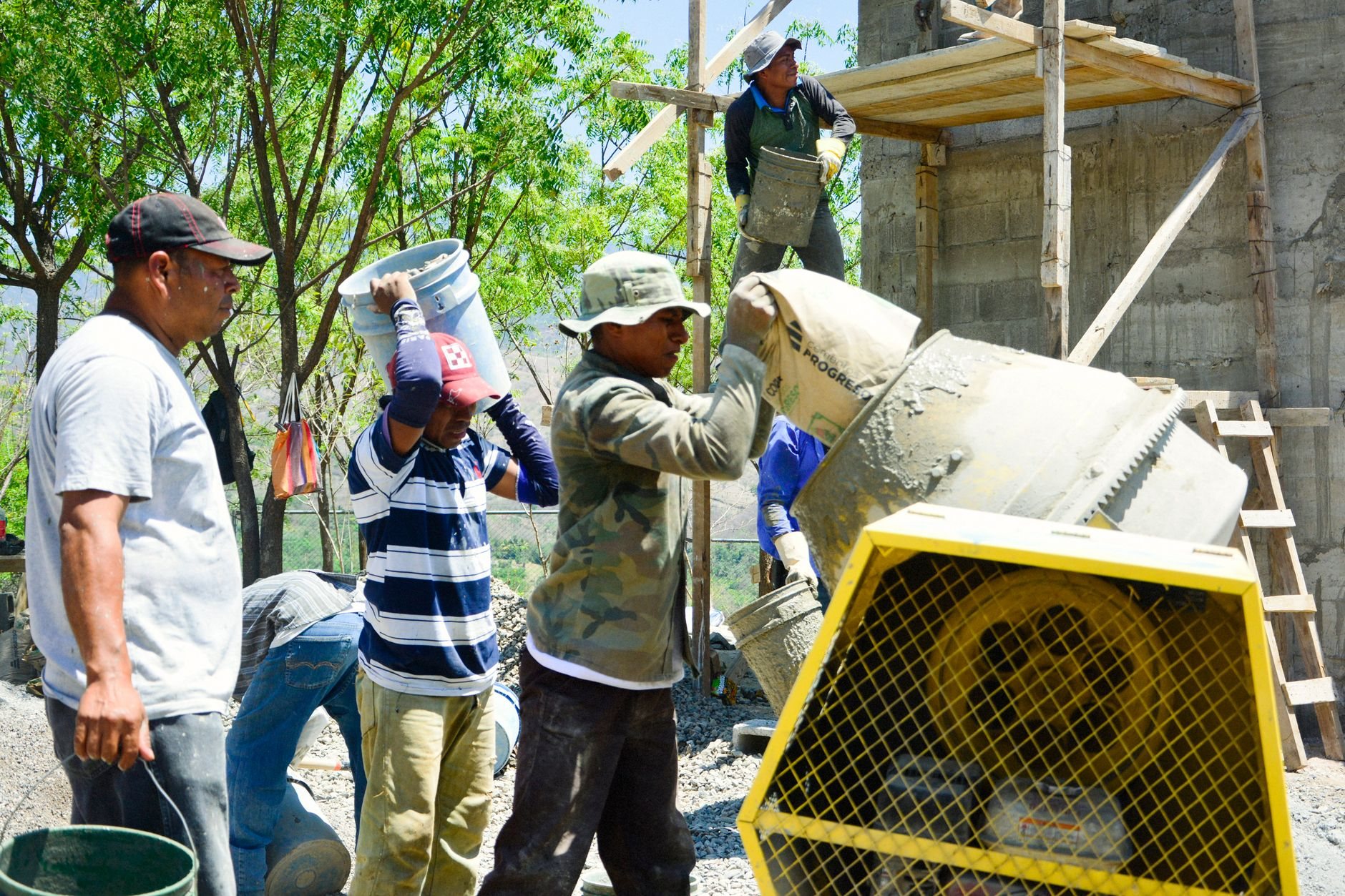
What does a post-tension slab cost in Utah?
As a planning ballpark, a post-tension slab runs roughly 10 to 25 percent more than a conventional reinforced slab of the same footprint — tendons, anchors, PT engineering, stressing crew, and extra inspection. On expansive clay it often costs less overall, because it replaces the over-excavation and imported fill a plain slab would need on the same ground. Planning numbers, not promises.
- Slab shape. A ribbed slab means long runs of beam trenching and more concrete than a uniform plate; the geotech’s movement estimate decides which you get.
- Footprint geometry. Simple rectangles stress efficiently; L-shapes and many openings add tendons, anchors, and detailing.
- Pour logistics and schedule. A monolithic pour needs a pump, enough trucks, and a crew sized for the yardage; cold weather stretches the cure-to-stress wait.
We give a budget range after a site walk and the geotech report, and a firm estimate once the PT engineering is stamped. Footings, columns, and the rest of a larger structure continue under structural concrete. This is one system within our foundation construction work in the site, structure & envelope family; a slab you already own that’s moving belongs under foundation repair. Our license is verifiable at dopl.utah.gov — #14282236-5501.
Questions we actually get
Can I cut or core a post-tension slab later for plumbing or an addition?
Not without locating the tendons first. A stressed cable carries about 33,000 pounds, and hitting one with a saw is dangerous and costly to repair. Any future core or sawcut needs a GPR scan to map the cables and an engineer’s sign-off.
Why does the slab have to wait before the cables are stressed?
The anchors bear on the concrete around them, and green concrete crushes under that load. Stressing waits until field-cured cylinders reach the specified strength — typically 2,500 to 3,000 psi, three to seven days in summer and longer in cold weather. Stressing early cracks the slab you paid to keep crack-free.
Is a post-tension slab common in Utah, or is this a Texas thing?
It’s more common in Texas and Arizona, where expansive clay is nearly universal. Along the Wasatch Front it’s a site-specific call: most lots get a conventional slab or a basement, and a PT slab is specified where the geotech flags expansive or variable soils. Utah County building departments see enough of them that inspection is routine.
Tell us what you’re building on
Send the geotech report, the plans, or just the lot address. You’ll get a straight read on whether a post-tension slab fits your soil and what it should cost — usually within a couple of hours during business hours, a day at most.