
Post-Fire & Post-Flood Demolition in Utah County
Post-fire and post-flood demolition is the controlled removal of charred, soot-laden, or water-saturated materials so a damaged building can be dried, inspected, and rebuilt. Grandview performs it across Utah County and the Salt Lake Valley under a B100 general contractor license, sequenced around your insurance adjuster, the city, and the rebuild that follows.
When damage demolition is the right scope
This is the right scope when a fire or flood has already decided what comes out, and the job is to remove exactly that without destroying the evidence your claim depends on. Standard selective interior demolition follows a remodel plan; damage demolition follows a char line, a water line, and a moisture meter.
If the fire took the roof structure and the insurer has written the building off, you need full-structure demolition instead. If the survey finds asbestos in burned ceiling texture or flood-soaked floor tile, the job runs through hazmat-coordinated demolition first. Most losses sit between: the structure is worth keeping, and the question is how much of its skin and systems have to go.
What post-fire demolition involves
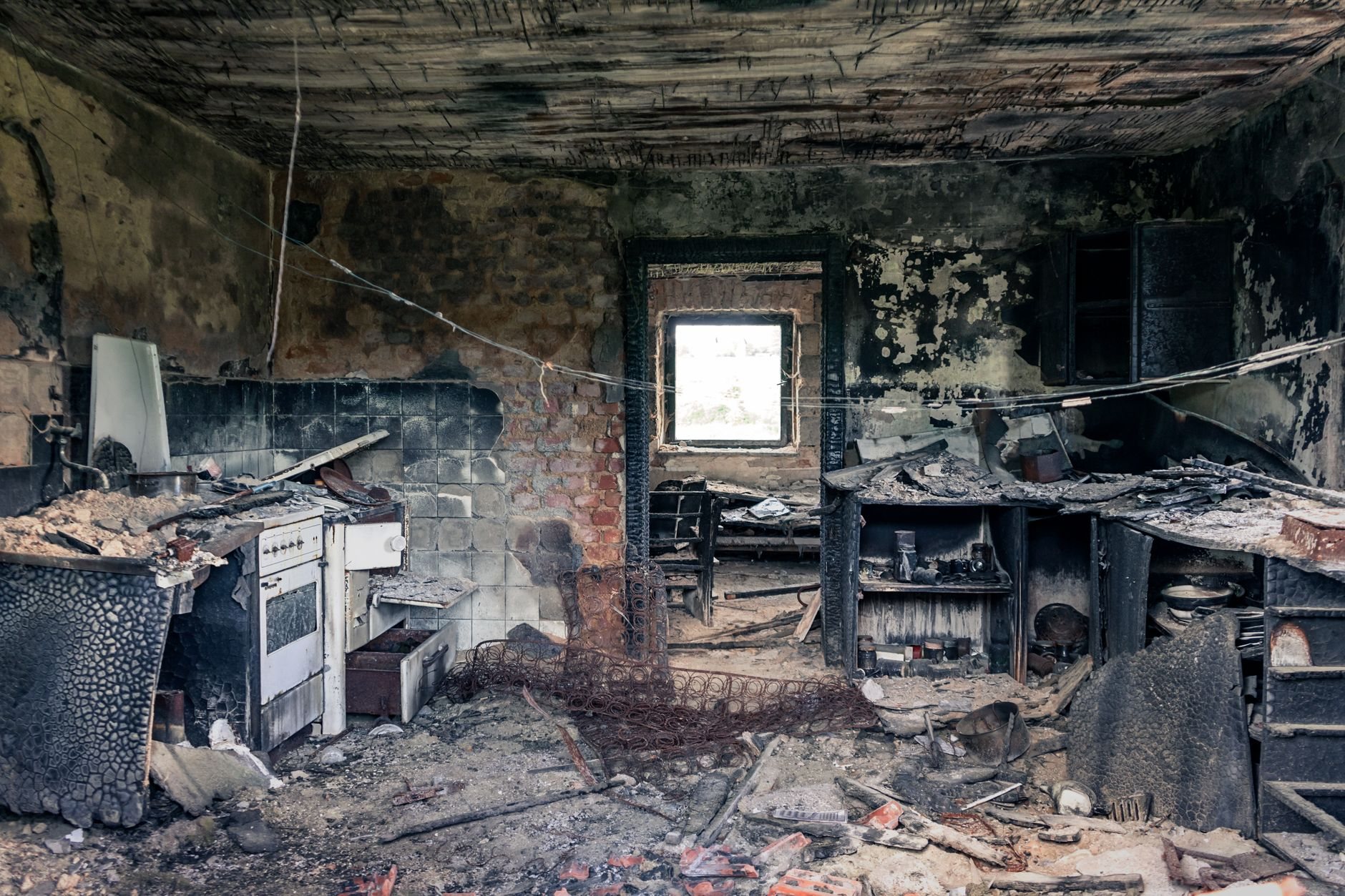
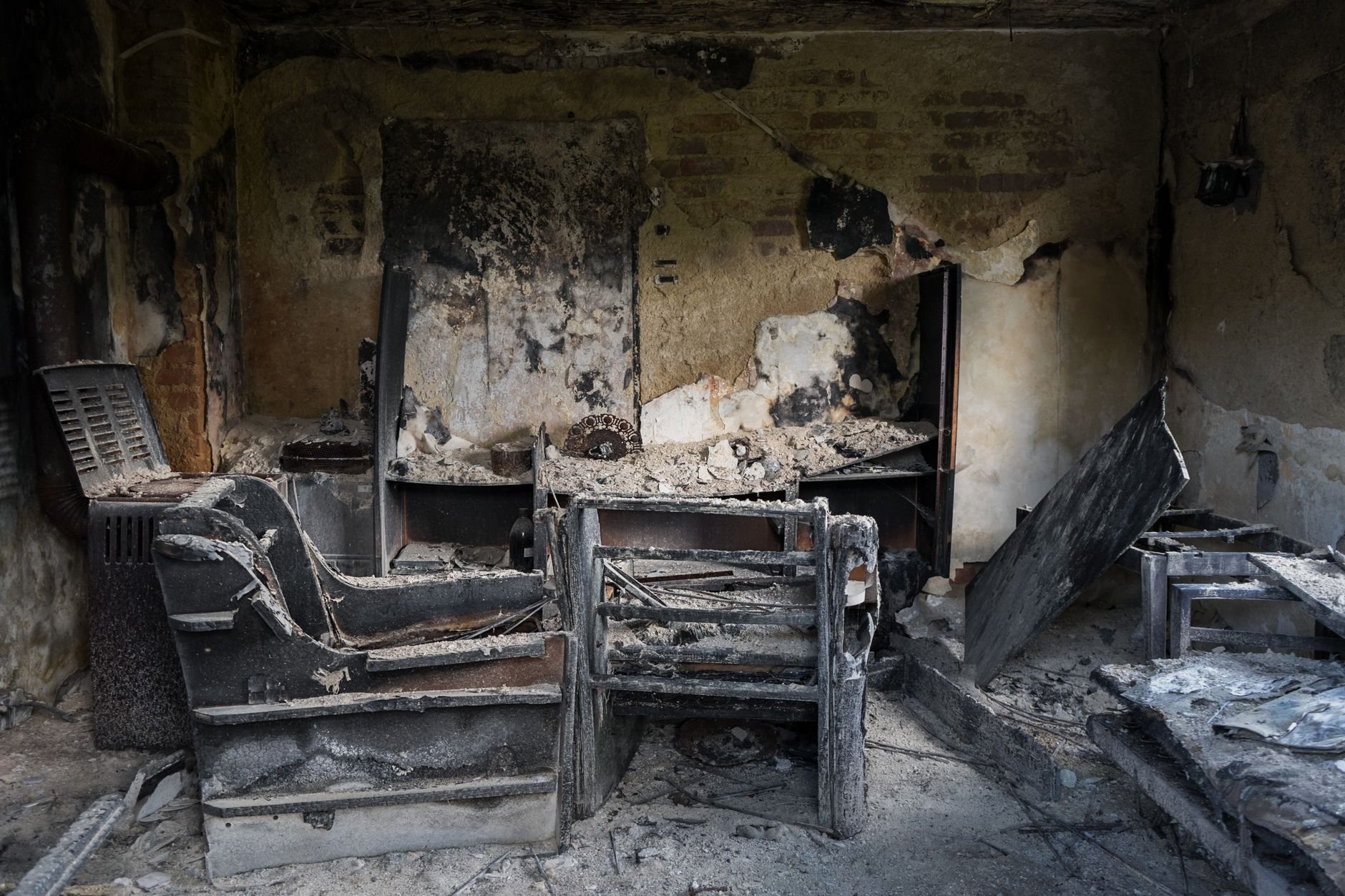
Fire damage runs in three layers, each with its own removal rule. Charred structure is replaced or sistered depending on char depth — a joist that has lost a meaningful share of its section is replaced, not sanded. Soot-contaminated finishes — drywall, insulation, carpet, anything porous in the smoke path — come out because the corrosive residue doesn’t clean out of them. And everything the fire department soaked is treated as a water loss on top of a fire loss.
Nothing is removed until the adjuster has released it in writing, the utilities are confirmed dead at the meter, and a licensed electrician has made the panel safe. Heat-damaged masonry is checked for spalling and cracked lintels; heat-warped steel is tagged for replacement, not straightened. Debris leaves bagged or in lined containers, and the shell gets a HEPA clean before deodorizing begins. We hold the contract and coordinate that cleaning and any fire damage reconstruction that follows. On bench lots where the fire began outside, the envelope comes first — vented soffits, ember-pocketed decks, and melted siding come off and the openings are weathered-in the same day.
What post-flood demolition involves
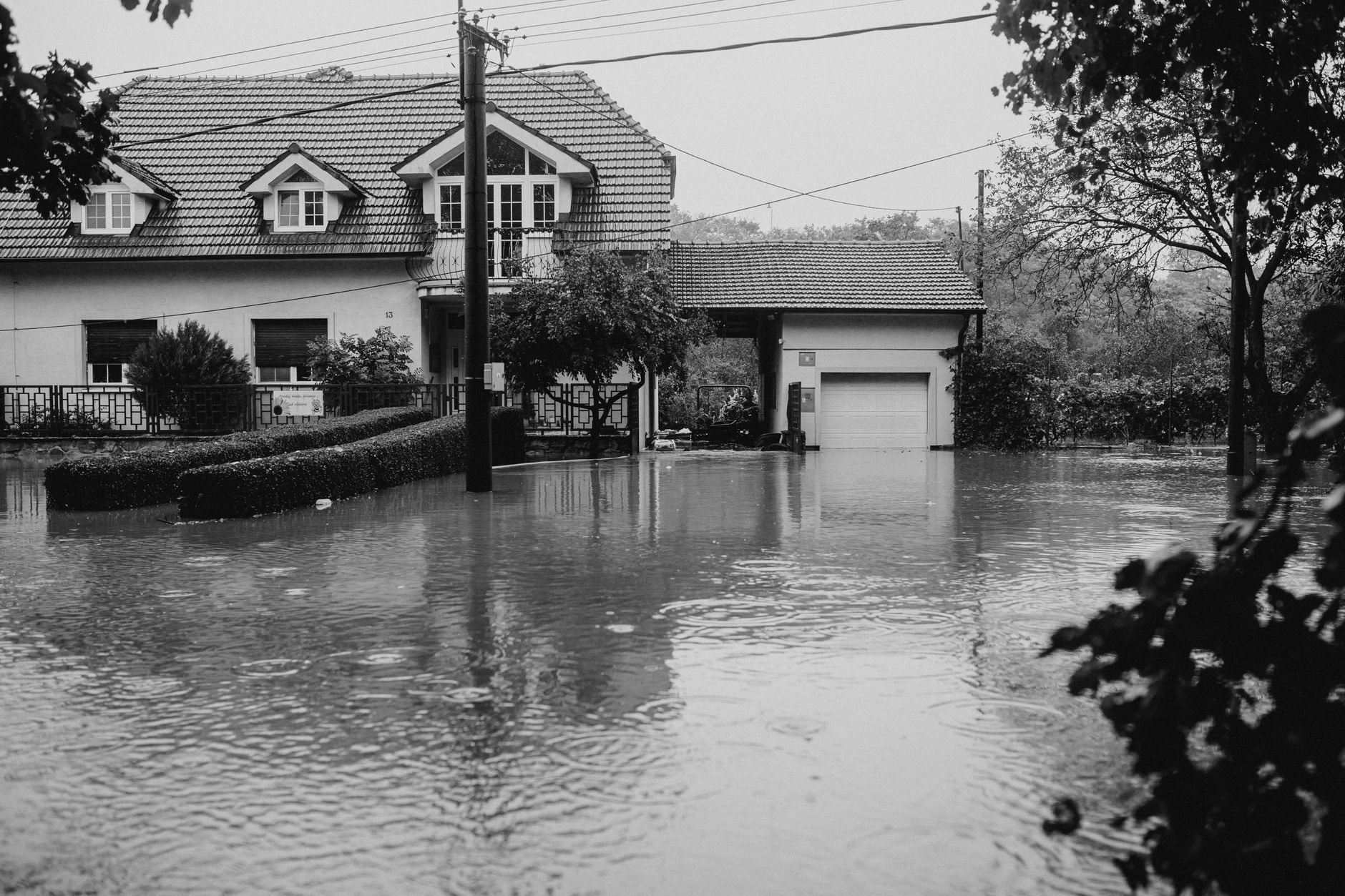
Flood demolition is defined by the water line and the water category. The standard flood cut removes drywall and insulation to a clean line 12 to 24 inches above the highest wet mark so the cavity can dry and be inspected. Cabinets, base trim, and flooring come out; subfloor follows if sheathing readings won’t drop. Water that carried sewage or groundwater is contaminated, and what it touched is disposed of, not dried.
Along the Wasatch Front, most flood losses are basement losses. Finished basements are common here, and spring snowmelt runoff, mapped floodplain creeks, and summer monsoon cloudbursts all reach below grade first. Basements are stripped to the foundation wall so the concrete can be assessed, window wells and drains are cleared, and the dry-out is verified by meter before water damage restoration starts. Where floodwater has saturated the collapsible soils common on bench lots, we also check for fresh settlement cracks — a wet foundation on loose silt can move after the water is gone.
How we sequence a damage demolition
- Make it safe. Utilities confirmed off, temporary shoring under fire-weakened framing, weather protection over open roofs and windows.
- Document and release. We walk the loss with your adjuster, photograph room by room, and get written release before removal.
- Survey. A fire does not cancel Utah’s asbestos-survey requirement. Licensed inspectors survey, licensed abatement contractors clear anything positive, and the state notification is filed where the scope requires it.
- Remove to the line. Char line, flood line, or moisture reading — the scope is marked on the wall before a saw touches it.
- Clean, dry, verify. HEPA cleaning, drying equipment, and meter readings logged until the shell is ready.
- Hand off. A written record of what came out, what stayed, and why — so framing repair and finish work start from facts, not guesses.
An interior strip-out often rides on the rebuild’s building permit; removing structure usually needs a demolition permit — verify with your city’s building department or let us file it. The whole sequence runs under one scope through our demolition service, inside site, structure & envelope.
What does fire or flood damage demolition cost in Utah?
As ballpark planning numbers only: flood cuts and basement strip-outs along the Wasatch Front commonly run $3 to $8 per square foot of affected area including disposal; fire demolition with structural removal, bagged debris, and HEPA cleaning often lands between $8 and $20 per square foot. Insurance usually covers demolition as part of the loss; we price it in a written scope your adjuster can read.
- Contamination category. Clean water is dried; sewage or groundwater means everything it touched is disposed of. Heavy soot raises the line the same way.
- Structural extent. Replacing charred joists or rafters under shoring costs far more than removing finishes alone.
- Hazardous materials. A positive asbestos survey adds licensed abatement before demolition can proceed.
Questions we actually get
Can demolition start before the insurance adjuster has been through?
Only the safety work — shutting utilities, shoring, and weathering-in openings. Removing damaged materials before the adjuster documents or releases them can reduce what your claim pays. We photograph everything, work from the release, and keep a written log of what came out.
Does a burned house still need an asbestos survey?
Yes. Fire doesn’t exempt a building from Utah’s asbestos-survey requirement, and heat can make regulated materials easier to release into the air. Any building from before the 1980s gets surveyed by a licensed inspector before removal starts, and anything positive is abated by licensed specialists first.
How high do you cut drywall after a flood?
Typically 12 to 24 inches above the highest water mark, on a clean horizontal line, so the cavity can dry and the new drywall patches to a straight seam. If insulation wicked water higher than the mark, the cut follows the moisture readings instead of the stain.
What drives the cost of post-fire demolition the most?
Whether structure has to come out. Finishes are removal and disposal; charred framing means shoring, engineered replacement, and often a longer permit path. After that, it’s soot depth and whether firefighting water created a second loss below the fire floor.
Tell us what the damage looks like
Send the address, a few photos, and your claim status. We’ll give you a straight read on scope, sequence, and budget — usually within a couple of hours during business hours, a day at most.