
Fire and smoke damage reconstruction in Utah County
After a fire, mitigation crews clean, demo, and dry — then someone has to rebuild. Grandview is a licensed Utah general contractor (B100, DOPL #14282236-5501) that reconstructs fire- and smoke-damaged homes and buildings from structural framing to final paint, in step with your insurance adjuster.
Owners standing in a building that smells like the worst day it ever had
Most fire reconstruction calls come from three places. A homeowner after a kitchen, garage, or electrical fire — the flames stayed in one or two rooms, but smoke went everywhere the air did. A landlord or property manager with a burned unit that’s bleeding rent every week it sits stripped. Or a commercial owner whose building took real structural damage and needs an honest answer to the hardest question in this trade: repair it, or take it down and rebuild.
In every case you’re juggling a claim, a schedule, and a building you can’t use. Our job is to give you one accountable contractor for the rebuild — scoped in writing, documented with photos, and licensed under a Utah DOPL B100 you can verify yourself at dopl.utah.gov.
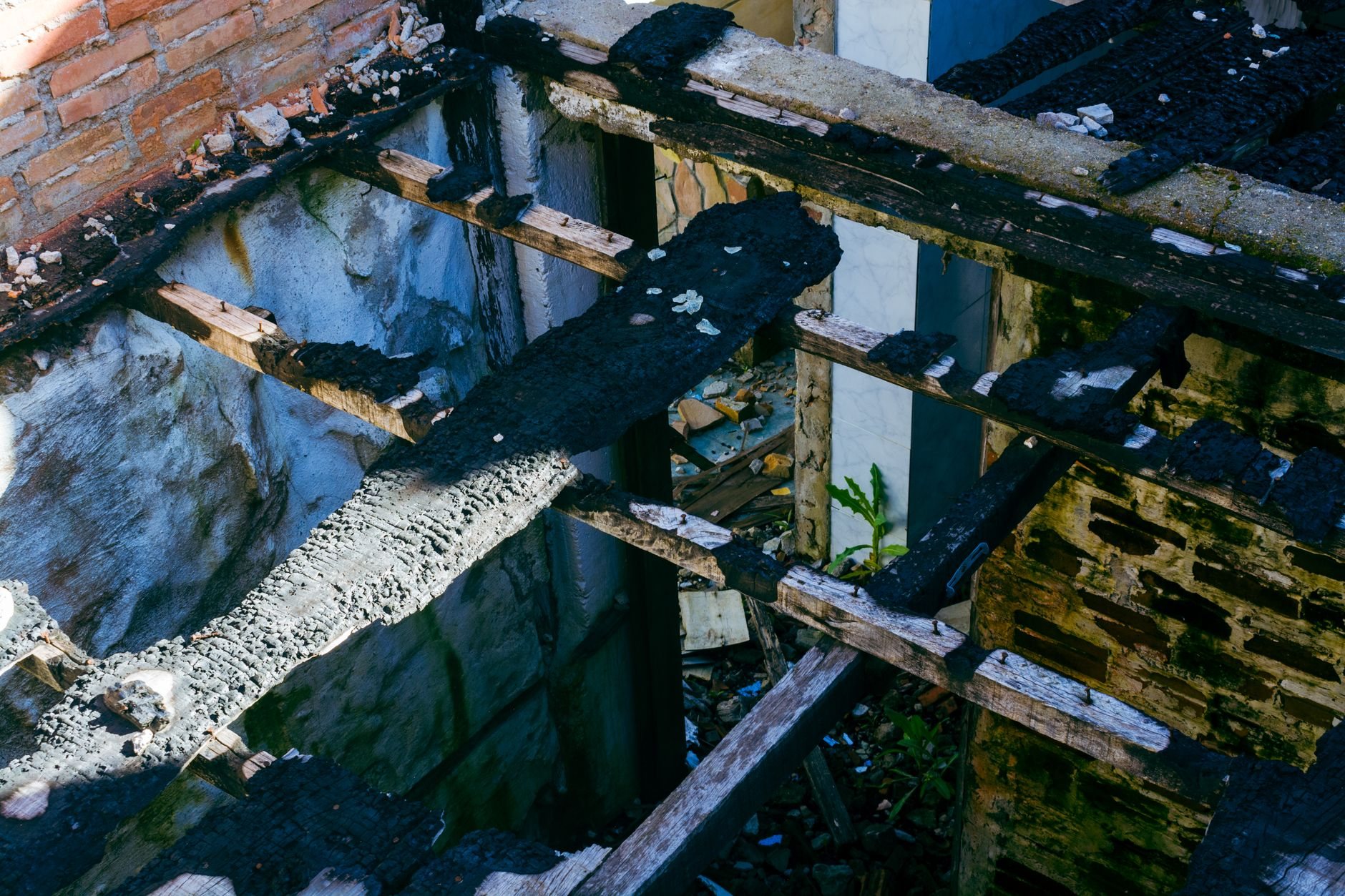
What happens after the fire trucks and the mitigation company leave?
Mitigation stops the loss; reconstruction rebuilds the building. A mitigation company handles emergency cleanup — soot removal, water extraction from firefighting, contents pack-out, and demo of burned or smoke-saturated materials. When they finish, you have a structure stripped to framing and subfloor. Reconstruction is licensed general contractor work: structural repair, systems, insulation, drywall, finishes, permits, and inspections.
The handoff between those two phases is where fire projects stall. The mitigation scope ends, the carrier is still processing the claim, and nobody owns the rebuild yet. We’d rather be in the building early — walking it during or right after mitigation, so the reconstruction scope is written and reconciled with your adjuster before the drying equipment even leaves. If the fire just happened and the building is open to weather or trespass, start with emergency stabilization and board-up; securing the structure protects both the property and the claim.
One more thing owners are often surprised by: fires are wet losses too. Thousands of gallons of firefighting water go into the structure, so the rebuild frequently includes the same moisture-driven scope as a water damage restoration — verified dry framing before anything gets closed up.
Repair the structure, or demolish and rebuild?
The honest answer: it depends on char depth, how far smoke traveled, and math. Framing with shallow surface char can often be cleaned, sistered, and sealed. Members with deep char have lost section and strength and must be replaced. When enough of the frame crosses that line — or smoke has saturated cavities you’d have to open anyway — selective repair costs more than stripping to the frame, or to the foundation, and rebuilding.
We don’t make that call by eyeball alone. Where fire has touched structural framing, trusses, or connections, we bring in a structural engineer to assess char depth and remaining capacity, and the repair-versus-rebuild decision gets made on their numbers, not on optimism. Sometimes the answer genuinely is demolition — and if it is, we’ll say so, because a patched frame that shouldn’t have been patched is a liability with drywall over it.
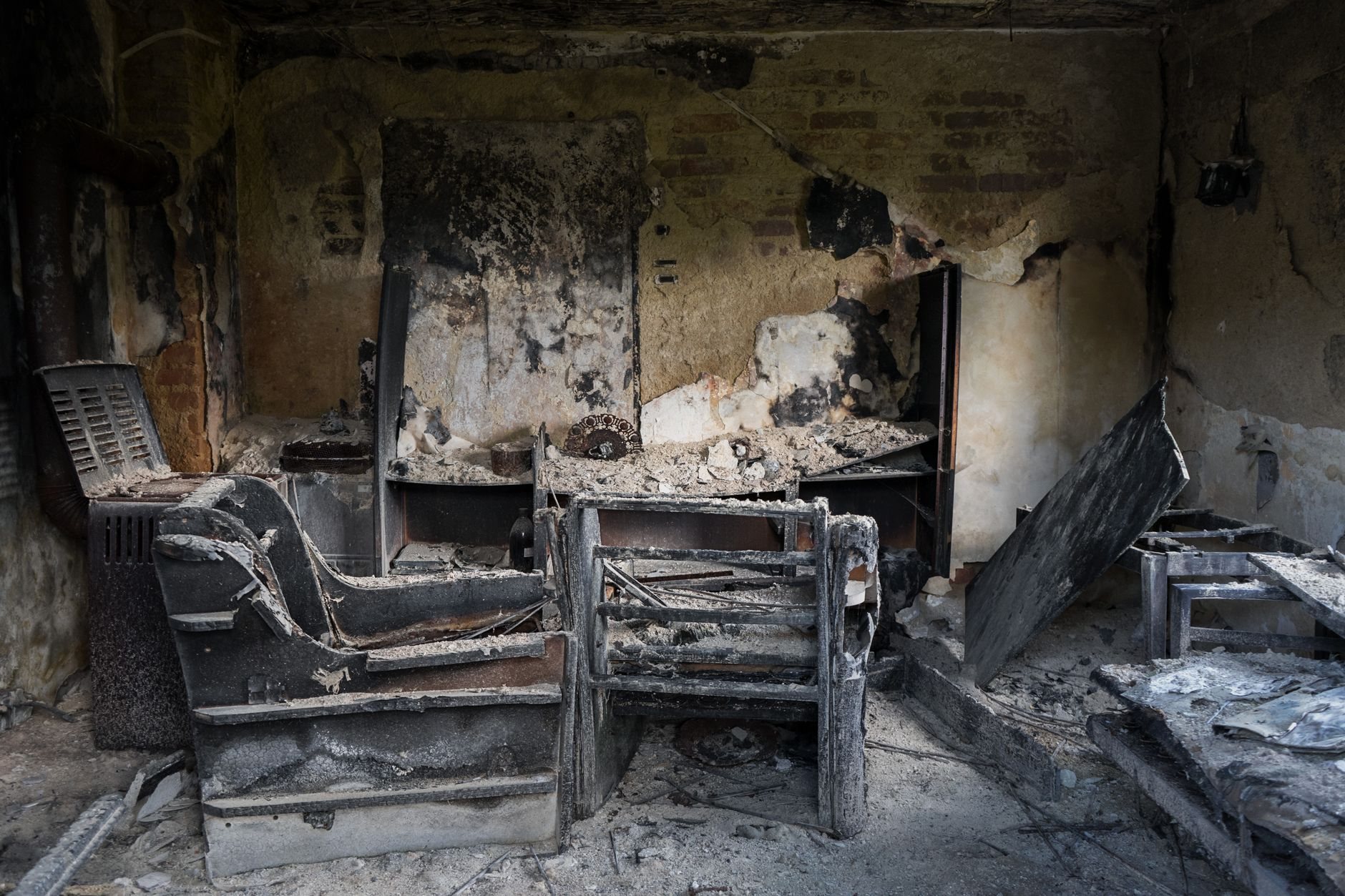
There’s a code dimension to the decision too. Whatever comes out goes back in to current Utah-adopted code, not to the code the building was framed under. Along the Wasatch fault, that often means better seismic anchorage and connection hardware than the original structure had — hold-downs, straps, and anchor bolts that simply weren’t required decades ago. On significant rebuilds, those upgrades are frequently claimable under the ordinance-and-law portion of your policy, which is worth checking before you assume the scope.
What a fire rebuild actually includes
Reconstruction runs from structure to finishes on one contract:
- Demolition of remaining unsalvageable materials, beyond what mitigation removed
- Structural framing repair or replacement, engineered where required
- Sealing salvageable smoke-stained framing with odor-blocking encapsulant primer so the smell doesn’t come back on the first hot day
- Roof sheathing and roofing where fire vented through the roof — with fastening detailed for canyon-wind gusts, not just the minimum schedule
- Insulation, drywall, flooring, cabinetry, tile, trim, and paint
- Exterior siding and finish matching, chosen for Utah’s high-elevation UV so the new wall doesn’t weather differently than the old one
Fire almost always damages building systems — wiring insulation cooks inside walls well beyond the visible burn, smoke contaminates ductwork, and plumbing near the fire can be compromised. That work is done by licensed electricians, plumbers, and HVAC technicians: Grandview holds the contract and manages those trades, sequencing and quality-checking their work within your rebuild. You get one schedule and one point of accountability instead of four phone numbers.
How a fire reconstruction runs, start to finish
- Stabilize. Board-up, temporary shoring, and weatherproofing if the building is open. Nothing else matters if the structure keeps taking damage.
- Assess the structure. We walk the building, and where framing is fire-touched, a structural engineer evaluates char depth and capacity. Repair-versus-rebuild gets decided here, in writing.
- Scope and document. Room-by-room rebuild scope with photos and measurements, in the same line-item format your adjuster works in.
- Align with the carrier. We reconcile our scope against the adjuster’s estimate before work starts, so the approved budget matches the real building.
- Permit and rebuild. Permits pulled, inspections scheduled, trades sequenced. Hidden damage found during the rebuild gets photographed and submitted as a supplement, not buried.
- Close out. Final inspections, punch list, and a documentation package for your records, your carrier, and any future buyer’s inspector.
Permit timelines are a real schedule variable. Fast-growing cities like Lehi, Saratoga Springs, and Eagle Mountain run busy counters with their own review rhythms, while established Provo, Orem, and Salt Lake City processes are slower-moving but predictable. We build the permit path into the schedule up front instead of discovering it mid-project — and if your rebuild starts in winter, we plan temporary heat and weatherproofing so drying, drywall, and paint aren’t fighting freezing temperatures.
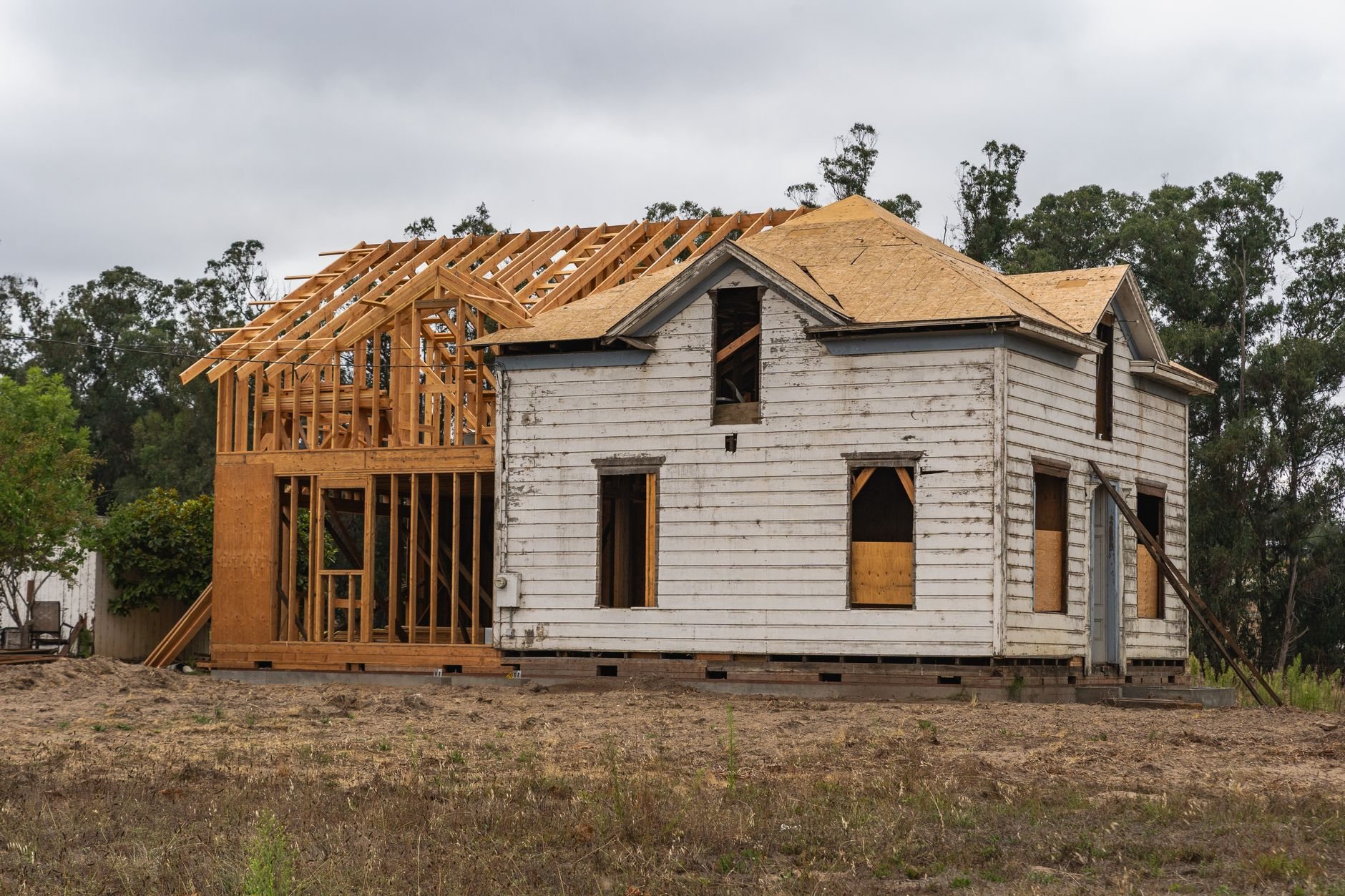
What does fire damage reconstruction cost in Utah?
As ballpark planning numbers only — never a quote: a contained single-room fire with smoke cleanup and rebuild often lands between $25,000 and $75,000; a fire that compromises structure across multiple rooms commonly runs $100,000 to $300,000 or more; and a rebuild down to the foundation is effectively new construction, priced per square foot. On insured losses, the carrier typically pays most of it.
What moves the number:
- Structural involvement. Finishes are cheap to replace; engineered framing, trusses, and roof structure are not.
- How far the smoke traveled. Smoke scope regularly exceeds burn scope — sealing and refinishing rooms the flames never reached.
- Systems damage. Rewiring, duct replacement, and plumbing repair by licensed trades adds real cost, especially when walls are already open.
- Code upgrades. Rebuilding to current Utah-adopted code — seismic anchorage included — can exceed like-for-like replacement, which is where ordinance-and-law coverage matters.
- Finish level. Insurance owes for what you had; upgrading beyond it is your call and your delta.
On the claim itself: we work from the adjuster’s scope and speak the same line-item language. When demo reveals damage the initial estimate missed — on fire losses, it usually does — we document it and submit a supplement rather than eating the gap or hiding it in change orders. You see everything your adjuster sees.
Questions we actually get
Can smoke odor really be sealed in, or does everything have to come out?
Both, depending on saturation. Lightly smoke-stained framing can be cleaned and sealed with encapsulant primer, and done properly the odor does not return. Heavily saturated porous materials — insulation, some drywall, charred wood — can’t be reliably sealed and should come out. We test rather than guess, because a rebuild that smells like smoke in August failed.
Do I need permits to rebuild after a fire?
Almost always, yes. Fire reconstruction routinely touches structure, electrical, plumbing, and mechanical systems, and each of those triggers permits and inspections under Utah-adopted code. That’s a good thing on a fire loss — inspection records prove the rebuild was done right, which matters to your carrier and to any future sale. Requirements vary by city, so we verify with your building department.
What if the adjuster’s estimate is lower than your scope?
We reconcile before work starts. Our scope is built room by room with photos and measurements in the adjuster’s own line-item format, so differences become specific, resolvable items rather than a lump-sum argument. Most gaps close on documentation. You approve everything, and we work for you — not the carrier — but speaking their language keeps the claim moving.
Do you handle the smoke cleanup and mitigation too?
No — mitigation is a separate scope, usually done by a dedicated mitigation company under its own agreement with you or your carrier. Grandview does the reconstruction side. We coordinate directly with your mitigation company on the handoff so the project doesn’t stall between demo and rebuild, and we can recommend the sequence if you’re starting from scratch.
Can we stay in the building during reconstruction?
Sometimes. If the damage is contained to one area and systems are safe, we can isolate the work zone with containment and keep the rest of the building livable. If structure, wiring, or air quality is compromised, no — and your policy’s additional-living-expense coverage usually funds temporary housing. We’ll give you a straight answer on day one, not a hopeful one.
Can we improve the space instead of rebuilding what was there?
Yes, and a fire rebuild is often the cheapest moment to do it, since walls are already open. Insurance pays for like-for-like replacement; layout changes or finish upgrades beyond that are priced separately as your portion. Our renovation team handles the upgrade design on the same contract, so it’s one project, not two.
Adjacent services
Fire reconstruction is one branch of our repair, restoration & property services family. If wind or hail opened the building first, see storm damage repair. If firefighting water did more damage than the flames, water damage restoration covers that scope. And when the rebuild reaches foundations, framing, or roofing at a structural scale, our site, structure & envelope team carries it on the same contract.
Tell us where the fire left you
We reply within a couple of hours during business hours — a day at most. You’ll get a straight read on structure, scope, sequence, and how the claim fits, before anyone commits to anything.