
Decks with Built-In Seating & Benches
Built-in deck seating is bench framing bolted into the deck structure itself — perimeter benches, backed benches, corner L-seats, and storage benches clad in the same boards as the floor. Grandview builds them into new decks or adds them to sound existing ones under a B100 general contractor license.
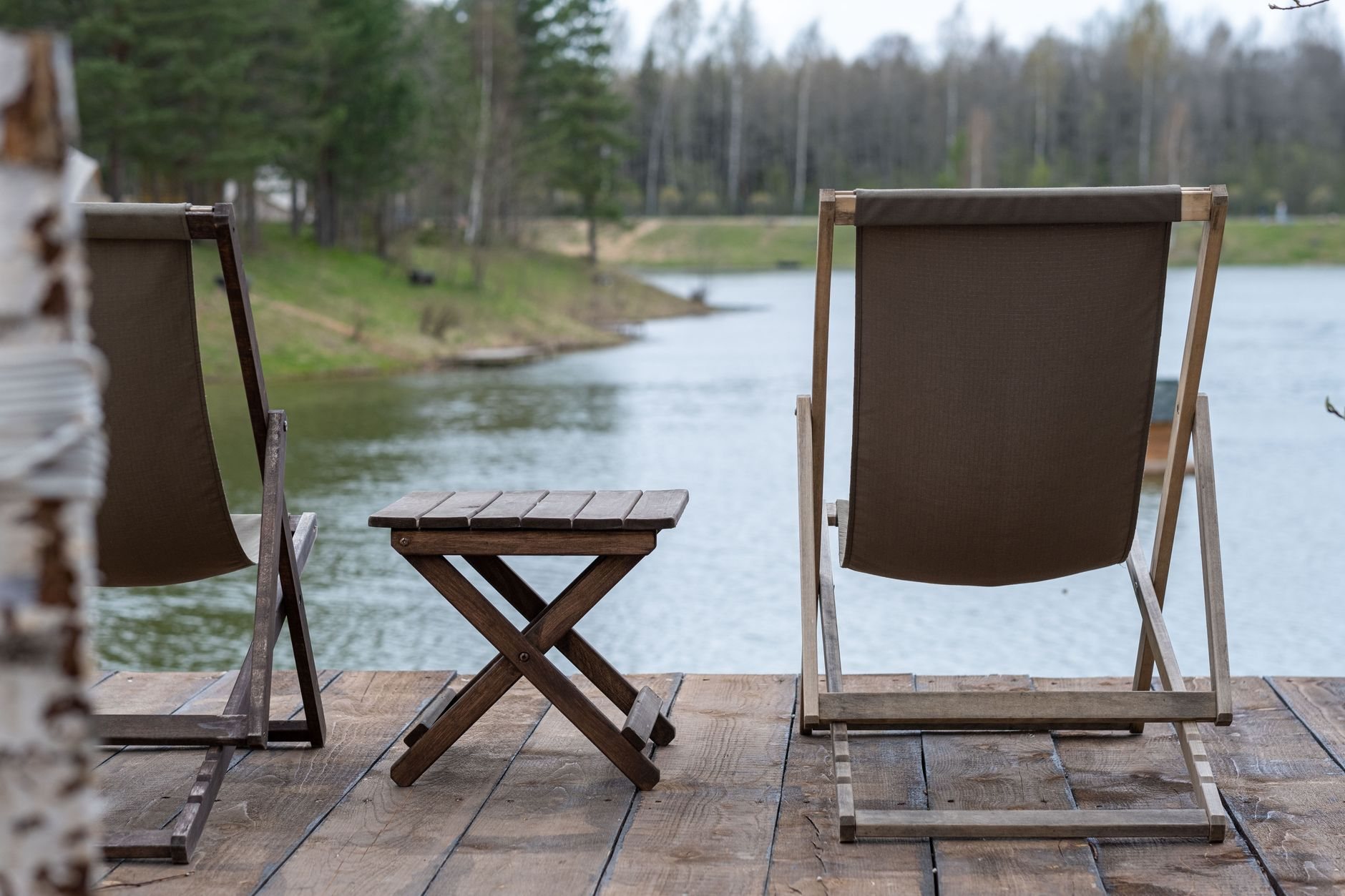
When built-in seating beats furniture
A built-in bench earns its place when the deck has a defined edge and a defined use. On a low platform — under 30 inches above grade, where current Utah-adopted code doesn’t require a guard — a perimeter bench becomes the edge, and the deck reads as a room. It also solves a local problem: canyon-wind events out of Farmington and Centerville, and downslope gusts on bench lots from Alpine to Draper, relocate patio furniture every winter. A bench bolted to the frame stays put.
It’s the wrong choice when you want flexibility or the deck is tall. On a deck that needs a guard, the bench sits inside the railing rather than replacing it — a stairs and railing conversation first. If the goal is seating created by elevation changes, a multi-level deck with a wide step between tiers does it with less framing. Our deck construction page covers the structure underneath.
How a bench gets built into the frame
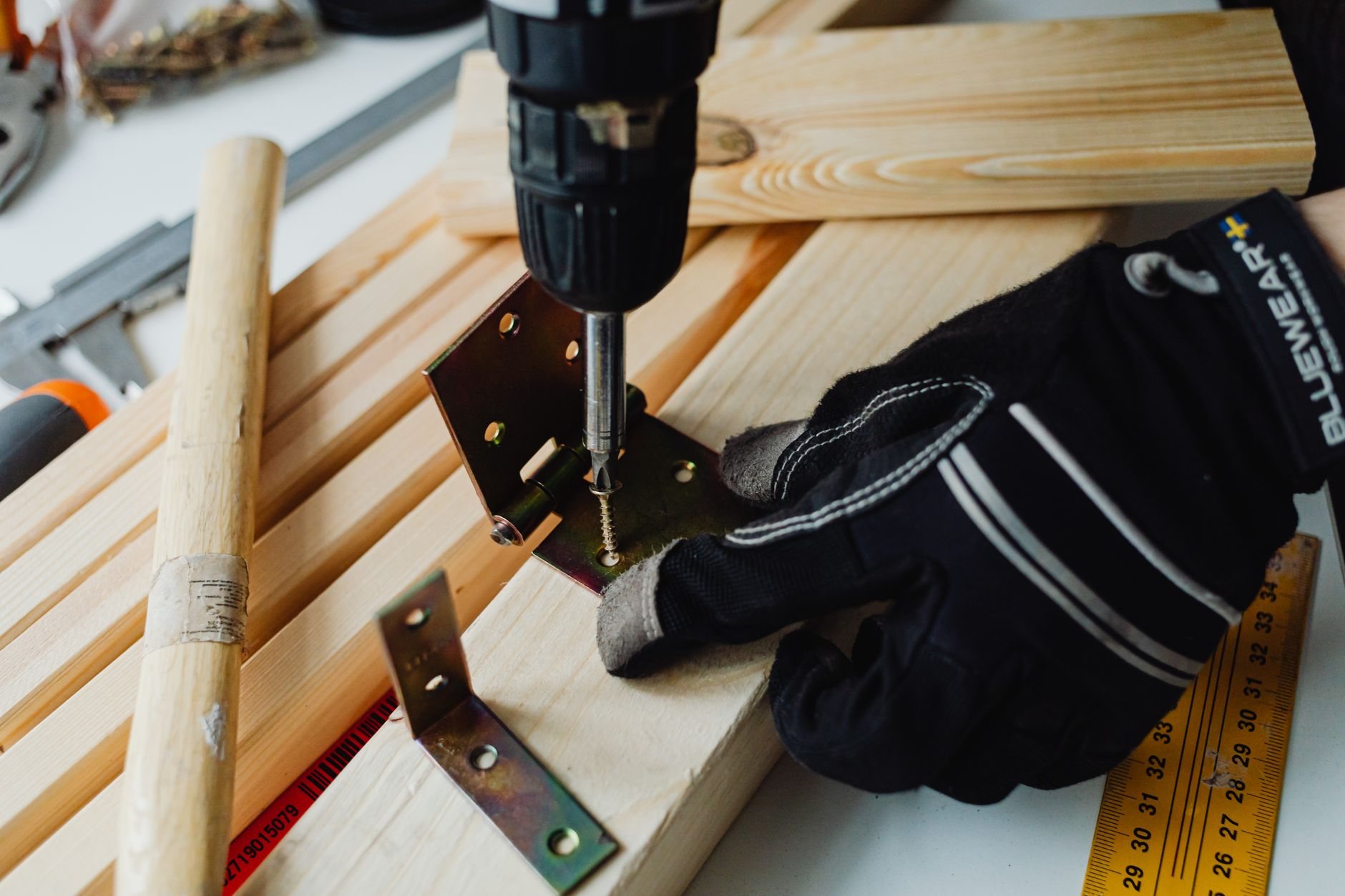
A built-in bench carries its load through supports bolted to joists or to blocking let into the frame — never through screws driven into the decking, which loosen in two seasons and turn the bench into a lever that pries boards up.
- Supports. Notched 4×4 or doubled 2x uprights, through-bolted to a joist or full-depth blocking, with decking fitted around them. Spacing stays under 4 feet so the seat doesn’t bounce.
- Seat geometry. Seat height 17–18 inches above the finished deck, depth 16–20 inches, backrests leaning 10–15 degrees. Furniture numbers, not framing numbers — skipping them is why so many built-in benches go unused.
- Cladding. Seat and back faced in the deck’s own board, gapped for drainage, with eased or picture-framed edges where legs meet wood.
- Hardware. Treated lumber corrodes ordinary steel, so bench hardware is hot-dipped galvanized or stainless, with hidden fasteners or plugged screws on the seat — nobody wants a screw head behind the knee.
- Storage benches. A hinged lid needs a drip edge and a box floor set off the deck so cushions dry out instead of composting.
Material matters more on a seat than a floor. A dark composite board that’s fine underfoot in July can be too hot to sit on, so seat cladding leans toward lighter colors or shade. Composite profiles from lines such as Trex match the deck without the splinters weathered cedar or pressure-treated throw; for wood benches we spec a smoother grade than the floor.
Benches, guards, and the 30-inch line
Below 30 inches above grade, no guard is required and a bench can define the edge outright. Above it, many inspectors treat a fixed seat along the guard as a walking surface — the guard then has to measure 36 inches from the seat, not the deck boards, pushing railing to roughly 53 inches. On raised decks we pull the bench off the guard line or turn it to face the edge. Verify with your city’s building department; interpretations vary.
A bench with a 36-inch back along the edge of a low deck is a guard in everything but name, so we build it to guard spacing — no opening that passes a 4-inch sphere — even where code doesn’t ask.
Snow, sun, and seats
A bench is a horizontal surface nobody walks on, so it holds snow and ice longer than the floor — a hundred-plus freeze–thaw cycles sitting on the seat boards every Wasatch Front winter. We pitch the seat slightly, keep the gaps clear, and tell wood-bench owners the seat wants sealer more often than the deck. UV at our elevation grays a seat faster too; composite cladding sidesteps both problems. A low-voltage strip under the bench lip — see deck lighting — gets roughed in before the bench is clad, not after.
What built-in deck seating costs in Utah County
As ballpark planning numbers, not quotes: a backless perimeter bench built into a new deck typically adds roughly $100–$200 per linear foot in our market; benches with backrests or hinged storage run roughly $200–$350 per linear foot. Retrofitting onto an existing deck costs more per foot because decking has to come up to reach the frame.
What moves the number: backrests and lids, composite versus wood cladding, corners (an L-seat has twice the framing of a straight run), and a bench built to guard spacing. We break the bench out as its own line, and every project runs under a B100 license you can check at Utah DOPL.
Questions we actually get
Can a built-in bench replace the railing on my deck?
Only if the deck surface is under 30 inches above grade, where current Utah-adopted code doesn’t require a guard. Above that, a bench along the guard usually forces it taller. We measure from the lowest grade around the deck — a sloping bench-lot yard can push one corner over the limit.
Can you add benches to a deck you didn’t build?
Yes, if the frame is sound. We pull decking along the bench line, inspect the joists, add blocking, and bolt the supports in before re-laying boards. If we find rot or undersized framing, we’ll show you first; our deck repair page covers that inspection.
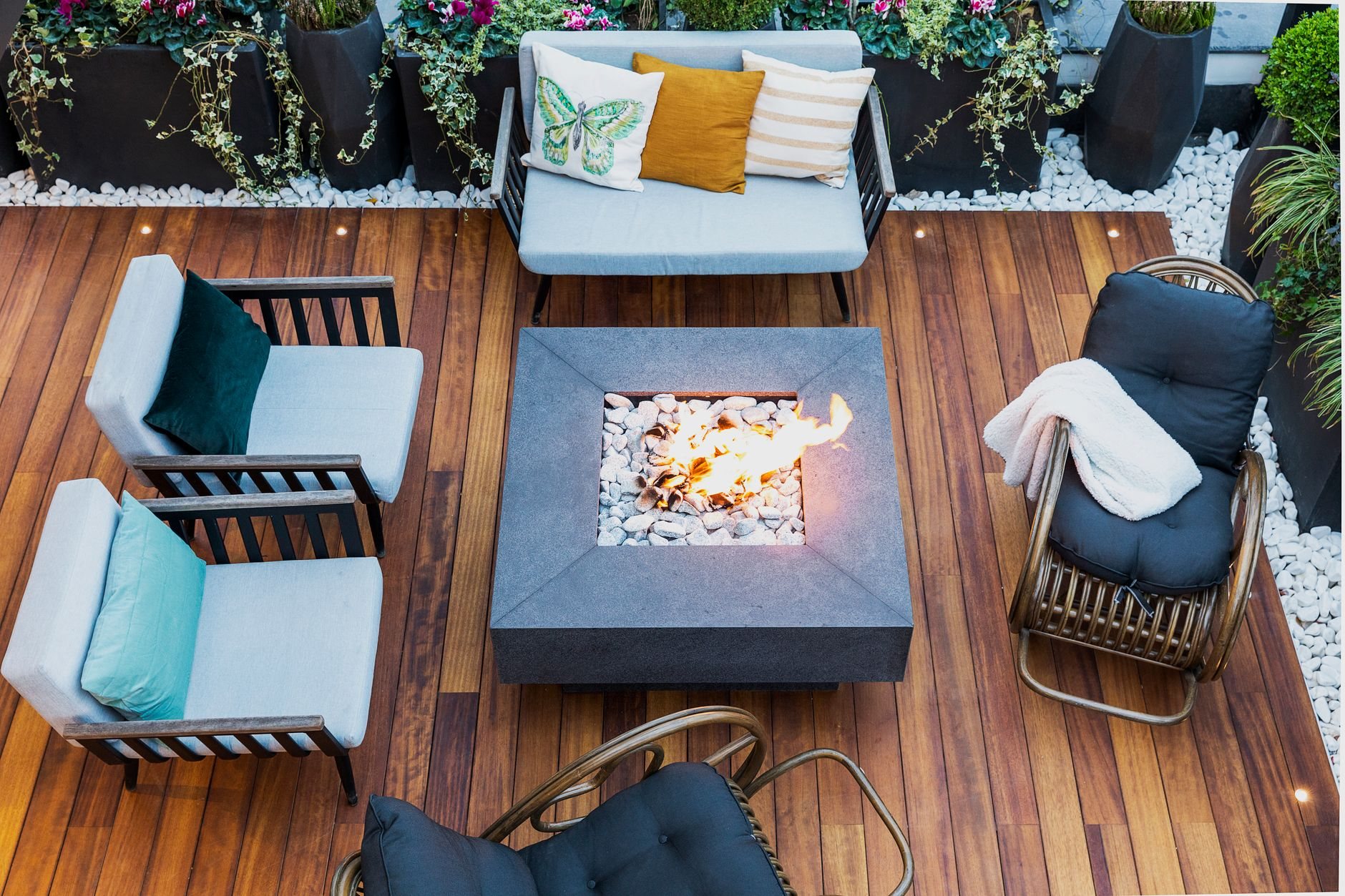
Do built-in benches work with a fire pit?
With a gas fire feature, yes — a fixed L-seat at a set distance is the best argument for built-in seating. Wood-burning pits on a deck raise clearance and hearth questions; our outdoor fireplace and fire pit page covers what’s safe and where.
What drives the cost of built-in seating most?
Backrests and storage lids first — each roughly doubles the framing and cladding of a plain bench. Then material: composite costs more than wood but needs no sealing. Length matters less than you’d expect; most of the cost is in the ends and the supports.
Tell us how you want to use the deck
We reply within a couple of hours during business hours — a day at most. You’ll get a straight read on bench placement, materials, and budget before anyone commits to anything, planned alongside the rest of our site, structure & envelope work.