
Heated tile floor systems in Utah County
Heated tile floors use electric radiant mats or cables set in the mortar under the tile, warming the floor itself rather than the air above it. Grandview Contractors installs them in bathrooms, basements, mudrooms, and kitchens across Utah County and Salt Lake County under a Utah DOPL B100 license, with the circuit work done by licensed electricians we manage inside the same contract.
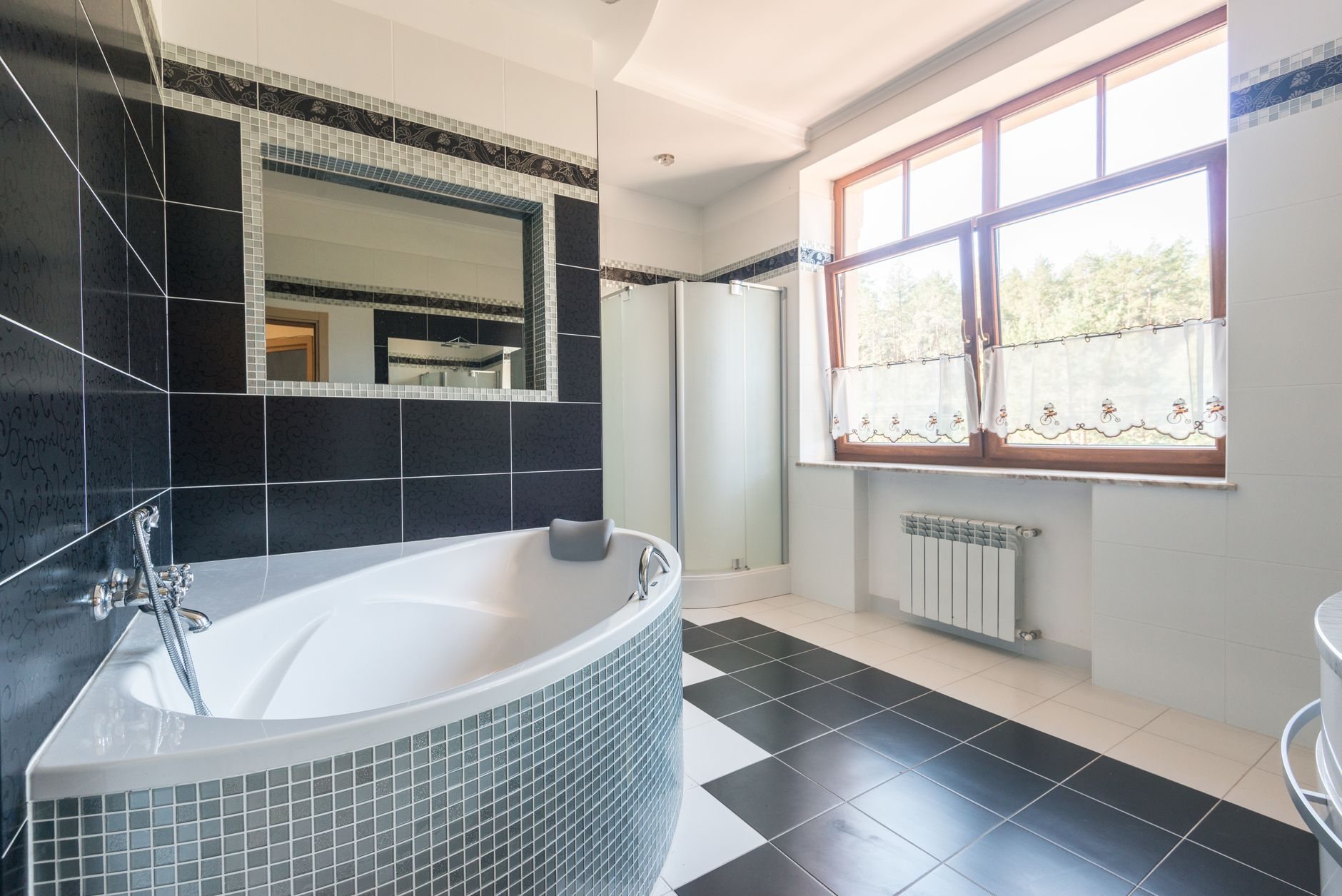
Electric floor warming is for rooms, not for heating the house
Electric radiant under tile is a comfort system. It takes a slab sitting in the mid-50s in January and holds it in the low 80s, on a schedule. It suits a master bath, a basement bathroom, a mudroom off the garage, or a kitchen floor where someone stands at the sink every morning. It is not a furnace replacement. Heating a whole basement or house from the floor is a hydronic job, covered on our radiant floor heating page.
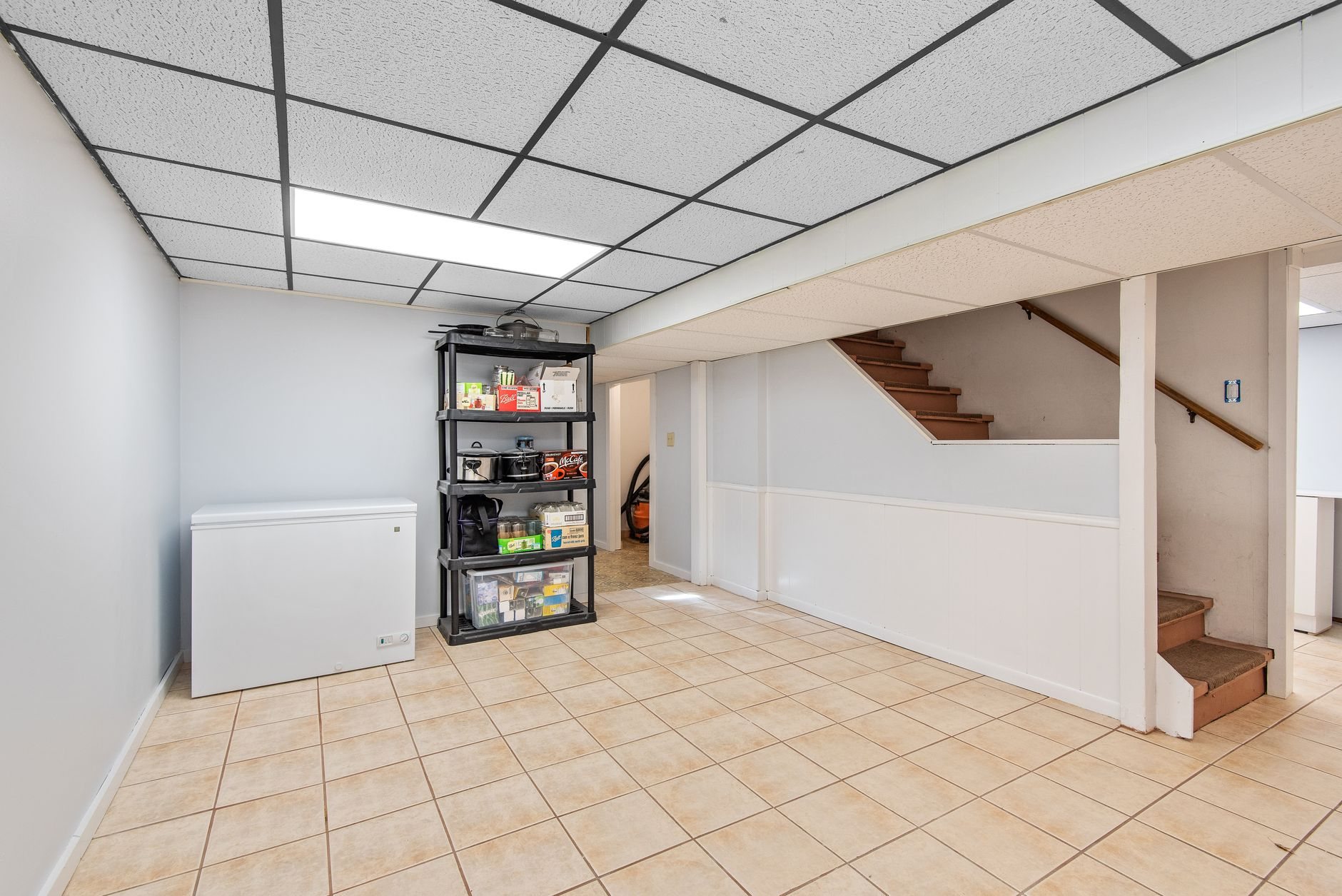
Utah basements are the most common reason people ask. Most Wasatch Front homes have one, and a slab in Provo or Lehi sits against soil that stays cold well into spring. Carpet hides that; tile broadcasts it. If a basement finish calls for a tiled bathroom or family room, warming it is the difference between a floor people use and one they avoid.
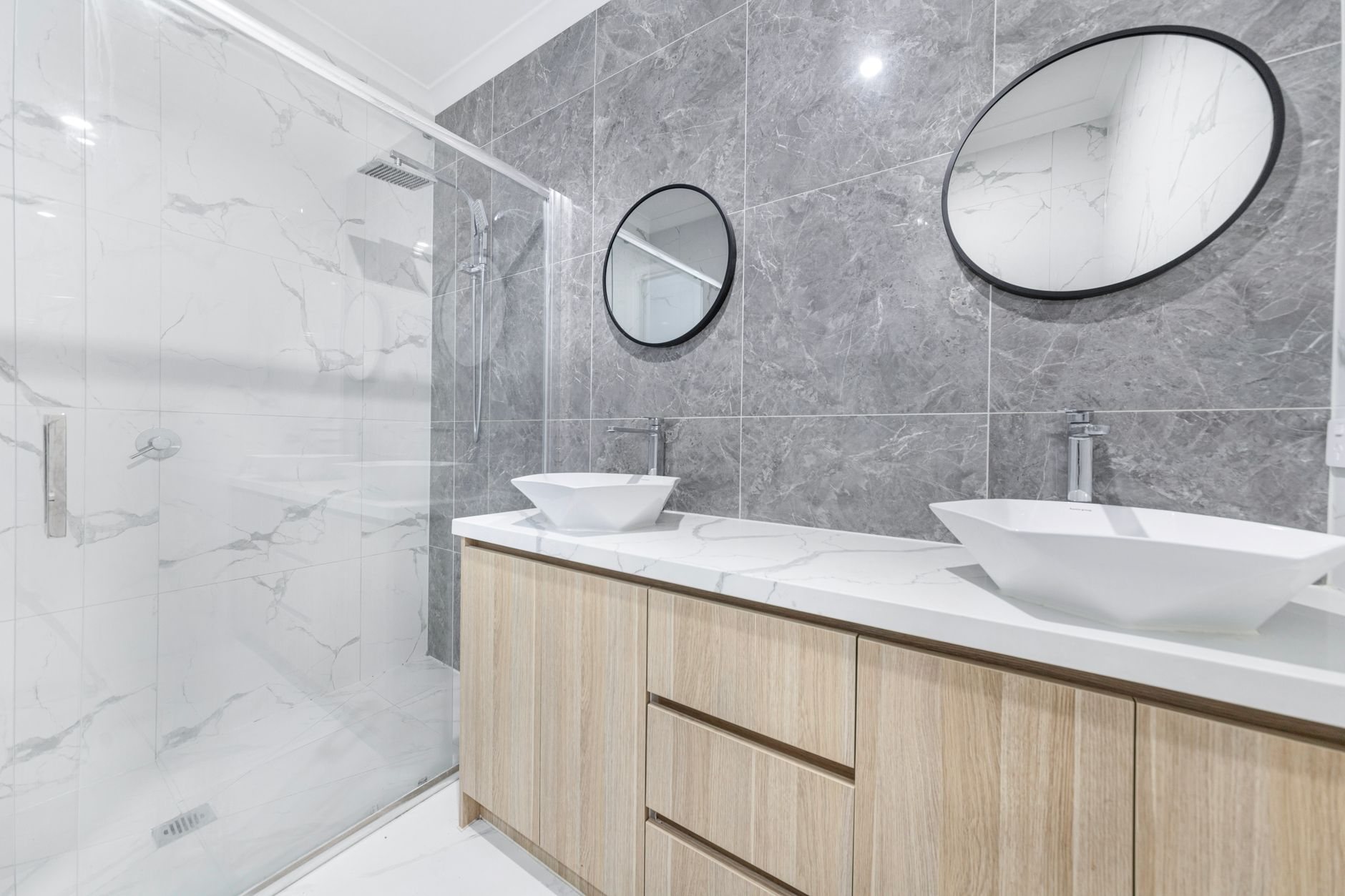
Porcelain and ceramic conduct and hold heat well, which is why this system pairs naturally with bathroom floor tile and ceramic and porcelain floor tile. Natural stone works too, though dense stone warms slower. All of it sits inside Grandview’s broader tile and stone installation work.
What a heated tile floor installation involves
Two product families cover nearly every job. Mesh mats carry a factory-spaced cable on a roll and go down fast in rectangular rooms. Loose cable clipped into an uncoupling membrane with heat-cable studs, such as Schluter’s DITRA-HEAT, costs more per square foot but routes cleanly around fixtures and adds crack isolation. On a Utah slab that matters: clay and collapsible bench soils move slabs, and a cable bonded to a cracking slab is one we would rather not have to find later.
- Layout and load. The heated zone covers walkable floor only. Cable never runs under cabinets, a toilet flange, a tub, or a shower curb. Heated square footage sets the wattage and whether the circuit is 120 or 240 volts.
- Substrate prep. Flatness matters more than on an unheated floor because cable thickness is fixed and tile must not rock over it. On slabs we patch cracks and seal the slab-to-wall joint first. In a basement this is also the moment to settle any radon mitigation plan, since Utah’s geology makes basement radon common and a sealed, heated floor is a bad thing to cut later. The Utah Geological Survey publishes county-level radon data.
- Insulation under heat on slabs. Cold concrete pulls heat downward, so on basement jobs we usually set a thin insulating underlayment or cork layer under the heating assembly so the warmth goes up into the tile, not the ground.
- Cable, sensor, and three resistance tests. The floor sensor probe sits between two cable runs, never crossing one. Resistance is measured before installation, after embedding, and after tile is set, with readings written inside the thermostat box. If a number drifts, we stop and find out why before grout hides it.
- Embed and tile. Mats get a skim of modified thinset or self-leveler; membrane systems take tile directly over the studs. Trowels never touch the cable with the notched edge, and tile goes on with full coverage so no voids create hot spots.
- Circuit and thermostat. The dedicated GFCI-protected circuit, thermostat box, and conduit for the cold lead and sensor are installed by a licensed electrician. Grandview holds the contract, sequences that work with the tile, and checks it before walls close. Nothing is energized until mortar and grout have fully cured, usually about a month.
One detail people overlook: the finished floor comes up roughly a quarter to three-eighths of an inch higher than an unheated tile floor. We plan transitions and door undercuts before the first mat is rolled out, not after.
What heated tile floors cost in Utah
As ballpark planning numbers, not a quote: electric floor warming usually adds about $12 to $25 per heated square foot on top of the tile installation in Utah County, including the mat or cable-and-membrane system, a floor-sensing thermostat, and the electrician’s dedicated circuit. A typical 50-square-foot bathroom lands around $900 to $1,800 for the warming layer. The tile itself is priced separately, and a real estimate follows a real layout.
- Room shape. A rectangle takes a mat; a jogged vanity wall and toilet alcove take loose cable and more layout time.
- Circuit distance. A panel in the next room is a short run; a full panel across the house may mean a subpanel conversation.
- Slab versus wood subfloor. Slabs get the insulating underlayment; wood subfloors get an uncoupling membrane. Each adds a layer and a day.
Operating cost stays modest because the floor runs on a schedule, warming before the morning rush and shutting off after it. Supplemental warmth in the rooms that need it is the honest use case, and it is one line inside most renovation and build-out projects we run.
Questions we actually get
Can you add floor heat under my existing tile floor?
No. The cable sits in the mortar under the tile, so warming an existing floor means removing it. The sensible path is to fold it into a planned bathroom remodel or basement finish, when the floor is open anyway and the electrician is already on site.
What happens if the heating cable breaks after the tile is down?
It is repairable without tearing out the floor. A fault locator pinpoints the break, one or two tiles come up, the cable is spliced with a manufacturer repair kit, and the tiles are reset. Breaks are rare when resistance is tested three times during installation, which is why we test and record every reading.
Does a heated tile floor need its own circuit?
Yes, a dedicated GFCI-protected circuit. Small bathrooms run on 120 volts; larger zones usually go to 240 to keep amperage down. It is licensed electrical work, done by an electrician we coordinate inside the tile schedule and inspected under current Utah-adopted code.
Can I run it under large-format or wood-look plank tile?
Yes. Large-format tile works well over a membrane-style heating system because the membrane gives a flat, uncoupled base. The caution is coverage: big tiles need full mortar contact over the cable, with no hollow spots, so the floor heats evenly.
Tell us what you’re working on
We reply within a couple of hours during business hours, a day at most. You’ll get a straight read on scope, sequence, and budget before anyone commits to anything.