
Marble, travertine & slate tile in Utah County
Natural stone tile is quarried marble, travertine, slate, or limestone, each with its own porosity and rules for setting and sealing. Grandview Contractors installs natural stone tile on floors, shower walls, fireplaces, and entries across Utah County and Salt Lake County under a Utah DOPL B100 general contractor license.
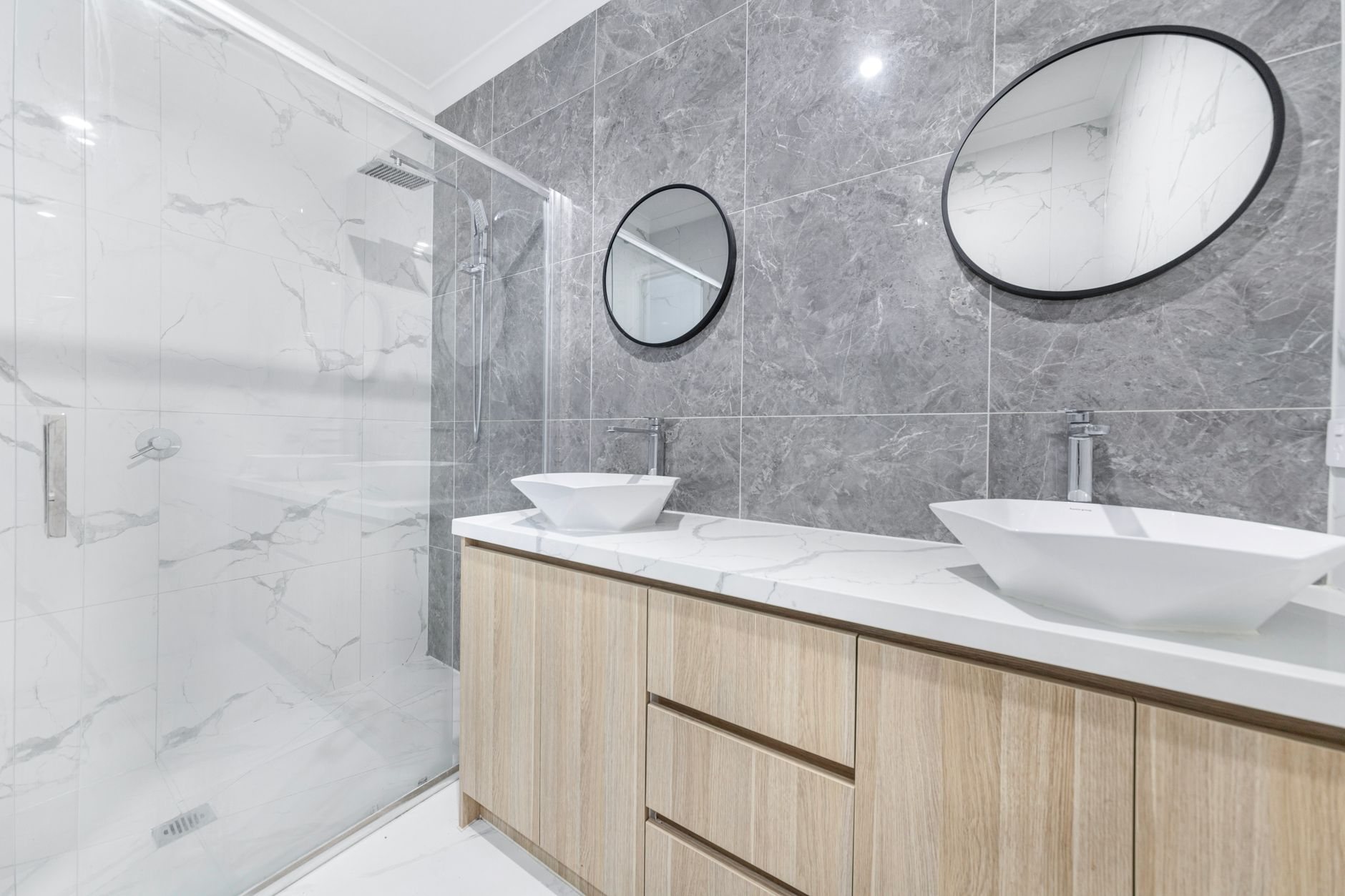
Stone when you want the real thing and will care for it
Natural stone is the right choice when you want veining no two tiles repeat and you accept sealing and gentler cleaning than porcelain needs. It is the wrong choice for a rental bath nobody will squeegee, or a kitchen floor where the owner wants zero maintenance.
If the look matters more than the material, porcelain floor tile now imitates Carrara convincingly and resists stains. If the goal is big panels with few joints, large-format tile gets there in porcelain without the weight. Stone around a firebox belongs on the fireplace tile surround page, and a herringbone in marble adds the planning from custom tile patterns to everything below.
Marble, travertine, and slate are three different jobs
Marble is calcite. Anything acidic etches it: vinegar, citrus, most bathroom cleaners. Polished marble shows an etch as a dull spot; honed hides it, so we steer floors and shower walls toward honed. Light marbles are translucent enough that gray thinset shadows through, so they get white mortar; green marbles curl in water-based mortar and need epoxy. Polished faces get unsanded grout; sand in the joint scratches the surface.
Travertine is limestone riddled with voids. It arrives filled or unfilled; unfilled stone gets its holes packed with color-matched filler during installation. It is softer than marble and drinks sealer, so we seal it before grouting; cement grout pushed into open pores leaves a haze that is hard to remove later.
Slate splits along natural cleft planes, so the face is textured and thickness varies piece to piece. Gauged slate is ground flat on the back; ungauged needs a thicker mortar bed and back-buttering of every tile to land in plane. Some slates shed flakes early or bleed iron into grout, so we test sample pieces with the actual sealer and grout first.
All three are brittle compared to porcelain and telegraph what sits under them. The floor-deflection limit for stone is twice as strict as for ceramic, per Natural Stone Institute standards, which on a wood-framed floor often means added subfloor or sistered joists first.
How we set natural stone
- Inspect the stone, not just the substrate. Crates vary. We dry-lay and blend for color and veining, cull pieces with fissures or weak fill, and get your sign-off before mortar.
- Stiffen and flatten. Floors must meet the stone deflection limit and sit flat within 1/8 inch over 10 feet. Slabs on the expansive clay and collapsible bench soils the Utah Geological Survey maps across Utah County move seasonally, so stone over concrete gets a crack-isolation membrane as standard.
- Set with the right mortar, full coverage. White medium-bed mortar for light stone, epoxy for moisture-sensitive stone, back-buttered to 95 percent coverage. Voids become cracks within a year.
- Grout, seal again, hand off. Silicone at every change of plane, a final impregnating sealer after grout cures, and the sealer, safe cleaner, and resealing interval written down for you.
Stone conducts heat well and is the best surface over a heated tile floor system. In a shower it rides on the same tested waterproofing as any shower tile installation; only the sealing and cleaning change.
Hard water, freeze-thaw, and what they do to stone
Wasatch Front tap water is hard. On a marble shower wall every drop that dries leaves a mineral ring, and the acidic descalers that remove it etch the calcite. The honest answer is a squeegee after each shower, a pH-neutral cleaner, and resealing every one to two years in a shower, two to three on a floor. We say this before you choose marble.
Outdoors is a separate conversation. Travertine pool decks suit warmer states, but Utah County sees roughly 100 or more freeze-thaw days a year, and water trapped in travertine’s pores pops the surface off. Exterior steps and landings here get dense, low-absorption stone or frost-rated porcelain over a drained base.

What natural stone tile costs in Utah County
As ballpark planning numbers, not a quote: installed natural stone floors in Utah County commonly land between $20 and $45 per square foot, travertine and slate at the low end and bookmatched marble above it. Shower walls run higher because of waterproofing, niches, and cutting. A real number follows a real scope.
- The stone itself. Commercial-grade travertine costs a few dollars a square foot; select Italian marble can cost ten times that.
- Floor stiffening. Added subfloor or sistered joists is the line item owners least expect.
Stone tile usually arrives inside a bathroom remodel, within our broader tile and stone installation scope and the renovation and build-outs family. Grandview’s B100 license is verifiable at dopl.utah.gov.
Questions we actually get
Is marble a bad idea in a shower?
Not bad, but demanding. Honed marble lasts decades in a shower if it is sealed, squeegeed, and cleaned with a pH-neutral product. Utah’s hard water is the main enemy: deposits build fast and acidic removers etch the stone. If daily upkeep is unrealistic, marble-look porcelain skips the regimen.
Why does my travertine floor keep getting new holes?
Travertine forms with voids, and factory fill only covers what was open when the tile was cut; traffic opens voids just beneath. It is normal, not a defect. We fill with color-matched filler and reseal. Honed, filled stone from a dense lot opens fewer holes than tumbled, unfilled stone.
Can natural stone tile go over my existing subfloor?
Only if the floor meets the stricter deflection limit stone requires, which many older Utah County homes with 2×8 joists on long spans do not. We measure span and joist size, then add plywood, sister joists, or specify a stiffer uncoupling assembly. Skipping this is why stone floors crack along joist lines.
What drives the price more, the stone or the labor?
They move together. Costlier stone usually sets slowest: bookmatched marble, ungauged slate, unfilled travertine. For a honed travertine floor, labor and prep are the larger share; for select marble, material can exceed labor. Stone orders also carry 15 to 20 percent overage for breakage and veining matches.
Tell us what you’re working on
We reply within a couple of hours during business hours — a day at most. You’ll get a straight read on scope, sequence, and budget before anyone commits to anything.